Artificial tears are the first-line treatment for most patients with dry eye.
Dozens of products exist, and the choice often looks arbitrary.
However, a few simple rules make the selection easier.
What Artificial Tears Do
Artificial tears lubricate the ocular surface and dilute inflammatory mediators in the tear film.
They also lower tear osmolarity for a short time.
However, they do not treat the cause of dry eye.
Therefore, view them as supportive therapy.
Main Components of Artificial Tears
Most products combine a demulcent such as carboxymethylcellulose or hyaluronate with electrolytes.
Some add a lipid component, and others use a gel or an oil.
Also, buffer and osmolarity differ between brands.
As a result, two drops with similar labels can feel very different.
All-fit Slit-Lamp Adapter
Record and share exactly what you see at the slit lamp. One adapter fits any slit lamp or surgical microscope — and any smartphone.
From Choroida — the team behind this sitePreservatives and Artificial Tears
Benzalkonium chloride keeps multidose bottles sterile.
However, it can injure the corneal epithelium with frequent use (see preservative toxicity).
Therefore, prefer preservative-free drops when a patient needs them more than four times a day.
Also choose them for anyone with a damaged ocular surface.
Viscosity and Comfort
Thin drops feel comfortable and cause little blur.
Thicker gels last longer but blur vision for several minutes.
Ointments suit the bedtime hour best.
Therefore, match viscosity to the time of day.
Lipid-Containing Artificial Tears
Evaporative dry eye from meibomian gland dysfunction often responds to lipid drops.
These emulsions slow evaporation of the aqueous layer.
Some patients report less burning with them.
However, the evidence for superiority over standard drops is modest.
Choosing Artificial Tears by Dry Eye Subtype
Aqueous deficient disease usually needs frequent aqueous supplements.
Evaporative disease also needs lid care (see meibomian gland dysfunction).
Severe cases may need biologic drops such as autologous serum.
Mixed disease needs a combination of all these steps.
How Often to Use Artificial Tears
Many patients start with four drops a day.
If symptoms persist, increase the frequency or switch to single-use vials.
Schedule the drops before discomfort starts.
Then review the response after four to six weeks.
Artificial Tears and Contact Lenses
Use rewetting drops labeled for lens wear.
Some preservatives accumulate in soft lenses.
Therefore, remove the lenses before standard drops unless the label allows otherwise.
Preservative-free options avoid this problem.
Cost and Access
Single-use vials cost more than multidose bottles.
However, they spare the surface from preservative toxicity.
Some bottles use filters that keep the contents sterile after opening.
Therefore, ask patients what they can afford before you prescribe.
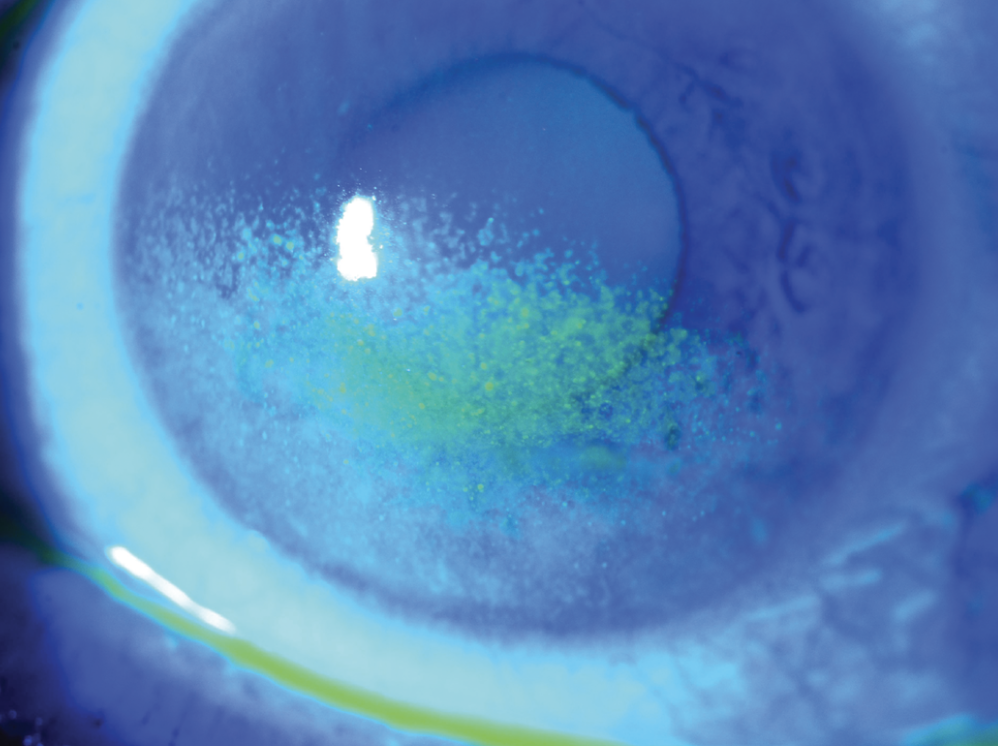
When Artificial Tears Are Not Enough
Persistent symptoms despite regular use call for a closer look.
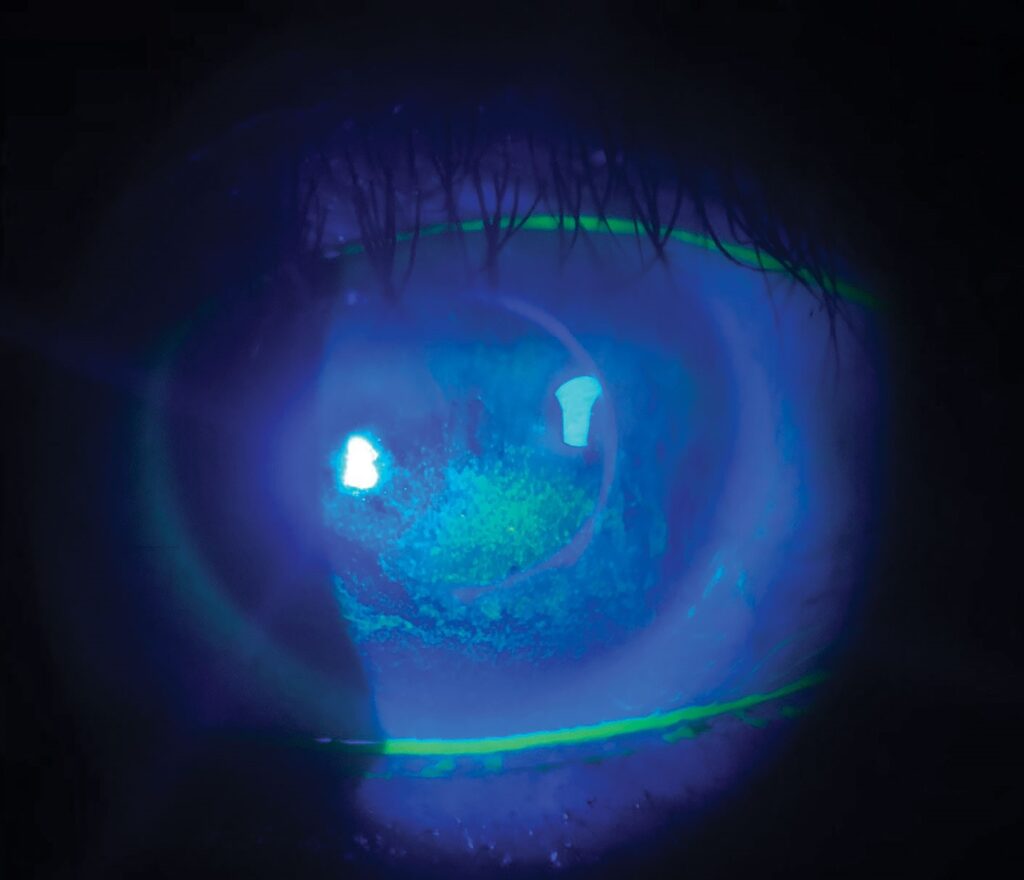
Check the lids, lashes and corneal staining.
Then consider anti-inflammatory therapy, punctal plugs or serum drops.
Refer when staining or pain persists (see aqueous deficient dry eye).
Counseling About Artificial Tears
Explain that relief may take several weeks of regular use.
Tell patients that redness-relief drops are different products.
Redness relievers can worsen dryness over time.
As a result, advise against them for chronic use.
Safe Handling of Artificial Tears
Wash hands before each instillation and keep the tip away from the eye.
Discard multidose bottles by the stated date.
Therefore, the risk of infection stays low.
Report pain, discharge or reduced vision early.
Pitfalls to Avoid
- Do not assume the most expensive product works best
- Never advise redness relievers for chronic dryness
- Do not use multidose bottles past their discard date
- Avoid heavy gels before driving
Special Groups
Older adults often need preservative-free vials because their surface is fragile.
Patients with arthritis may find single-use vials hard to open.
Therefore, check the packaging with the patient.
Offer a device or a family helper when needed.
Postoperative Use
After cataract or refractive surgery, many patients need extra lubrication.
Check the surgeon’s instructions before adding a new drop.
Also separate lubricants from prescribed drugs by five minutes.
As a result, the medicated drop stays on the eye longer.
Environmental Factors
Dry air, screens and wind increase evaporation.
Drops work better when patients also blink fully and take screen breaks.
Humidifiers help in dry rooms.
Therefore, combine drops with simple habits.
Following the Response
Ask patients to rate comfort on a simple scale.
Review staining at the next visit.
If scores do not improve, change the product or the plan.
Keep notes so that the next clinician can follow the trial.
For the latest studies, see the PubMed results for artificial tears.


Document what you see
Two smartphone imaging tools built for everyday clinic use — one for the slit lamp, one for the fundus.
From Choroida — the team behind this siteReferences
- Jones L, Downie LE, Korb D, et al. TFOS DEWS II management and therapy report. Ocul Surf. 2017;15:575-628.
- Pucker AD, Ng SM, Nichols JJ. Over the counter (OTC) artificial tear drops for dry eye syndrome. Cochrane Database Syst Rev. 2016;2:CD009729.
- Craig JP, Nichols KK, Akpek EK, et al. TFOS DEWS II definition and classification report. Ocul Surf. 2017;15:276-283.
- Asbell PA, Maguire MG, Pistilli M, et al. n-3 fatty acid supplementation for the treatment of dry eye disease. N Engl J Med. 2018;378:1681-1690.
Test yourself
A few questions straight from this article.
-
What role do artificial tears play in the treatment of dry eye disease?
Artificial tears lubricate the surface, dilute inflammatory mediators and lower osmolarity only briefly; they do not treat the cause, so they are supportive therapy. -
Which demulcent is commonly combined with electrolytes in artificial tear formulations?
Most artificial tears combine a demulcent such as carboxymethylcellulose or hyaluronate with electrolytes; some add lipids or use a gel or oil base. -
Above what daily dosing frequency should preservative-free artificial tears be preferred?
Benzalkonium chloride can injure the corneal epithelium with frequent use, so preservative-free drops are preferred beyond four times daily or with a damaged surface. -
Which artificial tear formulation is best suited to bedtime use?
Thin drops cause little blur, thicker gels last longer but blur for minutes, and ointments suit bedtime best, so viscosity is matched to time of day. -
Lipid-containing artificial tears are best suited to which type of dry eye?
Lipid emulsions slow evaporation of the aqueous layer and help evaporative dry eye from MGD, though evidence of superiority over standard drops is modest. -
After starting a regular artificial tear regimen, when should the response be reviewed?
Patients often start at four drops a day, scheduled before discomfort begins, with review after four to six weeks because relief can take several weeks. -
Why should soft contact lenses be removed before instilling standard preserved artificial tears?
Preservatives can accumulate in soft lenses, so lenses come out before standard drops unless labelled otherwise; preservative-free or lens rewetting drops avoid this. -
Why should redness-relief drops be avoided for chronic dry eye?
Redness relievers are different products from artificial tears and can worsen dryness over time, so they are not advised for chronic use. -
After cataract surgery, how far apart should artificial tears and prescribed eye drops be instilled?
Separating lubricants from prescribed drugs by five minutes keeps the medicated drop on the eye longer. -
Dry eye symptoms persist despite regular artificial tears; which management step comes next?
Persistent symptoms call for checking lids, lashes and staining, then considering anti-inflammatory therapy, punctal plugs or serum drops, with referral if staining or pain persists.

Writes and reviews the clinical articles on Educate. Every post is checked against peer-reviewed sources before it goes live.