CASE REPORT
DISEASE
Synchysis scintillans, or cholesterolosis bulbi, is a rare degenerative ocular condition characterized by the accumulation of cholesterol crystals in the vitreous humor of the eye.
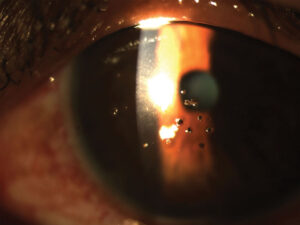
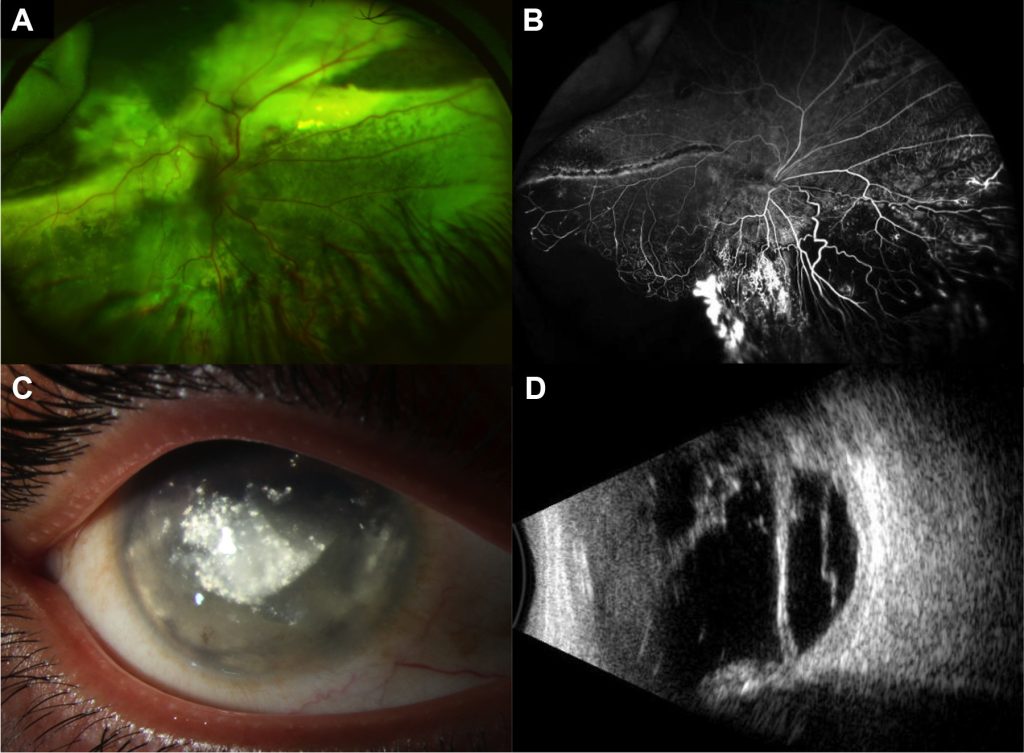
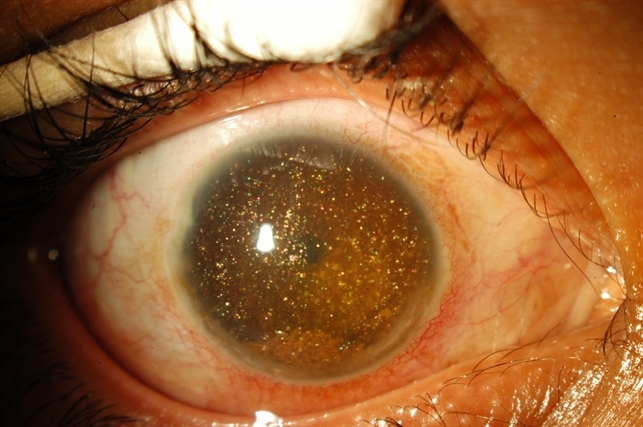
Cholesterol crystals appear as small, highly refractive opacities in the posterior chamber of the eye that freely move in a gravity-dependent manner, giving a snow globe-like effect.
There may also be anterior chamber involvement. While it is typically found in severely diseased eyes, synchysis scintillans is often an incidental asymptomatic finding.
The naming of the condition has been a subject of contention, most notably by Potter, who in 1983 argued that the pathological designation of “cholesterolosis bulbi” is more precise than the clinical descriptor “synchysis scintillans. It is often found incidentally.
On fundoscopy, yellow, highly reflective, flat, angular crystals can be seen in the vitreous humor, which has been liquefied via syneresis. Liquefaction of the vitreous results in the opacities settling inferiorly in a gravity–dependent manner when the eye is immobilized.
Synchysis scintillans is postulated to be due to a degenerative process in the vitreous. This can happen in any age group due to other ocular conditions like vitreous hemorrhage, hyphema, retinal detachment, or chronic uveitis.
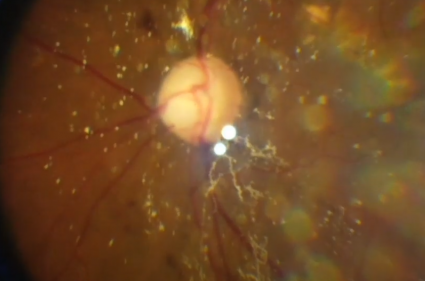
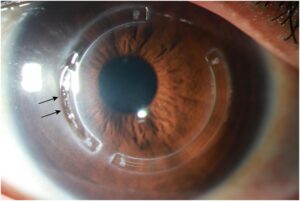
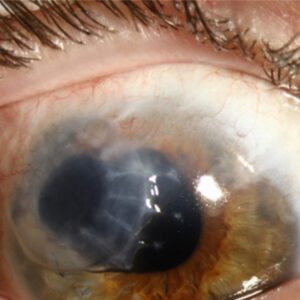
Rarely, when the vitreous gains access to the anterior chamber (e.g., in aphakia), synchysis scintillans of the anterior chamber can also be seen.
Fundus Explorer Pro
Photograph the retinal findings described here with the phone already in your pocket — 22 D optics and built-in illumination in one handheld unit.
From Choroida — the team behind this siteMANAGEMENT
Uveitis or vascular workup may be required to rule out active or lingering inflammation, which can produce vitritis.
Since vitreous hemorrhage is associated with degenerative processes that can raise intraocular pressure, patients should also be monitored for glaucoma.
Treatment
Since synchysis scintillans is considered a non-progressive and asymptomatic ocular condition, treatment is usually unnecessary.
However, the condition may be the result of underlying ocular diseases such as chronic uveitis, vitreous hemorrhage, retinal detachment, raised intraocular pressure, or inflammation. These underlying conditions should be treated accordingly.
A therapeutic strategy that targets oxidative stress may be effective in the treatment of synchysis patients. However, no pharmacological studies have been done to assess this strategy.
In the case of a patient with glaucoma and cholesterolosis bulbi in both the anterior and posterior segments, pars plana vitrectomy was performed. Not all cholesterol crystals could be removed due to a continuous influx of crystals.
While the vitrectomy led to a successful decrease in intraocular pressure and bevacizumab injection led to iris neovascularization regression, the number of cholesterol crystals did not decrease significantly.
Historically, anterior segment cholesterolosis has been treated with enucleation due to intractable pain and a risk of contralateral eye involvement leading to inflammation of sympathetic ophthalmia.


Document what you see
Two smartphone imaging tools built for everyday clinic use — one for the slit lamp, one for the fundus.
From Choroida — the team behind this siteREFERENCES
- Wand M, Smith TR, Cogan DG. Cholesterosis Bulbi: The Ocular Abnormality Known as Synchysis Scintillans. American Journal of Ophthalmology. 1975;80(2):177-183. doi:10.1016/0002-9394(75)90129-4
- Gonçalves M.B. (2020) Asteroid Hyalosis and Synchysis Scintillans. In: Rodrigues E., Meyer C, Tomazoni E. (eds) Trauma and Miscellaneous Disorders in Retina. Retina Atlas. Springer, Singapore. Doi:10.1007/978-981-13-8550-6
- Kumar S. Cholesterol crystals in the anterior chamber. Br J Ophthalmol 1963;47:295-9.
- Potter JW. Synchysis Scintillans, Cholesterosis Bulbi, and Asteroid Bodies: Does Synchysis Scintillans Exist? The Australian Journal of Optometry. 1983;66(6):232-238. doi:10.1111/j.1444-0938.1983.tb03724.
- Margo CE. Age-Related Diseases of the Vitreous. In: Cavallotti CAP, Cerulli L, eds. Age-Related Changes of the Human Eye. Aging Medicine. Humana Press; 2008:157-191. doi:10.1007/978-1-59745-507-7_8
Test yourself
A few questions straight from this article.
-
Synchysis scintillans, also called cholesterolosis bulbi, is characterised by the accumulation of what?
Synchysis scintillans, or cholesterolosis bulbi, is a rare degenerative ocular condition defined by accumulation of cholesterol crystals in the vitreous humour. -
What produces the snow globe effect described in synchysis scintillans?
The crystals are small, highly refractive opacities that move freely in a gravity-dependent manner, which gives the characteristic snow globe-like effect. -
How do the vitreous crystals of synchysis scintillans appear on fundoscopy?
On fundoscopy the crystals of synchysis scintillans are yellow, highly reflective, flat and angular, lying within a liquefied vitreous. -
Why do the opacities of synchysis scintillans settle inferiorly when the eye is immobilised?
The vitreous in synchysis scintillans is liquefied by syneresis, so once the eye stops moving the opacities settle inferiorly in a gravity-dependent manner. -
Which ocular conditions are described as leading to synchysis scintillans?
Synchysis scintillans is postulated to arise from a degenerative process in the vitreous, and can occur at any age after conditions such as vitreous haemorrhage, hyphaema, retinal detachment or chronic uveitis. -
Under what circumstance does synchysis scintillans appear in the anterior chamber?
Anterior chamber synchysis scintillans is rare and occurs when the vitreous gains access to the anterior chamber, for example in aphakia. -
What is the usual approach to treating synchysis scintillans itself?
Because synchysis scintillans is regarded as non-progressive and asymptomatic, treatment is usually unnecessary; any underlying disease such as chronic uveitis, vitreous haemorrhage or retinal detachment is treated instead. -
For which complication should a patient with synchysis scintillans be monitored?
Patients with synchysis scintillans should be monitored for glaucoma, since the associated degenerative processes can raise intraocular pressure. -
What is the purpose of a uveitis or vascular workup in a patient with synchysis scintillans?
A uveitis or vascular workup may be required to rule out active or lingering inflammation, which can produce vitritis in these eyes. -
What was the outcome of pars plana vitrectomy reported for cholesterolosis bulbi with glaucoma?
Vitrectomy successfully reduced intraocular pressure, but not all crystals could be removed because of a continuous influx, and the number of cholesterol crystals did not fall significantly.

Writes and reviews the clinical articles on Educate. Every post is checked against peer-reviewed sources before it goes live.