Sunglasses do more than reduce glare.
They block ultraviolet light that harms the cornea, lens and eyelids.
Choosing the right pair is simple once the facts are clear.
Why Ultraviolet Light Harms the Eye
Ultraviolet B is absorbed by the cornea and lens.
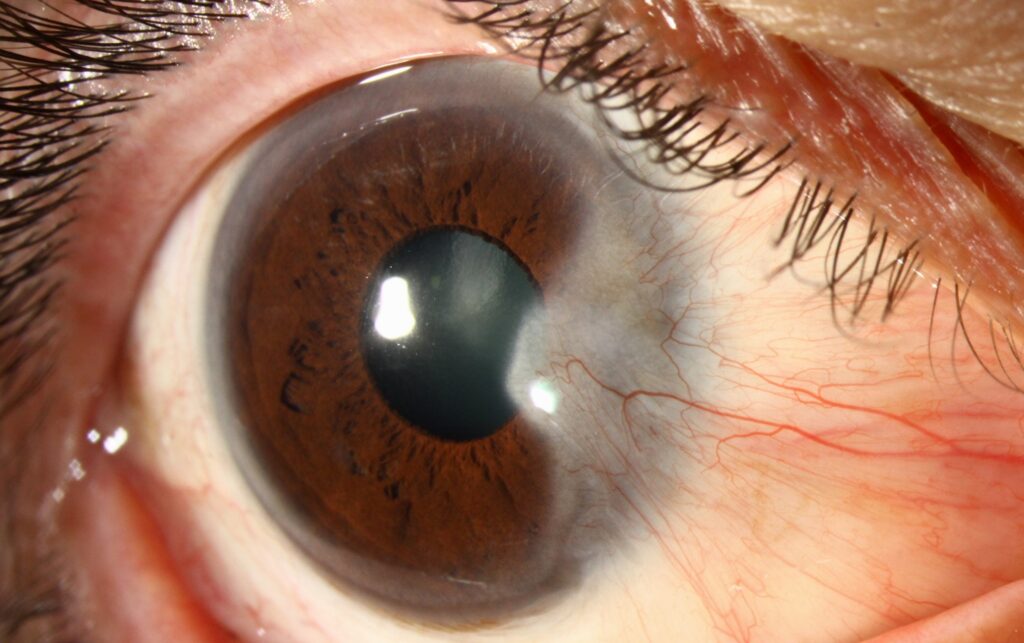
Chronic exposure contributes to cataract and pterygium.
Intense exposure causes photokeratitis.
Therefore, protection matters at every age.
Eye Conditions Linked to Ultraviolet Light
Cortical cataract, pterygium and pinguecula relate to sun exposure.
Eyelid skin cancers also follow sun damage.
The link to macular degeneration is less certain.
So advise protection for the surface and the lens.
All-fit Slit-Lamp Adapter
Record and share exactly what you see at the slit lamp. One adapter fits any slit lamp or surgical microscope — and any smartphone.
From Choroida — the team behind this sitePhotokeratitis
Snow, water and welding arcs cause painful corneal burns.
Symptoms appear several hours later.
Treatment is supportive.
Also prevention with proper eyewear is easy.
What UV400 Means on Sunglasses
A UV400 label means the lens blocks light up to 400 nanometers.
This covers UVA and UVB.
Look for a label or a standard mark.
So a tag matters more than a dark tint.
Sunglasses Tint and Protection
Dark lenses do not guarantee ultraviolet blocking.
A dark lens without a filter dilates the pupil and lets in more UV.
Clear lenses with a UV coating can protect fully.
Therefore, read the label, not the shade.
Polarized Sunglasses
Polarized lenses cut glare from water and roads.
They improve comfort and contrast.
They do not by themselves add UV protection.
Also check for UV400.
Sunglasses Frame Shape and Coverage
Wraparound frames reduce light entering from the sides.
Large lenses protect the lids and surrounding skin.
Close-fitting designs work best.
So choose a style that sits near the face.
Children and Sunglasses
Children spend more time outdoors and have clearer lenses.
Their eyes transmit more UV to the retina.
Sunglasses and hats protect them.
Therefore, make eyewear a habit early (see pterygium).
Contact Lenses With UV Filter
Some lenses block part of the UV spectrum.
They cover only the cornea and part of the lens.
They do not replace sunglasses.
Also wear a hat.
Blue Light Myths and Sunglasses
Sunglasses do not need a special blue light filter for outdoor use.
Evidence that screens damage the retina is lacking.
Marketing claims often exceed evidence.
So be cautious about expensive add-ons.
Cataract Prevention
Long-term sun exposure contributes to cortical cataract (see cortical cataract).
Protection lowers risk over decades.
It is not a guarantee.
Therefore, combine it with not smoking and good health.
Skin Protection Around the Eye
Eyelid skin is thin and prone to cancer.
Sunscreen near the eye must be gentle.
Sunglasses shade the skin.
So combine eyewear with a hat.
Special Situations
Skiers, sailors and welders need extra protection.
Altitude and reflection increase exposure.
Use full-coverage goggles.
Also choose lenses rated for the activity.
Sunglasses: Practical Summary
Pick a UV400 label, a wraparound shape and comfortable fit.
If you work outdoors, add a hat.
Because UV damage builds over time, start early.
Finally, replace scratched lenses.
Pitfalls to Avoid
- Do not judge protection by lens darkness
- Never look at the sun directly even with sunglasses
- Avoid cheap lenses without a UV label
- Do not forget children
Sunglasses and Driving
Sunglasses reduce glare while driving in daylight.
Very dark lenses are unsafe in tunnels.
Because glare causes accidents, choose a comfortable tint.
Therefore, keep a clear pair for night.
Sunglasses After Cataract Surgery
Most intraocular lenses block ultraviolet light.
Sunglasses still reduce glare and protect the surface.
Because patients are sensitive early on, advise them to use sunglasses.
So they stay comfortable outdoors.
Sunglasses and Prescription Lenses
Prescription lenses can include ultraviolet filters and tints.
Photochromic lenses darken in sunlight.
Because they may not darken in a car, check the product.
Therefore, ask the optician about performance.
Sunglasses for Outdoor Workers
Farmers, builders and sailors have high exposure.
Wrap-around frames with side shields help.
Because exposure accumulates, make protection part of work.
So employers can supply eyewear.
Sunglasses Quality
Cheap sunglasses can have poor optics.
Cheaper lenses may distort images.
Because distortion causes strain, choose reliable brands.
Finally, replace scratched lenses.
Sunglasses: Patient Questions
Patients ask whether children need sunglasses.
They do, because their lenses transmit more UV.
They also ask if sunglasses weaken the eyes.
However, they do not, so reassure them.
Sunglasses: Key Message
Look for a UV400 label, a close fit and comfortable tint.
If a pair lacks a label, do not trust it.
Because sun damage adds up, start protection young.
Finally, use a hat as well.
For the latest studies, see the PubMed results for sunglasses.


Document what you see
Two smartphone imaging tools built for everyday clinic use — one for the slit lamp, one for the fundus.
From Choroida — the team behind this siteReferences
- Yam JC, Kwok AK. Ultraviolet light and ocular diseases. Int Ophthalmol. 2014;34:383-400.
- Behar-Cohen F, Baillet G, de Ayguavives T, et al. Ultraviolet damage to the eye revisited: eye-sun protection factor (E-SPF), a new ultraviolet protection label for eyewear. Clin Ophthalmol. 2014;8:87-104.
- Sliney DH. Photoprotection of the eye: UV radiation and sunglasses. J Photochem Photobiol B. 2001;64:166-175.
- Taylor HR, West SK, Rosenthal FS, et al. Effect of ultraviolet radiation on cataract formation. N Engl J Med. 1988;319:1429-1433.

Writes and reviews the clinical articles on Educate. Every post is checked against peer-reviewed sources before it goes live.