
Infantile esotropia is a large-angle, constant inward deviation of the eyes presenting in the first six months of life, and the timing of surgical correction has been debated for decades, largely because of the possibility that aligning the eyes earlier gives a better chance of developing at least some binocular function, even coarse stereopsis.
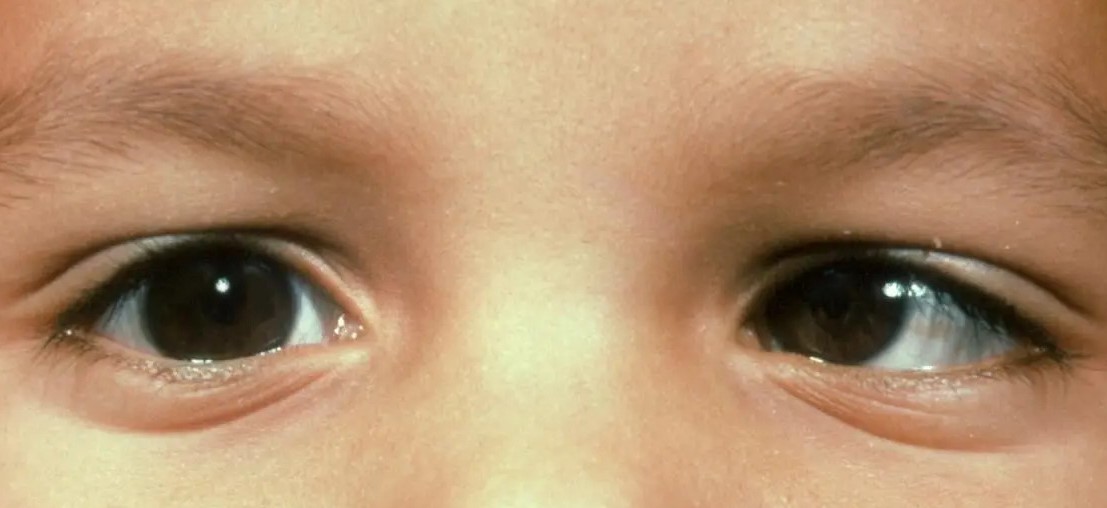
Clinical Features
- Onset within the first six months of life, distinguishing it from accommodative esotropia, which typically presents later
- A large, comitant esodeviation, often 30 to 50 prism diopters or more
- Cross-fixation is common: the child uses the right eye to look left and the left eye to look right, which can mask an underlying abduction limitation and sometimes prompts unnecessary concern for a sixth nerve palsy
- Mild hyperopia, typically less than the amount seen in accommodative esotropia
- Associated findings that often develop over time, including inferior oblique overaction, dissociated vertical deviation, and latent or manifest latent nystagmus
Why Timing Matters
Human binocular vision develops during a sensitive period in infancy, and misalignment during this period prevents the two eyes from working together to develop stereopsis.
The theoretical argument for early surgery is that restoring alignment while the visual system is still plastic gives the best chance, though still not a guarantee, of developing at least gross or peripheral stereopsis, whereas delaying surgery past this window may close that opportunity permanently even if alignment is eventually achieved.
Evidence on Timing
Several studies have examined outcomes based on age at surgery, generally comparing surgery performed before versus after around 12 to 24 months of age.
Earlier surgery, particularly before 12 to 18 months, has been associated with a higher rate of achieving at least some measurable stereopsis in several studies, though the proportion of children who achieve good, high-grade stereopsis remains low regardless of timing, and many children with infantile esotropia never develop fine stereopsis even with prompt, technically successful surgery.
Practice has generally shifted toward earlier surgery, often in the range of 6 months to about a year and a half of age, once the diagnosis is confirmed and any accommodative component has been excluded with cycloplegic refraction and, if needed, a trial of glasses.
Preoperative Evaluation
- Cycloplegic refraction to identify and correct any significant hyperopia, since a partly or fully accommodative component should be treated with glasses before considering surgery
- Careful assessment to exclude sixth nerve palsy or other neurological causes, particularly important given the cross-fixation pattern that can mimic abduction limitation
- Documentation of the deviation angle at distance and near, and assessment for any associated vertical or oblique muscle dysfunction, which may need to be addressed at the same surgery or later
Surgical Approach
Bilateral medial rectus recession is the most common initial procedure for infantile esotropia, with the amount of recession determined by the size of the deviation.
Some surgeons combine this with medial rectus recession and lateral rectus resection in one eye for larger or asymmetric deviations.
Associated inferior oblique overaction and dissociated vertical deviation often develop or become apparent later and may require a second procedure, so families should be counseled from the start that more than one surgery is common in infantile esotropia.
Postoperative Course
Overcorrection, undercorrection, and the later development of dissociated vertical deviation or inferior oblique overaction are all reasonably common, and long-term follow-up through childhood is standard, since alignment and associated findings can change as the child grows.
Prognosis
Ocular alignment can usually be achieved with one or more surgeries, and earlier surgery appears to improve the chance of at least some binocular function, though most children with true infantile esotropia do not achieve normal, high-grade stereopsis even with optimal timing and technique.
Setting expectations accordingly, while still pursuing prompt treatment for the best achievable outcome, is part of counseling these families.
Document what you see
Two smartphone imaging tools built for everyday clinic use — one for the slit lamp, one for the fundus.
From Choroida — the team behind this siteReferences
- Birch EE, Fawcett S, Stager DR. Why does early surgical alignment improve stereoacuity outcomes in infantile esotropia? J AAPOS. 2000;4:10-14.
- Ing MR. Early surgical alignment for congenital esotropia. Ophthalmology. 1983;90:132-135.
- Wright KW, Edelman PM, Walonker F, Yiu S. Reduced stereopsis after strabismus surgery for congenital esotropia in the first 6 months of life. Am J Ophthalmol. 1994;117:99-103.
- Simonsz HJ, Kolling GH, Unnebrink K. Final report of the early vs. late infantile strabismus surgery study (ELISSS). Strabismus. 2005;13:169-199.
Test yourself
A few questions straight from this article.
-
Infantile esotropia presents with onset within which period of life?
A large-angle constant inward deviation beginning in the first six months of life defines infantile esotropia, separating it from the later-presenting accommodative form. -
What size of esodeviation is typical in infantile esotropia?
The deviation is large and comitant, commonly measuring 30 to 50 prism diopters or more. -
Cross-fixation in infantile esotropia can mask which finding?
The child uses the right eye to look left and the left eye to look right, hiding any abduction deficit and sometimes raising unnecessary concern about sixth nerve palsy. -
What is the theoretical rationale for operating early in infantile esotropia?
Binocular vision develops during a sensitive period, so realigning the eyes while the system remains plastic offers the best chance of gross or peripheral stereopsis. -
How does the refractive error of infantile esotropia compare with accommodative esotropia?
Infantile esotropia is associated with only mild hyperopia, typically less than the amount found in accommodative esotropia. -
Surgery before which age has been linked to more measurable stereopsis in infantile esotropia?
Several studies associate surgery before roughly 12 to 18 months with a higher rate of achieving at least some measurable stereopsis. -
Which preoperative test must precede surgery for infantile esotropia?
Cycloplegic refraction identifies significant hyperopia, since a partly or fully accommodative component should be treated with glasses before surgery is considered. -
Which procedure is the most common initial surgery for infantile esotropia?
Bilateral medial rectus recession is the usual first operation, with the amount of recession set by the size of the deviation. -
Which associated findings often appear later and may require a second operation?
Both often develop or become apparent after the initial surgery, so families are counselled that more than one operation is common. -
What should families be told about stereopsis after surgery for infantile esotropia?
Alignment is usually achievable with one or more operations, but most children with true infantile esotropia never reach normal, high-grade stereopsis.
