
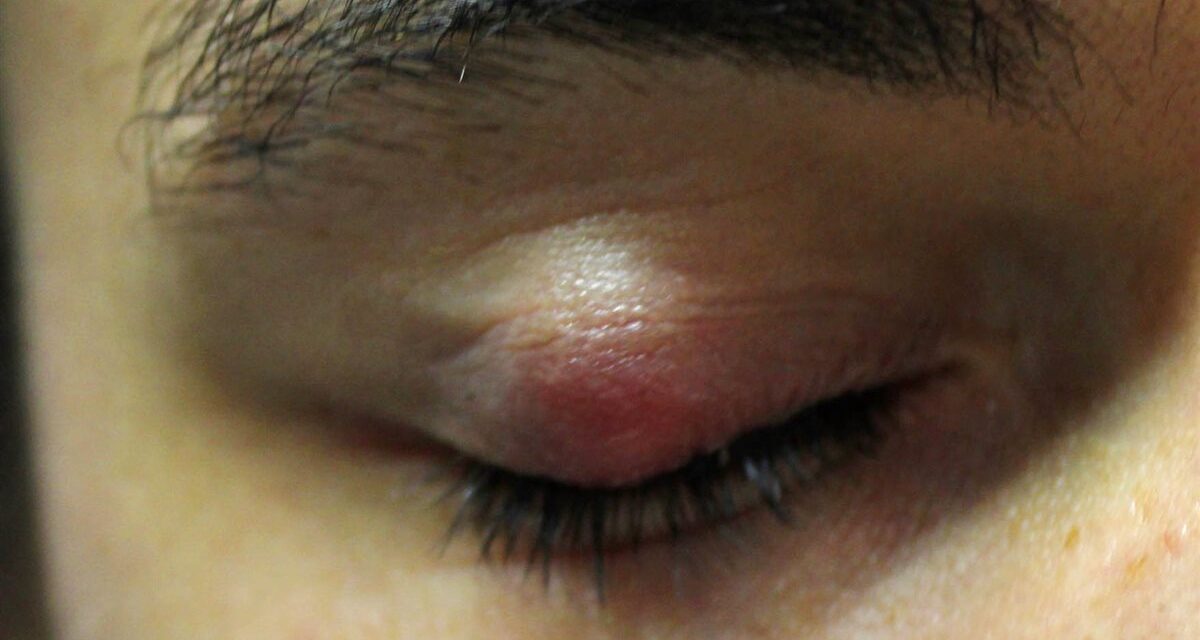
Not every eyelid lump is an infection — and treating it like one is a common mistake.
A chalazion is a painless, chronic swelling that forms when a meibomian or Zeis gland becomes blocked.
It is the single most common eyelid lesion encountered in general and ophthalmic practice.
Patients — and sometimes clinicians — frequently mistake it for a stye and expect antibiotics to clear it.
They rarely do, because a chalazion is a sterile granulomatous reaction to trapped lipid, not a bacterial infection.
Recognizing this distinction changes the entire management plan, from reassurance and warm compresses through to injection or minor surgery.
What Is a Chalazion?
A chalazion is a chronic, localized, lipogranulomatous inflammation resulting from obstruction and stasis of secretions within a meibomian gland, or less commonly a Zeis gland.
Key features that define it:
- Firm, well-circumscribed, non-tender nodule within the tarsal plate
- Usually painless, unless secondarily inflamed
- Can occur on either the upper or lower eyelid, more often the upper lid where meibomian glands are more numerous
- Sterile in origin — not the result of active bacterial infection
Chalazia are extremely common and can occur at any age, though they are seen most frequently in adults.
Epidemiology
Chalazion is widely regarded as the most common eyelid lesion in general clinical practice.
- Large administrative-data studies report a chalazion diagnosis rate in the range of roughly 0.5-1% of the general population, almost certainly an undercount given how many resolve without ever presenting for care
- Recurrence after treatment has been reported anywhere from under 10% up to roughly one-third of cases, depending on the treatment modality and study population
- Diagnosis is reported more frequently in women in several large cohort studies
Because most chalazia are managed conservatively and never formally coded, true population prevalence is almost certainly higher than administrative data suggest.
All-fit Slit-Lamp Adapter
Record and share exactly what you see at the slit lamp. One adapter fits any slit lamp or surgical microscope — and any smartphone.
From Choroida — the team behind this sitePathophysiology
The meibomian glands normally secrete lipid that stabilizes the tear film.
A chalazion develops through the following sequence:
- The gland orifice becomes obstructed, often related to meibomian gland dysfunction or chronic blepharitis
- Lipid-rich secretions accumulate and stagnate behind the blockage
- The retained lipid leaks into surrounding tarsal tissue
- A chronic, sterile granulomatous inflammatory reaction develops around the extravasated lipid
- The resulting lipogranuloma forms the palpable, well-defined nodule
Because the driving process is inflammatory rather than infectious, antibiotics alone rarely resolve an established chalazion.
Risk Factors
Ocular Risk Factors
- Chronic blepharitis and meibomian gland dysfunction
- Rosacea-associated ocular surface disease
- A prior history of chalazion, since recurrence and new lesions are common
Systemic and Demographic Risk Factors
- Adult age, though children can also be affected
- Seborrheic skin conditions
- Poor eyelid hygiene
Addressing meibomian gland dysfunction is central to preventing both the first chalazion and its recurrence.
Clinical Presentation
Symptoms
- A gradually enlarging, painless eyelid lump, typically noticed over days to weeks
- Mild mechanical irritation or a foreign-body sensation if large enough to touch the ocular surface
- Occasionally, blurred vision from induced corneal astigmatism when a large chalazion presses on the globe
- Cosmetic concern is often the primary reason patients seek care
Examination Findings
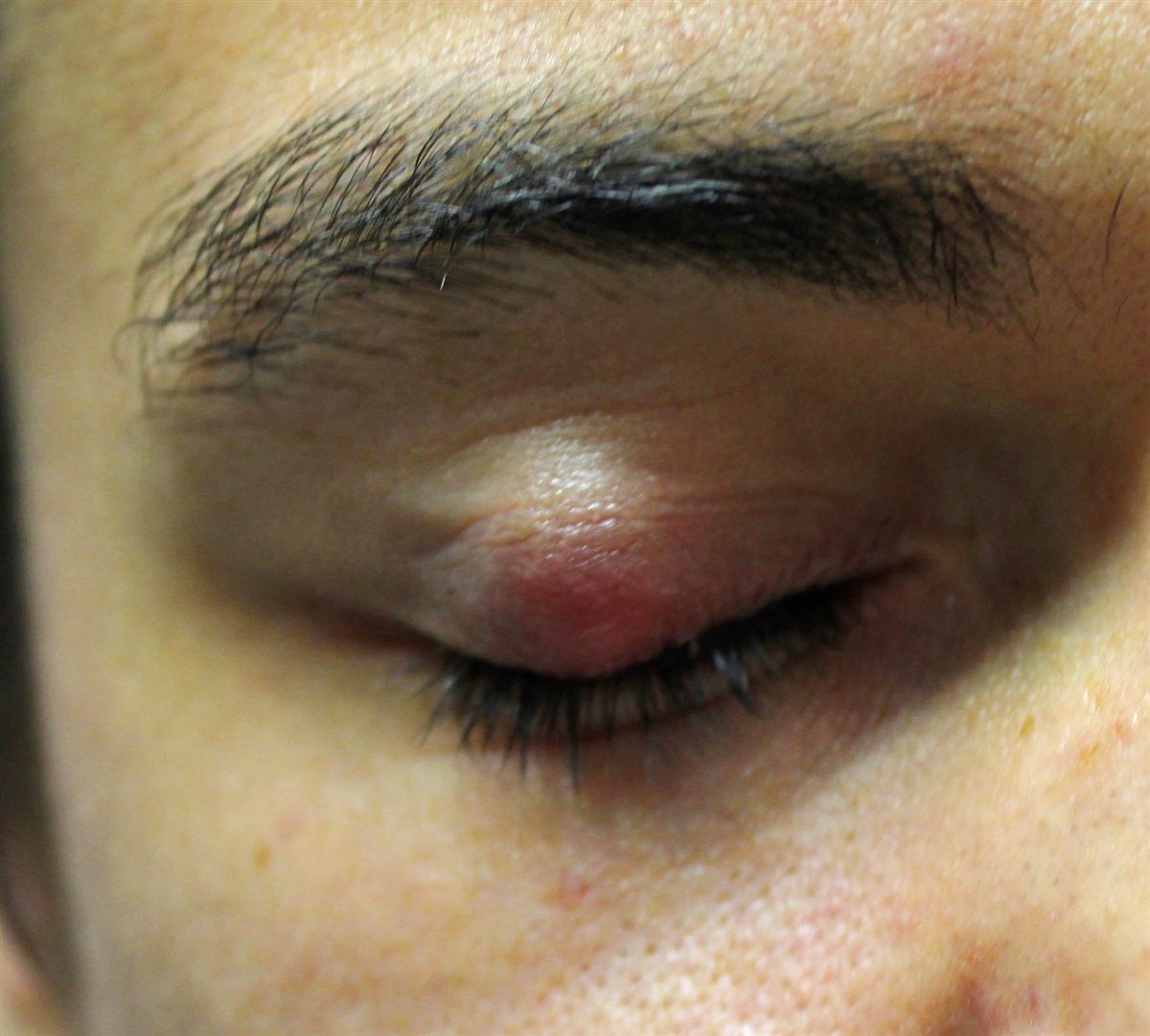
- A firm, round or oval, non-tender nodule palpable within the tarsal plate
- Skin over the lesion is usually mobile and not adherent, distinguishing it from other eyelid masses
- Eversion of the eyelid may reveal a granulomatous or gray-yellow area on the conjunctival surface directly beneath the lesion
- No significant surrounding erythema or warmth unless secondarily inflamed
Any chalazion-like lesion in an older patient that is unusually firm, recurrent at the same site, or associated with lash loss deserves a closer look before assuming it is benign.
Diagnostic Evaluation
Clinical Examination
- Diagnosis is primarily clinical, based on the characteristic painless, firm, well-circumscribed nodule
- Eyelid eversion to inspect the tarsal conjunctiva confirms the diagnosis and localizes the involved gland
When to Biopsy
- Atypical features — recurrence at the same site, lash loss, ulceration, or firm fixation to surrounding tissue — warrant biopsy to exclude sebaceous gland carcinoma, particularly in older adults
- Any chalazion that fails to respond to appropriate treatment or recurs repeatedly at the same location should also be biopsied
Most chalazia need no investigation beyond a careful eyelid exam, but a low threshold for biopsy protects against missing a masquerading malignancy.
Differential Diagnosis
Conditions that can be mistaken for a chalazion include:
- Hordeolum (stye) — an acute, painful, infectious process, usually with surrounding erythema and tenderness
- Sebaceous gland carcinoma — must be excluded in recurrent, atypical, or non-resolving lesions, especially in older patients
- Preseptal cellulitis — diffuse eyelid erythema, warmth, and tenderness rather than a discrete nodule
- Epidermal inclusion cyst — smooth, mobile, and typically not tarsal in origin
- Molluscum contagiosum — umbilicated papules, often multiple, on the lid margin
The distinction that matters most clinically is separating a straightforward chalazion from a masquerading malignancy — missing the latter has far greater consequences than a delayed chalazion treatment.
Management
Conservative Management
Appropriate as first-line therapy for most new, small-to-moderate chalazia:
- Warm compresses applied for 10-15 minutes, several times daily
- Gentle eyelid massage to encourage drainage of the obstructed gland
- Lid hygiene measures to address any underlying blepharitis or meibomian gland dysfunction
Many small chalazia resolve spontaneously with these measures alone over several weeks.
Medical and Injection Therapy
- Topical antibiotic-steroid combinations are sometimes used when there is secondary inflammation, though they do not address the underlying lipogranuloma
- Intralesional corticosteroid injection (e.g., triamcinolone acetonide) is effective for persistent lesions and avoids surgery in many cases
Surgical Management
- Incision and curettage is indicated for chalazia that persist despite conservative and medical treatment
- Performed through a transconjunctival approach in most cases to avoid a visible skin scar
- Adding intraoperative steroid injection has been shown to reduce recurrence compared with incision and curettage alone in patients with recurrent or multiple chalazia
Treatment intensity should escalate only as needed — most chalazia never require surgery.
Prognosis
Overall prognosis is excellent.
- The majority of chalazia resolve with conservative measures or a single intervention
- Recurrence is the main long-term issue, particularly in patients with untreated meibomian gland dysfunction or blepharitis
- Vision-threatening complications are rare and generally limited to induced astigmatism from very large lesions, which resolves once the chalazion is treated
Addressing the underlying lid margin disease is what actually prevents the next chalazion, not just treating the current one.
Would you like to document anterior segment findings with your smartphone?
Document what you see
Two smartphone imaging tools built for everyday clinic use — one for the slit lamp, one for the fundus.
From Choroida — the team behind this siteReferences
- Nemet AY. Risk factors for chalazion diagnosis and subsequent surgical excision. Ophthalmic Epidemiology. 2023.
- Goawalla A, Lee V. A prospective randomized treatment study for primary hordeolum and chalazion. Clinical & Experimental Ophthalmology. 2007.
- Ben Simon GJ, Rosen N, Rosner M, Spierer A. Intralesional triamcinolone acetonide injection versus incision and curettage for primary chalazia. American Journal of Ophthalmology. 2011.
- Chalazion. StatPearls, NCBI Bookshelf. 2024.
- Chalazion Treatment: A Concise Review of Clinical Trials. Seminars in Ophthalmology. 2023.
- Chalazia: A Scoping Review to Identify the Evidence Behind Treatments. Ophthalmic Plastic and Reconstructive Surgery. 2024.
Test yourself
A few questions straight from this article.
-
A chalazion is best described as which process?
A chalazion is chronic, localised lipogranulomatous inflammation caused by obstruction and stasis of secretions in a meibomian gland, or less commonly a Zeis gland. -
Why do antibiotics alone rarely resolve an established chalazion?
A chalazion is a sterile granulomatous reaction to trapped lipid rather than a bacterial infection, so the driving process is inflammatory and antibiotics alone rarely clear it. -
Which step in chalazion formation produces the palpable nodule?
Once the gland orifice blocks, stagnant lipid leaks into the tarsal tissue and provokes a chronic sterile granulomatous reaction; that lipogranuloma is the well-defined nodule felt on examination. -
What chalazion diagnosis rate do large administrative-data studies report in the general population?
Large administrative datasets report a diagnosis rate of about 0.5-1%, almost certainly an undercount because many chalazia resolve without ever being presented or coded. -
Which examination finding is typical of a chalazion?
The nodule is firm, round or oval and non-tender within the tarsal plate, with skin that stays mobile; everting the lid may reveal a gray-yellow granulomatous area directly beneath it. -
Which feature separates a hordeolum (stye) from a chalazion?
A hordeolum is an acute painful infectious process with surrounding erythema and tenderness, whereas a chalazion is a chronic, painless, sterile nodule. -
Which chalazion feature should prompt biopsy to exclude sebaceous gland carcinoma?
Atypical features such as recurrence at the same site, lash loss, ulceration or fixation to surrounding tissue warrant biopsy to exclude sebaceous gland carcinoma, especially in older adults. -
What is the first-line conservative treatment for a new chalazion?
Warm compresses for 10-15 minutes several times daily, gentle massage and lid hygiene are first line; many small chalazia resolve spontaneously with these measures over several weeks. -
Which treatment is effective for a persistent chalazion and often avoids surgery?
Intralesional triamcinolone is effective for persistent lesions and spares many patients surgery; if incision and curettage is needed it is usually transconjunctival, and adding intraoperative steroid reduces recurrence. -
Which vision-related complication can a very large chalazion cause?
Vision-threatening complications are rare and generally limited to astigmatism induced when a large chalazion presses on the globe, which resolves once the lesion is treated.
