Amblyopia vs strabismus is a common source of confusion, because parents often call both conditions “lazy eye.”
Amblyopia is reduced best-corrected vision caused by abnormal visual development in childhood, while strabismus, by contrast, is a misalignment of the visual axes. The two often coexist, yet each needs its own examination and treatment plan.
Amblyopia vs Strabismus: Core Definitions
Amblyopia is a functional deficit, so the eye may look entirely normal at the slit lamp and on fundus examination, although best-corrected acuity remains reduced, usually in one eye. Strabismus, in contrast, is a motor finding that the examiner can see and measure. Therefore, one describes how well the eye sees, while the other describes where it points.
Where the Lay Terms Go Wrong
In everyday speech, “lazy eye” often means an eye that drifts. Clinically, however, lazy eye refers to amblyopia, while crossed or wandering eye refers to strabismus. As a result, a parent may describe a lazy eye when the child has straight eyes and anisometropia, and a visibly turned eye may still see well if the child alternates fixation.
All-fit Slit-Lamp Adapter
Record and share exactly what you see at the slit lamp. One adapter fits any slit lamp or surgical microscope — and any smartphone.
From Choroida — the team behind this siteWhy Amblyopia Develops
Amblyopia arises when one eye sends a blurred or conflicting image during the sensitive period, and the visual cortex then favors the other eye. Common causes include strabismus, anisometropia and deprivation, for example from cataract or ptosis, and high bilateral refractive error can also cause bilateral amblyopia.
Why Strabismus Develops
Strabismus has several mechanisms, for example accommodative esotropia follows uncorrected hyperopia, while infantile esotropia appears early without a clear refractive cause. Cranial nerve palsies, restrictive orbital disease and poor vision in one eye can also misalign the eyes (see sensory strabismus). Therefore, a new deviation always warrants a full dilated fundus examination.
Amblyopia vs Strabismus: How They Interact
The relationship runs in both directions. First, a constant unilateral deviation leads to suppression of the deviating eye, and amblyopia follows. Next, a poorly seeing eye loses its drive for fusion and may drift over time, and alternating strabismus, however, rarely produces dense amblyopia because each eye takes turns fixating.
Examining Amblyopia vs Strabismus
The examination differs because the clinical question differs. For amblyopia, the clinician measures best-corrected visual acuity with age-appropriate optotypes, while for strabismus, the clinician measures alignment with cover testing and prisms. Both require cycloplegic refraction, because uncorrected refractive error drives each condition.
Visual Acuity Testing
In preverbal children, fixation preference testing helps estimate whether vision is equal, while older children read crowded optotypes such as HOTV or Lea symbols. An interocular difference of two lines or more supports amblyopia, but the clinician must first exclude organic disease with a dilated fundus examination.
Alignment Testing in Amblyopia vs Strabismus
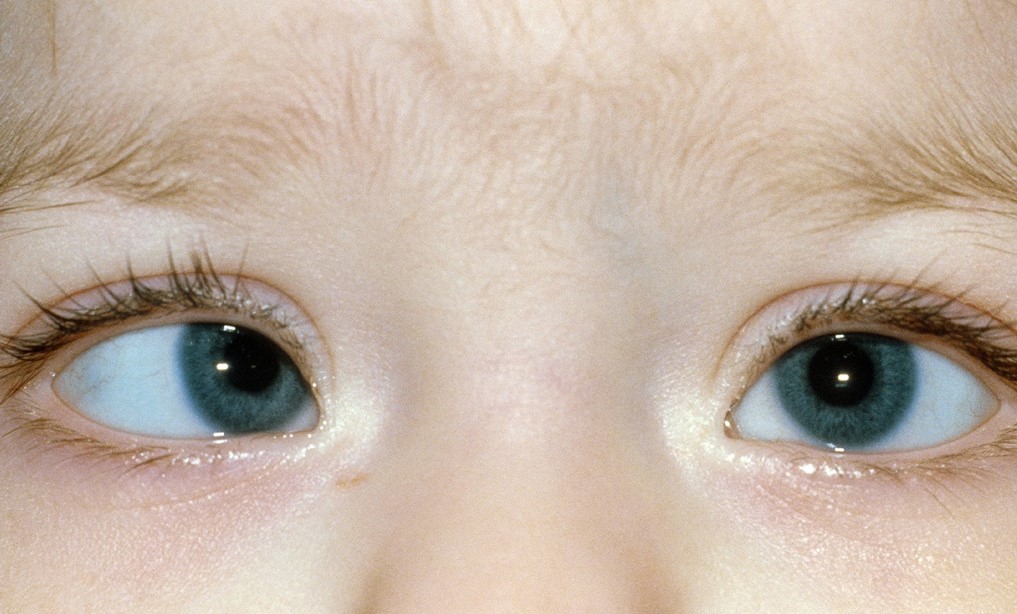
The Hirschberg corneal light reflex gives a quick estimate of the deviation, and then the cover-uncover test separates a tropia from a phoria. Next, the alternate prism cover test quantifies the angle in prism diopters, and finally, versions and ductions reveal incomitance, such as an A or V pattern.
Treating Amblyopia
Treatment starts with full refractive correction, which alone improves many children, and in a PEDIG cohort with anisometropic amblyopia, many children gained two lines or more with spectacles alone. Patching or atropine penalization of the better eye then follows if acuity plateaus, and adherence predicts the outcome more than the prescribed hours (see amblyopia patching therapy).
Treating Strabismus
Glasses may fully correct an accommodative esotropia, while other deviations may need surgery, which repositions extraocular muscles to change their mechanical effect (see strabismus surgery). Botulinum toxin is also an option in selected cases, but surgery straightens the eyes and does not restore lost acuity.
Treatment Order in Amblyopia vs Strabismus
When both conditions coexist, most clinicians treat amblyopia first, because equal or near-equal vision tends to improve the stability of alignment after surgery. Exceptions exist, for example a large infantile deviation where early alignment takes priority.
Age and Prognosis
Amblyopia responds best in young children, while plasticity declines with age, although PEDIG data also showed a response in some older children, especially those never treated before. Strabismus surgery, in contrast, can align the eyes at any age, but adults may develop diplopia, so preoperative assessment of fusion matters.
Counseling Parents on Amblyopia vs Strabismus
Explain that straight eyes do not guarantee normal vision and that surgery for alignment will not replace glasses or patching. Parents should know that amblyopia can recur after treatment stops, so schedule follow-up visits through the visual developmental years.
Pitfalls to Avoid
- Do not call every turned eye a lazy eye
- Never skip cycloplegic refraction in a child with either condition
- Do not attribute reduced vision to amblyopia without a dilated fundus exam
- Avoid promising that surgery will improve visual acuity


Document what you see
Two smartphone imaging tools built for everyday clinic use — one for the slit lamp, one for the fundus.
From Choroida — the team behind this siteReferences
- Wallace DK, Repka MX, Lee KA, et al. Amblyopia Preferred Practice Pattern. Ophthalmology. 2018;125:P105-P142.
- Pediatric Eye Disease Investigator Group. A randomized trial of atropine vs patching for treatment of moderate amblyopia in children. Arch Ophthalmol. 2002;120:268-278.
- Cotter SA, Pediatric Eye Disease Investigator Group, Edwards AR, et al. Treatment of anisometropic amblyopia in children with refractive correction. Ophthalmology. 2006;113:895-903.
- Scheiman MM, Hertle RW, Beck RW, et al. Randomized trial of treatment of amblyopia in children aged 7 to 17 years. Arch Ophthalmol. 2005;123:437-447.

Writes and reviews the clinical articles on Educate. Every post is checked against peer-reviewed sources before it goes live.