RP inheritance follows several Mendelian patterns, and each pattern sets a different risk for relatives.
Dozens of genes can cause nonsyndromic retinitis pigmentosa, so a careful pedigree is still the first genetic test in clinic.
Why RP Inheritance Shapes the Visit
Patients with RP usually ask about their family as well as their own vision, and the answer depends on the inheritance pattern, the gene and sometimes the specific variant. As a result, the clinical diagnosis (see retinitis pigmentosa) is only the first step.
Taking a Three-Generation Pedigree
First, draw at least three generations and mark every relative with night blindness. Ask about consanguinity directly, because it raises the likelihood of recessive disease. Then ask about deafness, obesity, extra digits and kidney disease, which suggest syndromic forms.
Fundus Explorer Pro
Photograph the retinal findings described here with the phone already in your pocket — 22 D optics and built-in illumination in one handheld unit.
From Choroida — the team behind this siteAutosomal Dominant RP Inheritance
In dominant disease, one altered gene copy is enough to cause degeneration, and affected relatives usually appear in consecutive generations and in both sexes. Male-to-male transmission excludes X-linked inheritance, and RHO is the classic dominant gene, while PRPF31, RP1 and PRPH2 are also frequent.
Family Risk in Dominant Disease
Each child of an affected parent has a 50% chance of inheriting the variant, but severity can vary widely within one family. For example, PRPF31 variants show incomplete penetrance, so the disease may seem to skip a generation and a healthy parent may still carry the variant.
Autosomal Recessive RP Inheritance
Recessive disease needs two altered copies, one from each parent, and the parents are usually healthy carriers with normal fundi. As a result, the patient is often the only affected person in the family, and USH2A is a frequent recessive gene that also causes Usher syndrome type 2.
Sibling and Offspring Risk in Recessive Disease
Each full sibling of an affected patient has a 25% risk of disease, and an unaffected sibling has a two in three chance of being a carrier. Children of an affected person are obligate carriers with a low risk of disease. However, that risk rises with consanguineous partners or shared founder variants.
X-Linked RP Inheritance
X-linked disease mainly affects males and tends to be the most severe pattern. Boys often report night blindness in childhood, and many are myopic. RPGR accounts for most X-linked cases, while RP2 explains a smaller share.
Carrier Mothers and Daughters
A carrier woman passes the variant to half of her sons, who will be affected, and half of her daughters will be carriers. Meanwhile, every daughter of an affected man is a carrier, and none of his sons are affected.
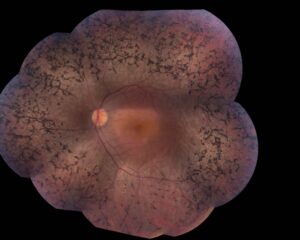
Carriers may show a tapetal-like reflex or patchy peripheral pigment (see RPGR carrier signs). Some carriers develop symptomatic disease, probably because of skewed X-inactivation.
Simplex RP Inheritance
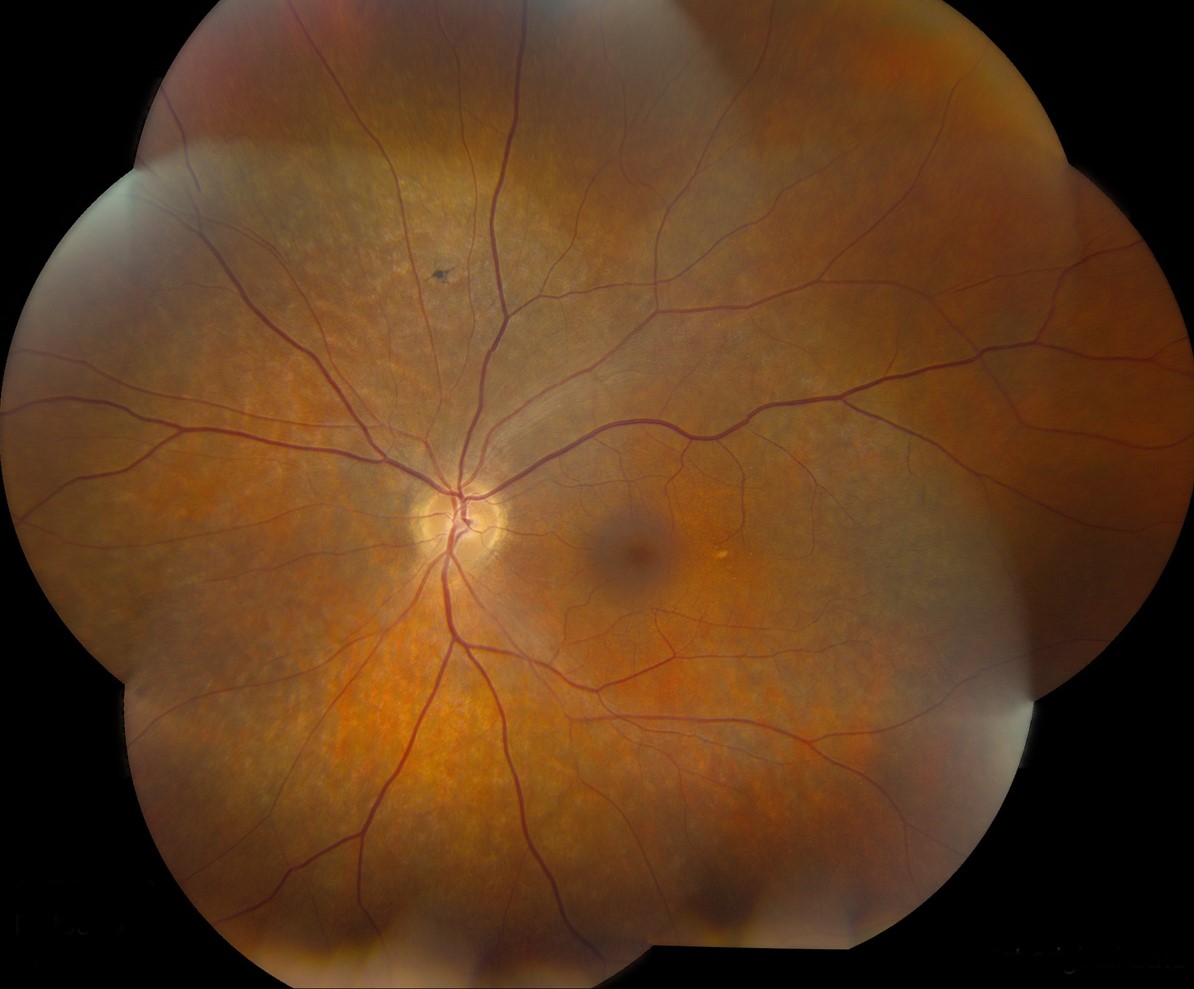
A simplex patient has no known affected relatives, and this presentation is common. Many simplex cases prove recessive, although de novo dominant variants also occur. An affected boy may have X-linked disease from an unrecognized carrier mother, so examine the mother’s fundus when a male proband has no family history.
Ruling Out Phenocopies
Before assigning any pattern, confirm that the degeneration is genetic. Syphilis, autoimmune retinopathy, old trauma and thioridazine toxicity can mimic RP, and unilateral or strongly asymmetric disease also suggests an acquired cause.
Rarer Patterns
Digenic inheritance occurs with combined PRPH2 and ROM1 variants, and mitochondrial disease can cause pigmentary retinopathy with maternal transmission. In addition, syndromic forms such as Usher and Bardet-Biedl syndromes are usually recessive.
Genetic Testing for RP Inheritance
Panel or exome sequencing now identifies the cause in many patients, but a negative result does not exclude genetic disease. Variants of uncertain significance should not drive family decisions alone, while segregation testing in relatives can clarify which variants matter (see genetic testing guide).
How Testing Refines the Pedigree
A molecular result can overturn the assumed pattern. For example, a man with apparent recessive disease may carry an RPGR variant. Similarly, a de novo dominant variant raises the risk for that patient’s children to 50%.
Counseling Conversations About RP Inheritance
Use clear numbers, and explain that each pregnancy carries the same independent risk. Avoid blame, because carriers have no control over their genes, and refer families to a genetic counselor for prenatal or preimplantation options.
Why RP Inheritance Affects Treatment Access
Gene-specific therapy requires a confirmed molecular diagnosis, and voretigene neparvovec treats biallelic RPE65 retinopathy while RPGR trials are ongoing. Therefore, testing can open access to trials and approved therapy, although most RP genes still lack an approved treatment.
Pitfalls to Avoid
- Do not label a patient simplex before examining available parents
- Never call disease X-linked when a father passes it to a son
- Do not overlook mild disease in carrier women
- Avoid counseling from a variant of uncertain significance alone
- Check hearing and systemic signs, because syndromic RP changes counseling


Document what you see
Two smartphone imaging tools built for everyday clinic use — one for the slit lamp, one for the fundus.
From Choroida — the team behind this siteReferences
- Hartong DT, Berson EL, Dryja TP. Retinitis pigmentosa. Lancet. 2006;368:1795-1809.
- Verbakel SK, van Huet RAC, Boon CJF, et al. Non-syndromic retinitis pigmentosa. Prog Retin Eye Res. 2018;66:157-186.
- Stone EM, Aldave AJ, Drack AV, et al. Recommendations for genetic testing of inherited eye diseases: report of the American Academy of Ophthalmology task force on genetic testing. Ophthalmology. 2012;119:2408-2410.
- Russell S, Bennett J, Wellman JA, et al. Efficacy and safety of voretigene neparvovec (AAV2-hRPE65v2) in patients with RPE65-mediated inherited retinal dystrophy: a randomised, controlled, open-label, phase 3 trial. Lancet. 2017;390:849-860.
Test yourself
A few questions straight from this article.
-
In a retinitis pigmentosa pedigree, which observation excludes X-linked inheritance?
In dominant RP affected relatives appear in consecutive generations and both sexes, and male-to-male transmission excludes X-linked inheritance. -
Which gene is the classic cause of autosomal dominant retinitis pigmentosa?
RHO is the classic dominant RP gene, with PRPF31, RP1 and PRPH2 also frequent; USH2A is recessive and RPGR X-linked. -
Why may autosomal dominant retinitis pigmentosa from PRPF31 variants seem to skip a generation?
PRPF31 variants show incomplete penetrance, so disease may seem to skip a generation and a healthy parent may still carry the variant. -
What is the risk of disease for each full sibling of a patient with autosomal recessive retinitis pigmentosa?
Each full sibling has a 25% risk of disease, and an unaffected sibling has a two in three chance of being a carrier. -
Which frequent recessive retinitis pigmentosa gene also causes Usher syndrome type 2?
Recessive RP needs two altered copies from usually healthy carrier parents; USH2A is a frequent recessive gene that also causes Usher syndrome type 2. -
Which gene accounts for most cases of X-linked retinitis pigmentosa?
X-linked RP mainly affects males and tends to be the most severe pattern; RPGR accounts for most cases, while RP2 explains a smaller share. -
A man has X-linked retinitis pigmentosa. What is the status of his children?
Every daughter of an affected man is a carrier and none of his sons are affected, whereas a carrier woman passes the variant to half her sons and half her daughters. -
A boy with retinitis pigmentosa has no family history. Which examination can reveal X-linked disease?
An affected boy may have X-linked disease from an unrecognized carrier mother, who may show a tapetal-like reflex or patchy peripheral pigment, so examine her fundus. -
Which feature suggests an acquired phenocopy rather than genetic retinitis pigmentosa?
Syphilis, autoimmune retinopathy, old trauma and thioridazine toxicity can mimic RP, and unilateral or strongly asymmetric disease suggests an acquired cause. -
Voretigene neparvovec is approved for retinal dystrophy caused by which genotype?
Gene-specific therapy requires a confirmed molecular diagnosis; voretigene neparvovec treats biallelic RPE65 retinopathy, while RPGR trials are ongoing.

Writes and reviews the clinical articles on Educate. Every post is checked against peer-reviewed sources before it goes live.