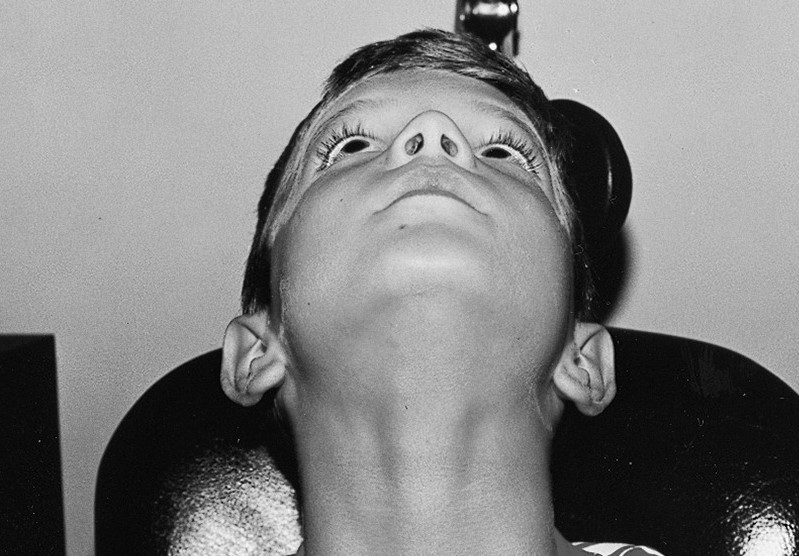
Abnormal head posture is a sustained turn, tilt or chin position that a patient adopts to see better or avoid diplopia.
Clinicians also call it ocular torticollis when the cause lies in the eye, and it is common in children, where parents often accept it as a habit.
What Abnormal Head Posture Means
The posture is compensatory, because it places the eyes where fusion is easiest or where nystagmus is quietest. As a result, the patient usually sees well in the adopted position and worse when the head is straightened.
Three Components of Posture
Every posture combines up to three elements.
- Face turn to the right or left
- Head tilt toward either shoulder
- Chin elevation or depression
Describe each one separately, because each points to a different mechanism.
All-fit Slit-Lamp Adapter
Record and share exactly what you see at the slit lamp. One adapter fits any slit lamp or surgical microscope — and any smartphone.
From Choroida — the team behind this siteWhy the Head Moves
In paralytic strabismus, the face usually turns toward the field of action of the weak muscle, and therefore the eyes look away from that field, where the deviation is smallest. By contrast, in nystagmus the head moves so the eyes rest at the null zone.
Infantile Nystagmus and Abnormal Head Posture
Many children with infantile nystagmus have an eccentric null zone. The face then turns opposite to that zone, so the eyes sit in it during distance viewing.
Vertical null zones also produce chin-up or chin-down positions, and for classification of the nystagmus itself, see infantile nystagmus syndrome.
Latent Nystagmus
Latent nystagmus dampens when the fixing eye is in adduction, and therefore the child turns the face toward the side of the fixing eye. The posture may switch sides when fixation alternates.
Fourth Nerve Palsy and Head Tilt
The classic picture is a head tilt toward the opposite shoulder, and a chin-down position and a face turn to the opposite side often accompany it.
Then the Parks-Bielschowsky three-step test confirms the paretic superior oblique, while old photographs that show the tilt in early childhood suggest a congenital palsy.
Sixth Nerve Palsy and Face Turn
A sixth nerve palsy produces a face turn toward the affected side, which keeps the eyes in gaze away from the weak lateral rectus. New palsies in adults also need a careful workup (see sixth nerve palsy).
Third Nerve Palsy
Complete palsy with ptosis often needs no posture, because the closed lid removes diplopia. However, partial palsies may cause a face turn or chin elevation, while pupil involvement and acute onset demand urgent imaging.
Brown Syndrome and Abnormal Head Posture
Restricted elevation in adduction often leads to chin elevation, and many children also turn the face away from the affected side. Some adopt a head tilt toward the involved eye as well.
Duane Syndrome and Abnormal Head Posture
In esotropic Duane syndrome, the face usually turns toward the affected side, while exotropic Duane, however, usually produces a turn away from it. Look for globe retraction and fissure narrowing on adduction (see Duane retraction syndrome).
Patterns, Ptosis and Refraction
A and V patterns can drive chin-up or chin-down positions that preserve fusion, and bilateral ptosis also forces chin elevation to clear the visual axis. In addition, uncorrected oblique astigmatism and homonymous hemianopia may cause tilts or turns.
Nonocular Causes of Abnormal Head Posture
Congenital muscular torticollis, cervical spine anomalies and hearing loss can mimic ocular torticollis, and a tight sternocleidomastoid band favors a muscular cause. Moreover, a posture that persists during sleep suggests a nonocular origin.
Exam Checklist for Abnormal Head Posture
- First, observe the posture during distance fixation and near tasks
- Then record turn, tilt and chin position separately
- Also review old photographs to date the onset
- Next, measure visual acuity in the habitual and straight positions
- Perform cover tests in the nine gaze positions
- Check ductions, versions and the head tilt test
- Look for manifest nystagmus, latent nystagmus and a null zone
- Assess ptosis, lid fissures and globe retraction
- Patch one eye and watch whether the posture resolves
- Finally, palpate the neck and test neck range of motion
Measuring Abnormal Head Posture
Measure each component in degrees with a goniometer or torticollometer, and repeat the measurement at each visit, because posture varies with fatigue and task, while photographs also give a simple record for comparison.
Treatment Options
Treat the cause first and correct significant refractive error, and prisms can shift the null zone or relieve small deviations. For nystagmus, Kestenbaum-Anderson surgery moves the null zone toward primary position.
For palsies and restrictions, targeted muscle surgery reduces the deviation in the avoided field. However, surgery may not abolish the posture fully, and residual turns are common.
Counseling Families
Explain that the posture helps the child see clearly or fuse, and therefore parents should avoid forcing the head straight, because this may cost vision or fusion. Long-standing torticollis can cause facial asymmetry and neck strain, so early referral helps.
Pitfalls to Avoid
- Do not refer every head tilt to physiotherapy before an eye examination
- Never assume that a straight head excludes strabismus
- Do not miss a fourth nerve palsy hidden by good fusion
- Remember that patching does not abolish a nystagmus posture
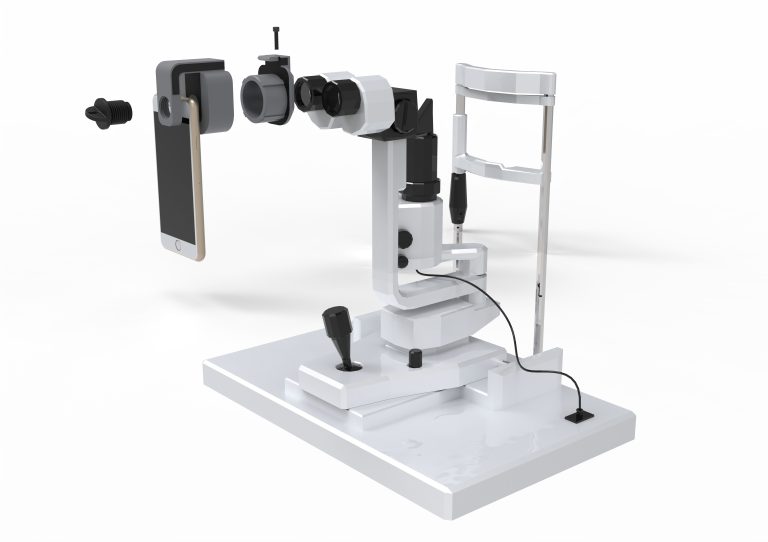
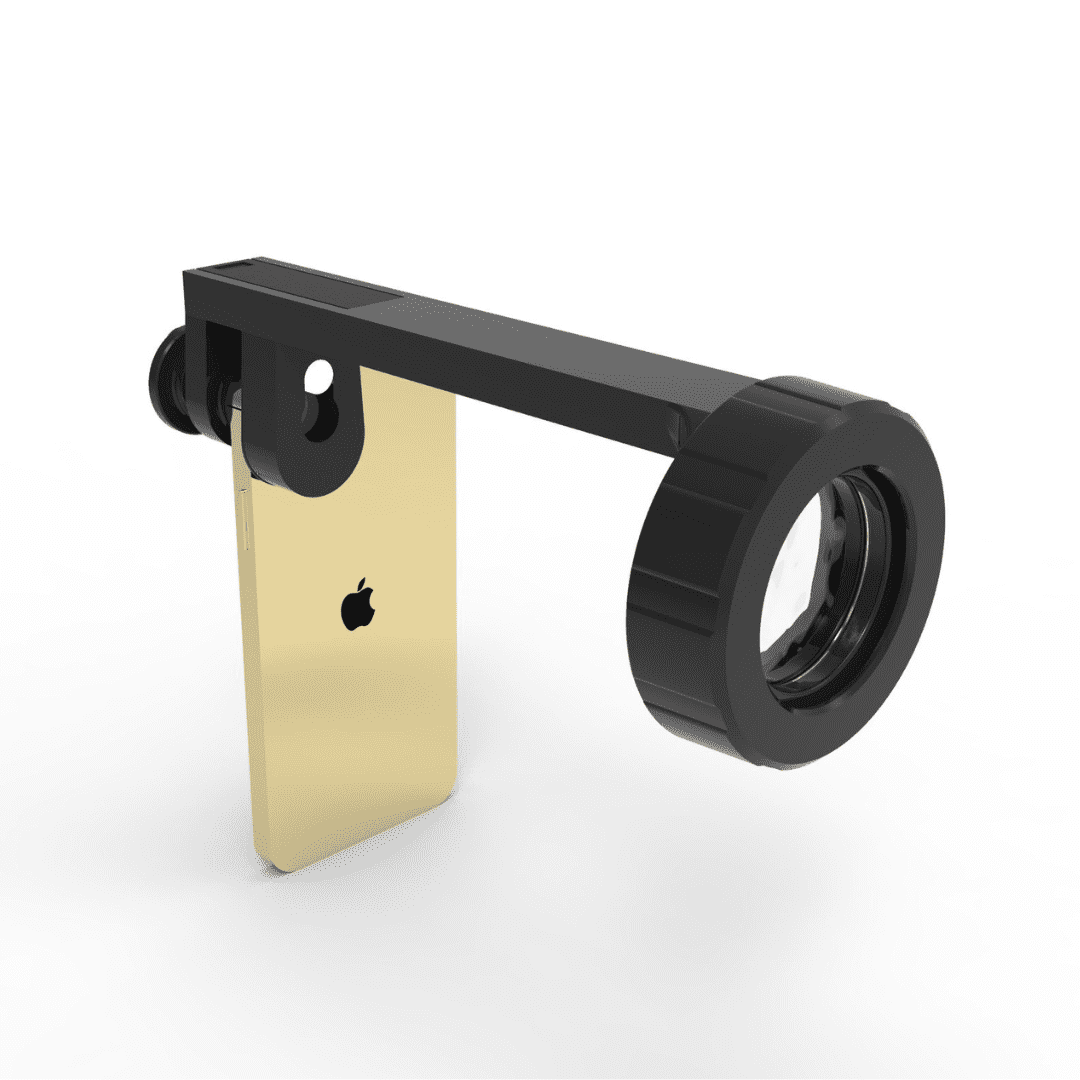
Document what you see
Two smartphone imaging tools built for everyday clinic use — one for the slit lamp, one for the fundus.
From Choroida — the team behind this siteReferences
- Kushner BJ. Ocular causes of abnormal head postures. Ophthalmology. 1979;86:2115-2125.
- Nucci P, Kushner BJ, Serafino M, Orzalesi N. A multi-disciplinary study of the ocular, orthopedic, and neurologic causes of abnormal head postures in children. Am J Ophthalmol. 2005;140:65-68.
- Rubin SE, Wagner RS. Ocular torticollis. Surv Ophthalmol. 1986;30:366-376.
- American Academy of Ophthalmology. Basic and Clinical Science Course, Section 6: Pediatric Ophthalmology and Strabismus. San Francisco: AAO; 2024.
Test yourself
A few questions straight from this article.
-
What is abnormal head posture (ocular torticollis) when the cause lies in the eye?
The article defines abnormal head posture as a sustained turn, tilt or chin position that a patient adopts to see better or avoid diplopia. It is called ocular torticollis when the cause lies in the eye. -
In infantile nystagmus with abnormal head posture, why does the child turn the face?
Many children with infantile nystagmus have an eccentric null zone, and the face turns so the eyes sit in it. Vertical null zones similarly produce chin-up or chin-down positions. -
In latent nystagmus, toward which side does the child turn the face to dampen the nystagmus?
Latent nystagmus dampens when the fixing eye is in adduction, so the face turns toward the fixing eye. The posture may switch sides when fixation alternates. -
What is the classic head posture in fourth nerve palsy?
The classic picture of fourth nerve palsy is a head tilt toward the opposite shoulder. A chin-down position and a face turn to the opposite side often accompany it. -
Which test confirms a paretic superior oblique in fourth nerve palsy with a head tilt?
The Parks-Bielschowsky three-step test confirms the paretic superior oblique. Old photographs showing the tilt in early childhood suggest a congenital palsy. -
What face turn does sixth nerve palsy produce, and why?
A sixth nerve palsy produces a face turn toward the affected side. This keeps the eyes looking away from the field of the weak lateral rectus, where the deviation is smallest. -
Why does a complete third nerve palsy with ptosis often need no head posture?
In complete third nerve palsy with ptosis the closed lid removes diplopia, so no posture is needed. Partial palsies may cause a face turn or chin elevation, and pupil involvement with acute onset demands urgent imaging. -
In Duane syndrome, how does the face turn differ between the esotropic and exotropic types?
In esotropic Duane syndrome the face usually turns toward the affected side, while exotropic Duane usually produces a turn away from it. Globe retraction and fissure narrowing on adduction are the clues. -
Which finding suggests a nonocular cause of abnormal head posture rather than ocular torticollis?
A posture that persists during sleep suggests a nonocular origin, as does a tight sternocleidomastoid band, which favors a muscular cause. Cervical spine anomalies and hearing loss can also mimic ocular torticollis. -
What does Kestenbaum-Anderson surgery do for abnormal head posture in nystagmus?
For nystagmus, Kestenbaum-Anderson surgery moves the null zone toward primary position. Surgery may not abolish the posture fully, and residual turns are common.

Writes and reviews the clinical articles on Educate. Every post is checked against peer-reviewed sources before it goes live.