Stye vs chalazion is a question patients ask almost daily.
Both appear as a lump on the eyelid, but they differ in cause and course.
Telling them apart guides the right treatment.
What Is a Stye
A stye, or hordeolum, is an acute infection of an eyelid gland.
Staphylococcus aureus is the usual cause (see hordeolum and stye).
External styes involve the lash follicle glands.
Internal styes involve the meibomian glands.
What Is a Chalazion
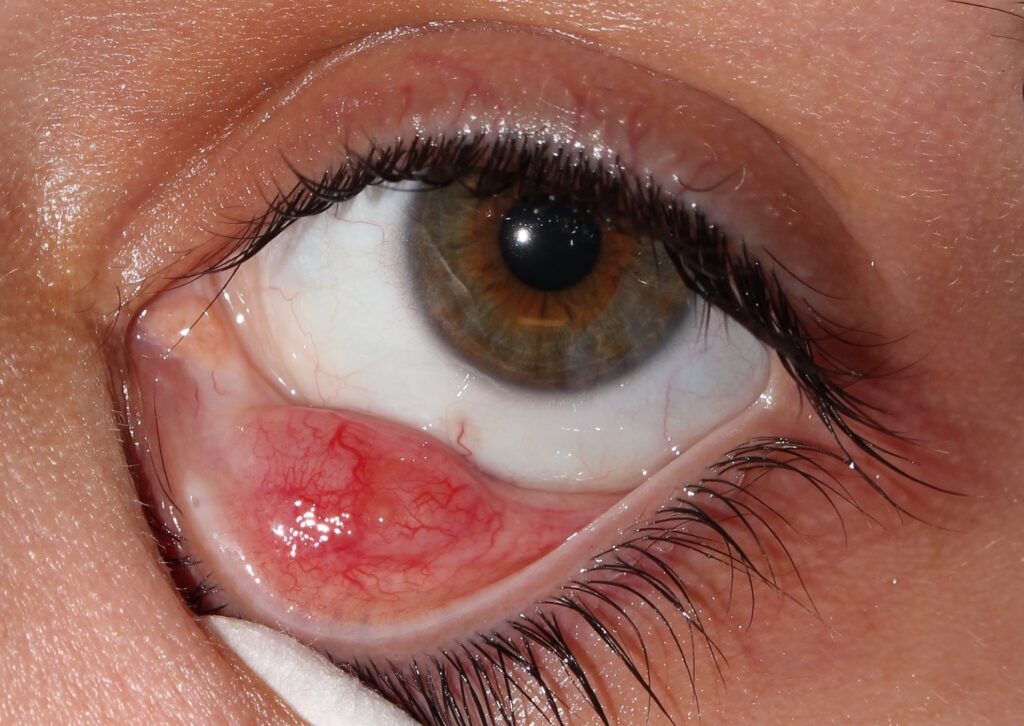
A chalazion is a chronic granulomatous inflammation of a blocked meibomian gland.
It follows leakage of oil into the surrounding tissue.
It is not an infection (see chalazion).
Therefore, antibiotics rarely help.
All-fit Slit-Lamp Adapter
Record and share exactly what you see at the slit lamp. One adapter fits any slit lamp or surgical microscope — and any smartphone.
From Choroida — the team behind this siteStye vs Chalazion by Pain
A stye is tender, red and painful from the start.
A chalazion is usually painless after the first few days.
Pain therefore points toward a stye.
However, an acute chalazion can be tender.
Stye vs Chalazion by Location
External styes sit at the lid margin near a lash.
Chalazia sit deeper in the tarsal plate, away from the margin.
Also, a chalazion may point toward the conjunctival side.
So evert the lid to see the lesion.
Stye vs Chalazion by Time Course
A stye develops over a few days and often drains within a week.
A chalazion grows slowly over weeks.
It may persist for months without treatment.
Therefore, ask how long the lump has been present.
Appearance on Examination
A stye shows a pustule or yellow head with surrounding redness.
A chalazion appears as a firm, round, non-tender nodule.
The overlying skin is usually normal.
Also, check for loss of lashes.
Initial Treatment
Both conditions respond to warm compresses.
Apply them for ten minutes, three to four times daily.
Gentle massage after the compress helps drainage.
Also, keep the eyelid clean (see blepharitis).
When Antibiotics Help
Antibiotics suit a stye with spreading cellulitis.
Topical drops do little for a deep internal stye.
Also, they do not treat a chalazion.
Therefore, avoid reflex prescribing.
Options for a Persistent Chalazion
Steroid injection can shrink a persistent lesion.
Incision and curettage is another choice.
However, the choice depends on size and patient preference.
Also, steroid can depigment the skin in dark-skinned patients.
Recurrence and Underlying Disease
Recurrent lesions suggest blepharitis, rosacea or meibomian gland dysfunction.
Treat these causes to prevent new lumps.
Also consider biopsy for a lesion that recurs at the same site.
Sebaceous carcinoma can mimic a chalazion.
When to Refer
Refer lesions with loss of lashes, distortion or bleeding.
Refer suspected orbital spread with fever or proptosis.
Also refer children with a lesion that blocks the visual axis.
Therefore, give clear return advice.
Pitfalls to Avoid
- Do not prescribe antibiotics for a simple chalazion
- Never squeeze a stye
- Avoid skipping biopsy in recurrent lesions
- Do not forget to examine the lash line
Stye vs Chalazion in Children
Children get both lesions, often with blepharitis.
Parents should apply warm compresses with care.
Surgery may need sedation in young children.
Therefore, choose conservative care first.
Stye vs Chalazion in Adults
Adults with rosacea and diabetes get both more often.
Recurrent lesions should prompt a metabolic check.
Check glucose in unexplained recurrent styes.
Also screen for rosacea.
Warm Compress Technique
Use a clean cloth soaked in warm water.
Hold it on the closed lid for ten minutes.
Repeat three to four times daily.
Never use a compress that burns the skin.
What Not to Do
Do not squeeze or pop a stye.
Squeezing can spread infection into the orbit.
Avoid wearing eye make-up during an active lesion.
Also avoid contact lenses until it settles.
Pathology and Biopsy
Send tissue from recurrent or atypical lesions for pathology.
Sebaceous carcinoma can mimic chronic chalazion.
It is rare but dangerous.
So a high index of suspicion helps.
Recurrence After Treatment
Recurrence is common without lid care.
Combine treatment of the lesion with eyelid hygiene.
Also treat the underlying meibomian gland disease.
Therefore, follow the patient until the lids are quiet.
Stye vs Chalazion: Patient Questions
Patients ask whether the lump will go away on its own.
Many styes drain within a week, and some chalazia fade over weeks to months.
They also ask whether the lump is contagious.
A stye is not spread by casual contact.
Practical Summary
If the lump is painful and recent, think of a stye.
When it is painless and slow, think of a chalazion.
However, remember that both respond to warm compresses.
Because recurrence is common, advise lid care.
Therefore, review the patient if the lump persists for more than a month.
Finally, biopsy any lesion that looks atypical.


Document what you see
Two smartphone imaging tools built for everyday clinic use — one for the slit lamp, one for the fundus.
From Choroida — the team behind this siteReferences
- Lindsley K, Nichols JJ, Dickersin K. Non-surgical interventions for acute internal hordeolum. Cochrane Database Syst Rev. 2017;1:CD007742.
- Wu AY, Gervasio KA, Gergoudis KN, et al. Conservative therapy for chalazia: is it really effective? Acta Ophthalmol. 2018;96:e514-e517.
- Carlisle RT, Digiovanni J. Differential diagnosis of the swollen red eyelid. Am Fam Physician. 2015;92:106-112.
- Shields JA, Shields CL. Eyelid, Conjunctival, and Orbital Tumors: An Atlas and Textbook. 3rd ed. Wolters Kluwer; 2016.
Test yourself
A few questions straight from this article.
-
Which organism is the usual cause of a stye (hordeolum)?
A stye is an acute infection of an eyelid gland, usually caused by Staphylococcus aureus. -
How is a chalazion defined?
A chalazion follows leakage of oil from a blocked meibomian gland into surrounding tissue; it is not an infection, so antibiotics rarely help. -
An external stye involves which eyelid glands?
External styes involve the lash follicle glands and sit at the lid margin near a lash; internal styes involve the meibomian glands. -
A tender, red eyelid lump appeared two days ago at the lash margin with a yellow head; what is the likely diagnosis?
A stye is tender and painful from the start, develops over days and shows a pustule or yellow head, whereas a chalazion is a slow, painless, firm nodule. -
Where is a chalazion typically located, compared with an external stye?
Chalazia sit deeper in the tarsal plate and may point toward the conjunctival side, so the lid should be everted to see the lesion. -
When are antibiotics appropriate for a stye?
Antibiotics suit a stye with spreading cellulitis; topical drops do little for a deep internal stye and do not treat a chalazion. -
Which side effect of steroid injection for a persistent chalazion is a concern in dark-skinned patients?
Steroid injection or incision and curettage can treat a persistent chalazion, but steroid can depigment the skin in dark-skinned patients. -
Which malignancy can mimic a chalazion that recurs at the same site?
Sebaceous carcinoma is rare but dangerous and can mimic a chronic chalazion, so recurrent or atypical lesions should be biopsied. -
Why should patients never squeeze or pop a stye?
Squeezing a stye can spread infection into the orbit; suspected orbital spread with fever or proptosis needs referral. -
Unexplained recurrent styes in an adult should prompt which systemic check?
Adults with diabetes and rosacea get these lesions more often, so recurrent lesions prompt a metabolic check, including glucose for unexplained recurrent styes.

Writes and reviews the clinical articles on Educate. Every post is checked against peer-reviewed sources before it goes live.