Eyelid hygiene is the base of treatment for blepharitis and meibomian gland dysfunction.
Patients often receive vague advice, so they stop early.
A clear routine improves adherence and results.
Why Eyelid Hygiene Works
Debris, bacteria and thick meibum collect along the lash line.
Removing them calms the lid margin and frees blocked glands.
As a result, the tear film becomes more stable.
Also, regular care slows relapse.
Who Needs Eyelid Hygiene
Patients with blepharitis, chalazia and evaporative dry eye benefit most (see blepharitis).
Contact lens wearers with lid disease also benefit.
Patients before eye surgery benefit as well.
Therefore, teach it often.
All-fit Slit-Lamp Adapter
Record and share exactly what you see at the slit lamp. One adapter fits any slit lamp or surgical microscope — and any smartphone.
From Choroida — the team behind this siteStep One of Eyelid Hygiene: Warm Compress
Heat softens the thick oil in the meibomian glands.
Use a clean cloth or a microwavable mask warmed to a comfortable level.
Hold it on closed lids for five to ten minutes.
Avoid heat that burns the thin lid skin.
Step Two: Gentle Lid Massage
After the compress, massage the lid toward the lash line.
Use light pressure with a clean finger.
Move from the base of the lid to the margin.
Patients should feel no pain.
Step Three: Lid Scrubs
Clean the lash base with a diluted baby shampoo or a commercial lid wipe.
Use a cotton bud or soft pad.
Also remove crusts along the lashes.
Then rinse the eyelids with clean water.
Tea Tree Oil and Demodex
Tea tree oil can reduce Demodex mites on the lashes.
However, high concentrations irritate the eye.
Therefore, use products formulated for lid care.
See Demodex blepharitis.
How Often Should Eyelid Hygiene Be Done
Start with a daily routine for several weeks.
Then reduce to a few times a week once symptoms settle.
Stopping completely often brings symptoms back.
So frame it as a lifelong habit, like brushing teeth.
Eyelid Hygiene With Makeup
Remove eye makeup every night.
Avoid products inside the lash line.
Replace mascara and liner every three months.
Also avoid sharing them.
Eyelid Hygiene for Children
Children with chalazia and blepharitis need a gentle routine.
A parent should supervise the compress and scrub.
Keep sessions short and use a warm, not hot, cloth.
Then reward consistency with a simple chart.
Mistakes Patients Make
Many patients use water that is too hot.
Some scrub the eye itself, not the lid margin.
Others stop after a week when relief is partial.
Therefore, review the technique at each visit.
Follow-Up for Eyelid Hygiene
Review adherence and symptoms after four weeks.
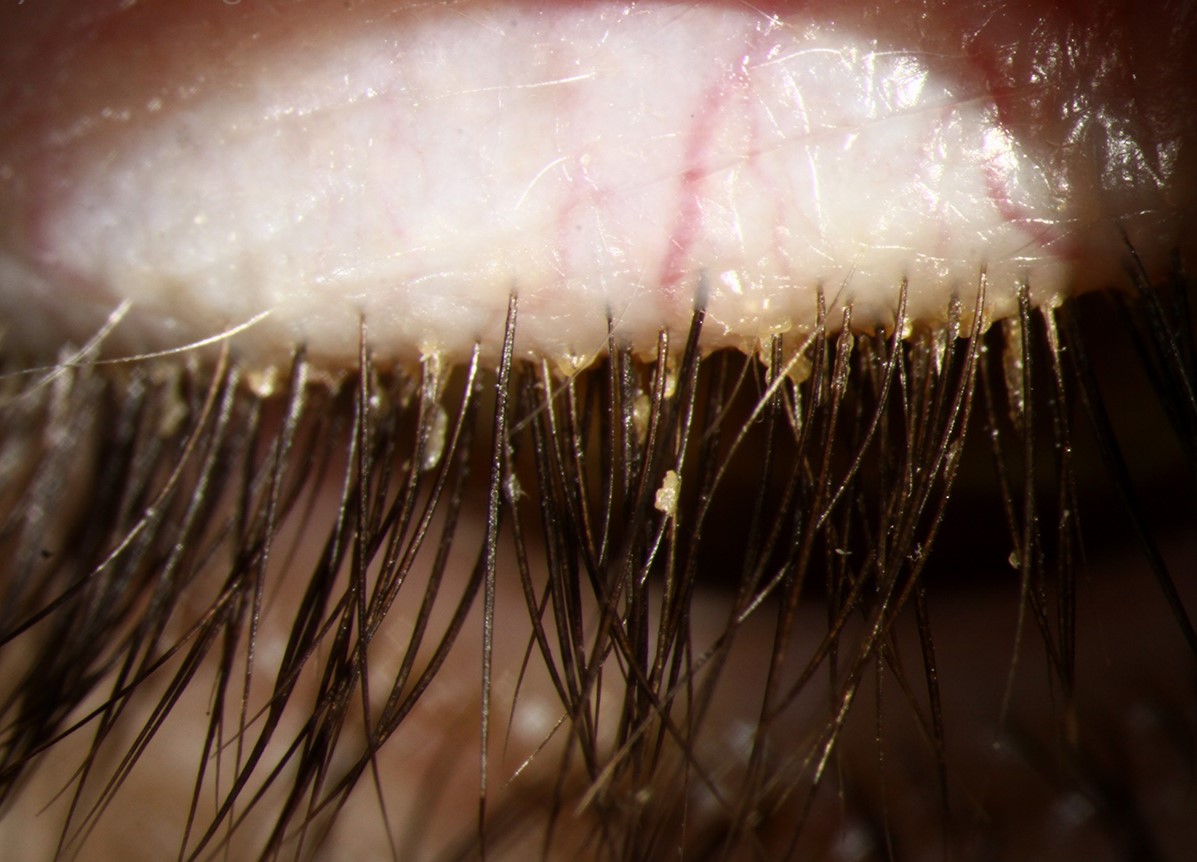
Examine the lid margin for debris and expressible oil.
If response is poor, consider other treatment (see meibomian gland dysfunction).
Also check for rosacea and allergy.
Pitfalls to Avoid
- Do not use very hot compresses
- Never scrub the cornea or conjunctiva
- Avoid undiluted tea tree oil near the eye
- Do not stop the routine as soon as symptoms improve
Eyelid Hygiene and Contact Lenses
Lens wearers should clean the lids before insertion.
Debris on the lash line transfers to the lens surface.
Also take lenses out during a flare.
Therefore, adjust the routine when symptoms rise.
Eyelid Hygiene After Eye Surgery
Clean lids reduce the bacterial load before surgery.
Surgeons often ask patients to start two weeks earlier.
After surgery, follow the instructions of the surgeon.
Also avoid scrubbing near fresh wounds.
Choosing Products for Eyelid Hygiene
Commercial lid wipes and foams are convenient.
Diluted baby shampoo is cheaper but may sting.
Avoid products with strong fragrances.
So let the patient try one that they will actually use.
Eyelid Hygiene and Skin Conditions
Rosacea and seborrheic dermatitis often coexist with lid disease.
Treat the skin as well as the lid.
Dermatology referral helps resistant cases.
Therefore, ask about facial redness and flaking.
Monitoring Eyelid Hygiene Results
Look for fewer crusts and clearer meibum.
Patients usually notice less burning within weeks.
Compare lid photographs over time.
Also record any new lesions.
Eyelid Hygiene Does Not Cure Everything
Severe disease may need antibiotics or anti-inflammatory drugs.
Hygiene remains the base even then.
Patients must understand that it complements, not replaces, medicine.
So continue it throughout treatment.
Eyelid Hygiene for Older Adults
Older adults may find lid scrubs difficult because of tremor or poor vision.
A pre-moistened wipe is easier than a cotton bud.
A family member can help.
Therefore, adapt the routine to the person.
For the latest studies, see the PubMed results for eyelid hygiene.


Document what you see
Two smartphone imaging tools built for everyday clinic use — one for the slit lamp, one for the fundus.
From Choroida — the team behind this siteReferences
- Geerling G, Tauber J, Baudouin C, et al. The international workshop on meibomian gland dysfunction: report of the subcommittee on management and treatment of meibomian gland dysfunction. Invest Ophthalmol Vis Sci. 2011;52:2050-2064.
- Lindsley K, Matsumura S, Hatef E, Akpek EK. Interventions for chronic blepharitis. Cochrane Database Syst Rev. 2012;5:CD005556.
- Amescua G, Akpek EK, Farid M, et al. Blepharitis preferred practice pattern. Ophthalmology. 2019;126:P56-P93.
- Lemp MA, Nichols KK. Blepharitis in the United States 2009: a survey-based perspective on prevalence and treatment. Ocul Surf. 2009;7:S1-S14.
Test yourself
A few questions straight from this article.
-
In eyelid hygiene for meibomian gland dysfunction, what is the purpose of the warm compress?
Heat softens thick meibum so blocked glands can be freed, which stabilizes the tear film. -
For how long should a warm compress be held on closed lids during an eyelid hygiene routine?
A clean cloth or microwavable mask warmed to a comfortable level is held on closed lids for five to ten minutes, avoiding heat that burns the thin lid skin. -
After a warm compress, in which direction should lid massage be performed?
Light, painless pressure with a clean finger moves from the base of the lid toward the margin to express the softened oil. -
Which cleanser is recommended for lid scrubs at the lash base in blepharitis?
The lash base is cleaned with diluted baby shampoo or a commercial lid wipe on a cotton bud or soft pad, crusts are removed and the lids are rinsed. -
Tea tree oil lid-care products are used to reduce which organism on the eyelashes?
Tea tree oil can reduce Demodex mites, but high concentrations irritate the eye, so formulated lid-care products are used instead of undiluted oil. -
Once blepharitis symptoms settle with daily lid hygiene, how should the routine continue?
A daily routine for several weeks is reduced to a few times a week; stopping completely often brings symptoms back, so it is framed as lifelong. -
When should adherence and symptoms first be reviewed after starting eyelid hygiene?
At four weeks, review adherence and examine the lid margin for debris and expressible oil; consider other treatment and check for rosacea or allergy if response is poor. -
How long before eye surgery do surgeons often ask patients to begin eyelid hygiene?
Clean lids reduce the bacterial load before surgery, so surgeons often ask patients to start about two weeks earlier. -
Why should contact lens wearers with lid disease clean their eyelids before lens insertion?
Lash-line debris transfers to the lens, so lids are cleaned before insertion and lenses are removed during a flare. -
Which skin conditions commonly coexist with lid margin disease and should be asked about in resistant cases?
Rosacea and seborrheic dermatitis often coexist with lid disease; the skin should be treated too, with dermatology referral for resistant cases.

Writes and reviews the clinical articles on Educate. Every post is checked against peer-reviewed sources before it goes live.