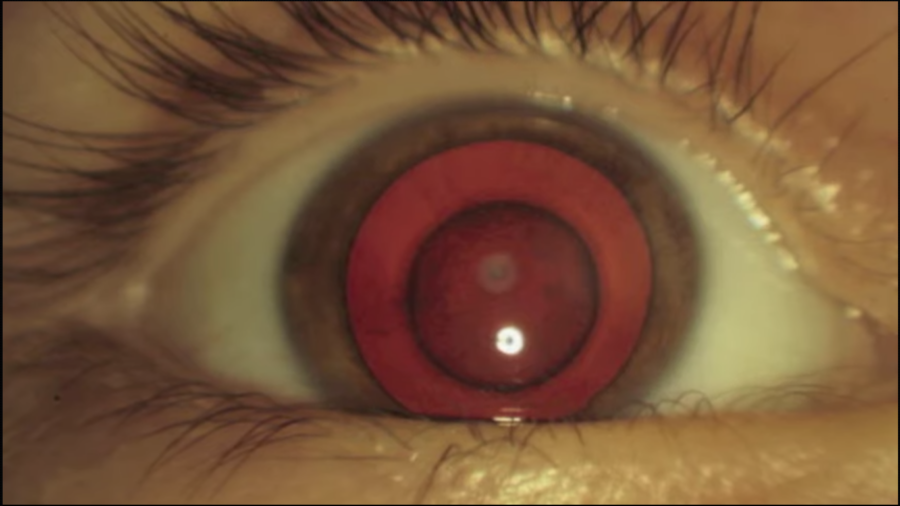
Red reflex test is a simple screening examination that detects media opacities and retinal disease in infants and children.
A normal result shows a bright, symmetric red-orange glow from both pupils.
Therefore, it should be done at every well-child visit and by every clinician who sees children.
What the Red Reflex Test Detects
The test shows whether light passes through the cornea, lens and vitreous to the retina and back.
Opacities in these media change the reflex.
Also, retinal tumors and detachments alter the color.
Because early detection saves vision and life, the test is part of routine care.
Preparing for the Red Reflex Test
Use a dim room and a direct ophthalmoscope.
Set the lens to zero and hold the instrument at arm’s length.
Also, let the child look at a toy or the light.
Therefore, the child stays calm and the eyes stay open.
Fundus Explorer Pro
Photograph the retinal findings described here with the phone already in your pocket — 22 D optics and built-in illumination in one handheld unit.
From Choroida — the team behind this siteTechnique of the Red Reflex Test
View both pupils together at about 40 to 50 centimeters.
Then look at each eye separately from a shorter distance.
Also, compare the brightness, color and symmetry.
Because the first view is binocular, it shows differences at once.
The Bruckner Test
Bruckner described the binocular view in 1962.
Differences between the eyes point to strabismus, anisometropia or opacity.
Also, a brighter reflex suggests the eye that deviates or has a refractive error.
Therefore, the test detects amblyopia risk as well as disease.
Normal Findings on the Red Reflex Test
The reflex is red to orange in most children.
Darkly pigmented children show a duller or grayer reflex.
Also, both eyes should match.
Because pigmentation varies, learn the normal for each patient.
Abnormal Findings: Leukocoria
A white or gray reflex is called leukocoria.
Causes include cataract, retinoblastoma, Coats disease, persistent fetal vasculature and retinal detachment (see leukocoria).
Also, retinopathy of prematurity may cause it.
Therefore, refer any child with leukocoria urgently.
Abnormal Findings: Dark or Absent Reflex
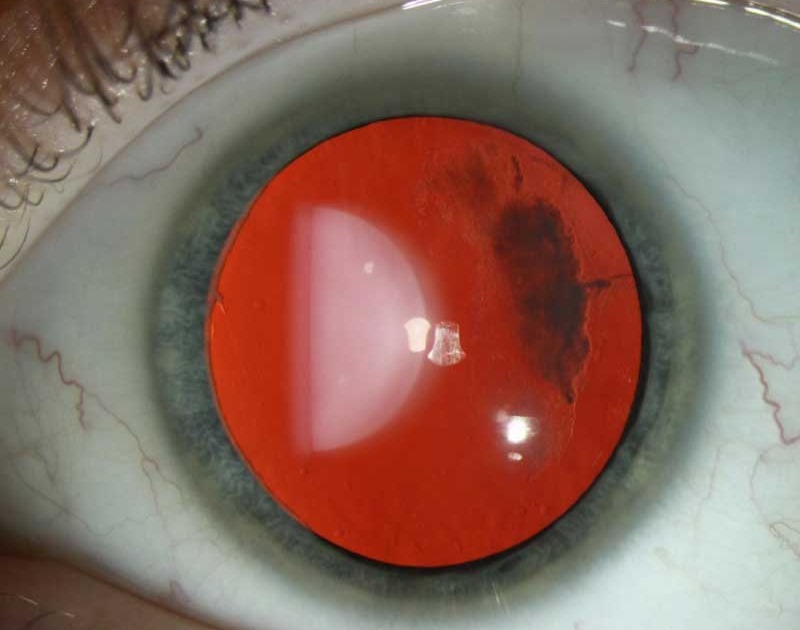
A dark reflex suggests a dense cataract, vitreous hemorrhage or other media opacity.
It may also reflect a small pupil.
Also, an absent reflex needs a repeat in dilated conditions.
Because the cause may be serious, refer for a full examination.
Asymmetric Reflex
A brighter reflex in one eye may indicate high refractive error.
A reflex with a crescent suggests anisometropia.
Also, strabismus shows a brighter reflex in the deviated eye.
Therefore, asymmetry deserves a referral for cycloplegic refraction.
Retinoblastoma and the Red Reflex Test
Leukocoria is the most common presenting sign of retinoblastoma.
Abramson and colleagues linked presenting signs with outcomes.
Also, Li and colleagues studied the detection of simulated tumors by red reflex testing.
Because delay worsens outcome, act without hesitation (see retinoblastoma).
Photographs and Flash Reflexes
Parents may notice a white reflex in flash photographs.
This can be an early clue and should be taken seriously.
Also, a different color in one eye in photographs deserves an examination.
Therefore, ask parents about photographs.
Frequency of Red Reflex Test Screening
The American Academy of Pediatrics recommends red reflex testing in newborns and at each well-child visit.
Also, the test should be repeated at any age if concerns arise.
Because disease may appear later, repeat screening matters.
Limitations of the Red Reflex Test
The test misses some small lesions.
A normal reflex does not exclude all disease.
Also, poor cooperation reduces accuracy.
Therefore, combine it with history and other screening tests.
Documentation and Referral
Record the result for each eye and the method.
Also, refer abnormal results promptly to a pediatric ophthalmologist.
Because parents need clear steps, give written information.
Special Situations
In premature infants, the reflex may be dull and the eyes small.
Also, in children with dark irises, the reflex is paler and may look gray.
Because skin and iris color affect the glow, compare both eyes and do not judge a single color.
Pupil Size and Lighting
A dilated pupil gives a stronger reflex and makes subtle opacities easier to see.
Also, bright room lights shrink the pupil and reduce the view.
Therefore, dim the room and use the same setting each time.
Common Mistakes
Do not use too much light, since glare can mask a defect.
Also, do not assume that a single glance is enough.
Because small tumors can sit at the periphery, refer when you are in doubt.
Parent Education
Explain that the test is quick and painless.
Also, tell parents to report a white reflex in photographs.
Because parents often notice changes first, involve them.


Document what you see
Two smartphone imaging tools built for everyday clinic use — one for the slit lamp, one for the fundus.
From Choroida — the team behind this siteReferences
- American Academy of Pediatrics, Section on Ophthalmology; American Association for Pediatric Ophthalmology and Strabismus; American Academy of Ophthalmology. Red reflex examination in neonates, infants, and children. Pediatrics. 2008;122:1401-1404.
- Bruckner R. Exakte Strabismusdiagnostik bei 1/2-3jahrigen Kindern mit einem einfachen Fundusreflextest. Ophthalmologica. 1962;144:184-198.
- Roe LD, Guyton DL. The light that leaks: Bruckner and the red reflex. Surv Ophthalmol. 1984;28:665-670.
- Abramson DH, Beaverson K, Sangani P, et al. Screening for retinoblastoma: presenting signs as prognosticators of patient and ocular survival. Pediatrics. 2003;112:1248-1255.
Test yourself
A few questions straight from this article.
-
What does a normal red reflex test look like in a child?
A normal result shows a bright, symmetric red-orange glow from both pupils, and both eyes should match. -
How is the binocular red reflex (Bruckner) view performed?
In a dim room the ophthalmoscope lens is set to zero and both pupils are viewed together at about 40-50 cm, then each eye separately from closer. -
On the Bruckner test, what does a brighter reflex in one eye suggest?
Differences between the eyes point to strabismus, anisometropia or opacity, and the brighter reflex suggests the deviating eye or the one with refractive error. -
What is the most common presenting sign of retinoblastoma?
Leukocoria is the most common presenting sign of retinoblastoma, and because delay worsens outcome, any child with it is referred urgently. -
Which condition is a recognised cause of leukocoria on the red reflex test?
Causes of a white or grey reflex include cataract, retinoblastoma, Coats disease, persistent fetal vasculature, retinal detachment and retinopathy of prematurity. -
A child has a dark or absent red reflex. What is the appropriate next step?
A dark reflex suggests dense cataract, vitreous haemorrhage or a small pupil; an absent reflex is repeated dilated and the child referred because the cause may be serious. -
An asymmetric red reflex with a crescent suggests anisometropia. What should follow?
A brighter reflex may indicate high refractive error and a crescent suggests anisometropia, so asymmetry deserves referral for cycloplegic refraction. -
When does the American Academy of Pediatrics recommend red reflex testing?
The AAP recommends testing in newborns and at every well-child visit, and repeating it at any age if concerns arise. -
What is a key limitation of the red reflex test?
The test misses some small lesions and poor cooperation reduces accuracy, so it is combined with history and other screening tests. -
Parents report a white pupil reflex in one eye on flash photographs. How should this be handled?
A white reflex in flash photographs can be an early clue and must be taken seriously, so clinicians should ask parents about photographs.

Writes and reviews the clinical articles on Educate. Every post is checked against peer-reviewed sources before it goes live.