Bisphosphonate ocular inflammation is a group of eye reactions seen in a small share of patients treated with nitrogen-containing bisphosphonates.
These include conjunctivitis, episcleritis, anterior uveitis, scleritis, and orbital inflammation, and they appear after oral and intravenous doses (see scleritis). The reaction is usually mild, but scleritis can be severe, and every patient with a red eye on these drugs deserves a careful look.
Bisphosphonate Ocular Inflammation: Which Drugs Are Involved
The nitrogen-containing agents are the usual culprits, including alendronate, risedronate, ibandronate, pamidronate, and zoledronic acid. Intravenous drugs, given for osteoporosis, bone metastases, and Paget disease, cause the largest share of reports, often within one to three days of the infusion (see the references).
Types of Bisphosphonate Ocular Inflammation
- Conjunctivitis: the most common and mild, with redness and tearing
- Anterior uveitis: pain, photophobia, and cells and flare (see acute anterior uveitis)
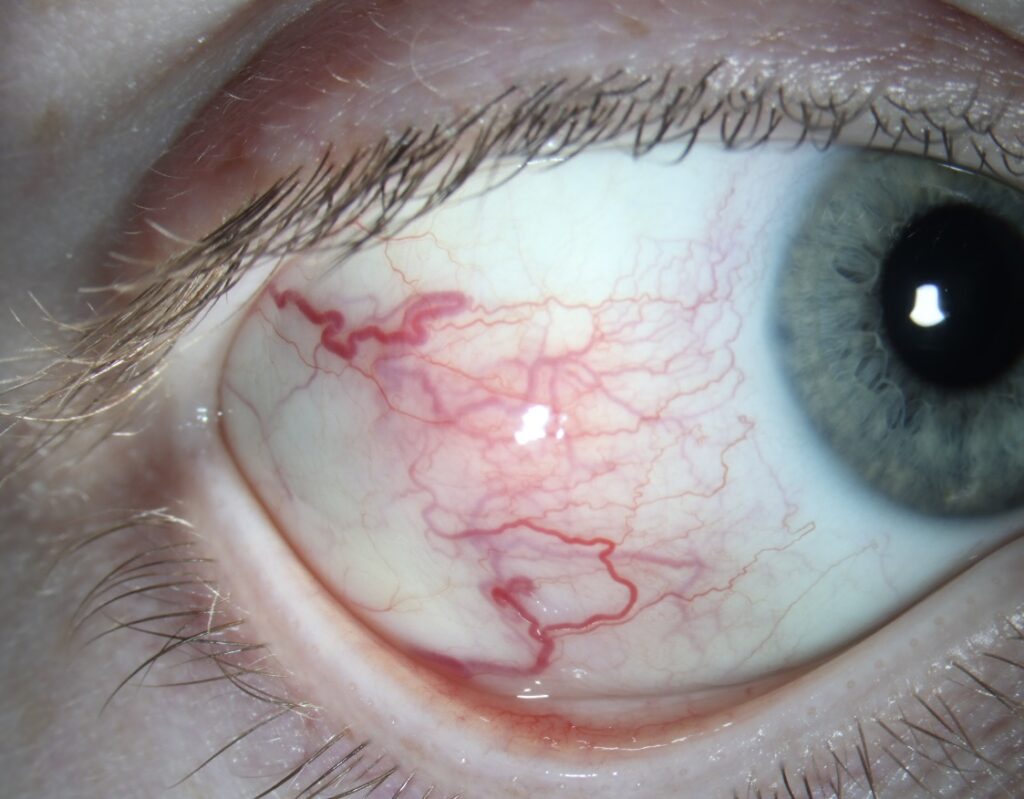
- Episcleritis: sectoral redness with mild pain (see episcleritis)
- Scleritis: deep boring pain, with nodular or diffuse disease, and rarely necrotizing (see necrotizing scleritis)
- Orbital inflammation: proptosis and pain, very rare
Estimates from cohort studies show a small but real increase in risk of uveitis and scleritis in oral users, in the range of a few cases per thousand patients (see the references).
All-fit Slit-Lamp Adapter
Record and share exactly what you see at the slit lamp. One adapter fits any slit lamp or surgical microscope — and any smartphone.
From Choroida — the team behind this siteWhy It Happens
Nitrogen-containing bisphosphonates activate certain immune cells and release inflammatory cytokines, which causes an acute-phase reaction with fever and aches. A similar mechanism is thought to play a part in eye inflammation, though the details are not clear.
Bisphosphonate Ocular Inflammation: Typical Timeline
Conjunctivitis and uveitis begin within days of an infusion, and oral drugs may cause reactions after weeks or months. In addition, rechallenge with the same drug often brings the inflammation back, which supports the link.
Diagnosis of Bisphosphonate Ocular Inflammation
The diagnosis rests on the timing and the exclusion of other causes, so examine the eye with slit lamp, check the pressure, and use a phenylephrine test or deep scleral imaging to separate episcleritis from scleritis. Look for systemic autoimmune disease, since scleritis is often linked to rheumatoid arthritis and vasculitis (see posterior scleritis).
Treatment for Bisphosphonate Ocular Inflammation
- Conjunctivitis and episcleritis: cold compresses and lubricants, with a mild steroid if needed
- Uveitis: topical steroids and cycloplegics, with a taper
- Scleritis: oral steroids or NSAIDs, and urgent review, with stopping of the drug
Stop the drug in patients with scleritis, and avoid rechallenge with the same agent. Patients with uveitis or scleritis may be switched to another class of therapy for bone disease, such as denosumab, with the prescribing physician.
Outcome
Most reactions resolve fully in days to weeks with appropriate treatment, and permanent damage is rare.
Bisphosphonate Ocular Inflammation: Counselling
Tell patients on these drugs to report red, painful, or light-sensitive eyes at once, and to tell their eye doctor and their physician about the drug.
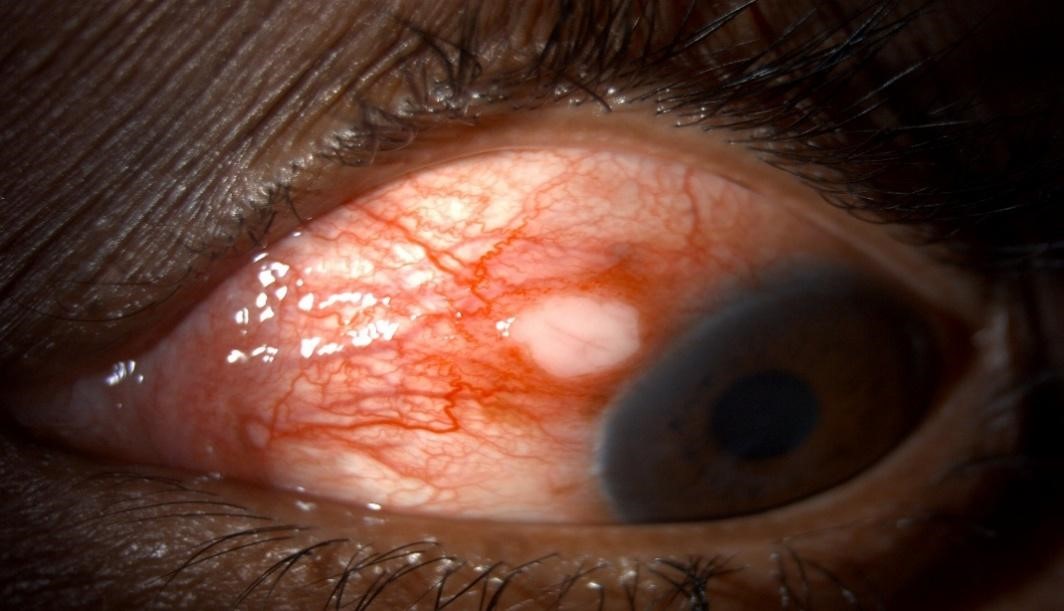
An Example Case
A 72-year-old woman receives her first infusion of zoledronic acid for osteoporosis, and two days later has a red, painful left eye with photophobia. Slit lamp examination shows 2+ cells and flare with ciliary injection, no scleral involvement, and a normal pressure.
She is treated with prednisolone drops and a cycloplegic, and the inflammation settles in two weeks. Her physician chooses a different agent for the next dose.
Practical Steps in the Clinic
- Ask about recent infusions or new tablets in every patient with a red eye
- Examine for scleral involvement, with natural light and phenylephrine blanching
- Look for systemic disease if the inflammation is severe or recurrent
- Report the reaction to the prescriber and to the drug safety system
Counselling
Tell patients that the reaction is uncommon, usually mild, and that it is no reason to avoid treatment for osteoporosis in general. Explain that a repeat dose may also bring it back, and that other therapies are available.
Key Points to Remember
- Nitrogen-containing bisphosphonates are the usual culprits
- Conjunctivitis and uveitis are common, scleritis is rare but serious
- Symptoms start within days of an infusion
- Stop the drug in scleritis and avoid rechallenge
Limits of the Evidence
Data come largely from case reports and cohort studies, and the exact rates differ between studies, while large databases are being used to refine the estimates.
Reporting and Safety
Report cases to the national drug safety agency, since case reports are the main source of data on rare reactions. Clinicians who prescribe bisphosphonates can add a line in the consent about red or painful eyes, and a note on whom to call.
When to Refer
Refer urgently any patient with deep, boring pain, a violet scleral hue, or reduced vision, since these point to scleritis or a complication. Clinicians advise a rheumatology review when the inflammation recurs without a clear drug trigger.
Document what you see
Two smartphone imaging tools built for everyday clinic use — one for the slit lamp, one for the fundus.
From Choroida — the team behind this siteReferences
- Fraunfelder FW, Fraunfelder FT. Bisphosphonates and ocular inflammation. N Engl J Med. 2003;348:1187-1188.
- Fraunfelder FW, Fraunfelder FT, Jensvold B. Scleritis and other ocular side effects associated with pamidronate disodium. Am J Ophthalmol. 2003;135:219-222.
- Etminan M, Forooghian F, Maberley D. Inflammatory ocular adverse events with the use of oral bisphosphonates: a retrospective cohort study. CMAJ. 2012;184:E431-E434.
- American Academy of Ophthalmology. Basic and Clinical Science Course, Section 9: Uveitis and Ocular Inflammation. AAO; current edition.
Test yourself
A few questions straight from this article.
-
Which class of drugs is the usual cause of bisphosphonate ocular inflammation?
The article names nitrogen-containing agents (alendronate, risedronate, ibandronate, pamidronate, zoledronic acid) as the usual culprits. -
Which form of bisphosphonate ocular inflammation is the most common?
The article lists conjunctivitis as the most common and mild type, with redness and tearing. Orbital inflammation is very rare. -
How soon after an intravenous bisphosphonate infusion does ocular inflammation often appear?
Intravenous drugs cause the largest share of reports, often within one to three days of the infusion. Oral drugs may cause reactions after weeks or months. -
What mechanism is thought to contribute to bisphosphonate ocular inflammation?
Nitrogen-containing bisphosphonates activate immune cells and release cytokines, causing an acute-phase reaction. A similar mechanism is thought to play a part in the eye, though details are unclear. -
What finding on rechallenge supports a link between a bisphosphonate and ocular inflammation?
The article states that rechallenge with the same drug often brings the inflammation back, which supports the link. -
Which test helps separate episcleritis from scleritis in bisphosphonate ocular inflammation?
The article advises a phenylephrine test or deep scleral imaging, with slit lamp and pressure checks, to separate episcleritis from scleritis. -
What is the recommended treatment for bisphosphonate-related anterior uveitis?
The article lists topical steroids and cycloplegics with a taper for uveitis. Oral steroids or NSAIDs are for scleritis. -
What is the key management step for bisphosphonate-related scleritis?
The article advises oral steroids or NSAIDs, urgent review, stopping the drug, and avoiding rechallenge with the same agent. -
Which systemic conditions should be sought in a patient with bisphosphonate-related scleritis?
The article says to look for systemic autoimmune disease, since scleritis is often linked to rheumatoid arthritis and vasculitis. -
What is the typical outcome of bisphosphonate ocular inflammation with appropriate treatment?
The article states most reactions resolve fully in days to weeks with appropriate treatment, and permanent damage is rare.

Writes and reviews the clinical articles on Educate. Every post is checked against peer-reviewed sources before it goes live.