
Introduction
Keratitis is one of the most time-sensitive ophthalmic conditions encountered in clinical practice. With prompt diagnosis and appropriate antimicrobial therapy, most cases of infectious keratitis can be controlled effectively.
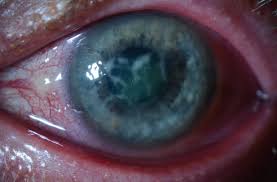
However, in real-world practice, a subset of patients shows poor or incomplete response despite apparently adequate treatment.
These “non-responding keratitis cases” represent a significant diagnostic and therapeutic challenge.
Treatment failure is not always due to drug resistance or incorrect medication choice; in many cases, the underlying issue is a missed diagnosis, an unrecognized organism, or a hidden clinical pitfall that alters disease behavior.
For ophthalmologists, recognizing these pitfalls early can be the difference between corneal clarity and irreversible vision loss.
Why Keratitis Treatment Fails: The Core Problem
Treatment failure in keratitis is rarely random. It usually falls into one of three categories:
- Incorrect initial diagnosis (infectious vs non-infectious)
- Inadequate or inappropriate therapy
- Host or structural factors preventing resolution
👉 The most dangerous assumption is that “non-response = resistant organism,” while in reality, many cases are misclassified from the beginning.
All-fit Slit-Lamp Adapter
Record and share exactly what you see at the slit lamp. One adapter fits any slit lamp or surgical microscope — and any smartphone.
From Choroida — the team behind this siteHidden Diagnostic Pitfalls
1. Misdiagnosing the Etiology (Bacterial vs Fungal vs Acanthamoeba)
One of the most common reasons for treatment failure is incorrect identification of the causative organism.
- Bacterial keratitis → usually responds to fortified antibiotics
- Fungal keratitis → requires antifungal therapy and worsens with steroids
- Acanthamoeba keratitis → often mimics epithelial disease and is highly resistant to standard antibiotics
👉 Early fungal or protozoal keratitis often mimics bacterial ulcers clinically, leading to inappropriate treatment.
2. Early Steroid Misuse
Corticosteroids are a double-edged sword in keratitis management.
While they may reduce inflammation in selected bacterial cases, premature use can:
- Suppress local immune response
- Accelerate fungal proliferation
- Mask clinical progression
- Delay epithelial healing
👉 One of the most critical pitfalls is starting steroids before microbiological confirmation.
3. Inadequate Corneal Scraping or Missed Microbiology
Failure to perform proper diagnostic sampling leads to empirical treatment that may not match the pathogen.
Common issues include:
- Superficial scraping in deep stromal infections
- Failure to culture on appropriate media
- Missing repeat scraping in non-responders
👉 Any keratitis not improving within 48–72 hours should be re-scraped.
Hidden Infectious Pitfalls
4. Atypical Organisms
Some organisms behave differently and do not respond to standard regimens.
Examples include:
- Fusarium species → aggressive fungal keratitis with poor drug penetration
- Nocardia → slow-growing, often mistaken for fungal infection
- Herpetic keratitis → can mimic bacterial ulcers but worsens with steroids
- Acanthamoeba → severe pain out of proportion to clinical signs
👉 A mismatch between clinical appearance and pain severity is often a diagnostic clue.
5. Polymicrobial Infections
Mixed infections are more common than often appreciated, especially in:
- Contact lens users
- Trauma cases
- Chronic ocular surface disease
Bacteria + fungi or bacteria + protozoa combinations can lead to partial treatment response.
👉 Treating only one organism leads to apparent “treatment failure.”
Structural and Host-Related Pitfalls
6. Ocular Surface Disease
Underlying surface abnormalities can prevent healing:
- Severe dry eye disease
- Neurotrophic keratopathy
- Limbal stem cell deficiency
- Chronic blepharitis
Even when infection is controlled, epithelial healing fails.
7. Corneal Biofilm Formation
Some pathogens form biofilms on corneal tissue or contact lenses, leading to:
- Antibiotic resistance
- Chronic low-grade infection
- Recurrent inflammation
👉 Biofilms significantly reduce drug penetration and efficacy.
8. Delayed Presentation and Advanced Disease
Late presentation leads to:
- Deep stromal involvement
- Endothelial damage
- Impending perforation
At this stage, medical therapy alone may be insufficient.
Clinical Red Flags of Treatment Failure
Ophthalmologists should suspect a hidden pitfall when they observe:
- No improvement after 48–72 hours of intensive therapy
- Worsening infiltrate despite treatment
- Increasing pain or disproportionate pain
- Appearance of satellite lesions or feathery borders
- New hypopyon or worsening anterior chamber reaction
👉 “Stable but not improving” is itself a warning sign.
Role of Imaging in Non-Responding Keratitis
Advanced imaging can uncover hidden pathology.
Anterior Segment OCT
- Depth of infiltrate
- Stromal necrosis
- Descemet involvement
Confocal Microscopy
- Fungal filaments
- Acanthamoeba cysts and trophozoites
- In vivo microbial visualization
👉 These tools are especially useful when cultures are negative.
Management Strategy in Failed Keratitis
When keratitis does not respond, a structured approach is essential:
1. Re-evaluate Diagnosis
- Repeat scraping
- Consider fungal, viral, or protozoal causes
2. Modify Therapy Based on Response
- Switch antimicrobial class
- Add antifungal or anti-amoebic agents if suspected
3. Avoid Blind Steroid Use
- Only consider after clear infection control in bacterial cases
4. Address Underlying Surface Disease
- Lubrication
- Lid hygiene
- Neurotrophic support
5. Consider Surgical Options
- Amniotic membrane graft
- Therapeutic keratoplasty in perforation risk
Steroids Revisited: The Most Common Clinical Trap
The misuse of steroids remains one of the most important causes of worsening keratitis.
Steroids may:
- Improve symptoms temporarily
- Reduce redness
- Create false clinical stability
But at the same time, they may:
- Allow unchecked microbial proliferation
- Delay definitive diagnosis
- Increase the perforation risk in fungal disease
👉 In infectious keratitis, timing of steroids is more important than the drug itself.
Conclusion
Treatment failure in keratitis is rarely due to a single factor. It is usually the result of hidden clinical pitfalls involving misdiagnosis, inadequate microbiological workup, inappropriate steroid use, atypical organisms, or underlying ocular surface disease.
For ophthalmologists, the key principle is simple:
When keratitis does not respond as expected, reconsider the diagnosis before escalating the same treatment.
Early recognition of these pitfalls not only improves outcomes but also prevents irreversible corneal damage and vision loss.

Document what you see
Two smartphone imaging tools built for everyday clinic use — one for the slit lamp, one for the fundus.
From Choroida — the team behind this siteReferences
- Thomas PA, et al. “Infectious keratitis: pathogenesis and management.” Clin Microbiol Rev. 2020.
- Ting DSJ, et al. “Infectious keratitis: update on epidemiology and management.” Eye (Lond). 2021.
- Wilhelmus KR. “Indecision about corticosteroids in keratitis.” Ophthalmology. 2002.
- Srinivasan M. “Fungal keratitis.” Curr Opin Ophthalmol. 2004.
- Alfonso EC, et al. “Acanthamoeba keratitis.” Surv Ophthalmol. 2019.
- Dart JK, et al. “Microbial keratitis management strategies.” Eye. 2015.
- Sharma N, et al. “Microbial keratitis clinical profile.” Br J Ophthalmol. 2010.
- Garg P. “Diagnosis of microbial keratitis.” Br J Ophthalmol. 2010.
