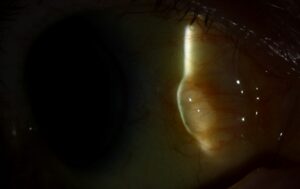
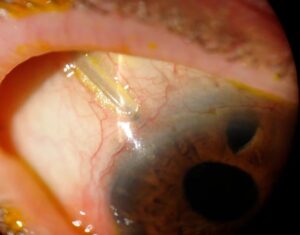
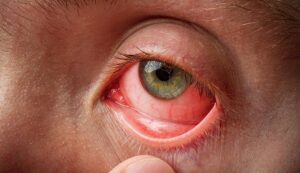
Chalazion in children is a sterile lipogranuloma that forms when a blocked meibomian gland leaks lipid into the tarsus. Most lesions settle with simple care, although a large upper lid lesion can distort the cornea and threaten vision.
Why Chalazion in Children Needs Extra Thought
The pathology matches the adult disease (see chalazion), yet the stakes differ because the visual system is still maturing. In addition, young children rarely tolerate local anesthesia, so surgical timing weighs visual risk against anesthetic exposure.
Clinical Features of Chalazion in Children
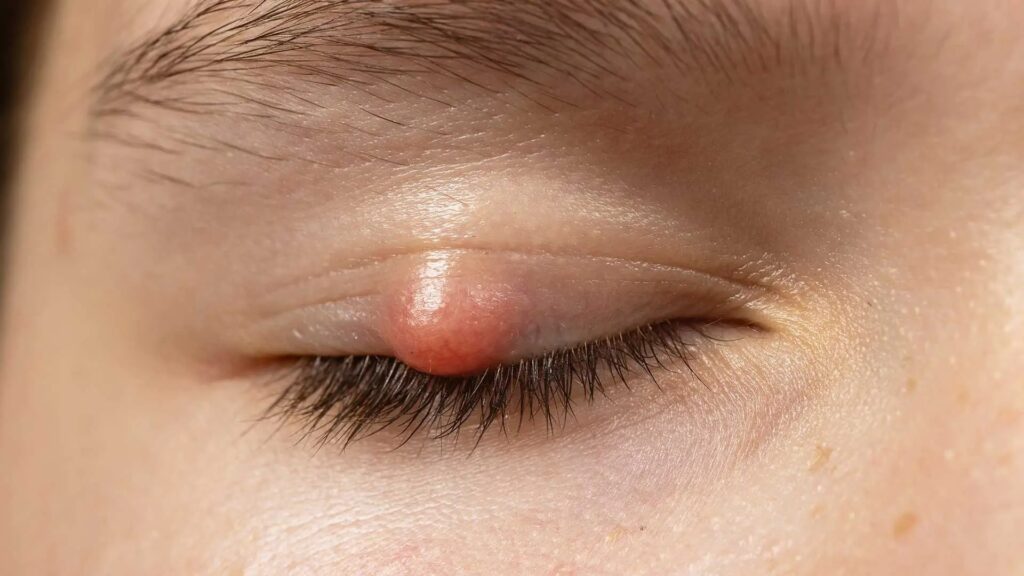
Parents usually describe a painless, firm nodule that grew over weeks, sometimes after a tender phase resembling a stye. On eversion, a gray or yellow granuloma may show on the tarsal conjunctiva. Also, multiple bilateral lesions often point to underlying blepharitis or rosacea.
All-fit Slit-Lamp Adapter
Record and share exactly what you see at the slit lamp. One adapter fits any slit lamp or surgical microscope — and any smartphone.
From Choroida — the team behind this siteWhat Else Can Mimic a Lid Bump
A typical lesion needs no imaging or biopsy. However, rapid growth, lash loss, fever or diffuse swelling should widen the differential:
- Preseptal cellulitis, with diffuse tender swelling and fever
- Molluscum contagiosum, with umbilicated nodules near the margin
- Dermoid cyst, usually firm and smooth at the lateral brow
- Infantile hemangioma, which often enlarges during early infancy
- Rhabdomyosarcoma, a rare but rapidly growing lid or orbital mass
How a Chalazion Changes Refraction
A large upper lid lesion presses on the cornea, which can induce astigmatism or even a hyperopic shift. Larger, central lesions seem more likely to alter refraction, although no single size threshold reliably predicts the effect.
Amblyopia Risk With Chalazion in Children
Children younger than about seven years remain in the sensitive period, so unequal refraction lasting months can cause anisometropic amblyopia. A lesion large enough to cause mechanical ptosis may also block the pupil (see pediatric blepharoptosis).
Infants and toddlers carry the highest risk, because they cannot report blur and their lesions may persist. Therefore, judge each lesion by its effect on refraction and the visual axis, with appearance as a secondary concern.
Refraction and Visual Assessment
First, test acuity with an age-appropriate method, then perform cycloplegic refraction of both eyes and compare cylinder and spherical equivalent. Where the child cooperates, keratometry or topography documents the corneal change and gives a useful baseline.
If anisometropia or reduced acuity appears, glasses and amblyopia patching may be needed even before the lid fully settles. Then repeat refraction after resolution, because induced astigmatism usually improves, although recovery may be incomplete in some children.
Conservative Treatment First
Warm compresses, gentle massage and lid hygiene come first, because heat softens meibum and helps the gland drain. Many lesions settle within months, although retrospective data show conservative care fails in a sizable share of patients. Topical antibiotics do not shrink a sterile lesion, so reserve them for clear secondary infection.
Compliance is hard in toddlers, so show parents a practical method, such as a warm clean cloth during bath time. In addition, children who rub the lid or pick at the lesion need simple hand hygiene advice.
Lid Margin Disease and Chalazion in Children
Recurrent lesions usually reflect meibomian gland dysfunction, and some children also develop phlyctenular keratoconjunctivitis or marginal keratitis. In these cases, oral erythromycin or azithromycin is preferred, because tetracyclines can stain developing teeth. Topical steroids help corneal inflammation, although they require pressure checks during treatment.
Steroid Injection in Young Patients
Intralesional triamcinolone can shrink a chalazion without incision, which suits older, cooperative children better than toddlers. Possible complications include skin depigmentation, especially in darker skin, local fat atrophy and rare retinal vascular occlusion from embolization. Therefore, discuss these risks openly with parents before choosing this route.
When to Drain Chalazion in Children Under Anesthesia
Incision and curettage through the tarsal conjunctiva is definitive treatment, but many young children need general anesthesia or deep sedation. Consider surgery when a lesion persists despite months of conservative care, induces anisometropia, or causes ptosis over the visual axis.
Also plan surgery for repeated lesions at one site, and send that tissue for histology. Meanwhile, a small stable lesion with normal refraction can safely wait, because anesthesia carries its own risks.
Counseling Parents About Chalazion in Children
Explain that a chalazion is not contagious and does not reflect poor hygiene, which reduces guilt and unnecessary antibiotic requests. Next, warn that resolution takes weeks to months and new lesions may appear while the lid margin stays inflamed. Finally, ask parents to return sooner if swelling spreads or fever develops.
Pitfalls to Avoid
- Skipping cycloplegic refraction when a large upper lid lesion persists
- Prescribing topical antibiotics for a noninflamed chalazion
- Giving oral tetracyclines to young children
- Injecting steroid into the lid of an uncooperative child
- Ignoring a lesion that keeps recurring at the same site


Document what you see
Two smartphone imaging tools built for everyday clinic use — one for the slit lamp, one for the fundus.
From Choroida — the team behind this siteReferences
- Arbabi EM, Kelly RJ, Carrim ZI. Chalazion. BMJ. 2010;341:c4044.
- Wu AY, Gervasio KA, Gergoudis KN, et al. Conservative therapy for chalazia: is it really effective? Acta Ophthalmol. 2018;96:e503-e509.
- Santa Cruz CS, Culotta T, Cohen EJ, Rapuano CJ. Chalazion-induced hyperopia as a cause of decreased vision. Ophthalmic Surg Lasers. 1997;28:683-686.
- Suzuki T, Mitsuishi Y, Sano Y, et al. Phlyctenular keratitis associated with meibomitis in young patients. Am J Ophthalmol. 2005;140:77-82.
- American Academy of Ophthalmology. Basic and Clinical Science Course, Section 6: Pediatric Ophthalmology and Strabismus. San Francisco: AAO; 2023.
Test yourself
A few questions straight from this article.
-
What is the pathology of a chalazion in children?
A blocked meibomian gland leaks lipid into the tarsus and forms a sterile lipogranuloma; the pathology matches the adult disease. -
How can a large upper lid chalazion in a child change refraction?
Corneal pressure from a large upper lid lesion can induce astigmatism or even a hyperopic shift; no single size threshold reliably predicts the effect. -
Below about what age does a refraction-altering chalazion carry amblyopia risk?
Children younger than about seven remain in the sensitive period, so unequal refraction lasting months can cause anisometropic amblyopia. -
Which test is essential when a large upper lid chalazion persists in a child?
After age-appropriate acuity, cycloplegic refraction of both eyes compares cylinder and spherical equivalent; skipping it is a listed pitfall. -
What is the role of topical antibiotics for a noninflamed chalazion in a child?
Topical antibiotics do not shrink a sterile lesion, so they are reserved for clear secondary infection; warm compresses, massage and lid hygiene come first. -
Which oral antibiotics are preferred for recurrent chalazia with lid margin disease in young children?
Erythromycin or azithromycin is preferred because tetracyclines can stain developing teeth. -
Which complication of intralesional triamcinolone for chalazion is more likely in darker skin?
Steroid injection can cause depigmentation, especially in darker skin, plus local fat atrophy and rare retinal vascular occlusion from embolization. -
Which finding favors incision and curettage of a chalazion in a young child despite anesthesia risk?
Surgery is considered when a lesion persists despite months of conservative care, induces anisometropia or causes ptosis over the visual axis; a small stable lesion with normal refraction can wait. -
What should be done with tissue from a child's chalazion that keeps recurring at the same site?
Repeated lesions at one site warrant surgery with histology of the tissue; ignoring a lesion that keeps recurring at the same site is a listed pitfall. -
Which features in a child's eyelid lump should widen the differential beyond chalazion?
A typical lesion needs no imaging or biopsy, but rapid growth, lash loss, fever or diffuse swelling raise cellulitis, hemangioma or rhabdomyosarcoma.

Writes and reviews the clinical articles on Educate. Every post is checked against peer-reviewed sources before it goes live.