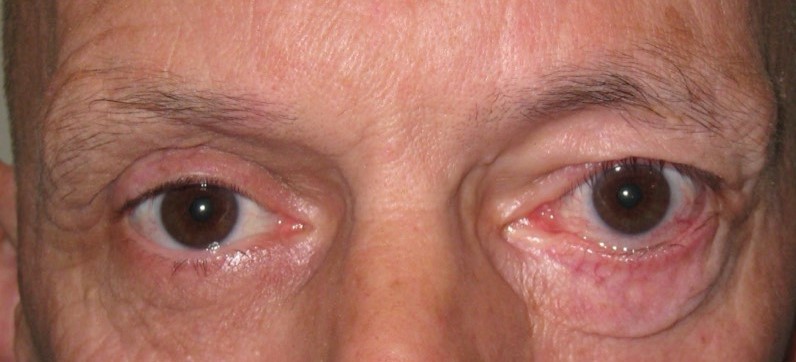
Bell’s palsy eye problems start when the paralyzed orbicularis oculi cannot close the lids or blink fully.
The cornea then dries, and exposure keratitis can follow within days. Because most palsies recover, the goal is to protect the eye until the nerve returns.
Why the Bell’s Palsy Eye Is at Risk
The facial nerve drives orbicularis oculi, the muscle that closes the lids. When it fails, the patient develops lagophthalmos and a weak, incomplete blink. As a result, the tear film spreads poorly, while a sagging lower lid adds exposure and spill.
What the Patient Reports
Many patients complain of a watery eye, which seems paradoxical, but the tearing reflects reflex secretion and a failed lacrimal pump. Others describe grittiness, burning, or blur that clears with each blink, while new pain and light sensitivity suggest epithelial breakdown.
All-fit Slit-Lamp Adapter
Record and share exactly what you see at the slit lamp. One adapter fits any slit lamp or surgical microscope — and any smartphone.
From Choroida — the team behind this siteBell’s Palsy Eye Examination
First, measure lagophthalmos in millimeters during gentle closure, and next check Bell phenomenon, the upward roll of the globe on attempted closure. A good Bell phenomenon shields the cornea, while a poor one leaves it bare. Finally, test corneal sensation, then stain with fluorescein for inferior punctate erosions.
Red Flags in Bell’s Palsy Eye Care
Reduced corneal sensation with facial palsy removes both protection and the pain warning (see neurotrophic keratitis). Also, ear vesicles or a fifth nerve deficit point to Ramsay Hunt syndrome or another cause, and a slowly progressive palsy warrants imaging to exclude a tumor.
Steroids and Nerve Recovery
Oral corticosteroids started within 72 hours improve facial nerve recovery, and in the Sullivan trial prednisolone helped, while acyclovir alone added no benefit. However, nerve treatment does not protect the cornea during weeks of weakness.
The Lubrication Ladder for Bell’s Palsy Eye
Match lubrication to lid closure, Bell phenomenon and staining.
- Mild exposure: preservative-free tears four to six times daily
- Moderate exposure: drops every one to two hours plus gel
- Night exposure: ointment at bedtime
- Persistent staining: ointment by day as well
Preservative-free drops avoid epithelial toxicity with frequent dosing. Then, step down the ladder as closure improves.
Taping the Bell’s Palsy Eye
Taping keeps the lids shut at night when ointment alone fails, so place the tape on the closed upper lid, then secure it to the cheek. However, loose tape can let the eye open underneath and cause abrasion. Moisture chambers, such as sealed goggles or clear film, suit patients who dislike tape.
Botulinum Toxin Protective Ptosis
Botulinum toxin injected into the levator produces a temporary ptosis, and the drooping lid then covers the cornea for several weeks. However, it blocks vision in that eye and may cause diplopia if it reaches the superior rectus.
Tarsorrhaphy in Bell’s Palsy Eye
A temporary tarsorrhaphy joins part of the lid margins with sutures or glue. Surgeons usually choose a lateral tarsorrhaphy, which narrows the fissure but spares central vision, and then open it once blink function returns. Because patients often dislike the appearance, explain its purpose clearly.
Gold Weight and Lid Loading
An upper lid weight uses gravity to help the lid close, and surgeons fix gold or platinum implants to the tarsal plate (see gold weight implant). Therefore, lid loading suits patients with a poor prognosis or long-standing lagophthalmos. However, gravity fails when the patient lies flat, so night lubrication often continues.
Warning Signs of Exposure Keratitis
Teach patients to return the same day with any of these:
- Increasing pain or photophobia
- Redness that persists despite lubrication
- Falling vision
- A white spot on the cornea
- Discharge or sticky lids
These signs suggest progression toward ulceration (see exposure keratopathy).
When an Ulcer Develops
Treat an infiltrate in an exposed cornea as infectious until cultures say otherwise, and first take scrapings before intensive antibiotics (see corneal scraping technique). Then, close the lids promptly, because epithelium heals poorly on a dry surface.
Bell’s Palsy Eye Follow-Up
Review the eye within days of onset, then at intervals that match the risk. At each visit, measure lagophthalmos, recheck Bell phenomenon and repeat staining, and also see patients with poor sensation or poor Bell phenomenon more often.
Counseling the Bell’s Palsy Eye Patient
Explain that most facial palsies recover, so most eye measures are temporary. However, recovery may take months, and the cornea needs protection throughout. Also, warn that ointment blurs vision, which affects driving, and finally give written instructions on drops, taping and red flags.
Pitfalls to Avoid
- Do not skip corneal sensation testing
- Never rely on daytime drops when the eye stays open at night
- Avoid preserved drops for frequent dosing
- Never assume tearing means the eye is wet enough


Document what you see
Two smartphone imaging tools built for everyday clinic use — one for the slit lamp, one for the fundus.
From Choroida — the team behind this siteReferences
- Baugh RF, Basura GJ, Ishii LE, et al. Clinical practice guideline: Bell’s palsy. Otolaryngol Head Neck Surg. 2013;149(3 Suppl):S1-S27.
- Sullivan FM, Swan IR, Donnan PT, et al. Early treatment with prednisolone or acyclovir in Bell’s palsy. N Engl J Med. 2007;357:1598-1607.
- Engström M, Berg T, Stjernquist-Desatnik A, et al. Prednisolone and valaciclovir in Bell’s palsy: a randomised, double-blind, placebo-controlled, multicentre trial. Lancet Neurol. 2008;7:993-1000.
- Lee V, Currie Z, Collin JR. Ophthalmic management of facial nerve palsy. Eye. 2004;18:1225-1234.
- Peitersen E. Bell’s palsy: the spontaneous course of 2,500 peripheral facial nerve palsies of different etiologies. Acta Otolaryngol Suppl. 2002;(549):4-30.
Test yourself
A few questions straight from this article.
-
In Bell's palsy, paralysis of which muscle causes lagophthalmos and an incomplete blink?
The facial nerve drives orbicularis oculi, the lid-closing muscle; when it fails the patient develops lagophthalmos and a weak, incomplete blink. -
Why does a patient with Bell's palsy often complain of a watery eye despite corneal exposure?
The paradoxical tearing reflects reflex secretion and a failed lacrimal pump, so tearing never means the eye is wet enough. -
What is Bell phenomenon, assessed when examining the eye in Bell's palsy?
Bell phenomenon is the upward roll of the globe on attempted closure; a good one shields the cornea while a poor one leaves it bare. -
A facial palsy presents with ear vesicles. Which diagnosis should this raise instead of simple Bell's palsy?
Ear vesicles or a fifth nerve deficit point to Ramsay Hunt syndrome or another cause, and a slowly progressive palsy warrants imaging to exclude a tumor. -
Within what time from onset do oral corticosteroids improve facial nerve recovery in Bell's palsy?
Oral corticosteroids started within 72 hours improve nerve recovery; in the Sullivan trial prednisolone helped while acyclovir alone added no benefit. -
On the lubrication ladder for moderate exposure in Bell's palsy, what is recommended?
Mild exposure gets preservative-free tears four to six times daily, moderate exposure drops every one to two hours plus gel, with ointment added at night and by day if staining persists. -
Botulinum toxin is injected into the levator for protective ptosis in Bell's palsy. Which side effect can occur?
The toxin produces a temporary ptosis that covers the cornea for several weeks, but it blocks vision in that eye and can cause diplopia if it reaches the superior rectus. -
Which temporary tarsorrhaphy do surgeons usually choose to protect the cornea in Bell's palsy?
A lateral tarsorrhaphy narrows the fissure while sparing central vision, and it is opened once blink function returns. -
Why does night lubrication often continue after a gold weight implant for Bell's palsy lagophthalmos?
An upper lid weight uses gravity to close the lid, so it suits poor-prognosis or long-standing lagophthalmos, but gravity fails when the patient lies flat. -
A corneal infiltrate develops in an exposed Bell's palsy eye. What is the first step?
An infiltrate in an exposed cornea is treated as infectious until cultures say otherwise, with scrapings taken before intensive antibiotics and the lids then closed promptly.

Writes and reviews the clinical articles on Educate. Every post is checked against peer-reviewed sources before it goes live.