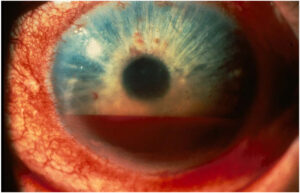
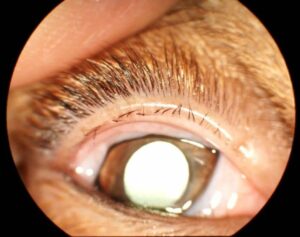
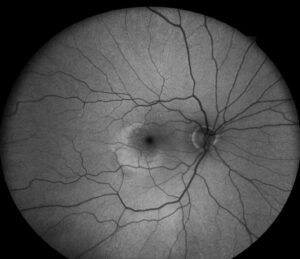
Gas bubble eye is the common term for an eye filled with intraocular gas after vitrectomy.
Surgeons inject air, sulfur hexafluoride (SF6), hexafluoroethane (C2F6) or perfluoropropane (C3F8) to support the retina while it heals. The bubble presses on the retina from inside until the repair seals.
Why Surgeons Use a Gas Bubble Eye Tamponade
Gas has high surface tension, so it seals retinal breaks and closes macular holes. It also floats, therefore it pushes hardest against the upper retina. Head positioning then directs this buoyant force toward the break or the hole.
Gas Types and How Long They Last
Kinetic studies and clinical texts give these approximate durations:
- Air: usually absorbed within about one week
- SF6: about two weeks
- C2F6: about four to five weeks
- C3F8: about six to eight weeks, sometimes longer
However, duration varies with fill size, concentration and eye anatomy. Ask the surgeon which gas they used, because every restriction depends on it.
Fundus Explorer Pro
Photograph the retinal findings described here with the phone already in your pocket — 22 D optics and built-in illumination in one handheld unit.
From Choroida — the team behind this siteGas Bubble Eye on the First Day
Vision is usually very poor at first, and most patients see only light, shapes or hand movements through a full bubble. Because the gas acts like a strong lens, glasses cannot sharpen the image.
Early Expansion and Pressure
Expansile gases absorb nitrogen from the blood and grow over the first days. Therefore, surgeons usually dilute SF6, C2F6 or C3F8 with air to limit growth. Even so, pressure can rise during the first few days, so clinicians check it early and treat spikes promptly.
The Moving Line in Gas Bubble Eye
As the bubble shrinks, a horizontal edge appears, and patients describe a wobbling line, like a spirit level or the surface of water.
Because the retinal image is inverted, the bubble sits high in the eye but blocks the lower field. As a result, the upper field clears first, and the line drops lower each week.
Small Bubbles Near the End
Late in absorption, the single bubble may break into several small beads, which look like black dots bouncing in the lower vision. Next, these beads disappear, usually within days, but patients may mistake them for new floaters, so warn them in advance.
What the Clinician Sees
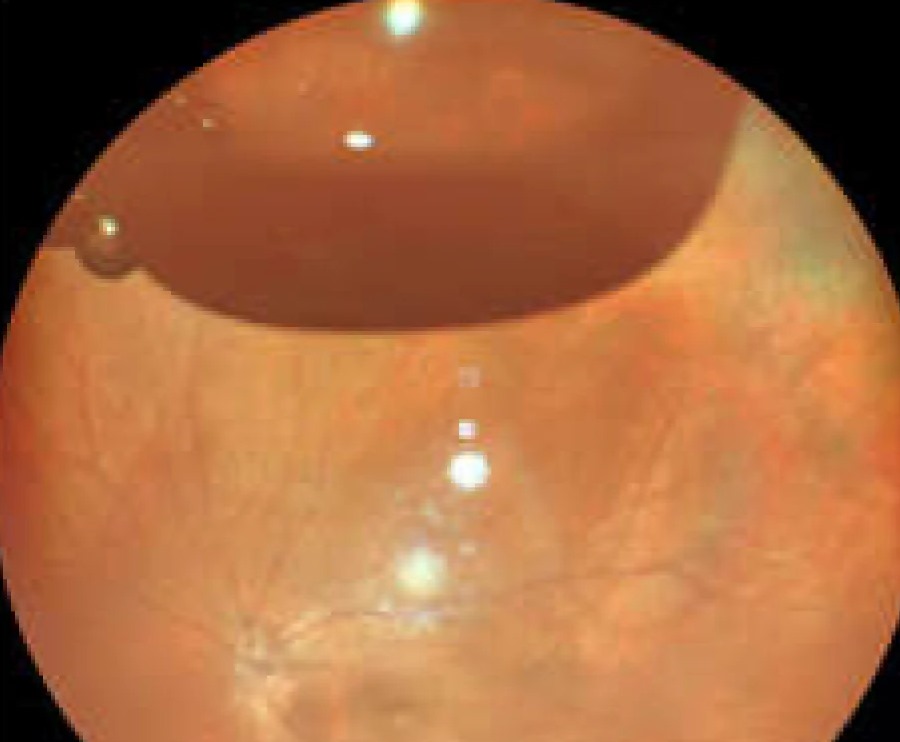
At the slit lamp, the gas reflects light brightly and shows a fluid meniscus below it. Indirect ophthalmoscopy through the gas usually shows the attached retina, although reflections can limit detail. Estimate the fill from the meniscus position, then document it at each visit.
Positioning in Gas Bubble Eye Care
Positioning depends on the indication and the location of the break. For example, some surgeons ask for face-down posture for several days after macular hole repair. In addition, patients should avoid lying flat on their back while gas fills the eye, otherwise the bubble can press on the lens and the iris.
Flying and Altitude Rules
Flying with gas in the eye is dangerous. Cabin pressure falls during flight, so the bubble expands and eye pressure can rise sharply. Therefore, patients must not fly until the surgeon confirms the gas has gone.
Nitrous Oxide and Gas Bubble Eye
Nitrous oxide anesthesia makes an intraocular bubble expand rapidly, and as a result, pressure can rise enough to occlude the central retinal artery. For this reason, many units give the patient a wristband stating the gas type, and patients should also report the bubble before any other surgery (see nitrous oxide and intraocular gas).
Daily Activities With a Gas Bubble Eye
Heavy lifting and strenuous exercise follow the surgeon’s advice, which varies between units. Driving is unsafe until vision and depth perception recover. For a broader plan, see vitrectomy recovery week by week.
Warning Signs That Need Same-Day Review
Some symptoms need urgent assessment:
- Severe eye pain, headache, nausea or vomiting
- Vision that worsens after an early improvement
- A new shadow or curtain in the clear part of the field
- New flashes or a shower of floaters
- Increasing redness, discharge or swelling
How Vision Returns as Gas Clears
Vision improves as the line drops below the center of the field. Then the eye needs a new refraction, usually after the gas has cleared. Final acuity depends on the macula and the underlying disease (see retinal detachment recovery).
Explaining the Gas Bubble Eye to Patients
Describe the dark field, the moving line and the final beads before discharge, and also give a written date when flying may become safe. Patients who know what to expect report true warning signs earlier.
Pitfalls to Avoid
- Do not quote one timeline for all gases
- Never clear a patient to fly without confirming absorption
- Do not dismiss pain as normal discomfort without checking pressure


Document what you see
Two smartphone imaging tools built for everyday clinic use — one for the slit lamp, one for the fundus.
From Choroida — the team behind this siteReferences
- Thompson JT. Kinetics of intraocular gases: disappearance of air, sulfur hexafluoride, and perfluoropropane after pars plana vitrectomy. Arch Ophthalmol. 1989;107:687-691.
- Lincoff H, Mardirossian J, Lincoff A, et al. Intravitreal longevity of three perfluorocarbon gases. Arch Ophthalmol. 1980;98:1610-1611.
- Mills MD, Devenyi RG, Lam WC, et al. An assessment of intraocular pressure rise in patients with gas-filled eyes during simulated air flight. Ophthalmology. 2001;108:40-44.
- Fu AD, McDonald HR, Eliott D, et al. Complications of general anesthesia using nitrous oxide in eyes with preexisting gas bubbles. Retina. 2002;22:569-574.
- Salmon JF. Kanski’s Clinical Ophthalmology: A Systematic Approach. 9th ed. Elsevier; 2020.
Test yourself
A few questions straight from this article.
-
Which property of intraocular gas lets it seal retinal breaks and close macular holes after vitrectomy?
Gas has high surface tension, so it seals retinal breaks and closes macular holes while the repair heals. -
Why does head positioning matter after an intraocular gas tamponade?
Gas floats and pushes hardest against the upper retina, so head positioning directs this buoyant force toward the break or the hole. -
Approximately how long does an SF6 intraocular gas bubble last after vitrectomy?
SF6 lasts about two weeks, compared with about one week for air, four to five weeks for C2F6 and six to eight weeks for C3F8, varying with fill and concentration. -
Why do surgeons usually dilute SF6, C2F6 or C3F8 with air before injection?
Expansile gases absorb nitrogen from the blood and grow over the first days, so surgeons dilute them with air; pressure can still rise early and must be checked. -
As an intraocular gas bubble shrinks, which part of the patient's visual field clears first?
The bubble sits high in the eye but, because the retinal image is inverted, it blocks the lower field; the upper field clears first and the line drops each week. -
Late in intraocular gas absorption, a patient sees black dots bouncing in the lower vision. What usually explains this?
Late in absorption the single bubble may break into small beads that look like bouncing black dots and usually disappear within days; patients should be warned in advance. -
Why must a patient with intraocular gas not fly until the gas has gone?
Cabin pressure falls during flight, so the bubble expands and eye pressure can rise sharply; patients must not fly until the surgeon confirms the gas has gone. -
What serious complication can nitrous oxide anesthesia cause in an eye containing an intraocular gas bubble?
Nitrous oxide makes an intraocular bubble expand rapidly, and pressure can rise enough to occlude the central retinal artery; many units give a wristband stating the gas type. -
Why should patients avoid lying flat on their back while gas fills the eye after vitrectomy?
Patients should avoid lying flat on their back while gas fills the eye, otherwise the floating bubble can press forward on the lens and the iris. -
A patient with an intraocular gas bubble reports severe eye pain, headache and vomiting. What is appropriate?
Severe pain, headache, nausea or vomiting need same-day assessment, and pain should never be dismissed as normal discomfort without checking pressure.

Writes and reviews the clinical articles on Educate. Every post is checked against peer-reviewed sources before it goes live.