Anisometropia means that the two eyes have a different refractive error.
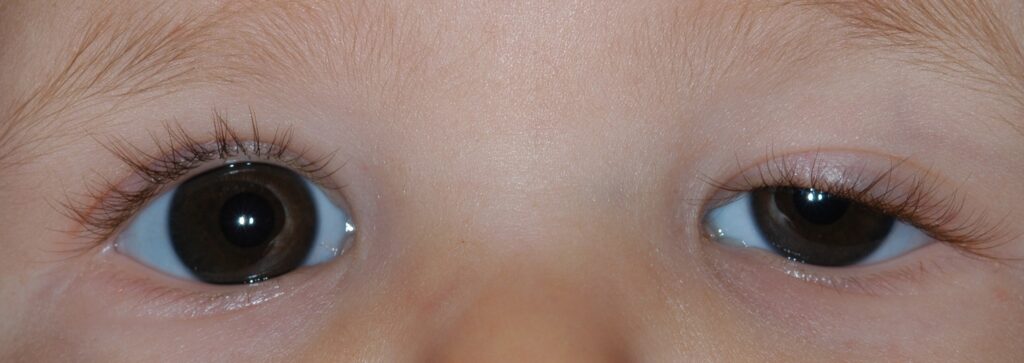
A difference of one diopter or more is the usual threshold in clinical practice. Small differences are common and cause no trouble, but larger ones, especially in children, can cause amblyopia, and in adults they cause discomfort with glasses.
Types and Causes of Anisometropia
- Axial anisometropia: a difference in the axial length of the eyes, the most common type
- Refractive anisometropia: a difference in the power of the cornea or lens
- Acquired causes: unilateral cataract, aphakia, pseudophakia, corneal scars, and keratoconus (see keratoconus)
Surgery can create anisometropia, for example when surgeons operate on the first cataract eye before the second (see phacoemulsification).
Anisometropia and Amblyopia
In children, the brain suppresses the blurred image from the more ametropic eye, and acuity fails to develop. Hyperopic anisometropia is the most amblyogenic, because the more hyperopic eye is never in focus, and myopic anisometropia needs a larger difference to cause amblyopia (see the references).
The deeper the amblyopia, the more it is tied to the size of the difference, and it often has no strabismus, so doctors find it late. Screening in children and a cycloplegic refraction in any child with a poor result are therefore important (see amblyopia overview).
All-fit Slit-Lamp Adapter
Record and share exactly what you see at the slit lamp. One adapter fits any slit lamp or surgical microscope — and any smartphone.
From Choroida — the team behind this siteAnisometropia: Symptoms in Adults
Adults with unequal glasses may notice headaches, eye strain, double vision, or dizziness when reading. The cause is aniseikonia, which means a difference in image size between the eyes, and prismatic effects when looking away from the optical center of the lens.
As a rule of thumb, spectacle correction produces about 1 percent of image size change per diopter, and a total difference of 3 to 5 percent is poorly tolerated.
Vertical Prism in Downgaze
A difference in the vertical power means that reading through the lower part of the lenses creates a vertical prism. Each diopter of difference gives one prism diopter per centimeter of decentration, so even small differences can cause diplopia in downgaze. Slab-off prisms, bifocal designs, or lowering the optical center solve the problem.
Anisometropia: Treatment in Children
Full optical correction comes first, and many children improve with glasses alone, in a period of refractive adaptation (see the references). When acuity stays low after adaptation, doctors add patching or atropine penalization of the better eye (see amblyopia patching therapy). Contact lenses help when the difference is large, since they reduce the image size difference.
Anisometropia: Treatment in Adults
- Contact lenses, the best option for large differences
- Refractive surgery, such as LASIK or phakic lenses in selected patients (see LASIK)
- Cataract surgery in the second eye with a planned target
- Special spectacle designs, such as iseikonic lenses and slab-off prisms
Take a careful history, since symptoms often appear after one eye is changed.
Follow-Up
Review the refraction every year in children, and monitor the development of the acuity, since amblyopia can return when treatment stops.
An Example Case
A 5-year-old girl fails a school screening, and cycloplegic refraction shows +4.50 D in the right eye and +1.00 D in the left, with acuity of 20/80 and 20/25.
She receives full spectacle correction, which raises the acuity to 20/50 after four months, and then patching two hours a day brings the right eye to 20/30 (see amblyopia patching therapy). At age ten, the acuity remains stable, and she wears contact lenses for sports.
Key Points for the Clinic
- Always do a cycloplegic refraction in a child with a difference between the eyes
- Do not stop treatment as soon as the acuity improves, but taper it
- Warn adults that new glasses may feel odd for a few weeks, and review the prescription if headaches persist
- Plan the second eye early in patients with a unilateral cataract
Questions Families Ask
Parents ask whether the child will outgrow the difference, yet the refractive error may change while untreated amblyopia will not resolve, so do not delay treatment. They ask about contact lenses, which are safe in children when parents are trained and follow-up is regular.
Surgical Options in Detail
Photorefractive surgery in adults with high anisometropia corrects the difference and may restore binocular function, and implantable lenses suit very high myopia or hyperopia. In children, doctors reserve refractive surgery for those who cannot wear glasses or lenses because of severe medical or developmental problems, and they follow the results carefully.
When to Refer
Refer children with a refractive difference of two diopters or more, any child whose acuity does not improve with glasses, and adults with intolerable symptoms to a contact lens or refractive surgery service.


Document what you see
Two smartphone imaging tools built for everyday clinic use — one for the slit lamp, one for the fundus.
From Choroida — the team behind this siteReferences
- Weakley DR Jr. The association between nonstrabismic anisometropia, amblyopia, and subnormal binocularity. Ophthalmology. 2001;108:163-171.
- Cotter SA, Pediatric Eye Disease Investigator Group. Treatment of anisometropic amblyopia in children with refractive correction. Ophthalmology. 2006;113:895-903.
- Rutstein RP, Corliss D. Relationship between anisometropia, amblyopia, and binocularity. Optom Vis Sci. 1999;76:229-233.
- American Academy of Ophthalmology. Basic and Clinical Science Course, Section 3: Clinical Optics. AAO; current edition.
Test yourself
A few questions straight from this article.
-
What difference in refractive error between the eyes is the usual clinical threshold for anisometropia?
The article states that a difference of one diopter or more is the usual threshold in clinical practice. Small differences are common and cause no trouble. -
Which type of anisometropia is the most common, based on a difference between the eyes in axial length?
The article describes axial anisometropia, a difference in axial length of the eyes, as the most common type. Refractive anisometropia instead involves corneal or lens power. -
How does anisometropia lead to amblyopia in a child?
In children, the brain suppresses the blurred image from the more ametropic eye, so acuity fails to develop. -
Which form of anisometropia is the most amblyogenic in children?
The more hyperopic eye is never in focus, which makes hyperopic anisometropia the most amblyogenic. Myopic anisometropia needs a larger difference to cause amblyopia. -
Why is amblyopia from anisometropia often found late in children?
The article notes that amblyopia from anisometropia often has no strabismus, so doctors find it late. Screening and cycloplegic refraction are therefore important. -
What is aniseikonia in an adult with anisometropia and unequal glasses?
Aniseikonia means a difference in image size between the eyes. Along with prismatic effects, it causes headaches, eye strain, double vision, or dizziness. -
What total image size difference from spectacle correction in anisometropia is poorly tolerated?
Spectacle correction produces about 1 percent image size change per diopter, and a total difference of 3 to 5 percent is poorly tolerated. -
Which measure helps an adult with anisometropia who has diplopia in downgaze from vertical prism?
Reading through the lower lens with a vertical power difference creates vertical prism. Slab-off prisms, bifocal designs, or lowering the optical center solve the problem. -
What is the first step in treating anisometropic amblyopia in a child?
Full optical correction comes first, and many children improve with glasses alone during refractive adaptation. Patching or atropine is added if acuity stays low. -
Which option is the best for adults with a large anisometropia, since it reduces the image size difference?
The article lists contact lenses as the best option for large differences in adults. They also help children with large differences by reducing the image size difference.

Writes and reviews the clinical articles on Educate. Every post is checked against peer-reviewed sources before it goes live.