Psoriatic arthritis uveitis is an intraocular inflammation in patients with psoriatic arthritis, and it differs from the acute, unilateral uveitis seen in ankylosing spondylitis.
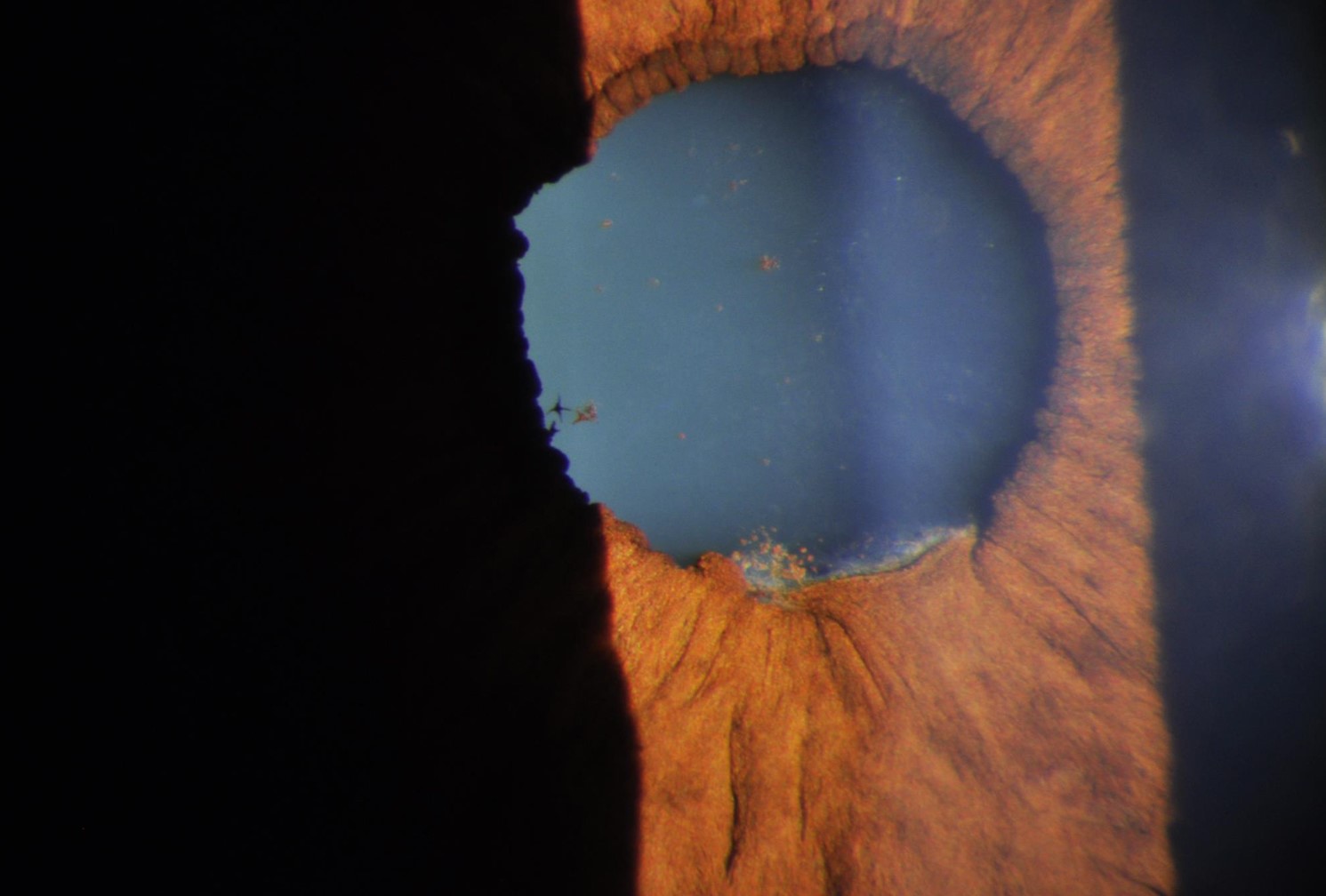
The onset is often insidious, the eyes are frequently both involved, and the course may be chronic.
These features lead to delayed diagnosis and a higher rate of complications unless the ophthalmologist and the rheumatologist work together.
What Is Psoriatic Arthritis Uveitis?
Uveitis is one of the extra-articular features of the spondyloarthropathies, along with enthesitis and skin disease.
It occurs in a minority of patients with psoriatic arthritis, and the frequency is lower than in ankylosing spondylitis.
HLA-B27 is associated with uveitis in psoriatic arthritis, particularly in patients with axial disease, but many patients with uveitis are HLA-B27 negative.
The exact link between psoriasis, arthritis, and uveitis is not clear, and shared immune pathways are suspected.
Clinical Features
- Insidious onset with mild or no pain, and a white or minimally red eye
- Bilateral involvement in a large fraction, and sometimes simultaneous
- Chronic or relapsing course, with persistent cells and flare
- Posterior segment involvement, including vitritis and macular edema, in some patients
- Complications such as synechiae, cataract, glaucoma, and cystoid macular edema
In ankylosing spondylitis, by contrast, the uveitis is typically acute, unilateral, painful, and alternating between the eyes (see acute anterior uveitis).
All-fit Slit-Lamp Adapter
Record and share exactly what you see at the slit lamp. One adapter fits any slit lamp or surgical microscope — and any smartphone.
From Choroida — the team behind this siteAssociated Findings
Skin psoriasis and nail pitting are often present, but psoriatic arthritis can occur before the skin disease.
Joint involvement may be asymmetric oligoarthritis, a symmetric polyarthritis, or axial disease.
Dactylitis and enthesitis are typical features.
Ask the patient about back pain, joint swelling, and a history of psoriasis in the family.
Differential Diagnosis
- HLA-B27 acute anterior uveitis in ankylosing spondylitis or reactive arthritis
- Juvenile idiopathic arthritis uveitis: asymptomatic and chronic in children (see JIA uveitis)
- Sarcoidosis: granulomatous features and systemic signs
- Inflammatory bowel disease uveitis: gastrointestinal symptoms
- Infectious causes: syphilis and tuberculosis, which should be excluded in chronic cases
Evaluation
Examine the anterior chamber, the lens, the pressure, and the posterior segment under dilation, and obtain OCT of the macula.
Order HLA-B27 and an infectious screen as appropriate for chronic or atypical uveitis.
Refer to rheumatology and dermatology, because control of the systemic disease affects the eye.
Treatment
Topical corticosteroids and cycloplegics control mild anterior disease, but the chronic nature calls for steroid-sparing therapy.
Methotrexate is used in many patients, and TNF inhibitors, particularly adalimumab and infliximab, reduce the rate of recurrence and treat associated arthritis.
Etanercept has been less effective for uveitis and is generally not preferred when the eye is the concern.
Treat macular edema with local or systemic therapy as needed (see uveitic macular edema).
Monitor the pressure carefully, since steroid use and inflammation can cause glaucoma (see uveitic glaucoma).
Patients should be told that the eyes may be inflamed without pain, and that regular visits are the way to detect it.
How to Pick It Up in Clinic
Because the eye may be white and painless, patients seldom complain, and the finding may emerge at a routine visit.
Ask every patient with psoriatic arthritis about eye symptoms, and ask every patient with chronic anterior uveitis about psoriasis, nail changes, and joint pain.
A careful slit-lamp examination, with attention to the lens, the vitreous, and the macula, is important when the inflammation is chronic.
Rheumatologists should be aware that new floaters, blurred vision, or a red eye need urgent referral.
Complications to Watch For
- Posterior synechiae and pupil distortion from persistent inflammation
- Cataract, from the disease and from steroids
- Glaucoma, from inflammation and from steroid response
- Cystoid macular edema, which often limits vision more than any other complication
- Band keratopathy in long-standing anterior uveitis
Plan regular OCT of the macula, and check the pressure at every visit.
Working With the Rheumatologist
Treatment of the joints and the eye often overlap, and a single drug may serve both.
Adalimumab has the best evidence for uveitis among the biologic agents, and it controls the arthritis, the skin, and the entheses.
Agents that block interleukin-17 or interleukin-12/23 are effective for psoriasis and arthritis, but their value in uveitis is less clear, and some patients have developed uveitis while on certain agents.
Share the ocular findings and the activity of the inflammation with the rheumatologist, so that the choice of drug takes the eye into account.
Patient Information
Explain that psoriatic arthritis can affect the eyes, that the inflammation can be silent, and that regular eye checks protect vision.
Give a clear list of symptoms that need urgent review.
Document what you see
Two smartphone imaging tools built for everyday clinic use — one for the slit lamp, one for the fundus.
From Choroida — the team behind this siteReferences
- Paiva ES, Macaluso DC, Edwards A, Rosenbaum JT. Characterisation of uveitis in patients with psoriatic arthritis. Ann Rheum Dis. 2000;59:67-70.
- Zeboulon N, Dougados M, Gossec L. Prevalence and characteristics of uveitis in the spondyloarthropathies: a systematic literature review. Ann Rheum Dis. 2008;67:955-959.
- Salmon JF. Kanski’s Clinical Ophthalmology: A Systematic Approach. 9th ed. Elsevier; 2020.
- American Academy of Ophthalmology. Basic and Clinical Science Course, Section 9: Uveitis and Ocular Inflammation. AAO; current edition.

Writes and reviews the clinical articles on Educate. Every post is checked against peer-reviewed sources before it goes live.