
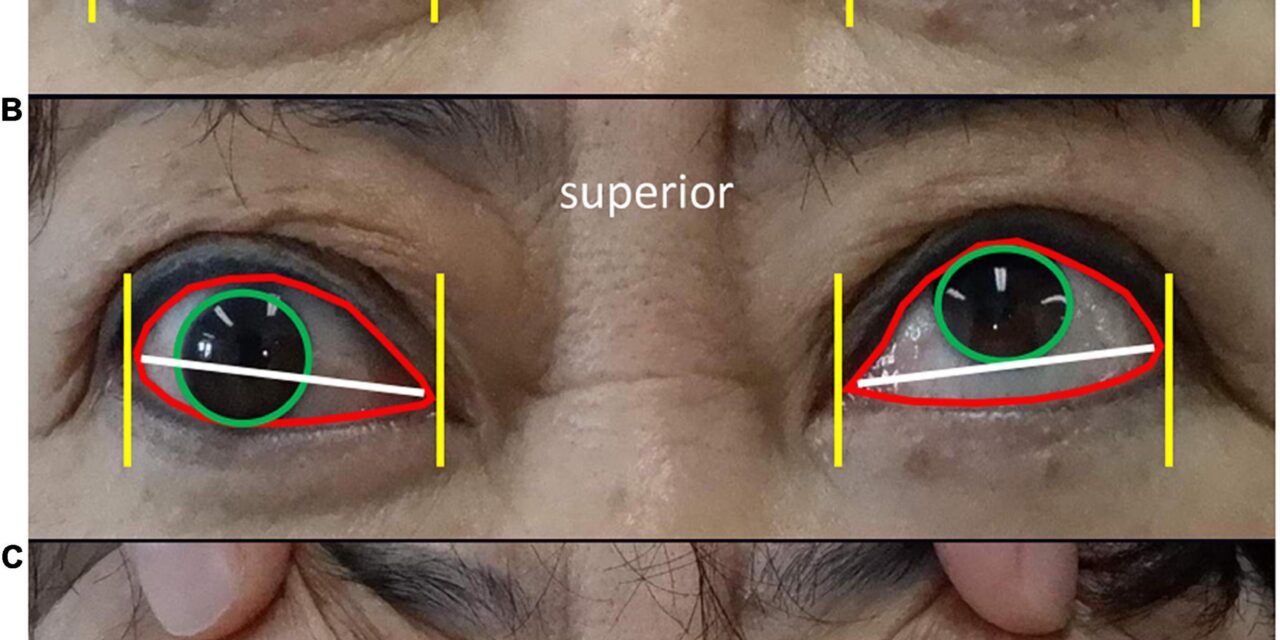
Introduction
Thyroid-associated orbitopathy (TAO), also known as thyroid eye disease (TED), is an autoimmune disorder primarily affecting the orbital tissues in patients with thyroid dysfunction, particularly Graves’ disease.
The disease presents with a spectrum of manifestations, from mild periorbital edema to severe proptosis, diplopia, and even sight-threatening compressive optic neuropathy. Timely and accurate diagnosis is crucial for optimal patient outcomes.
Recent advancements in artificial intelligence (AI) have revolutionized various aspects of medicine, including ophthalmology.
AI-powered algorithms, particularly machine learning (ML) and deep learning (DL), have demonstrated remarkable potential in TAO diagnosis, disease staging, and treatment planning.
Pathophysiology of Thyroid-Associated Orbitopathy
TAO is primarily mediated by an autoimmune response involving the thyroid-stimulating hormone receptor (TSHR) and insulin-like growth factor-1 receptor (IGF-1R).
Autoantibody-driven activation of fibroblasts leads to excessive glycosaminoglycan deposition, orbital adipogenesis, and inflammatory infiltration.
This results in progressive tissue remodeling, ultimately leading to proptosis, restrictive myopathy, and optic nerve compression.
The clinical course of TAO typically follows two distinct phases:
- Active (Inflammatory) Phase: Characterized by inflammation, edema, and rapidly progressing symptoms.
- Chronic (Fibrotic) Phase: Defined by fibrosis, restricted ocular motility, and persistent diplopia.
Accurate assessment of disease activity is critical for determining treatment strategies, and AI has emerged as a promising tool to assist in this process.
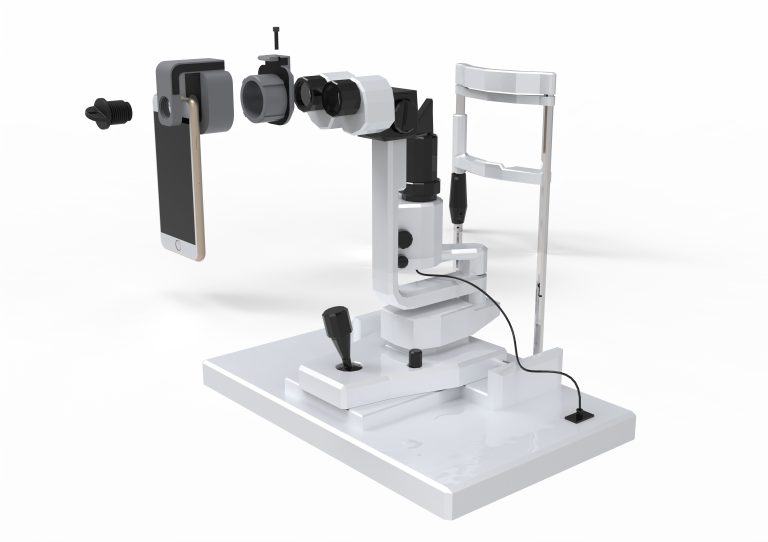
All-fit Slit-Lamp Adapter
Record and share exactly what you see at the slit lamp. One adapter fits any slit lamp or surgical microscope — and any smartphone.
From Choroida — the team behind this siteAI in TAO Diagnosis
AI-Based Imaging and Classification
- Deep Learning in Orbital Imaging
- AI-powered deep learning models have been trained to analyze orbital MRI and CT scans, identifying characteristic TAO changes such as extraocular muscle enlargement, fat expansion, and optic nerve compression.
- Convolutional neural networks (CNNs) have demonstrated superior accuracy in segmenting orbital structures and grading disease severity.
- Automated Grading of Proptosis
- Traditional measurement of proptosis relies on Hertel exophthalmometry, which is subjective and operator-dependent.
- AI algorithms trained on thousands of orbital images can provide automated and reproducible measurements, reducing inter-observer variability.
- Optical Coherence Tomography (OCT) Analysis
- AI-assisted OCT has been utilized to detect subtle retinal and optic nerve changes in TAO.
- Machine learning models can predict compressive optic neuropathy based on RNFL (retinal nerve fiber layer) thickness and macular changes.
AI in TAO Disease Activity Assessment
AI plays a crucial role in differentiating active from chronic TAO, which is essential for determining appropriate treatment strategies.
- Artificial Intelligence-Based CAS (AI-CAS):
- The Clinical Activity Score (CAS) is widely used to assess TAO activity. AI models trained on clinical images and patient data can automatically generate CAS scores with high accuracy.
- AI-CAS systems use facial recognition and deep learning techniques to detect inflammation, lid retraction, and soft tissue involvement.
- Infrared Thermography and AI Integration
- AI-assisted thermal imaging has been explored as a non-invasive method to assess orbital inflammation.
- Machine learning algorithms can analyze temperature variations in the periorbital region, correlating with disease activity.
- Real-Time Disease Progression Prediction
- AI models utilizing longitudinal patient data can predict disease progression and determine the likelihood of optic neuropathy development.
- Predictive analytics using AI can help guide clinicians on optimal timing for immunosuppressive therapy or surgical intervention.
AI in TAO Treatment Planning
- AI-Guided Personalized Treatment
- AI algorithms can integrate clinical, genetic, and imaging data to provide personalized treatment recommendations.
- Decision-support systems can assist ophthalmologists in selecting optimal therapeutic options, including corticosteroids, biologics, or surgical intervention.
- Optimizing Radiation and Surgical Planning
- AI-based radiotherapy planning tools help define precise radiation targets, minimizing ocular toxicity.
- In orbital decompression surgery, AI-powered 3D imaging assists in preoperative planning, improving surgical outcomes and reducing complications.
- AI-Assisted Monitoring of Treatment Response
- Automated analysis of serial imaging allows objective monitoring of treatment response.
- AI-powered telemedicine solutions enable remote monitoring of TAO patients, reducing the need for frequent hospital visits.
Challenges and Limitations of AI in TAO Management
Despite its promising applications, AI in TAO management faces several challenges:
- Data Availability and Quality: Large, high-quality datasets are required for accurate AI training, but TAO-specific datasets remain limited.
- Interpretability: Many AI models function as “black boxes,” making it difficult to understand decision-making processes.
- Regulatory and Ethical Concerns: AI-based diagnostic tools must undergo rigorous validation and regulatory approval before clinical deployment.
- Integration with Clinical Workflow: Adoption of AI requires seamless integration with existing ophthalmology practice, including electronic health records (EHRs) and imaging platforms.
Future Directions of AI in TAO Management
The future of AI in TAO management is promising, with ongoing advancements in deep learning and computational medicine. Potential future applications include:
- Multimodal AI Models: Combining clinical data, imaging, and molecular markers to enhance diagnostic precision.
- Augmented Reality (AR) for Surgical Guidance: AI-powered AR systems could assist surgeons in real-time during orbital decompression surgery.
- AI-Driven Drug Discovery: Machine learning could facilitate the identification of novel therapeutic targets for TAO.
- Global AI-Based Screening Programs: AI-driven telemedicine solutions could improve early TAO detection, particularly in underserved regions.
Conclusion
Artificial intelligence has revolutionized the diagnosis, monitoring, and treatment of thyroid-associated orbitopathy.
AI-driven imaging analysis, automated disease activity scoring, predictive modeling, and personalized treatment planning offer immense potential to improve patient care.
While challenges remain, ongoing research and technological advancements will likely enhance AI’s role in TAO management, paving the way for more precise and efficient patient outcomes.
As AI continues to evolve, its integration into clinical ophthalmology will undoubtedly lead to earlier detection, better prognostication, and improved therapeutic strategies for TAO patients.
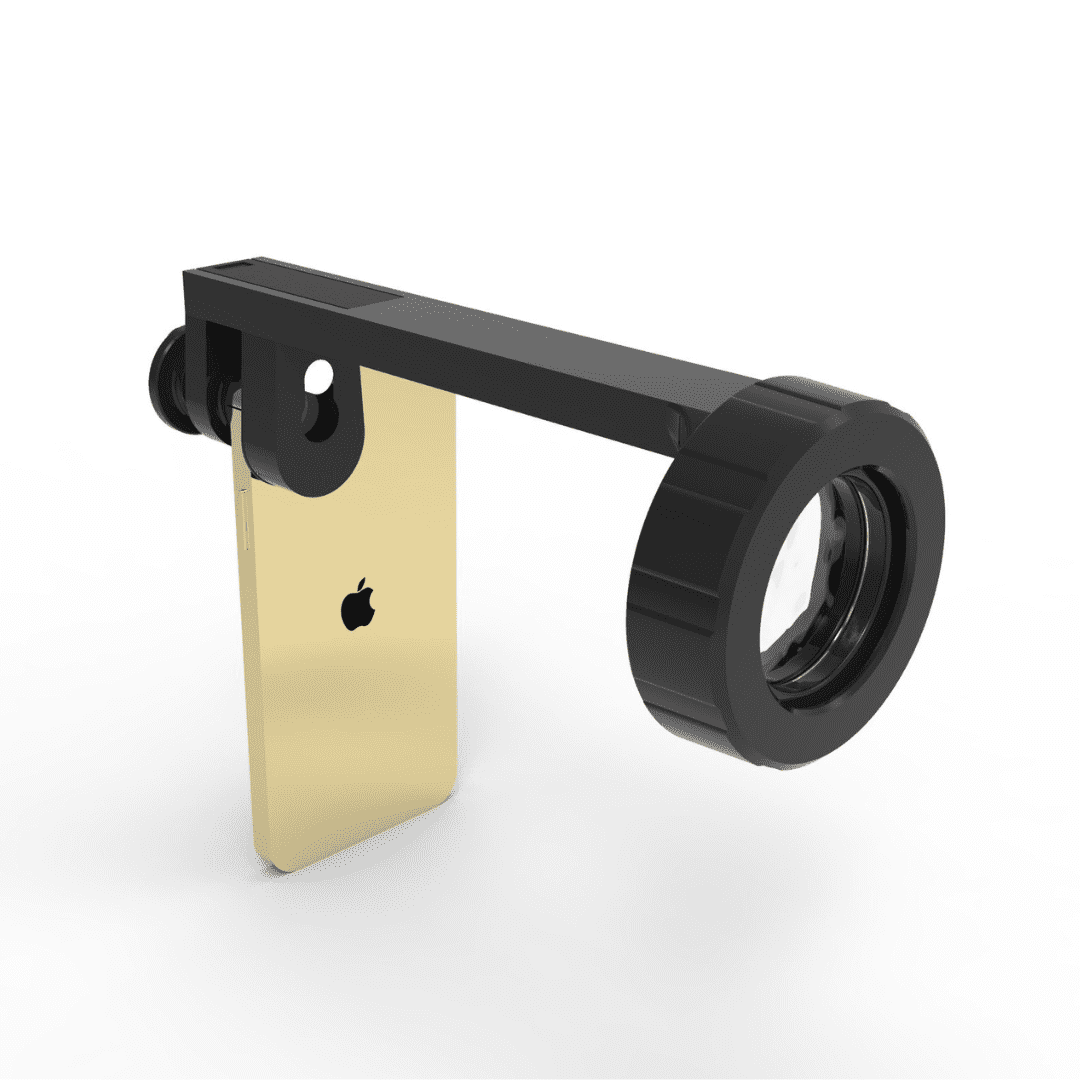
Document what you see
Two smartphone imaging tools built for everyday clinic use — one for the slit lamp, one for the fundus.
From Choroida — the team behind this siteReferences
- Wiersinga WM, Bartalena L. Epidemiology and prevention of graves’ Ophthalmopathy. Thyroid. (2002) 12:855–60. doi: 10.1089/105072502761016476.
- Ugradar S, Kang J, Kossler AL, Zimmerman E, Braun J, Harrison AR, et al. Teprotumumab for the treatment of chronic thyroid eye disease. Eye. (2022) 36:1553–9. doi: 10.1038/s41433-021-01593-z.
- Oculoplastic and Orbital Disease Group of Chinese Ophthalmological Society of Chinese Medical Association, Thyroid Group of Chinese Society of Endocrinology of Chinese Medical Association. Chinese guideline on the diagnosis and treatment of thyroid‑associated ophthalmopathy (2022). Chin J Ophthalmol (2022) 58:646–68. doi: 10.3760/cma.j.cn112142-20220421-00201.
- Moujahid H, Cherradi B, Al-Sarem M, Bahatti L, Bakr A, Mohammed A, et al. Combining CNN and grad-cam for COVID-19 disease prediction and visual explanation. Intell Autom Soft Comput. (2022) 32:723–45. doi: 10.32604/iasc.2022.022179.
- Rehouma R, Buchert M, Chen YP. Machine learning for medical imaging-based COVID-19 detection and diagnosis. Int J Intell Syst. (2021) 36:5085–115. doi: 10.1002/int.22504.
Test yourself
A few questions straight from this article.
-
Thyroid-associated orbitopathy is an autoimmune disorder most commonly associated with which thyroid condition?
TAO primarily affects orbital tissues in patients with thyroid dysfunction, particularly Graves disease. -
Which two receptors drive the autoimmune response in thyroid-associated orbitopathy?
TAO is mediated by autoimmunity against the thyroid-stimulating hormone receptor and the insulin-like growth factor-1 receptor. -
Autoantibody activation of orbital fibroblasts in thyroid eye disease produces which tissue change?
Fibroblast activation leads to glycosaminoglycan deposition, orbital adipogenesis, and inflammatory infiltration, causing progressive tissue remodeling. -
Which features define the chronic phase of thyroid-associated orbitopathy?
TAO follows an active inflammatory phase and a chronic fibrotic phase marked by fibrosis, restricted ocular motility, and persistent diplopia. -
Which deep learning architecture is cited as superior for segmenting orbital structures in thyroid eye disease imaging?
Convolutional neural networks have shown superior accuracy in segmenting orbital structures on MRI and CT and in grading disease severity. -
Which limitation of Hertel exophthalmometry does AI-based proptosis measurement aim to overcome in thyroid eye disease?
Hertel exophthalmometry is subjective and operator-dependent, whereas AI trained on thousands of orbital images gives reproducible measurements with less inter-observer variability. -
In thyroid eye disease, machine learning models predict compressive optic neuropathy using which OCT parameters?
AI-assisted OCT detects subtle retinal and optic nerve changes, and models predict compressive optic neuropathy from RNFL thickness and macular changes. -
Which clinical scoring system do AI models automate to assess thyroid-associated orbitopathy activity?
AI-CAS systems generate Clinical Activity Score values automatically, using facial recognition and deep learning to detect inflammation, lid retraction, and soft tissue involvement. -
Which non-invasive imaging method is being combined with AI to assess orbital inflammation in thyroid eye disease?
AI-assisted thermal imaging analyses periorbital temperature variations, which correlate with disease activity. -
Which limitation makes many AI models for thyroid eye disease difficult to interpret clinically?
The article lists interpretability as a key challenge because many AI models act as black boxes, alongside limited datasets, regulatory hurdles, and workflow integration.
