Pseudoexfoliation Syndrome DISEASE entity
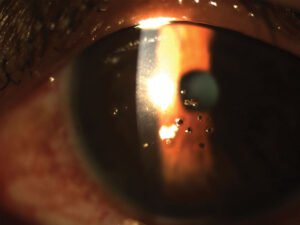
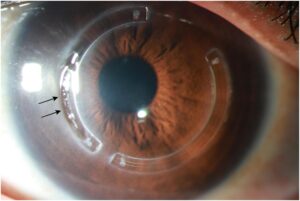
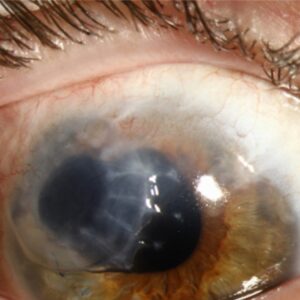
Pseudoexfoliation syndrome (PXF or PEX) is an age-related systemic syndrome that targets mainly ocular tissues through the gradual deposition of fibrillary white flaky material from the lens, mainly on the lens capsule, ciliary body, zonules, corneal endothelium, iris, and pupillary margin.
There is a higher prevalence of open-angle glaucoma in about 50% of these patients. Exfoliation (pseudoexfoliation) Syndrome is characterized by fibrillar deposits in the anterior segment of the eye.
The deposits have been found on and in the subconjunctival tissue, pupillary margin, ciliary epithelium, lens epithelium, lens capsule, iris pigment epithelium, trabecular meshwork, cornea, zonules, orbital soft tissues, iris stroma, and iris blood vessels.
These deposits have also been found elsewhere, including in the skin, heart, lungs, liver, kidneys, and elsewhere. The disease may be bilateral and asymmetric. It has been associated with myocardial infarction, cerebrovascular events, and systemic hypertension.
Physical examination
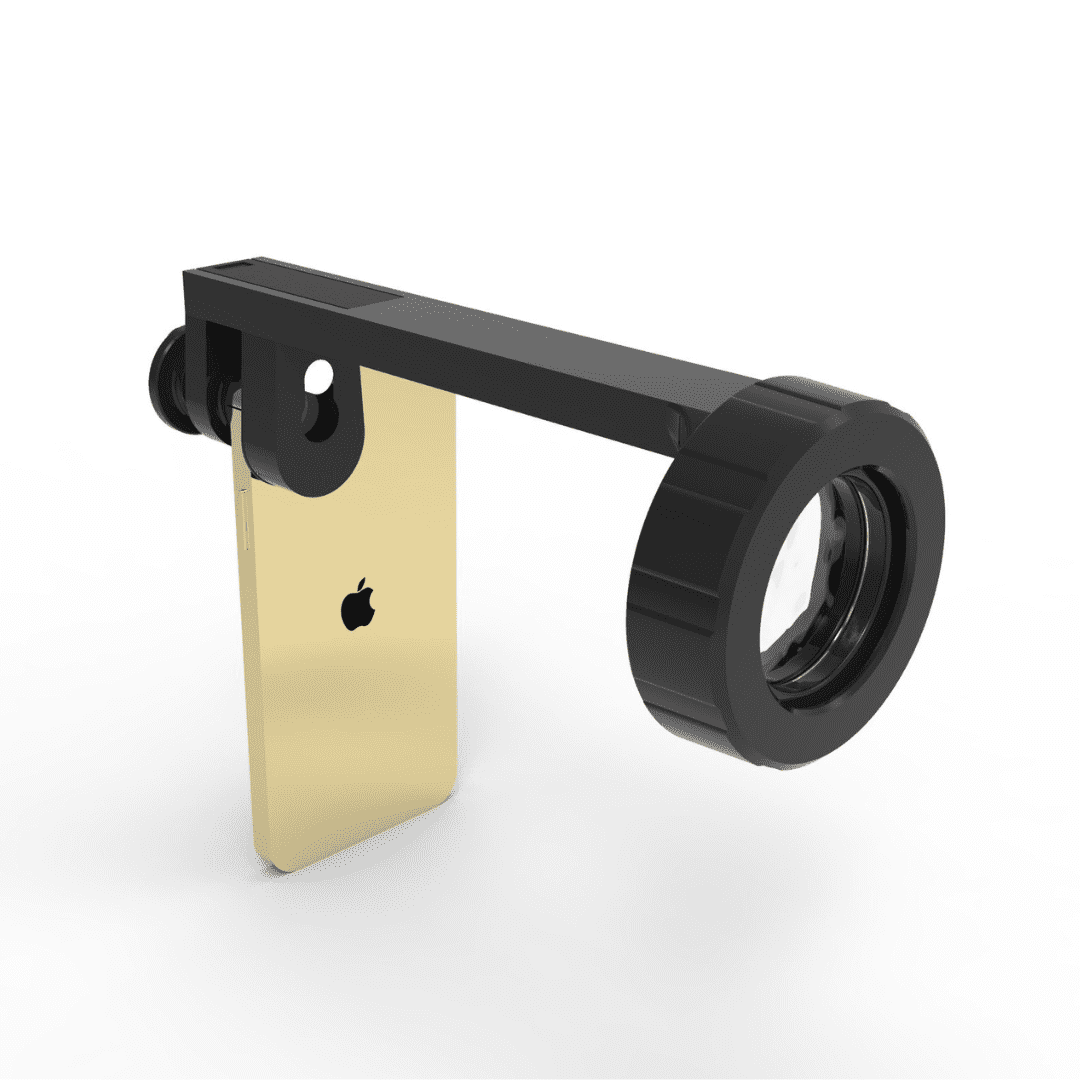
All-fit Slit-Lamp Adapter
Record and share exactly what you see at the slit lamp. One adapter fits any slit lamp or surgical microscope — and any smartphone.
From Choroida — the team behind this siteSigns:
- Increased intraocular pressure
- Possible glaucomatous damage to the optic nerve
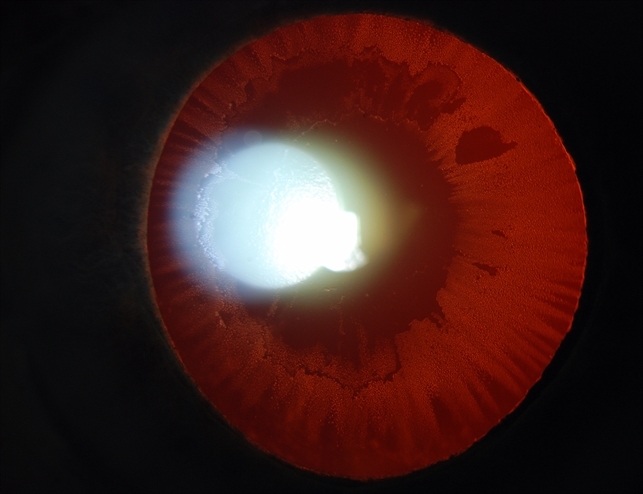
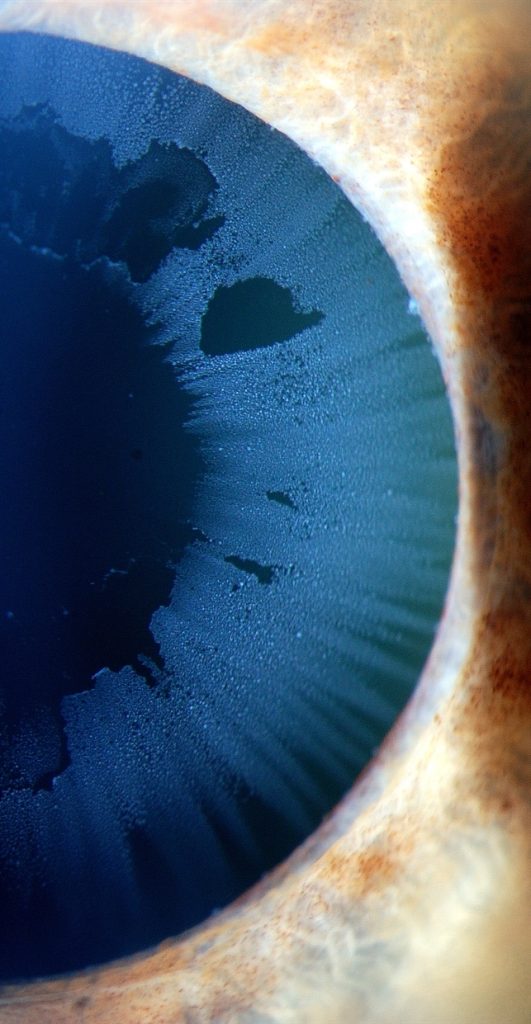
- Poor dilation with peripapillary transillumination defect
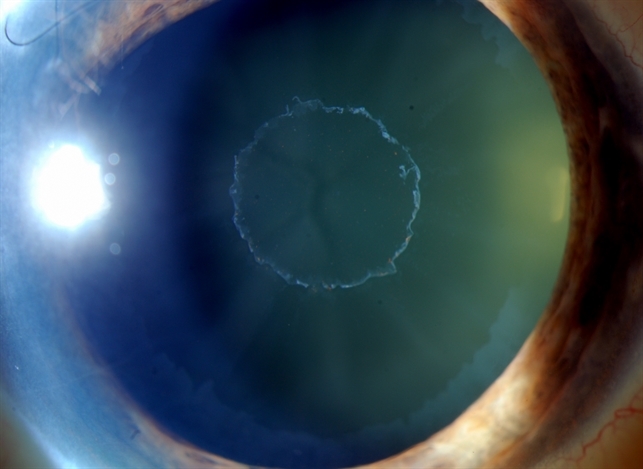
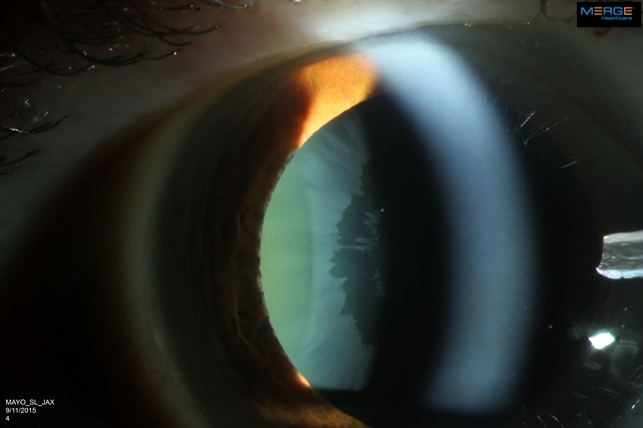
- Fibrillar white flaky deposits on the anterior lens capsule (Hoarfrost Ring)
- Fibrillar white flaky deposits at the pupillary border
- Hyperpigmentation of the trabecular meshwork (TM) with an open angle on gonioscopy
- Sampaolesi line, an abundance of linear pigment anterior to the TM at or anterior to Schwalbe’s line (not pathognomic; also seen in pigment dispersion syndrome)
Symptoms:
No associated symptoms aside from possibly significantly increased intraocular pressure
Laboratory test
- Genetic test for a single mutation in the LOXL1
- Check for Homocysteine levels in the tear film and plasma. Scientists believe that elevated levels of plasma homocysteine are a risk factor for cardiovascular disease, and two studies have found higher levels of plasma and tear fluids homocysteine levels in pseudoexfoliation patients.
Differential diagnosis
- Lens capsule deposite: true exfoliation syndrome
- Trabecular meshwork hyperpigmentation/ glaucoma: Pigment dispersion syndrome
- Iris transillumination defects: Pigment dispersion syndrome, trauma, prior herpes infection
MANAGEMENT of Pseudoexfoliation Syndrome
- Routine regular eye exam
- Glaucoma monitoring and treatment if warranted
- Special surgical considerations for cataract surgery pre-operatively, intra-operatively and post-operatively
Medical therapy
- Drops if the patient has glaucoma
- Possible use of antioxidants
- Lower Homocysteine if the level is high in plasma or tear film
Medical follow up
Routine annual eye screening exam with dilation.
Document what you see
Two smartphone imaging tools built for everyday clinic use — one for the slit lamp, one for the fundus.
From Choroida — the team behind this siteREFERENCES
- Schlötzer-Schrehardt U, Naumann GO. Ocular and systemic pseudoexfoliation syndrome. Am J Ophthalmol. 2006 May;141(5):921-937.
- Jeng SM, Karger RA, Hodge DO, Burke JP, Johnson DH, Good MS. The risk of glaucoma in pseudoexfoliation syndrome. J Glaucoma. 2007 Jan;16(1):117-21.
- Plateroti P, Plateroti AM, Abdolrahimzadeh S, Scuderi G. Pseudoexfoliation Syndrome and Pseudoexfoliation Glaucoma: A Review of the Literature with Updates on Surgical Management. J Ophthalmol. 2015;2015:370371.
- Elhawy E, Kamthan G, Dong CQ, Danias J. Pseudoexfoliation syndrome, a systemic disorder with ocular manifestations. Hum Genomics. 2012 Oct 10;6(1):22.
- Zenkel M, Kruse FE, Jünemann AG, Naumann GO, Schlötzer-Schrehardt U. Clusterin deficiency in eyes with pseudoexfoliation syndrome may be implicated in the aggregation and deposition of pseudoexfoliative material. Invest Ophthalmol Vis Sci. 2006 May;47(5):1982-90.
Test yourself
A few questions straight from this article.
-
What defines pseudoexfoliation syndrome (PXF)?
PXF is an age-related systemic syndrome in which fibrillary white flaky material derived from the lens is gradually deposited on ocular structures. -
Approximately what proportion of pseudoexfoliation syndrome patients have open-angle glaucoma?
The article reports a higher prevalence of open-angle glaucoma, in about 50% of patients with pseudoexfoliation syndrome. -
Beyond the eye, where else has pseudoexfoliation material been found?
Pseudoexfoliation deposits have been found in the skin, heart, lungs, liver and kidneys, and the condition is associated with myocardial infarction, cerebrovascular events and hypertension. -
What is the Hoarfrost ring seen in pseudoexfoliation syndrome?
The Hoarfrost ring describes the fibrillar white flaky deposits on the anterior lens capsule, one of the classic slit-lamp signs of PXF. -
What is the Sampaolesi line seen on gonioscopy in pseudoexfoliation syndrome?
The Sampaolesi line is an abundance of linear pigment anterior to the trabecular meshwork at or anterior to Schwalbe's line; it is not pathognomonic and also occurs in pigment dispersion syndrome. -
What symptoms do patients with pseudoexfoliation syndrome typically report?
PXF has no associated symptoms apart from those relating to a possibly significantly increased intraocular pressure, which is why it is a hidden cause of vision loss. -
A mutation in which gene is tested for in pseudoexfoliation syndrome?
Laboratory testing in PXF includes a genetic test for a single mutation in LOXL1. -
Which laboratory marker is found at higher levels in pseudoexfoliation patients?
Two studies found higher plasma and tear fluid homocysteine levels in pseudoexfoliation patients; elevated plasma homocysteine is also a cardiovascular risk factor. -
Which condition is the main differential for trabecular meshwork hyperpigmentation in pseudoexfoliation syndrome?
The article lists pigment dispersion syndrome as the differential for trabecular meshwork hyperpigmentation and glaucoma, and also for iris transillumination defects along with trauma and prior herpes infection. -
What follow-up is recommended for a patient with pseudoexfoliation syndrome?
Management is routine regular examination with annual dilated screening, glaucoma monitoring and treatment if warranted, plus special considerations around cataract surgery.

Writes and reviews the clinical articles on Educate. Every post is checked against peer-reviewed sources before it goes live.