AMD eye drops are a frequent request in retina clinics, yet no topical drop has proven benefit for macular degeneration.
Patients often find these products online and ask whether they can replace injections, so clinicians need a clear answer based on pharmacology and trial data.
Why Patients Ask About AMD Eye Drops
Intravitreal injections frighten many patients, and frequent visits are a real burden, so a drop sounds simple and safe. Online sellers also use the words “macula” and “retina” freely on their labels.
How Topical Drugs Reach the Eye
A drop lands on the tear film, and most of it drains within minutes, while the corneal epithelium and conjunctiva limit absorption. The drug that passes then meets aqueous outflow, the lens, the vitreous and choroidal blood flow, so only a tiny fraction of the dose reaches the macula.
Fundus Explorer Pro
Photograph the retinal findings described here with the phone already in your pocket — 22 D optics and built-in illumination in one handheld unit.
From Choroida — the team behind this siteThe Back of the Eye Problem
Anterior segment diseases respond well to drops because the target sits near the surface. However, the retinal pigment epithelium and choroid lie behind several clearance routes, so effective AMD drugs go into the vitreous, close to the target tissue.
Failed Trials of AMD Eye Drops
Several companies tested topical anti-angiogenic drops for neovascular AMD, and for example, squalamine, pazopanib and regorafenib drops reached clinical trials. However, none showed a benefit convincing enough for approval.
What Over-the-Counter AMD Eye Drops Contain
Products sold online often list antioxidants, carnosine derivatives, herbal extracts or homeopathic ingredients, and labels may claim to “nourish the macula” or “reverse degeneration.” Yet randomized trials in AMD do not support these claims, and the concentration and purity of such products are often unclear.
Possible Harm From Unproven AMD Eye Drops
Most of these drops are probably harmless to the ocular surface, but the real risk lies in delay. For example, a patient with new distortion may rely on drops and skip an urgent visit, yet untreated neovascular AMD can cause rapid central vision loss.
Evidence-Based Treatment for Wet AMD
Intravitreal anti-VEGF therapy is the standard of care for neovascular AMD, and ranibizumab improved visual acuity in the MARINA trial, with later agents building on that result. Treatment intervals then follow disease activity on OCT (see AMD management strategies). Injections carry a small risk of endophthalmitis, so patients must report pain or worsening vision.
Geographic Atrophy Options
Pegcetacoplan and avacincaptad pegol inhibit parts of the complement cascade, and both drugs slowed lesion growth in phase 3 trials. However, neither improved visual acuity, and both require intravitreal injection. Patients should also hear about intraocular inflammation and new neovascular AMD in treated eyes.
Oral Supplements Versus AMD Eye Drops
The AREDS formulation lowered the risk of progression in intermediate AMD or advanced AMD in one eye. Later, AREDS2 replaced beta-carotene with lutein and zeaxanthin (see macular pigment), and these nutrients reach the retina through the systemic circulation. However, the trials do not support supplements for early AMD alone.
Drops That AMD Patients May Still Need
Many older patients with AMD also have dry eye, glaucoma or blepharitis, and lubricants can improve comfort and contrast during reading. In addition, glaucoma drops stay necessary when pressure is elevated, because these drops treat coexisting disease and have no effect on the macula.
Drops Around Intravitreal Injections
Povidone-iodine antisepsis before injection has strong support. In contrast, routine topical antibiotics after injection have not shown clear protection against endophthalmitis, so many retina specialists no longer prescribe them.
Counseling About AMD Eye Drops
Start by asking what the patient bought and why, then explain that drops cannot reach the macula in useful amounts. Avoid mocking the product, because shame reduces trust and adherence. Finally, connect the discussion to a plan: supplements when indicated, monitoring and prompt treatment.
Home Monitoring Instead of AMD Eye Drops
Self-monitoring offers more value than any unproven drop. Amsler grid checks or approved home devices can detect new distortion early, and as a result, treatment can begin before major vision loss (see home monitoring).
Future Research on AMD Eye Drops
Researchers continue to explore nanoparticles, penetration enhancers and prodrugs for posterior delivery, and some compounds have reached the retina in animal models. However, no topical agent has matched intravitreal therapy in human trials, so treat any “breakthrough” drop claim with caution until peer-reviewed phase 3 data appear.
Pitfalls to Avoid
- Do not dismiss a question about drops without explanation
- Never let drops delay review of new distortion or blur
- Keep lubricants that improve comfort in an AMD patient
- Avoid routine antibiotic drops after every injection
- Also check supplement labels for beta-carotene in smokers
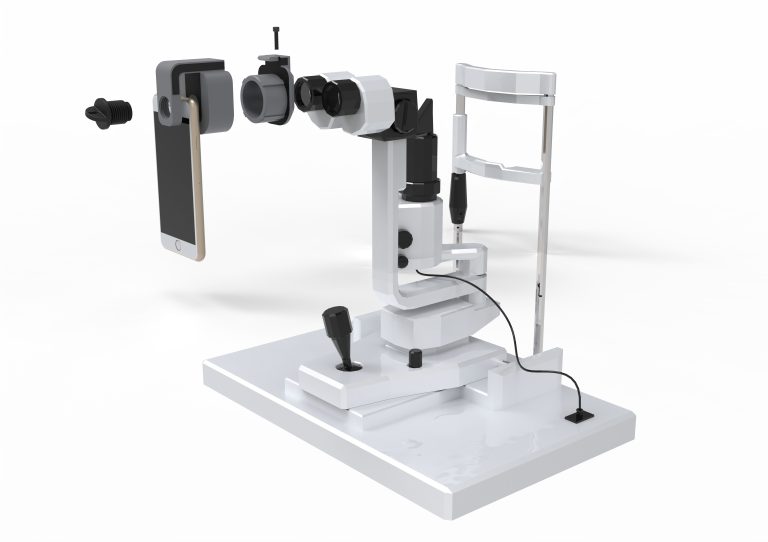
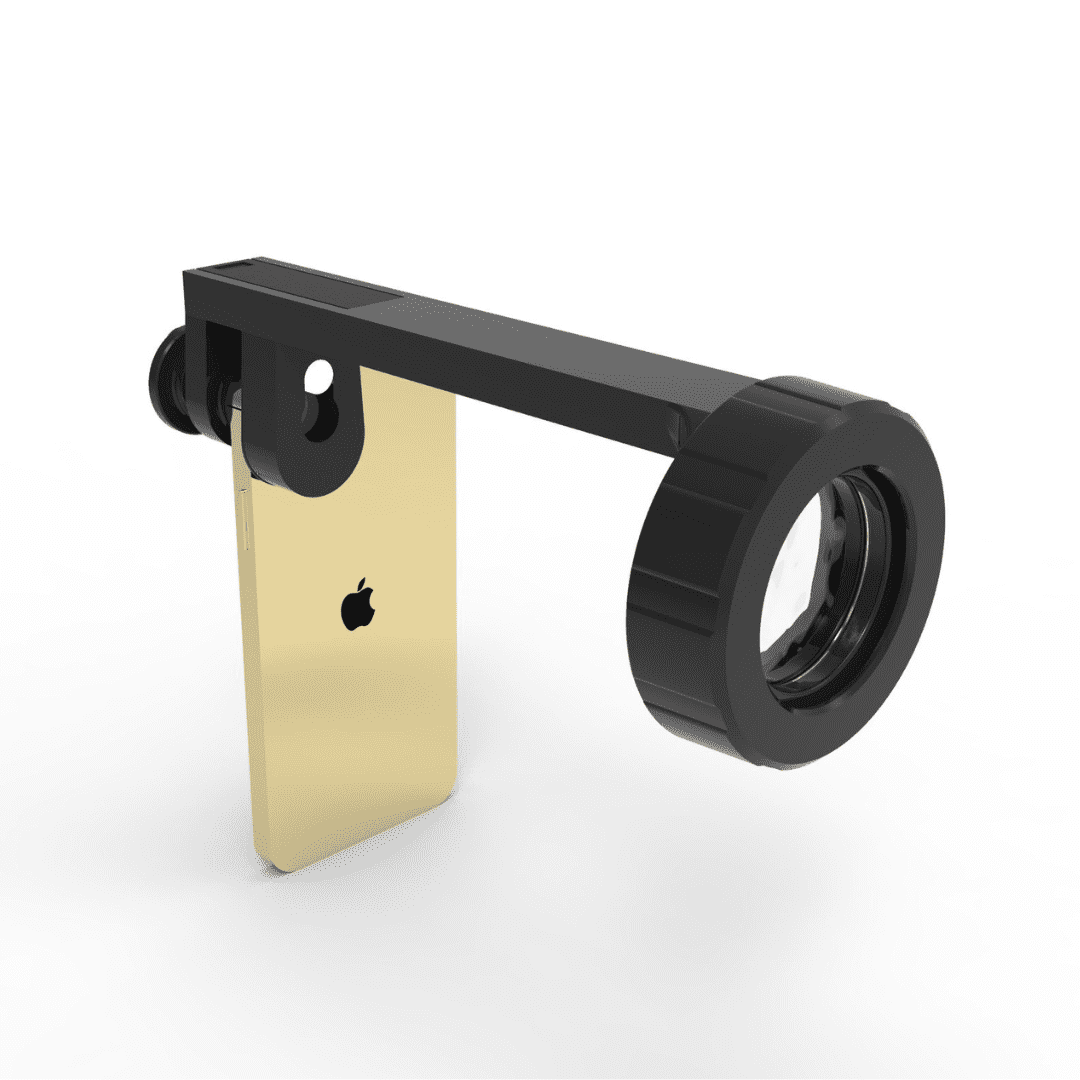
Document what you see
Two smartphone imaging tools built for everyday clinic use — one for the slit lamp, one for the fundus.
From Choroida — the team behind this siteReferences
- Age-Related Eye Disease Study Research Group. A randomized, placebo-controlled, clinical trial of high-dose supplementation with vitamins C and E, beta carotene, and zinc for age-related macular degeneration and vision loss: AREDS report no. 8. Arch Ophthalmol. 2001;119:1417-1436.
- Age-Related Eye Disease Study 2 Research Group. Lutein + zeaxanthin and omega-3 fatty acids for age-related macular degeneration: the AREDS2 randomized clinical trial. JAMA. 2013;309:2005-2015.
- Rosenfeld PJ, Brown DM, Heier JS, et al. Ranibizumab for neovascular age-related macular degeneration. N Engl J Med. 2006;355:1419-1431.
- Heier JS, Lad EM, Holz FG, et al. Pegcetacoplan for the treatment of geographic atrophy secondary to age-related macular degeneration (OAKS and DERBY). Lancet. 2023;402:1434-1448.
- Flaxel CJ, Adelman RA, Bailey ST, et al. Age-Related Macular Degeneration Preferred Practice Pattern. Ophthalmology. 2020;127:P1-P65.

Writes and reviews the clinical articles on Educate. Every post is checked against peer-reviewed sources before it goes live.