Eyelash epilation removes misdirected lashes that rub the cornea or conjunctiva.
It treats trichiasis, distichiasis and metaplastic lashes. However, the chosen method decides how long relief lasts, and selection depends on lash number, location, cause and the state of the lid margin.
What Eyelash Epilation Treats
Trichiasis means lashes from normally positioned follicles that turn toward the globe, while distichiasis is an extra row of lashes emerging from the meibomian gland orifices. Entropion, by contrast, turns the whole margin inward and needs lid surgery. Therefore, define the anatomy before choosing any lash procedure.
Examining the Lid Margin
Use the slit lamp while the patient looks up, down and to each side, then count the offending lashes and note whether they arise anterior or posterior to the gray line. Then instill fluorescein to map punctate epitheliopathy or abrasions under each lash.
All-fit Slit-Lamp Adapter
Record and share exactly what you see at the slit lamp. One adapter fits any slit lamp or surgical microscope — and any smartphone.
From Choroida — the team behind this siteUnderlying Causes to Exclude
Chronic blepharitis, trachoma, previous trauma and lid surgery all distort follicles, and mucous membrane pemphigoid and Stevens-Johnson syndrome can drive progressive misdirection. As a result, margin care and treatment of the cause should run alongside lash removal.
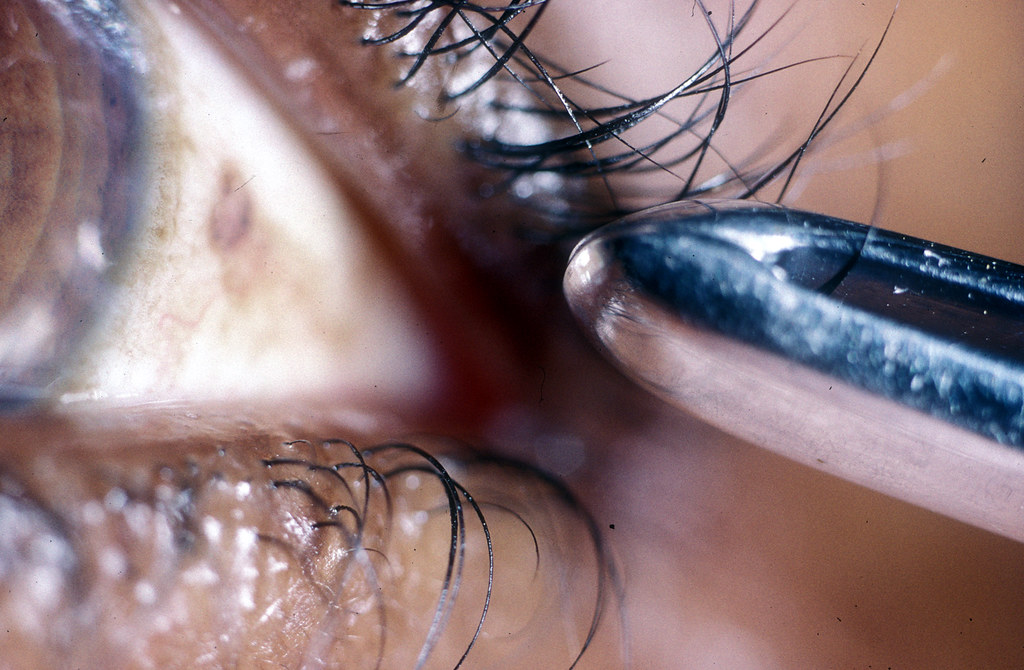
Forceps Eyelash Epilation
Plucking with fine forceps at the slit lamp gives immediate relief, needs no anesthesia and suits a few scattered lashes. However, the follicle survives, so the lash regrows within weeks. Short regrowing stubs can feel sharper and may abrade the cornea more, so patients therefore return repeatedly, or a relative learns to epilate at home with good lighting.
Evidence for Repeated Epilation
Rajak and colleagues randomized Ethiopian patients with minor trachomatous trichiasis to surgery or repeated epilation. The trial supported epilation as an acceptable option for minor disease when surgery is declined. Those findings apply to a few peripheral lashes only, while major trichiasis and entropion still need surgical correction.
Electrolysis for Permanent Removal
Electrolysis passes a fine needle along the lash shaft into the follicle, and a low current then destroys the germinal cells. Each lash needs individual treatment under local anesthesia, so sessions are slow. Recurrence is common because the needle often misses an angled follicle.
Radiofrequency Ablation
Radiofrequency units deliver high-frequency energy through a fine wire electrode placed at the follicle. Kezirian reported good control of localized trichiasis with this approach, and compared with electrolysis it tends to cause less collateral tissue damage. However, success depends on precise placement, and some lashes need retreatment.
Cryotherapy in Eyelash Epilation
Cryotherapy freezes a segment of the lid margin with a double freeze-thaw cycle, and because follicles tolerate cold poorly compared with surrounding tissue, a whole segment clears at once. Sullivan and colleagues described this technique for trichiasis decades ago.
As a result, it suits many lashes clustered along one part of the lid. The freezing principle resembles retinal work (see retinal cryotherapy), yet the lid margin heals less predictably.
Cryotherapy Risks
- Skin depigmentation, especially in darker skin
- Loss of normal lashes in the treated zone
- Lid margin notching and thinning
- Marked swelling for several days
- Possible flare of cicatricial conjunctivitis
Therefore, many surgeons avoid cryotherapy in active pemphigoid.
Laser Eyelash Epilation
Argon laser ablates the follicle by aiming along the lash shaft toward its root. Pigmented lashes absorb the energy well, so dark lashes respond best, while fine pale lashes absorb poorly and often regrow. In addition, several sessions are usually needed, and a corneal shield protects the eye.
Surgical Options Beyond Eyelash Epilation
A full row of distichiasis may need lid splitting with excision or targeted ablation of follicles, while trichiasis with entropion needs lid rotation surgery. Meanwhile, wedge resection can remove a small cluster at one site, and these operations correct anatomy that no ablative method can change.
Choosing a Method
- One to three scattered lashes: forceps or radiofrequency
- Recurrent isolated lashes: electrolysis, radiofrequency or laser
- Segmental clusters: cryotherapy or wedge excision
- Distichiasis row: lid splitting with targeted ablation
- Entropion: lid surgery first
Protecting the Cornea in Eyelash Epilation
Lubricants and a bandage contact lens cushion the cornea while lashes regrow, but watch for epithelial defects with infiltrates, because chronic abrasion invites infection (see microbial keratitis risk factors). Also, treat dry eye and blepharitis, since an irritated surface tolerates lash contact poorly.
Counseling Before Eyelash Epilation
Explain that plucking is temporary and that permanent methods can still fail. Next, warn about scarring, depigmentation and loss of healthy lashes with ablation, and note that patients with cicatricial disease should expect ongoing treatment. Finally, agree on a follow-up plan and what to do if symptoms return between visits.
Pitfalls to Avoid
- Do not epilate repeatedly while ignoring entropion
- Never apply cryotherapy without warning about depigmentation
- Use high magnification so fine lashes are not missed
- Avoid broad ablation in active cicatricial conjunctivitis


Document what you see
Two smartphone imaging tools built for everyday clinic use — one for the slit lamp, one for the fundus.
From Choroida — the team behind this siteReferences
- Rajak SN, Habtamu E, Weiss HA, et al. Surgery versus epilation for the treatment of minor trichiasis in Ethiopia: a randomised controlled noninferiority trial. PLoS Med. 2011;8:e1001136.
- Sullivan JH, Beard C, Bullock JD. Cryosurgery for treatment of trichiasis. Am J Ophthalmol. 1976;82:117-121.
- Kezirian GM. Treatment of localized trichiasis with radiosurgery. Ophthal Plast Reconstr Surg. 1993;9:260-266.
- American Academy of Ophthalmology. Basic and Clinical Science Course, Section 7: Oculofacial Plastic and Orbital Surgery. San Francisco: AAO.
- Bowling B. Kanski’s Clinical Ophthalmology: A Systematic Approach. 8th ed. Elsevier; 2016.
Test yourself
A few questions straight from this article.
-
What defines trichiasis, as distinct from entropion?
Trichiasis is misdirection of lashes from normally positioned follicles, whereas entropion turns the whole margin inward and needs lid surgery. -
Where do the extra lashes of distichiasis emerge?
Distichiasis is an extra row of lashes emerging from the meibomian gland orifices; a full row may need lid splitting with targeted ablation. -
Why does forceps epilation of a misdirected eyelash give only temporary relief?
Plucking gives immediate relief without anaesthesia, but the follicle survives; short regrowing stubs can feel sharper and abrade the cornea more. -
What did the Rajak trial in Ethiopia support for minor trachomatous trichiasis?
The randomized trial supported epilation for minor disease when surgery is declined; major trichiasis and entropion still need surgical correction. -
Why is recurrence common after electrolysis for trichiasis?
Electrolysis passes a needle along the shaft to destroy germinal cells, lash by lash under local anaesthesia; recurrence is common because the needle often misses an angled follicle. -
Compared with electrolysis, what advantage does radiofrequency ablation offer for localized trichiasis?
Radiofrequency tends to cause less collateral damage than electrolysis, though success depends on precise placement and some lashes need retreatment. -
For which pattern of misdirected lashes is cryotherapy best suited?
A double freeze-thaw clears a whole segment at once because follicles tolerate cold poorly, so cryotherapy suits clustered lashes along one part of the lid. -
Which cryotherapy risk for trichiasis is especially marked in darker skin?
Cryotherapy risks include depigmentation, especially in darker skin, loss of normal lashes, margin notching and possible flare of cicatricial conjunctivitis. -
Which eyelashes respond best to argon laser epilation?
Argon laser relies on pigment absorbing energy, so dark lashes respond best, while fine pale lashes absorb poorly and often regrow. -
What is the first-line treatment when trichiasis is caused by entropion?
Trichiasis with entropion needs lid rotation surgery first; ablative methods cannot correct the anatomy, and repeated epilation while ignoring entropion is a pitfall.

Writes and reviews the clinical articles on Educate. Every post is checked against peer-reviewed sources before it goes live.