
Microbial keratitis risk factors are genuinely worth knowing in detail, not just as background information, because the specific risk factor present in a given patient often points toward the most likely causative organism before culture results are even available, directly shaping the choice of empiric antimicrobial treatment started at first presentation.
Why Risk Factors Point Toward Likely Organisms
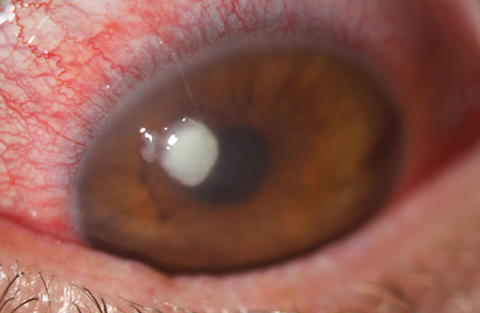
An intact, healthy corneal epithelium is remarkably resistant to microbial invasion, and microbial keratitis generally requires some disruption of this normal protective barrier or an underlying predisposing condition, and because different risk factors are associated with exposure to different organisms, recognizing the specific risk factor profile in a given patient provides genuinely useful diagnostic and treatment-guiding information.
Contact Lens Wear
Contact lens wear, particularly extended or overnight wear, is one of the most significant and common risk factors for microbial keratitis in otherwise healthy eyes, and this risk factor is specifically associated with Pseudomonas aeruginosa and, particularly with certain lens solutions or water exposure, Acanthamoeba (see Acanthamoeba ring infiltrate and contact lens-associated acute red eye for related contact-lens-specific corneal complications).
All-fit Slit-Lamp Adapter
Record and share exactly what you see at the slit lamp. One adapter fits any slit lamp or surgical microscope — and any smartphone.
From Choroida — the team behind this siteOcular Surface Disease
Chronic ocular surface disease, including severe dry eye, neurotrophic keratopathy, exposure keratopathy, and chronic blepharitis, compromises the normal protective epithelial barrier and tear film defenses, predisposing to microbial keratitis, often with a broader range of potential causative organisms, including both bacterial and, in some settings, fungal pathogens.
Trauma
- Corneal trauma involving vegetable matter or other organic material carries a specific, well-recognized association with fungal keratitis, an important consideration when selecting empiric treatment in this specific clinical setting
- Trauma involving soil or contaminated water exposure raises consideration for a broader range of organisms, including certain bacteria and, in specific circumstances, Acanthamoeba
- Any corneal trauma disrupting the epithelial barrier, regardless of the specific material involved, increases the general risk of microbial keratitis from typical bacterial pathogens
Topical Corticosteroid Use
Use of topical corticosteroids, particularly when used without adequate antimicrobial coverage in the setting of an already compromised ocular surface, can predispose to both worsening of an existing infection and, in some cases, facilitate fungal keratitis specifically, given corticosteroids’ suppression of local immune defenses against fungal organisms.
Other Recognized Risk Factors
- Recent ocular surgery, providing both a direct portal of entry and, in the early postoperative period, altered local tissue defenses
- Systemic immunosuppression, whether from medication or underlying systemic disease, broadly increasing susceptibility to infection, including at the ocular surface
- Diabetes, associated with both altered corneal epithelial health and impaired wound healing, contributing to increased microbial keratitis risk
- Eyelid malposition or dysfunction, including entropion, ectropion, or lagophthalmos, compromising normal tear film distribution and mechanical protection of the ocular surface
Clinical Application: Using Risk Factors to Guide Initial Management
- A contact lens wearer presenting with a corneal infiltrate warrants specific consideration of Pseudomonas coverage in initial empiric antibiotic selection, along with a lower threshold for considering Acanthamoeba if the clinical course is atypical or treatment-resistant
- A patient with trauma involving vegetable matter warrants specific consideration of fungal keratitis, potentially including empiric antifungal coverage or, at minimum, a lower threshold for fungal culture and staining
- Recognizing chronic ocular surface disease as the predisposing factor in a given case should prompt attention to addressing that underlying condition alongside treating the acute infectious episode, since failure to address the underlying predisposition risks recurrence
Diagnostic Evaluation
- A thorough history specifically addressing each of the major risk factor categories, contact lens wear pattern, any recent trauma and its circumstances, underlying ocular surface disease, and any recent corticosteroid use, since this history directly shapes both suspicion for specific organisms and initial empiric treatment selection
- Corneal scraping for culture and, when clinically indicated based on risk factors, specific staining or culture techniques for fungal or Acanthamoeba organisms, since standard bacterial culture alone will miss these important alternative causes
A short checklist
At the first visit, ask about contact lens wear and hygiene, recent injury (especially with plants), previous eye disease, steroid use, surgery, and systemic illness. These questions take a minute and often change the choice of treatment.
Prognosis
Recognizing and addressing the specific risk factor responsible for a given episode of microbial keratitis, whether through contact lens wear modification, treatment of underlying ocular surface disease, or more cautious future corticosteroid use, is an important part of both current episode management and prevention of future recurrence.
Risk-factor-informed empiric treatment selection at initial presentation, before culture results return, can meaningfully influence the speed and completeness of clinical resolution, underscoring the practical value of a careful, risk-factor-focused history in every patient presenting with suspected microbial keratitis.

Document what you see
Two smartphone imaging tools built for everyday clinic use — one for the slit lamp, one for the fundus.
From Choroida — the team behind this siteReferences
- Green M, Apel A, Stapleton F. Risk factors and causative organisms in microbial keratitis. Cornea. 2008;27:22-27.
- Keay L, Edwards K, Naduvilath T, et al. Microbial keratitis predisposing factors and morbidity. Ophthalmology. 2006;113:109-116.
- Bourcier T, Thomas F, Borderie V, Chaumeil C, Laroche L. Bacterial keratitis: predisposing factors, clinical and microbiological review of 300 cases. Br J Ophthalmol. 2003;87:834-838.
- Thomas PA, Kaliamurthy J. Mycotic keratitis: epidemiology, diagnosis and management. Clin Microbiol Infect. 2013;19:210-220.
