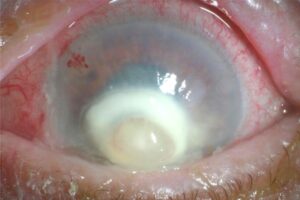
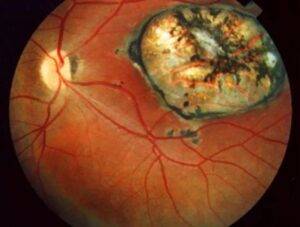
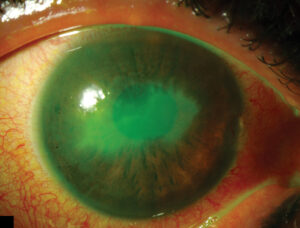
Endophthalmitis vs uveitis is the first question when an eye becomes inflamed after surgery or intravitreal injection.
Infection can destroy vision within hours, while sterile inflammation usually settles with steroids. However, the two conditions overlap at the slit lamp, so the decision rests on a pattern of findings, and when doubt remains, most retina specialists treat the eye as infected.
Why Endophthalmitis vs Uveitis Is Hard to Call
Both conditions produce anterior chamber cells, flare, fibrin and sometimes hypopyon, and both can also cause vitreous haze and reduced vision. As a result, no single sign separates them reliably, so the examiner weighs timing, pain, severity and trajectory together.
Timing in Endophthalmitis vs Uveitis
Toxic anterior segment syndrome (TASS) usually appears within the first 24 hours after cataract surgery, while acute bacterial endophthalmitis, by contrast, typically presents a few days after surgery. Then, onset over weeks or months suggests a low-virulence organism such as Cutibacterium acnes, and that delayed pattern often mimics recurrent uveitis (see chronic postoperative endophthalmitis).
Fundus Explorer Pro
Photograph the retinal findings described here with the phone already in your pocket — 22 D optics and built-in illumination in one handheld unit.
From Choroida — the team behind this sitePain in Endophthalmitis vs Uveitis
Pain out of proportion to the surgery is a classic warning sign of infection, and most patients in the Endophthalmitis Vitrectomy Study (EVS) reported pain. However, a meaningful minority did not, so painless inflammation can still be infectious, while TASS and many sterile post-injection reactions cause only mild discomfort.
Hypopyon and Fibrin
Hypopyon was a common finding in eyes enrolled in the EVS, but TASS can also produce hypopyon and dense fibrin. A hypopyon that grows over hours therefore favors infection, while a stable layer with a quiet vitreous favors sterile inflammation.
Vitreous Findings in Endophthalmitis vs Uveitis
Vitritis is the strongest clinical clue to infection after intraocular surgery, and TASS stays confined to the anterior segment, so the vitreous usually remains clear. In contrast, endophthalmitis involves the vitreous early, with haze that hides fundus details, and when the view is poor, B-scan ultrasound can show vitreous opacities and choroidal thickening.
Endophthalmitis vs Uveitis After Intravitreal Injection
Sterile inflammation after anti-VEGF injection is often painless and appears early, but post-injection infection can look similar in its first hours. Baumal and colleagues also described retinal vasculitis and occlusive inflammation after brolucizumab, and for the infectious picture, see post-injection endophthalmitis.
Visual Acuity and Trajectory
Severe vision loss, especially to hand motions or light perception, favors infection, while sterile inflammation usually improves within a day of intensive topical steroids. Therefore, close review at 6 to 24 hours often settles the question, and an eye that worsens despite steroids needs treatment as an infection.
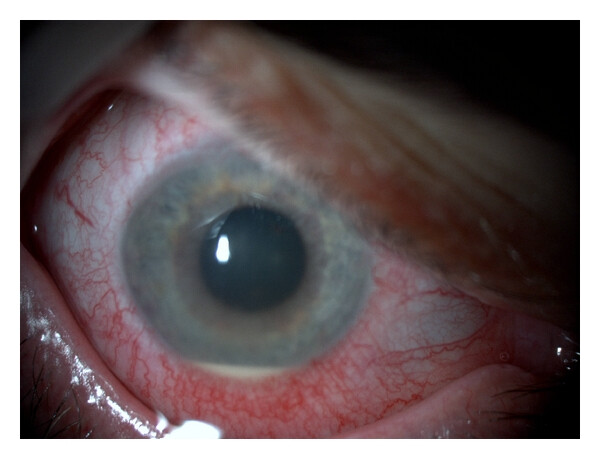
Other Causes That Mimic Infection
- Retained lens fragments causing lens-induced inflammation
- TASS from solutions or instrument residue
- Rebound inflammation after a rapid steroid taper
- Flare of preexisting uveitis after surgery
- Masquerade conditions such as lymphoma (see uveitis masquerade syndromes)
When to Tap and Inject
Suspected acute endophthalmitis calls for vitreous sampling and intravitreal antibiotics without delay, and a vitreous tap provides material for Gram stain, culture and, where available, PCR. Then, most surgeons inject vancomycin and ceftazidime at the same sitting, whereas observation for a steroid response is reasonable only when the picture strongly suggests sterile inflammation.
The EVS and Vitrectomy
The EVS compared immediate vitrectomy with tap and inject after cataract surgery, and eyes presenting with light perception vision benefited from immediate vitrectomy. For better presenting vision, tap and inject gave similar outcomes, and systemic intravenous antibiotics added no benefit in that trial.
Steroids in Endophthalmitis vs Uveitis
Intensive topical steroids are the main treatment for TASS and sterile reactions, but in endophthalmitis, clinicians add steroids only alongside effective antibiotics. Evidence for intravitreal dexamethasone is mixed and its use stays controversial, so never treat a suspicious eye with steroids alone.
Counseling the Patient
Explain that the eye may be infected, even though sterile inflammation is possible, and mention that a tap and injection carry small risks, including retinal detachment. However, untreated infection carries a far greater risk of permanent vision loss. Finally, ask the patient to return at once if pain or blurring increases.
Follow-Up in Endophthalmitis vs Uveitis
Review treated eyes within 24 hours, then frequently over the first week, while culture results may guide changes in antibiotic choice. Meanwhile, worsening vitritis may prompt repeat injection or vitrectomy, and for sterile cases, taper steroids slowly and recheck for rebound.
Pitfalls to Avoid
- Do not assume painless inflammation is sterile
- Never give steroids alone to an eye with dense vitritis
- Do not wait for culture results before injecting antibiotics
- Avoid dismissing a growing hypopyon as routine postoperative inflammation
- Also consider late, low-grade infection months after surgery


Document what you see
Two smartphone imaging tools built for everyday clinic use — one for the slit lamp, one for the fundus.
From Choroida — the team behind this siteReferences
- Endophthalmitis Vitrectomy Study Group. Results of the Endophthalmitis Vitrectomy Study: a randomized trial of immediate vitrectomy and of intravenous antibiotics for the treatment of postoperative bacterial endophthalmitis. Arch Ophthalmol. 1995;113:1479-1496.
- Mamalis N, Edelhauser HF, Dawson DG, et al. Toxic anterior segment syndrome. J Cataract Refract Surg. 2006;32:324-333.
- Baumal CR, Spaide RF, Vajzovic L, et al. Retinal vasculitis and intraocular inflammation after intravitreal injection of brolucizumab. Ophthalmology. 2020;127:1345-1359.
- Durand ML. Endophthalmitis. Clin Microbiol Infect. 2013;19:227-234.
Test yourself
A few questions straight from this article.
-
When does toxic anterior segment syndrome (TASS) usually appear after cataract surgery?
TASS usually appears within the first 24 hours after cataract surgery, whereas acute bacterial endophthalmitis typically presents a few days later. -
Postoperative endophthalmitis beginning weeks or months after cataract surgery suggests which kind of organism?
Onset over weeks or months points to a low-virulence organism such as Cutibacterium acnes, and this delayed pattern often mimics recurrent uveitis. -
What is the strongest clinical clue to infection in an inflamed eye after intraocular surgery?
Vitritis is the strongest clinical clue to infection; TASS stays confined to the anterior segment, so its vitreous usually remains clear. -
In postoperative inflammation, which hypopyon behaviour favours endophthalmitis over sterile inflammation?
TASS can also produce hypopyon and fibrin, so presence alone does not decide; a hypopyon growing over hours favours infection, while a stable layer with a quiet vitreous favours sterile inflammation. -
When the fundus view is poor in suspected endophthalmitis, what can B-scan ultrasound show?
Endophthalmitis involves the vitreous early, with haze hiding the fundus; B-scan can then show vitreous opacities and choroidal thickening. -
How soon should an eye with uncertain postoperative inflammation be re-reviewed to separate infection from sterile inflammation?
Sterile inflammation usually improves within a day of intensive topical steroids, so review at 6 to 24 hours often settles the question; worsening despite steroids means treating as infection. -
Which intravitreal antibiotic pair do most surgeons inject at the tap for suspected acute endophthalmitis?
A vitreous tap supplies material for Gram stain, culture and PCR, and most surgeons inject vancomycin and ceftazidime at the same sitting. -
In the Endophthalmitis Vitrectomy Study, which eyes benefited from immediate vitrectomy rather than tap and inject?
After cataract surgery, eyes presenting with light perception vision benefited from immediate vitrectomy; with better vision, tap and inject gave similar outcomes. -
Which symptom is a classic warning sign of endophthalmitis after intraocular surgery?
Disproportionate pain is a classic warning sign of infection, though some infected eyes are painless, so painless inflammation can still be infectious. -
When doubt remains between endophthalmitis and sterile uveitis after surgery or injection, how do most retina specialists manage the eye?
Infection can destroy vision within hours, so when doubt remains the eye is treated as infected; steroids alone should never be given to a suspicious eye.

Writes and reviews the clinical articles on Educate. Every post is checked against peer-reviewed sources before it goes live.