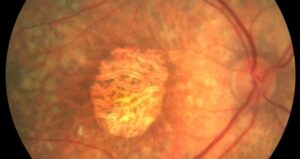
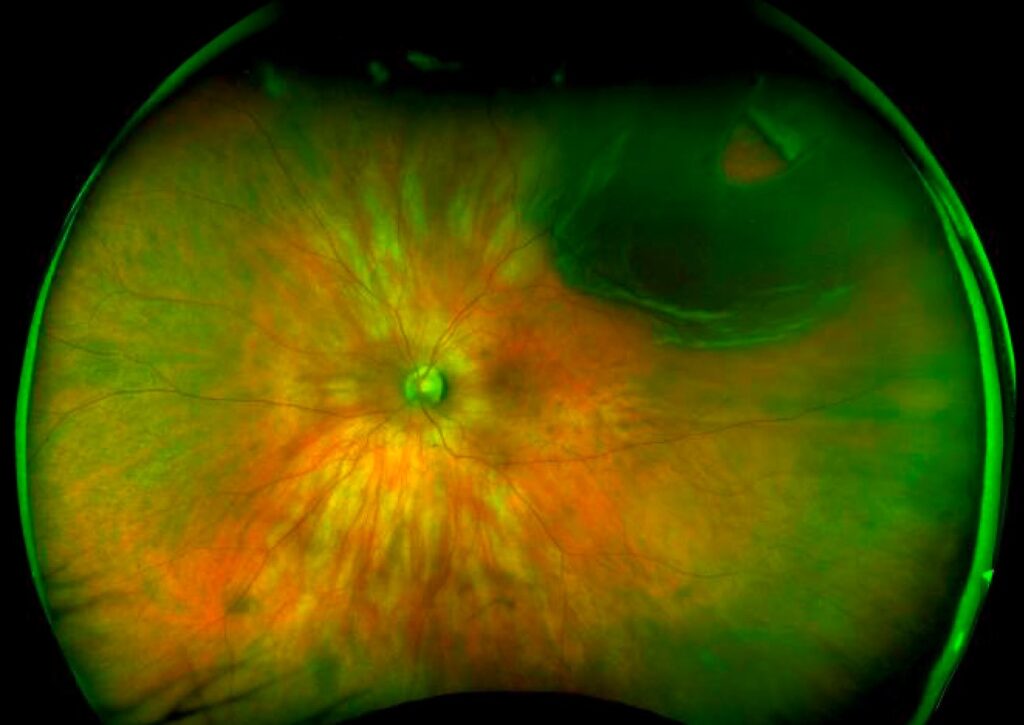
Recurrent retinal detachment after vitrectomy occurs in a minority of eyes, and it demands a systematic search for the cause before reoperation.
Proliferative vitreoretinopathy is the most common reason, but missed breaks, new breaks, and inadequate tamponade also play a role. The timing, the location of the detachment, and the retinal findings guide the plan.
Why Recurrent Retinal Detachment Occurs
The most frequent cause is PVR, in which membranes grow on and under the retina and contract it. Missed or reopened breaks, especially in the inferior retina, also cause redetachment. Other causes include tractional membranes at the vitreous base, a gas bubble that disappears too early, and new breaks at sclerotomy sites (see proliferative vitreoretinopathy).
Timing of Recurrent Retinal Detachment
Early redetachment, within weeks, often reflects a missed break or an inadequate tamponade, while detachments at two to three months more often come from PVR. Late redetachment, after silicone oil removal or years later, can result from new breaks or contraction of old membranes.
Fundus Explorer Pro
Photograph the retinal findings described here with the phone already in your pocket — 22 D optics and built-in illumination in one handheld unit.
From Choroida — the team behind this siteRisk Factors for Recurrent Retinal Detachment
- Preoperative PVR grade C or worse
- Large or multiple breaks, and giant tears
- Vitreous hemorrhage and uveitis
- Silicone oil removal in unstable eyes
Pastor and colleagues described these and other risk factors for PVR in a major review.
Examination of Recurrent Retinal Detachment
Check the pressure, the anterior chamber, and the lens position first, then use indirect ophthalmoscopy with scleral depression to look for breaks, membranes, and folds. OCT of the macula shows whether the fovea is still attached, and ultrasound helps when the view is poor. Draw the findings, because a clear map helps in surgery (see rhegmatogenous retinal detachment).
Management Options
Surgery usually requires a new vitrectomy to peel membranes and flatten the retina. Surgeons add laser around all breaks and choose a tamponade according to the break location. Silicone oil suits most eyes with PVR, since it gives a long tamponade, while retinectomy or a scleral buckle may add support in selected eyes (see scleral buckle surgery).
Outcomes of Recurrent Retinal Detachment
The Silicone Study showed that silicone oil gave better anatomic and visual results than sulfur hexafluoride gas in severe PVR. Anatomic success is possible in many eyes, but vision depends on the macula and on repeated surgery. Therefore, counsel patients that further surgery may be needed and that vision may remain limited.

An Example Case
A 58-year-old man undergoes vitrectomy with gas for a macula-off detachment with a superior break. Six weeks later, he reports a new shadow in the lower field, and the retina shows an inferior detachment with fixed folds.
Examination finds grade C PVR, and the original break remains closed, so he undergoes membrane peeling, a retinectomy, and silicone oil, and the retina reattaches. The surgeon removes the oil after five months, and vision stabilizes at 20/60.
Questions Patients Ask
Patients ask why the retina detached again, and the usual answer is that scar tissue formed and pulled the retina. They also ask whether another operation will work, and the success rate is good but lower than the first surgery. Because the oil may stay for months, discuss the follow-up plan in advance.
Pitfalls to Avoid
- Assuming that the original break has reopened without a full examination
- Operating without identifying every membrane and break
- Using gas in eyes with advanced PVR that need longer tamponade
- Ignoring pressure rises after oil, which may cause optic nerve damage
Looking Ahead
Trials of intravitreal methotrexate and other agents aim to reduce PVR and redetachment. Better imaging during surgery may also help to find residual membranes, but careful surgical technique remains the main factor in success.
Practical Points
Review the previous operative note, since it shows where breaks and membranes were, then plan the tamponade before the case and prepare silicone oil. Also arrange early postoperative visits, since the first weeks carry the highest risk.
Prevention of Recurrent Retinal Detachment
Peel all visible membranes and shave the vitreous base carefully at the primary operation, and also apply laser to all breaks and to areas of lattice. Because inferior pathology often drives failure, consider silicone oil or a scleral buckle in high-risk eyes.
Finally, in eyes with prior PVR, plan close follow-up for the first three months. Teach patients to report a new shadow, a curtain, or sudden loss of vision on the same day.

Document what you see
Two smartphone imaging tools built for everyday clinic use — one for the slit lamp, one for the fundus.
From Choroida — the team behind this siteReferences
- Pastor JC, de la Rua ER, Martin F. Proliferative vitreoretinopathy: risk factors and pathobiology. Prog Retin Eye Res. 2002;21:127-144.
- Silicone Study Group. Vitrectomy with silicone oil or sulfur hexafluoride gas in eyes with severe proliferative vitreoretinopathy: results of a randomized clinical trial. Silicone Study Report 1. Arch Ophthalmol. 1992;110:770-779.
- Heimann H, Bartz-Schmidt KU, Bornfeld N, et al. Scleral buckling versus primary vitrectomy in rhegmatogenous retinal detachment: a prospective randomized multicenter clinical study. Ophthalmology. 2007;114:2142-2154.
- American Academy of Ophthalmology. Basic and Clinical Science Course, Section 12: Retina and Vitreous. AAO; current edition.
Test yourself
A few questions straight from this article.
-
What is the most common cause of recurrent retinal detachment after vitrectomy?
The article states PVR is the most frequent cause, with membranes growing on and under the retina and contracting it. -
In recurrent retinal detachment after vitrectomy, what does early redetachment within weeks most often reflect?
Early redetachment, within weeks, often reflects a missed break or inadequate tamponade, while detachments at two to three months more often come from PVR. -
After vitrectomy, recurrent retinal detachment appearing at two to three months more often comes from which cause?
The article says detachments at two to three months more often come from PVR, whereas early ones suggest missed breaks or poor tamponade. -
Which preoperative finding is listed as a risk factor for recurrent retinal detachment after vitrectomy?
The listed risk factors include preoperative PVR grade C or worse, large or multiple breaks, giant tears, vitreous hemorrhage, uveitis, and silicone oil removal in unstable eyes. -
What does macular OCT show when examining an eye with recurrent retinal detachment after vitrectomy?
The article states OCT of the macula shows whether the fovea is still attached, while ultrasound helps when the view is poor. -
Which tamponade suits most eyes with PVR-related recurrent retinal detachment after vitrectomy?
The article says silicone oil suits most eyes with PVR because it gives a long tamponade, and gas is a pitfall in advanced PVR. -
What did the Silicone Study show about severe PVR in recurrent retinal detachment?
The Silicone Study showed silicone oil gave better anatomic and visual results than sulfur hexafluoride gas in severe PVR. -
After silicone oil tamponade for recurrent retinal detachment, which complication does the article warn about?
Among the pitfalls, the article lists ignoring pressure rises after oil, which may cause optic nerve damage. -
In the example case of recurrent retinal detachment, what pointed to PVR rather than a reopened break?
The patient had an inferior detachment with fixed folds, grade C PVR, and the original break remained closed. -
How closely should patients with prior PVR be followed after surgery for recurrent retinal detachment prevention?
The article advises close follow-up for the first three months in eyes with prior PVR, and teaching patients to report a new shadow, curtain, or sudden vision loss the same day.

Writes and reviews the clinical articles on Educate. Every post is checked against peer-reviewed sources before it goes live.