AREDS2 supplements are a formulation of vitamins, minerals, and carotenoids that trials have shown to slow intermediate age-related macular degeneration. It lowers the risk of progression to advanced disease.
Also, the recommendation comes from two large National Eye Institute trials, and it applies to a specific group of patients.
Misunderstandings about who should take them, and what they can achieve, are common.
AREDS2 Supplements: What Are the AREDS and AREDS2 Formulas?
The first Age-Related Eye Disease Study randomized participants to antioxidants, zinc, both, or placebo.
The combination of vitamin C, vitamin E, beta-carotene, zinc, and copper reduced the risk of progression to advanced AMD by about 25 percent over five years. This applied to patients with intermediate AMD or advanced AMD in one eye.
Also, the second study, AREDS2, tested lutein and zeaxanthin and omega-3 fatty acids as additions or replacements.
It found that adding lutein and zeaxanthin was at least as good as beta-carotene, and that omega-3 fatty acids gave no further benefit.
Because beta-carotene increased the risk of lung cancer in current and former smokers, lutein and zeaxanthin replaced it in the AREDS2 formula.
The Formulation
- Vitamin C, 500 milligrams
- Vitamin E, 400 international units
- Lutein, 10 milligrams, and zeaxanthin, 2 milligrams
- Zinc, 80 milligrams as zinc oxide (a lower dose of 25 milligrams performed similarly in a secondary comparison)
- Copper, 2 milligrams as cupric oxide, to prevent zinc-related copper deficiency
Manufacturers label many commercial products as AREDS2 formulations, but their contents vary, so check the label.
Fundus Explorer Pro
Photograph the retinal findings described here with the phone already in your pocket — 22 D optics and built-in illumination in one handheld unit.
From Choroida — the team behind this siteWho Should Take AREDS2 Supplements
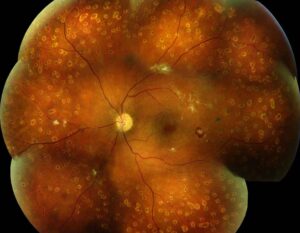
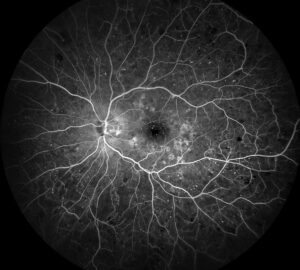
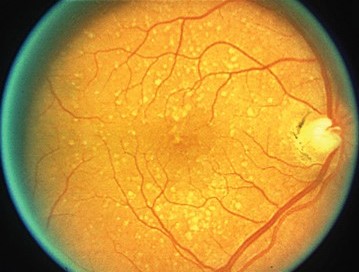
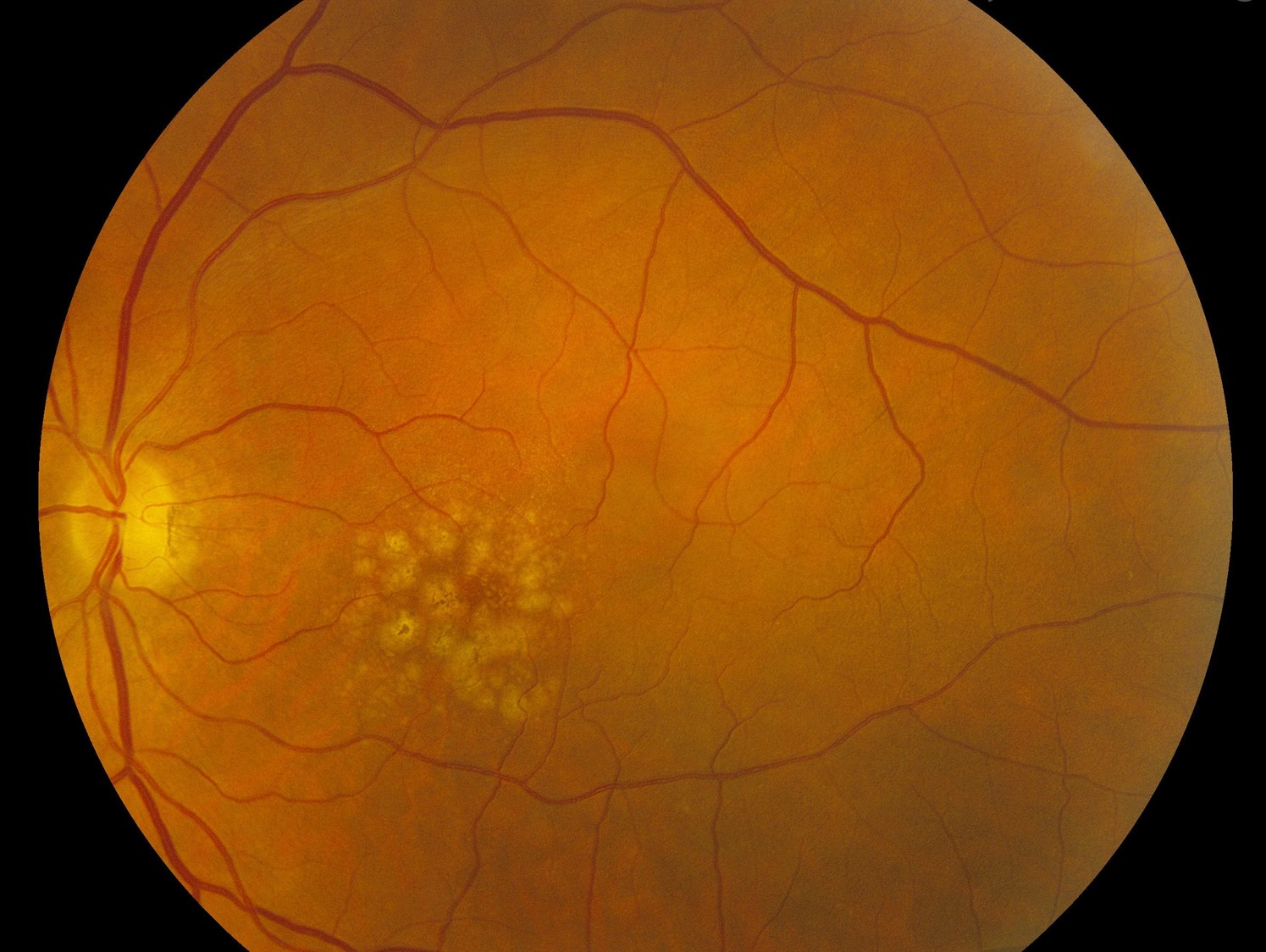
The evidence supports supplementation for people with intermediate AMD, or with advanced AMD in one eye. Intermediate AMD means extensive medium drusen or at least one large druse (see age-related macular degeneration).
There was no demonstrated benefit for patients with no AMD or with early AMD. Experts do not recommend supplementation for prevention in these groups.
In an eye that already has advanced neovascular or geographic disease, doctors also aim the supplement at protecting the fellow eye.
Supplements do not restore vision, and they do not replace treatment of neovascular AMD with injections (see AMD management strategies).
AREDS2 Supplements: Safety
- Smokers and former smokers should not take beta-carotene, so the AREDS2 formula is preferred
- High-dose zinc can cause gastrointestinal upset, and at long-term high doses has been associated with urinary tract problems in some men
- Studies link vitamin E at high doses to bleeding and, in a large trial, to a higher rate of prostate cancer. Patients should discuss it with their physician
- Consider interactions with anticoagulants and other medications
Patients with kidney disease or with complicated medical regimens need advice from their primary care doctor.
Other Measures That Matter
Stopping smoking is the most important modifiable step.
A diet rich in green leafy vegetables, fish, and nuts is associated with a lower risk of progression. A supplement, though, does not substitute for diet.
Control of blood pressure and weight, and regular home monitoring of vision with an Amsler grid or an app, help to detect neovascular change early.
Guidelines do not recommend genetic testing to guide supplement decisions.
Counselling
Explain the evidence honestly: the formula reduces the chance of progression by roughly a quarter, which is a meaningful but modest effect.
Many people will still progress.
Review the product the patient is using, and recommend one that matches the AREDS2 composition.
Arrange regular examinations and teach the warning symptoms of neovascular disease, such as new distortion or a central blind spot.
Questions Patients Ask
Patients often ask whether a regular multivitamin is enough.
The answer is that standard multivitamins do not contain these doses, so they cannot be assumed to give the same benefit.
Another question is whether patients should take the supplement in early AMD. Here the trials did not show a benefit in that group.
Some ask whether it can be started when they only have a family history.
The answer is that diet and lifestyle are the appropriate measures until drusen reach the intermediate stage.
Monitoring on Supplements
Patients on AREDS2 supplements still need the same examination schedule as others with intermediate disease. The schedule is usually every six to twelve months, with OCT when indicated.
Home monitoring of each eye separately is essential, because neovascular AMD can develop at any time and treatment works best when started early.
For the latest studies, see the PubMed results for AREDS2 supplements.


Document what you see
Two smartphone imaging tools built for everyday clinic use — one for the slit lamp, one for the fundus.
From Choroida — the team behind this siteReferences
- Age-Related Eye Disease Study Research Group. A randomized, placebo-controlled, clinical trial of high-dose supplementation with vitamins C and E, beta carotene, and zinc for age-related macular degeneration and vision loss: AREDS report no. 8. Arch Ophthalmol. 2001;119:1417-1436.
- AREDS2 Research Group. Lutein + zeaxanthin and omega-3 fatty acids for age-related macular degeneration: the Age-Related Eye Disease Study 2 (AREDS2) randomized clinical trial. JAMA. 2013;309:2005-2015.
- Chew EY, Clemons TE, Agrón E, et al. Long-term effects of vitamins C and E, beta-carotene, and zinc on age-related macular degeneration: AREDS report no. 35. Ophthalmology. 2013;120:1604-1611.
- American Academy of Ophthalmology. Basic and Clinical Science Course, Section 12: Retina and Vitreous. AAO; current edition.
Test yourself
A few questions straight from this article.
-
By about how much did the original AREDS formula reduce progression to advanced AMD over five years?
Vitamins C and E, beta-carotene, zinc and copper cut progression to advanced AMD by about 25 percent over five years in intermediate AMD or advanced AMD in one eye. -
Why was beta-carotene replaced by lutein and zeaxanthin in the AREDS2 formula?
Beta-carotene increased lung cancer risk in current and former smokers, and lutein plus zeaxanthin proved at least as good, so they replaced it. -
What did AREDS2 find when omega-3 fatty acids were added to the AREDS formula for AMD?
AREDS2 found that omega-3 fatty acids gave no further benefit, while lutein and zeaxanthin were at least as good as beta-carotene. -
Why does the AREDS2 supplement formula include copper?
Copper, 2 mg as cupric oxide, is added to prevent the copper deficiency that high-dose zinc can cause. -
For AREDS2 supplement eligibility, how is intermediate age-related macular degeneration defined?
Intermediate AMD means extensive medium drusen or at least one large druse; this group, and those with advanced AMD in one eye, are the ones supplementation is supported for. -
What is the advice on AREDS2 supplements for a patient with early age-related macular degeneration?
No benefit was shown for no AMD or early AMD, so supplements are not recommended there; diet and lifestyle apply until drusen reach the intermediate stage. -
In a large trial, high-dose vitamin E, a component of AREDS2 supplements, was linked to a higher rate of which cancer?
High-dose vitamin E has been linked to bleeding and, in a large trial, to a higher rate of prostate cancer, so patients should discuss it with their physician. -
For a patient with intermediate age-related macular degeneration, what is the most important modifiable step?
Stopping smoking is the most important modifiable step, alongside a diet rich in green leafy vegetables, fish and nuts. -
A patient with intermediate AMD asks if a standard multivitamin can replace AREDS2. What is the correct answer?
Standard multivitamins do not contain the AREDS2 doses, so they cannot be assumed to give the same benefit. -
How often do patients with intermediate AMD taking AREDS2 supplements usually need examination?
They keep the usual intermediate-AMD schedule of every six to twelve months, with OCT when indicated, plus home monitoring of each eye separately.

Writes and reviews the clinical articles on Educate. Every post is checked against peer-reviewed sources before it goes live.