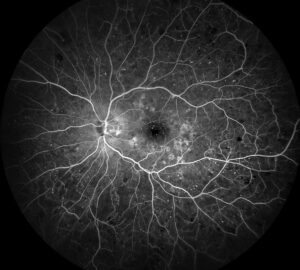
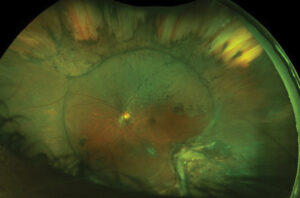
Diabetic retinopathy and kidney disease are two faces of the same problem, damage to the small vessels from long-standing diabetes.
The retina is the only place in the body where these vessels can be seen directly, so the eye often gives the first clue to what is happening in the kidney.
Ophthalmologists and nephrologists benefit from sharing information.
Diabetic Retinopathy and Kidney Disease: A Shared Mechanism
In both organs, high glucose and other metabolic stress damage the endothelium, thicken the basement membrane, and cause loss of pericytes in the retina and of podocytes in the glomerulus.
Also, the retinal capillaries and the glomerular capillaries have similar properties, including a filtering barrier that depends on tight regulation.
Inflammation, oxidative stress, and activation of the renin-angiotensin system contribute to both diseases (see diabetic retinopathy).
Patients with one complication are therefore at higher risk of the other.
Diabetic Retinopathy and Kidney Disease: What the Data Show
- Patients with diabetic retinopathy have a higher prevalence of kidney disease than those without. The risk rises with the severity of retinopathy
- Proliferative retinopathy is also associated with a greater chance of advanced kidney disease and with higher cardiovascular mortality
- Albuminuria and a reduced estimated glomerular filtration rate are linked to a higher risk of progression of retinopathy and of macular edema
- Retinopathy is a marker of the risk of diabetic nephropathy in type 1 diabetes, and of cardiovascular risk in both types
The relationship is not perfect, and some patients have severe kidney disease without retinopathy, which should prompt a search for other causes of renal disease.
Fundus Explorer Pro
Photograph the retinal findings described here with the phone already in your pocket — 22 D optics and built-in illumination in one handheld unit.
From Choroida — the team behind this siteWhat This Means for Screening
- Screen patients with retinopathy for albuminuria and renal function if they are not already monitored
- Patients with kidney disease should have regular retinal examinations, with closer follow-up if the disease progresses
- Absence of retinopathy in a patient with significant albuminuria and long-standing type 1 diabetes suggests that another renal cause should also be considered
- Eye findings can also be used to motivate patients to attend renal and cardiovascular care
Regular communication between teams reduces gaps in care.
Diabetic Retinopathy and Kidney Disease: Treatments That Help Both Organs
- Glycemic control, which lowers the risk of both complications (see retinopathy in type 1 diabetes)
- Blood pressure control, with ACE inhibitors or angiotensin receptor blockers as first-line agents in patients with albuminuria
- Lipid-lowering therapy, such as fenofibrate in selected patients (see fenofibrate and diabetic retinopathy)
- SGLT2 inhibitors and GLP-1 agonists, with renal and cardiovascular benefits, and with a need for eye monitoring when a rapid fall in glucose occurs (see GLP-1 agonists and diabetic retinopathy)
- Smoking cessation and weight control
In the DIRECT trials, candesartan reduced the incidence of retinopathy in type 1 diabetes.
The effect on progression was smaller, which supports the use of renin-angiotensin blockade (see the references).
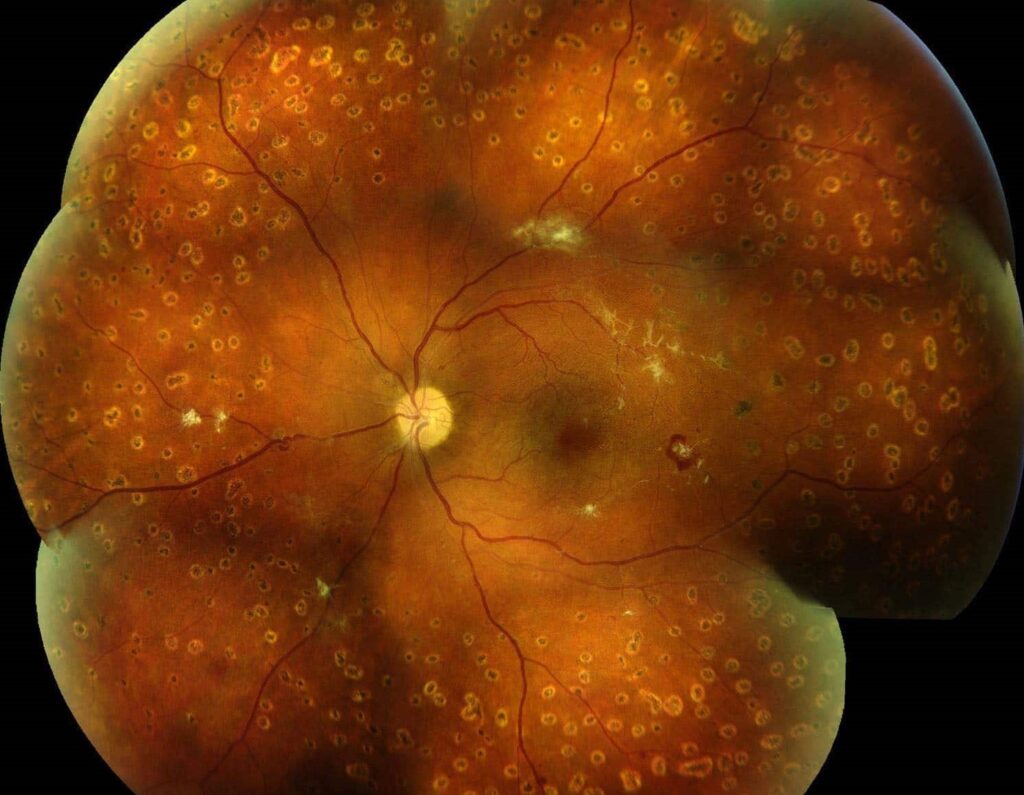
Special Issues in Advanced Kidney Disease
- Dialysis and transplantation: patients may also have fluctuating blood pressure and fluid status, which can affect macular edema
- Anticoagulation during dialysis can increase the risk of vitreous hemorrhage in eyes with proliferative disease
- Drug dosing: many drugs need adjustment for renal function
- Anti-VEGF therapy: the systemic safety in patients with advanced kidney disease is a subject of discussion. Inform the treating team (see anti-VEGF systemic safety)
- Hypertensive changes may add to the retinal picture (see hypertensive retinopathy)
Patients with advanced disease may have rapid progression of retinopathy and need frequent follow-up.
Coordinating Care
- Share the grade of retinopathy and the results of treatment with the diabetes and kidney teams
- Ask for the HbA1c, blood pressure, and renal function results before and after treatment
- Make sure that the patient has a single schedule of appointments, when possible
- Treat vision-threatening disease promptly, whatever the kidney status
Patients often find that a combined clinic or a shared plan reduces the burden of visits.
Counselling
Explain that the eyes and kidneys are affected by the same disease, that good control protects both, and that regular checks of each organ are important.
In addition, encourage patients to take their medications and to attend all follow-up visits.
Practical Message for Patients
Tell patients that the tiny vessels in the eyes and kidneys share the same risks, and that the same measures protect both.
A good eye result does not exclude kidney problems, so urine tests and blood tests are still needed.
Also, encourage them to ask for their results and to keep a record of their blood pressure and HbA1c.
Ask whether a nephrology clinic is already involved, and send a short letter with the retinal grade and the plan, so that both teams share the same picture.
Remind patients that new swelling, a rise in blood pressure, or a change in urine should be reported to the kidney team as well as to the eye clinic.
For the latest studies, see the PubMed results for diabetic retinopathy and kidney disease.


Document what you see
Two smartphone imaging tools built for everyday clinic use — one for the slit lamp, one for the fundus.
From Choroida — the team behind this siteReferences
- Chaturvedi N, Porta M, Klein R, et al. Effect of candesartan on prevention (DIRECT-Prevent 1) and progression (DIRECT-Protect 1) of retinopathy in type 1 diabetes: randomised, placebo-controlled trials. Lancet. 2008;372:1394-1402.
- Wong TY, Cheung CMG, Larsen M, Sharma S, Simó R. Diabetic retinopathy. Nat Rev Dis Primers. 2016;2:16012.
- Cheung N, Mitchell P, Wong TY. Diabetic retinopathy. Lancet. 2010;376:124-136.
- American Academy of Ophthalmology. Basic and Clinical Science Course, Section 12: Retina and Vitreous. AAO; current edition.

Writes and reviews the clinical articles on Educate. Every post is checked against peer-reviewed sources before it goes live.