
A capsular tension ring is a simple, elegant device that has become an essential tool for cataract surgeons managing eyes with zonular weakness, since a single flexible ring, placed within the capsular bag, redistributes and reinforces support around the bag’s entire circumference, converting what might otherwise be a high-risk, unstable surgery into one with a much more predictable and safer course.
What a Capsular Tension Ring Does
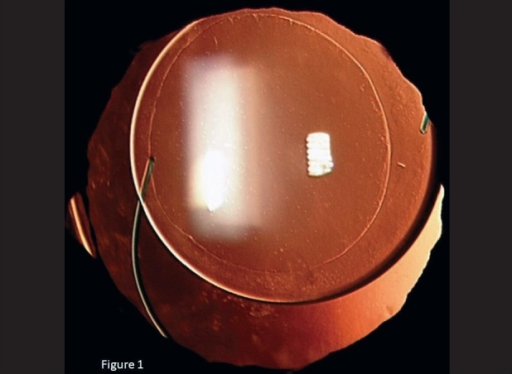
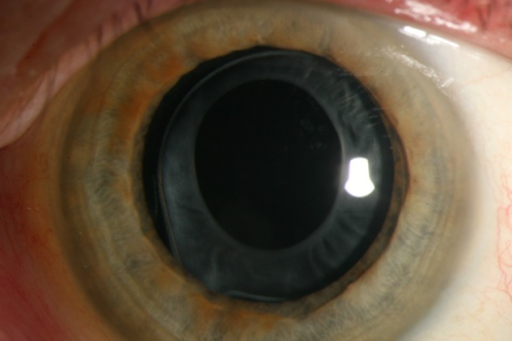
The device is an open, flexible ring, generally made of PMMA (polymethyl methacrylate), designed to be inserted into the capsular bag, either before or after removal of the cataractous lens material, where it exerts gentle outward, circumferential pressure against the capsular equator.
This outward pressure helps distribute the remaining, uneven zonular support more evenly around the entire circumference of the bag, effectively using the intact segments of zonular support to help stabilize the areas where support is weak or absent, rather than leaving those weakened areas to fail under the mechanical stresses of surgery.
Indications
- Pseudoexfoliation syndrome, one of the most common indications, given the diffuse, progressive zonular weakness characteristic of this condition
- Focal zonular dehiscence from trauma
- Generalized zonular laxity associated with connective tissue disorders such as Marfan syndrome
- High myopia with associated zonular laxity
- Any case where intraoperative signs, such as phacodonesis or capsular striae during capsulorhexis, indicate compromised zonular support
All-fit Slit-Lamp Adapter
Record and share exactly what you see at the slit lamp. One adapter fits any slit lamp or surgical microscope — and any smartphone.
From Choroida — the team behind this siteTiming of Placement
The ring can be placed at different points during surgery depending on the clinical situation.
- In cases with known or suspected zonular weakness identified preoperatively, the ring is often placed relatively early, sometimes after removal of the lens nucleus but before cortical cleanup, to provide stabilization through the remainder of the case
- In cases where zonular weakness is discovered unexpectedly during surgery, the ring can be placed at that point to stabilize the bag for the remainder of the procedure
Standard Versus Modified Rings
Standard Capsular Tension Rings
A standard ring provides generalized, circumferential support and is appropriate for more diffuse, relatively symmetric zonular weakness, such as that typically seen in pseudoexfoliation syndrome.
Modified Capsular Tension Rings
For more severe or focal zonular loss, modified rings incorporating one or more fixation eyelets or hooks are available, allowing the ring, and by extension the capsular bag, to be sutured directly to the sclera for additional, more definitive support in eyes where a standard ring alone would not provide adequate stability.
Benefits Beyond Immediate Surgical Stabilization
- Improved intraoperative safety, reducing the risk of posterior capsular rupture and lens fragment dislocation during phacoemulsification and cortical cleanup
- Support for more predictable, centered intraocular lens placement within the capsular bag
- Longer-term stabilization of the capsular bag and intraocular lens position, helping to reduce the risk of late in-the-bag lens subluxation, which can otherwise occur over months to years in eyes with progressive zonular weakness, particularly pseudoexfoliation syndrome
Limitations
A capsular tension ring redistributes and reinforces existing zonular support but does not create new support where none exists; in eyes with very severe or extensive zonular loss, a standard or even modified ring may be insufficient, and alternative fixation strategies, including sutured or other scleral-fixated intraocular lens placement, may ultimately be needed despite the ring’s use.
Prognosis
In appropriately selected eyes with mild to moderate zonular weakness, capsular tension ring placement supports safe cataract surgery and good long-term intraocular lens stability, substantially reducing the risk of both intraoperative complications and later lens subluxation compared with proceeding without this additional support.
This device exemplifies a broader principle in modern cataract surgery: anticipating a mechanical problem and addressing it with a purpose-built solution, rather than adapting standard technique reactively once a complication has already begun to unfold.
Document what you see
Two smartphone imaging tools built for everyday clinic use — one for the slit lamp, one for the fundus.
From Choroida — the team behind this siteReferences
- Cionni RJ, Osher RH. Endocapsular ring approach to the subluxed cataractous lens. J Cataract Refract Surg. 1995;21:245-249.
- Ahmed IIK, Cionni RJ, Kranemann C, Crandall AS. Optimal timing of capsular tension ring implantation. J Cataract Refract Surg. 2005;31:1809-1813.
- Hasanee K, Ahmed II. Capsular tension rings: update on endocapsular support devices. Ophthalmol Clin North Am. 2006;19:507-518.
- Lee GA, Lee JH. Capsular tension ring for pseudoexfoliation syndrome. Clin Exp Ophthalmol. 2001;29:389-391.
