
Paraneoplastic optic neuropathy is optic nerve damage arising from an autoimmune response directed against a remote tumor, distinct from the more familiar ways cancer can affect the optic nerve through direct compression, infiltration, or metastasis, and its recognition depends on understanding that the immune system, not the tumor itself, is doing the damage to the nerve.
Mechanism
Similar to other paraneoplastic neurological syndromes, paraneoplastic optic neuropathy results from an immune response generated against tumor antigens that cross-reacts with antigens expressed in the optic nerve or broader visual pathway.
Several specific antibodies have been associated with paraneoplastic optic neuropathy, including anti-CRMP5 (also known as anti-CV2) antibodies, most classically associated with small cell lung cancer, though paraneoplastic optic neuropathy has also been described with other tumor types and in association with other antibodies as part of broader paraneoplastic neurological syndrome panels.
Clinical Presentation
- Subacute, often progressive, vision loss, which can be unilateral or bilateral
- Optic disc swelling in some cases, though the disc can also appear normal, particularly if the process is predominantly retrobulbar
- Color vision deficits and visual field defects consistent with optic nerve dysfunction
- Often occurs in the context of, or overlapping with, other paraneoplastic neurological findings, since anti-CRMP5 antibody syndrome in particular is frequently associated with a broader constellation including peripheral neuropathy, cerebellar ataxia, and other neurological manifestations, reflecting the antigen’s expression across multiple neural tissues
- Can precede the diagnosis of the underlying malignancy, similar to the pattern seen in cancer-associated retinopathy
Fundus Explorer Pro
Photograph the retinal findings described here with the phone already in your pocket — 22 D optics and built-in illumination in one handheld unit.
From Choroida — the team behind this siteDiagnostic Evaluation
- Careful ophthalmic examination, including assessment of visual acuity, color vision, visual fields, and the optic disc appearance, along with pupillary testing for a relative afferent pupillary defect when the process is asymmetric
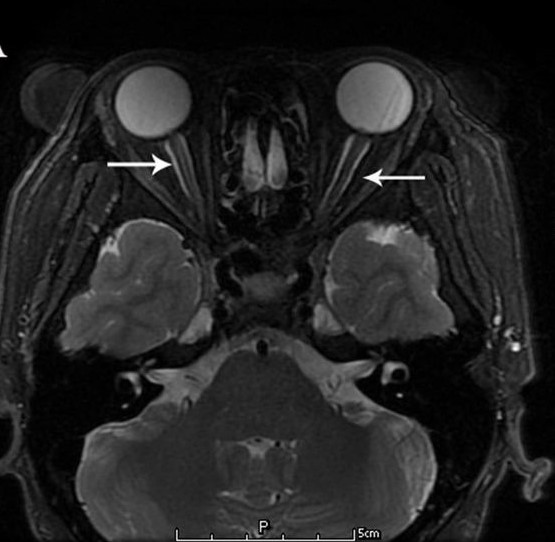
- Neuroimaging, typically MRI, to exclude other causes of optic neuropathy, including compressive or infiltrative lesions, since imaging in paraneoplastic optic neuropathy is often unremarkable or shows only optic nerve enhancement without a mass
- Serum and, when appropriate, cerebrospinal fluid testing for paraneoplastic antibody panels, including anti-CRMP5/CV2 and other relevant antibodies
- A systemic evaluation for an underlying malignancy, with particular attention to small cell lung cancer given its strong association with anti-CRMP5 paraneoplastic syndromes, including imaging and, when appropriate, further oncologic workup
- Electrophysiologic testing, including visual evoked potentials, can support the diagnosis of optic nerve dysfunction, though these findings are not specific to a paraneoplastic cause
Differential Diagnosis
Paraneoplastic optic neuropathy must be distinguished from other causes of subacute optic neuropathy, including typical demyelinating optic neuritis, infiltrative or compressive optic nerve lesions from direct tumor involvement or metastasis, toxic and nutritional optic neuropathies, and other autoimmune or inflammatory optic neuropathies, with the presence of other paraneoplastic neurological features and relevant antibody positivity supporting the paraneoplastic diagnosis specifically.
Management
Treating the Underlying Malignancy
As with other paraneoplastic syndromes, identifying and treating the underlying tumor is central to management, both for the patient’s overall prognosis and with the hope, though not a guarantee, of stabilizing the neurological and ophthalmic manifestations.
Immunomodulatory Treatment
Corticosteroids, intravenous immunoglobulin, plasma exchange, and other immunomodulatory approaches have been used in attempts to treat the underlying autoimmune process, with outcomes that are variable and, in many reported cases, limited, reflecting the generally aggressive and often treatment-resistant nature of paraneoplastic neurological syndromes once clinically established.
Prognosis
Visual outcomes in paraneoplastic optic neuropathy are often poor, with limited recovery even when the underlying malignancy is identified and treated, reflecting both the aggressive nature of the autoimmune process and the frequent delay between symptom onset and diagnosis given the rarity and diagnostic complexity of this condition.
As with cancer-associated retinopathy, the broader clinical value of recognizing this syndrome, beyond the visual prognosis itself, lies in its potential to prompt identification of an underlying malignancy that might not otherwise have been suspected at an early stage.
Document what you see
Two smartphone imaging tools built for everyday clinic use — one for the slit lamp, one for the fundus.
From Choroida — the team behind this siteReferences
- Cross SA, Salomao DR, Parisi JE, et al. Paraneoplastic autoimmune optic neuritis with retinitis defined by CRMP-5-IgG. Ann Neurol. 2003;54:38-50.
- Chan JW. Paraneoplastic retinopathies and optic neuropathies. Surv Ophthalmol. 2003;48:12-38.
- Yu Z, Kryzer TJ, Griesmann GE, Kim K, Benarroch EE, Lennon VA. CRMP-5 neuronal autoantibody: marker of lung cancer and thymoma-related autoimmunity. Ann Neurol. 2001;49:146-154.
- Sheorajpanday R, Slabbynck H, Van De Sompel W, Galdermans D, De Schepper AM, Marien P. Small cell lung carcinoma presenting as CRMP-5 paraneoplastic optic neuropathy. J Neuroophthalmol. 2006;26:168-172.
Test yourself
A few questions straight from this article.
-
Paraneoplastic optic neuropathy damages the optic nerve through which process?
The immune response to tumour antigens, not the tumour itself, injures the nerve, which separates it from compression, infiltration and metastasis. -
Which antibody is most characteristically linked to paraneoplastic optic neuropathy?
Anti-CRMP5, also known as anti-CV2, is the antibody most classically associated with paraneoplastic optic neuropathy. -
Anti-CRMP5 paraneoplastic optic neuropathy is most classically associated with which malignancy?
Anti-CRMP5 antibodies are most classically tied to small cell lung cancer, which deserves particular attention during the search for an underlying tumour. -
Which visual course typifies paraneoplastic optic neuropathy?
Vision loss is typically subacute and often progressive, and it may be unilateral or bilateral. -
Which optic disc appearance can occur in paraneoplastic optic neuropathy?
The disc may be swollen in some patients, but it can look entirely normal when the process is predominantly retrobulbar. -
What does MRI typically show in paraneoplastic optic neuropathy?
Imaging is often unremarkable or shows only optic nerve enhancement with no mass, and its main role is excluding compressive or infiltrative causes. -
Anti-CRMP5 antibody syndrome is frequently accompanied by which neurological findings?
The antigen is expressed across multiple neural tissues, so peripheral neuropathy, cerebellar ataxia and other neurological features often accompany the optic neuropathy. -
Which finding best supports a paraneoplastic rather than demyelinating cause of subacute optic neuropathy?
Accompanying paraneoplastic neurological features together with relevant antibody positivity are what point specifically to a paraneoplastic cause. -
What is central to the management of paraneoplastic optic neuropathy?
Treating the tumour is central both for overall prognosis and in the hope of stabilising the neurological and ophthalmic manifestations. -
What is the typical visual outcome in paraneoplastic optic neuropathy?
Visual outcomes are often poor with little recovery even after the malignancy is found and treated, partly because diagnosis is frequently delayed.
