
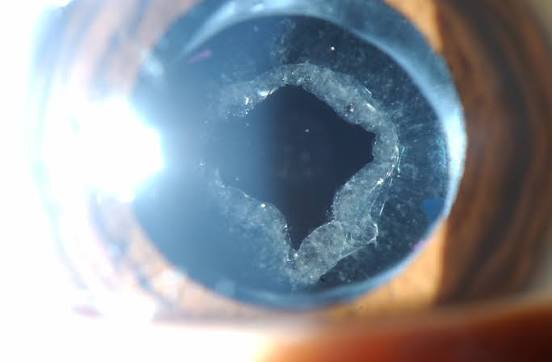
YAG laser capsulotomy is an outpatient laser procedure that opens the posterior lens capsule when it clouds after cataract surgery, treating posterior capsule opacification, sometimes called a secondary cataract, without any incision into the eye.
Posterior capsule opacification is the most common long-term complication of otherwise uneventful cataract surgery, and YAG capsulotomy is what makes it a minor, easily corrected inconvenience rather than a reason to fear a permanent decline in the vision cataract surgery achieved.
Understanding that this cloudy capsule is not a new cataract, but a separate structure left behind intentionally to support the intraocular lens, helps explain to patients why a second laser treatment is sometimes needed after otherwise successful cataract surgery.
The procedure is one of the most frequently performed laser treatments in ophthalmology, reflecting just how common posterior capsule opacification is across the very large population of patients who have had cataract surgery.
Why the Posterior Capsule Clouds
During cataract surgery, the natural lens is removed but the thin, transparent posterior capsule that originally surrounded it is deliberately left in place, since it provides essential structural support for the intraocular lens implant.
Residual lens epithelial cells left on the capsule after surgery can proliferate and migrate across it over subsequent months to years, causing progressive fibrosis and opacification that gradually degrades the clarity of the visual axis.
This process, posterior capsule opacification, develops in a meaningful proportion of eyes over time after cataract surgery, making it common enough that most patients who live long enough after cataract surgery will eventually need capsulotomy in at least one eye.
Certain intraocular lens designs and materials are associated with lower rates of capsule opacification than others, which is one of several factors surgeons weigh when selecting a lens for a given patient, alongside the visual outcome considerations that usually dominate that conversation.
How the Procedure Works
A neodymium:YAG laser delivers short, precisely focused pulses of energy that photodisrupt the central posterior capsule, creating a small opening directly in the visual axis without any incision or entry into the eye.
The procedure is performed at a slit lamp using a specialized contact lens to focus the laser accurately, and it typically takes only a few minutes with topical anesthesia alone.
Once the opening is created, light can pass unobstructed through the cleared visual axis to the retina again, and most patients notice improved clarity of vision within hours to a day or two after the procedure.
All-fit Slit-Lamp Adapter
Record and share exactly what you see at the slit lamp. One adapter fits any slit lamp or surgical microscope — and any smartphone.
From Choroida — the team behind this siteIndications
- Decreased vision attributable specifically to posterior capsule opacification, confirmed by exam showing capsular haze in the visual axis that correlates with the patient’s reported symptoms
- Glare or difficulty with contrast, particularly in bright light or at night, symptoms characteristic of capsular haze scattering light across the visual axis
- Interference with an adequate view of the fundus, needed for monitoring or treating a coexisting retinal condition in an eye where capsular haze is otherwise degrading the exam
Capsulotomy is generally deferred until symptoms are genuinely bothersome or clinically necessary, rather than performed prophylactically or at a fixed interval after cataract surgery, since the procedure carries its own modest but real risks discussed below.
Complications
A transient rise in intraocular pressure is common in the hours after the procedure, and pressure is typically checked before the patient leaves and treated with a short course of topical pressure-lowering medication when elevated.
Retinal detachment risk is modestly increased after capsulotomy, particularly in eyes with other predisposing risk factors such as high myopia, and patients should be counseled to report any new flashes, floaters, or a curtain in their vision promptly.
Cystoid macular edema, discussed in its own dedicated article on this site, and damage to the intraocular lens itself from an inaccurately focused laser are less common but recognized complications, underscoring why the procedure, despite its brevity, still requires careful technique and patient selection.
What Makes It Different From the Original Surgery
Unlike cataract surgery itself, which requires an operating room, an incision, and removal of a genuinely opaque lens, capsulotomy is purely an outpatient laser procedure treating a thin membrane, with no incision, no lens removal, and a dramatically faster recovery.
This distinction is worth explaining clearly to patients, since the term “secondary cataract” understandably leads many to fear a repeat of their original cataract surgery experience, when the reality is a brief, generally low-risk laser treatment performed in a clinic setting.
Most patients are genuinely relieved once this distinction is made clear, and setting that expectation before the visit where capsulotomy is actually recommended tends to reduce unnecessary anxiety considerably.
Document what you see
Two smartphone imaging tools built for everyday clinic use — one for the slit lamp, one for the fundus.
From Choroida — the team behind this siteReferences
- American Academy of Ophthalmology. Basic and Clinical Science Course, Section 11: Lens and Cataract.
- Karahan E, Er D, Kaynak S. An overview of Nd:YAG laser capsulotomy. Medical Hypothesis, Discovery and Innovation in Ophthalmology.
- Ge J, Wand M, Chiang R, et al. Long-term effect of Nd:YAG laser posterior capsulotomy on intraocular pressure. Archives of Ophthalmology.
