
Introduction
Despite significant advances in antimicrobial therapy and diagnostic tools, microbial keratitis remains a major cause of visual morbidity worldwide.
While many cases respond well to standard treatment protocols, a subset of patients demonstrates poor or delayed response, often leading to corneal scarring, perforation, or even loss of the eye.
Understanding why some keratitis cases fail treatment is critical—not only for improving outcomes but also for refining clinical judgment in challenging scenarios.
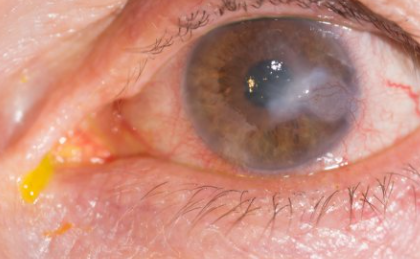
This article explores the often-overlooked pitfalls that contribute to treatment failure in keratitis, with a focus on practical, real-world clinical insights.
1. Misdiagnosis: The Most Common Trap
One of the leading causes of treatment failure is incorrect initial diagnosis. Not all corneal ulcers are bacterial, yet many are treated empirically as such.
Common Misdiagnoses:
- Fungal keratitis mistaken for bacterial keratitis
- Acanthamoeba keratitis misdiagnosed as herpetic keratitis
- Sterile inflammatory keratitis is treated as infectious
Why This Matters:
Each type of keratitis requires a completely different treatment approach. For example:
- Fungal keratitis requires antifungal agents, not antibiotics
- Acanthamoeba requires prolonged anti-protozoal therapy
- Herpetic keratitis worsens with steroids if epithelial disease is present
👉 Clinical Tip: If there is no improvement within 48–72 hours of appropriate therapy, reconsider the diagnosis immediately.
All-fit Slit-Lamp Adapter
Record and share exactly what you see at the slit lamp. One adapter fits any slit lamp or surgical microscope — and any smartphone.
From Choroida — the team behind this site2. Delayed or Inadequate Microbiological Workup
Empirical treatment is common, but failure to perform corneal scraping and culture can lead to inappropriate therapy.
Pitfalls:
- Skipping microbiology in “small” ulcers
- Prior antibiotic use masks culture results
- Inadequate sample collection
Consequences:
- Missed atypical organisms
- Inability to tailor therapy
- Increased resistance risk
👉 Clinical Tip: Always consider microbiological investigation in:
- Central ulcers
- Large or deep infiltrates
- Non-responding cases
3. Drug Penetration and Pharmacokinetics
Even when the correct drug is chosen, poor corneal penetration may limit effectiveness.
Contributing Factors:
- Intact epithelium limits drug entry
- Deep stromal or endothelial infections
- Biofilm formation (especially in contact lens-related infections)
Example:
Topical antifungals like natamycin have limited stromal penetration, making deep fungal infections difficult to treat.
👉 Clinical Tip: Consider:
- Debridement to enhance penetration
- Switching to fortified or systemic therapy in deep infections
4. Patient Compliance Issues
Non-adherence to treatment regimens is an underestimated factor.
Challenges:
- Frequent dosing schedules (every 30–60 minutes)
- Long treatment duration
- Financial constraints
- Lack of patient education
Impact:
Even the most appropriate treatment will fail if not followed correctly.
👉 Clinical Tip:
Simplify regimens when possible and ensure patients understand:
- Severity of condition
- Importance of adherence
- Warning signs of deterioration
5. Steroid Misuse
Topical steroids can be a double-edged sword.
Common Errors:
- Early use before infection control
- Use in undiagnosed keratitis
- Continued use despite worsening infection
Risks:
- Enhanced microbial replication
- Masking clinical signs
- Corneal thinning and perforation
👉 Clinical Tip:
Avoid steroids in active epithelial keratitis and use them cautiously only after the infection is under control.
6. Resistant and Atypical Organisms
Emerging antimicrobial resistance is a growing concern.
Examples:
- Methicillin-resistant Staphylococcus aureus (MRSA)
- Multidrug-resistant Pseudomonas
- Rare organisms like Nocardia or Mycobacteria
Clinical Clues:
- Poor response to broad-spectrum antibiotics
- Indolent or atypical clinical course
👉 Clinical Tip:
Reassess and escalate treatment early in non-responding cases. Consider referral if needed.
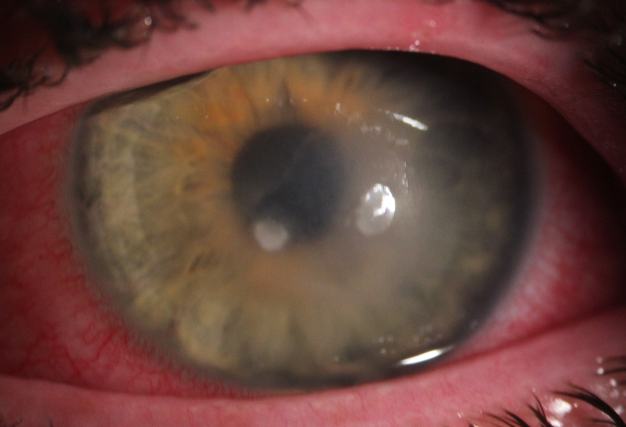
7. Underlying Ocular Surface Disease
Pre-existing conditions often interfere with healing.
Common Factors:
- Dry eye disease
- Neurotrophic keratopathy
- Exposure keratopathy
- Lid abnormalities
Impact:
- Delayed epithelial healing
- Increased susceptibility to infection
- Higher recurrence rates
👉 Clinical Tip:
Always treat the underlying surface disease, not just the infection.
8. Contact Lens-Related Factors
Contact lens wear remains a major risk factor.
Issues:
- Poor hygiene
- Extended wear
- Contaminated solutions
Special Concern:
- High risk of Acanthamoeba keratitis
- Biofilm-associated infections
👉 Clinical Tip:
Always ask detailed history about lens use—even if the patient doesn’t volunteer it.
9. Late Presentation
In many settings, patients present late after:
- Self-medication
- Traditional remedies
- Delayed referral
Consequences:
- Advanced stromal involvement
- Increased risk of perforation
- Limited treatment options
👉 Clinical Tip:
Early referral and aggressive management are key to preserving vision.
Conclusion
Failure of keratitis treatment is rarely due to a single factor. Instead, it is usually a combination of diagnostic errors, inadequate therapy, patient-related factors, and underlying ocular conditions.
Recognizing these hidden pitfalls can significantly improve clinical outcomes.
For ophthalmologists, the key lies in:
- Maintaining a high index of suspicion
- Reassessing non-responding cases early
- Adopting a multidisciplinary and individualized approach
Ultimately, timely intervention and critical thinking—not just protocols—are what save vision.

Document what you see
Two smartphone imaging tools built for everyday clinic use — one for the slit lamp, one for the fundus.
From Choroida — the team behind this siteReferences
- Ting DSJ, et al. “Infectious keratitis: an update on epidemiology, causative microorganisms, risk factors, and antimicrobial resistance.” Eye (Lond). 2021.
- Austin A, et al. “Microbial keratitis: diagnosis and management.” Ophthalmology. 2017.
- Thomas PA, Kaliamurthy J. “Mycotic keratitis: epidemiology, diagnosis and management.” Clin Microbiol Infect. 2013.
- Stapleton F, et al. “The epidemiology of microbial keratitis with contact lens use.” Eye. 2012.
- Sharma N, et al. “Evaluation of corneal scraping smear examination in the diagnosis of microbial keratitis.” Br J Ophthalmol. 2010.
- Alfonso EC, et al. “Fungal keratitis.” Lancet. 2019.
- Dart JK, et al. “Acanthamoeba keratitis: diagnosis and treatment update.” Am J Ophthalmol. 2009.
Test yourself
A few questions straight from this article.
-
What is described as the leading cause of treatment failure in microbial keratitis?
Not all corneal ulcers are bacterial, yet many are treated empirically as such; an incorrect initial diagnosis is the most common trap behind failed keratitis treatment. -
After how long without improvement on appropriate therapy should the diagnosis of keratitis be reconsidered?
If there is no improvement within 48 to 72 hours of appropriate therapy, the diagnosis should be reconsidered immediately rather than continuing the same regimen. -
Acanthamoeba keratitis is classically misdiagnosed as which other form of keratitis?
Acanthamoeba keratitis is commonly mistaken for herpetic keratitis, yet it needs prolonged anti-protozoal therapy rather than antiviral treatment. -
In which keratitis presentation should corneal scraping and culture always be considered?
Microbiological workup is essential in central ulcers, large or deep infiltrates, and any non-responding case; skipping it in small ulcers is a recognised pitfall. -
Which topical antifungal is limited by poor stromal penetration in deep fungal keratitis?
Natamycin penetrates the stroma poorly, so deep fungal infections may need debridement to aid entry or a switch to fortified or systemic therapy. -
Which clinical course should raise suspicion of Nocardia or Mycobacteria as the cause of keratitis?
Rare organisms such as Nocardia or Mycobacteria typically produce an indolent, atypical course with poor response to broad-spectrum antibiotics. -
What is the danger of using topical steroids before infection is controlled in keratitis?
Premature steroids enhance microbial replication and mask clinical signs, which can progress to corneal thinning and perforation. -
Which pre-existing ocular surface condition delays epithelial healing in keratitis?
Dry eye, neurotrophic and exposure keratopathy and lid abnormalities delay epithelial healing and raise recurrence rates, so the surface disease must be treated too. -
Which infection is contact lens wear specifically flagged as a high risk for in keratitis?
Poor hygiene, extended wear and contaminated solutions make contact lens users especially prone to Acanthamoeba keratitis and biofilm-associated infection. -
What is the main consequence of late presentation in microbial keratitis?
Self-medication, traditional remedies and delayed referral allow advanced stromal involvement, raising the risk of perforation and narrowing treatment options.
