
Abstract
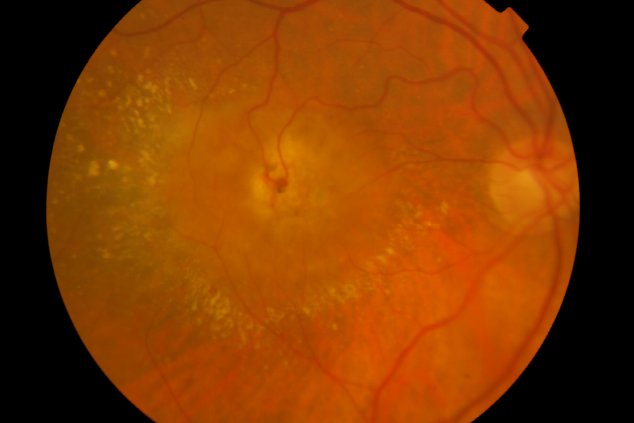
Retinal Angiomatous Proliferation (RAP) is a challenging subtype of neovascular age-related macular degeneration (nAMD), characterized by intraretinal neovascularization.
Managing RAP requires innovative approaches due to its complex pathology and potential for rapid progression.

Current treatments include anti-vascular endothelial growth factor (VEGF) agents, combination therapy, and photodynamic therapy (PDT).
Novel strategies, such as gene therapy, sustained-release formulations, and nanotechnology-based drug delivery, offer promising avenues for long-term control.
This article delves into these management options, comparing their efficacy, safety profiles, and potential to provide sustainable, improved visual outcomes.
Management Strategies for Retinal Angiomatous Proliferation (RAP)
1. Anti-VEGF Monotherapy
- Mechanism: Anti-VEGF agents such as Ranibizumab, Aflibercept, and Bevacizumab inhibit VEGF, reducing neovascular growth and fluid leakage.
- Application: Anti-VEGF injections remain the frontline RAP treatment due to their rapid onset of action in controlling neovascularization. They are typically administered monthly or as needed based on disease activity.
- Efficacy: Studies have shown that anti-VEGF monotherapy stabilizes vision and can slow disease progression. However, the frequent injection schedule often poses a challenge, impacting patient compliance and overall treatment success.
- Advances: The Port Delivery System (PDS) with Ranibizumab, a surgically implanted reservoir device, has shown promise in reducing the need for frequent injections, providing a sustained release of anti-VEGF medication directly to the retina.
2. Photodynamic Therapy (PDT)
- Mechanism: PDT utilizes verteporfin, a photosensitizing agent activated by a laser to target and occlude abnormal vessels selectively. This occlusion reduces retinal fluid accumulation and limits neovascular growth.
- Application: PDT is often combined with anti-VEGF agents for patients who exhibit incomplete response to anti-VEGF monotherapy. By occluding abnormal vessels in the retina, PDT can prevent the spread of neovascularization.
- Efficacy and Limitations: While effective, PDT has side effects such as potential retinal atrophy and transient visual disturbances. It is generally reserved for cases that do not respond adequately to anti-VEGF alone, or for patients requiring a more aggressive management approach.
3. Thermal Laser Photocoagulation
- Mechanism: Laser photocoagulation uses high-energy laser light to destroy abnormal retinal vessels, aiming to control disease progression, particularly in early RAP stages.
- Application: This therapy is best suited for patients with localized RAP lesions and minimal subretinal fluid, as it can be challenging to apply in advanced RAP with extensive retinal changes.
- Efficacy: Although effective in certain early RAP cases, laser photocoagulation is limited by its potential to cause collateral retinal damage, restricting its use to a small subset of patients.

4. Combination Therapy
- Mechanism: Combination therapy typically pairs anti-VEGF agents with PDT, capitalizing on the advantages of both treatments to target RAP’s complex pathology.
- Application: Patients with advanced or refractory RAP often benefit from combination therapy, as PDT can reduce the treatment burden by enhancing anti-VEGF efficacy, thus lowering the injection frequency.
- Clinical Trials: Evidence suggests combination therapy offers superior outcomes for RAP management compared to monotherapy, especially in cases where retinal and choroidal components are involved.
- Challenges: Although effective, combination therapy requires careful scheduling to optimize the timing of PDT and anti-VEGF injections for maximal efficacy.
5. Gene Therapy
- Overview: Gene therapy is emerging as a transformative strategy for RAP, focusing on delivering anti-VEGF or anti-angiogenic genetic material directly to retinal cells.
- Mechanism: By inserting genetic sequences that suppress VEGF production or promote anti-angiogenic factors, gene therapy provides a potentially long-term solution, reducing the need for repeated treatments.
- Advantages: Gene therapy offers the potential for sustained disease control, improving compliance by minimizing injection frequency. Recent advancements in adeno-associated viral (AAV) vectors have enhanced the safety and delivery precision of these treatments.
- Challenges: While promising, gene therapy faces hurdles related to immune response, the precise targeting of retinal cells, and the need for extensive monitoring. The potential for adverse effects, such as inflammation, requires cautious implementation and further research.
6. Nanotechnology-based Drug Delivery Systems
- Concept: Nanotechnology-based systems are being explored to deliver anti-VEGF agents at the cellular level, enabling more precise, controlled, and sustained drug release.
- Mechanism: These nanoparticles can be designed to release anti-VEGF agents over extended periods, allowing patients to achieve therapeutic effects with fewer injections.
- Advantages: Nanotechnology could help reduce the frequency of anti-VEGF injections, addressing a significant burden for patients requiring long-term treatment. Targeted nanoparticle delivery systems also minimize systemic exposure, enhancing safety.
- Current Research: Preclinical studies show promising results, but larger clinical trials are needed to establish long-term efficacy and safety for RAP management.
7. Sustained-release Anti-VEGF Formulations
- Overview: Sustained-release drug formulations are being developed to maintain therapeutic drug levels in the retina for extended periods, thereby reducing injection frequency.
- Examples: In addition to the Port Delivery System (PDS) with Ranibizumab, other sustained-release formulations are being researched, including bioerodible implants and injectable microparticles that gradually release anti-VEGF medication.
- Benefits: These approaches aim to alleviate patient burden while maintaining effective disease control. Sustained-release systems allow for consistent intraocular drug levels, avoiding the peaks and troughs associated with traditional injections.
- Challenges: There are ongoing studies to determine the ideal release rates and biocompatibility of these systems, with concerns around inflammation or device migration being addressed through continuous innovation.
Fundus Explorer Pro
Photograph the retinal findings described here with the phone already in your pocket — 22 D optics and built-in illumination in one handheld unit.
From Choroida — the team behind this siteComparative Efficacy and Safety
The efficacy of these management strategies varies, with anti-VEGF monotherapy being the most widely studied and established option.
However, combination therapy, especially with PDT, has demonstrated enhanced outcomes in advanced RAP cases, reducing disease progression and minimizing recurrence.
Emerging strategies like gene therapy and nanotechnology-based drug delivery hold the promise of reducing treatment burden significantly, though they are not yet widely available.
- Anti-VEGF Monotherapy: Effective, but requires frequent injections.
- Combination Therapy (Anti-VEGF + PDT): Provides enhanced control in advanced cases but can lead to phototoxic effects.
- Gene Therapy: Offers the potential for single-dose, long-term efficacy but requires extensive safety validation.
- Nanotechnology and Sustained-release Systems: Aim to reduce treatment burden, with ongoing research to optimize delivery and efficacy.

Future Directions in RAP Management
The field of RAP management is evolving, with a focus on balancing efficacy, safety, and patient compliance.
Ongoing studies in gene therapy and nanotechnology promise a future where RAP treatment could be transformed from frequent, burdensome injections to minimally invasive, sustained-release interventions.
Combining genetic modifications with targeted drug delivery may also allow for individualized treatments based on disease severity and patient response, providing a more tailored and effective approach to managing this complex condition.

Document what you see
Two smartphone imaging tools built for everyday clinic use — one for the slit lamp, one for the fundus.
From Choroida — the team behind this siteReferences
- Yannuzzi LA, Negrão S, Iida T, Spaide RF, Freund KB, Slakter JS, et al. Retinal angiomatous proliferation in age-related macular degeneration. Retina. 2001;21(5):416–34.
- Brown DM, Michels M, Kaiser PK, Heier JS, Sy JP, Ianchulev T, et al. Ranibizumab versus verteporfin for neovascular age-related macular degeneration. New England Journal of Medicine. 2006;355(14):1432–44.
- Tozer K, Roller AB, Chong LP, Chan RVP, Abraham C, Yannuzzi LA. Management of retinal angiomatous proliferation (RAP) in age-related macular degeneration with anti-VEGF agents and photodynamic therapy. Ophthalmology Retina. 2018;2(8):809–14.
- Campochiaro PA, Lauer AK, Sohn EH, Mir TA, Bharti K, Lauer A, et al. Lentiviral vector gene transfer of endostatin/angiostatin for macular degeneration (GEM) study. Human Gene Therapy. 2017;28(1):99–111.
- Yang S, Zhang H, Hao D, Zhang Y, Hu Z. Nanotechnology for the therapy of retinal diseases: progress and perspectives. Advanced Drug Delivery Reviews. 2022;186:114354.
