HLA-A29 is the class I human leukocyte antigen allele most strongly linked to birdshot chorioretinopathy. Clinicians test for it routinely when the fundus suggests this diagnosis. The association ranks among the strongest between any HLA type and any disease, although a positive result still needs careful interpretation.
What the HLA-A29 Test Measures
The test shows whether a patient carries the HLA-A29 allele on chromosome 6. Laboratories use molecular typing by polymerase chain reaction or older serological methods. Most laboratories now report allele-level results, which helps because birdshot is associated mainly with the HLA-A*29:02 subtype, common in European populations.
How Strong Is the Birdshot Link
Since Nussenblatt and colleagues described the association in 1982, case series have consistently found HLA-A29 in most patients with birdshot. In addition, genome-wide work has identified ERAP2 variants that modify risk. This suggests that antigen processing involving HLA-A29 contributes to the disease mechanism.
Fundus Explorer Pro
Photograph the retinal findings described here with the phone already in your pocket — 22 D optics and built-in illumination in one handheld unit.
From Choroida — the team behind this siteWhy HLA-A29 Fails as a Screening Test
HLA-A29 is common in the general population, while birdshot is rare. As a result, the positive predictive value in an unselected person is very low. Most carriers never develop eye disease, therefore testing healthy people, relatives or patients with nonspecific floaters produces anxiety without useful information.
When to Order HLA-A29
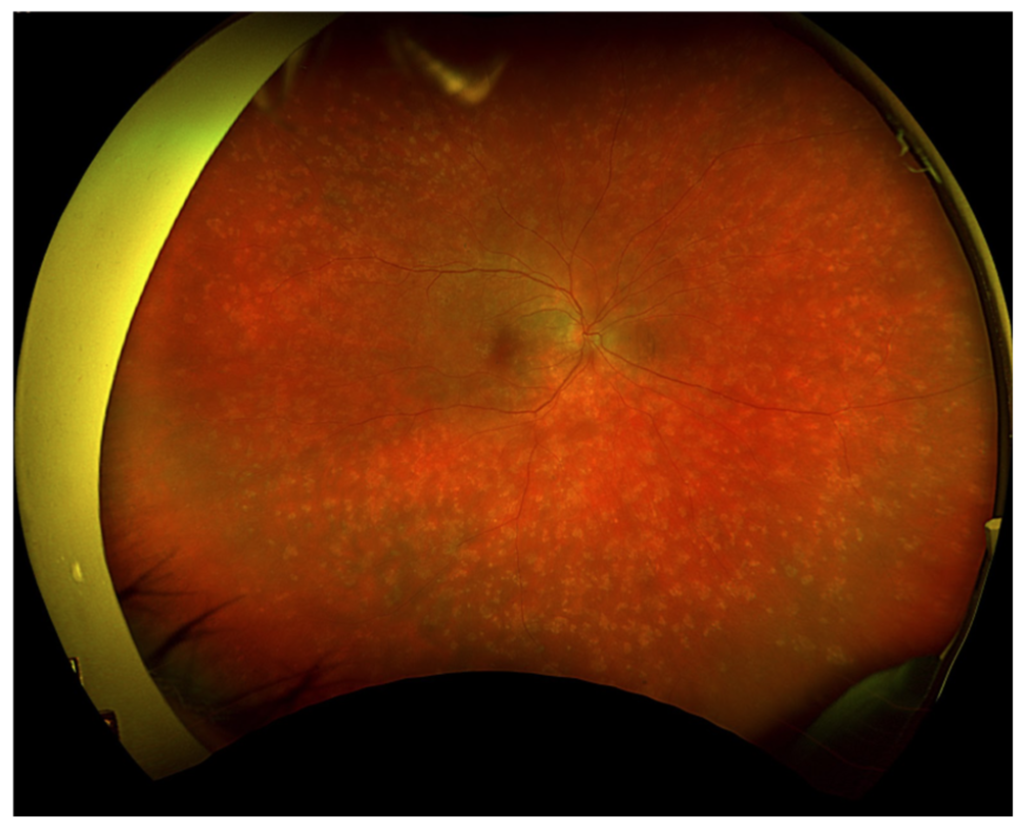
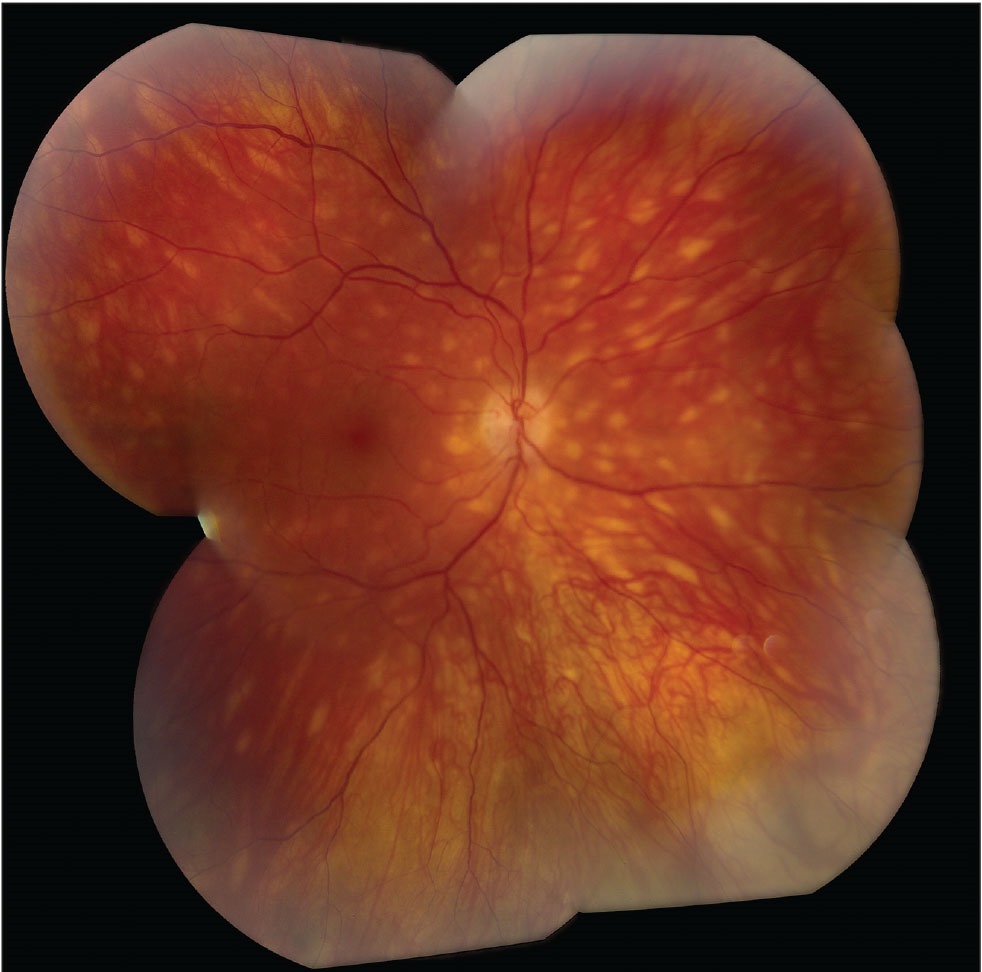
Order the test when a middle-aged adult presents with bilateral posterior uveitis, mild anterior chamber reaction and vitritis. Cream-colored oval choroidal lesions radiating from the disc complete the picture. Floaters, nyctalopia, glare and poor color vision with near-normal acuity also raise suspicion (see birdshot retinochoroidopathy).
HLA-A29 in Classification Criteria
The 2006 international consensus criteria listed HLA-A29 positivity as a supportive finding and did not require it for diagnosis. Later, the SUN Working Group criteria used a positive HLA-A29 test as one element confirming birdshot in patients with characteriztic multifocal choroidal lesions. This reflects its value once the phenotype is present.
Reading a Negative Result
A negative result makes birdshot considerably less likely, although HLA-A29-negative patients with a typical phenotype have been reported. Therefore, a negative test should prompt a careful review of the diagnosis and a broader work-up. The diagnosis remains possible when the clinical and angiographic picture is convincing.
What Still Has to Be Excluded
A positive result never removes the need to exclude mimics, because carriers can develop other inflammatory diseases. Sarcoidosis, tuberculosis and syphilis can all produce multifocal choroidal lesions. Chest imaging, serology and interferon-gamma release testing are therefore often appropriate (see uveitis testing).
In older patients with vitritis, also consider vitreoretinal lymphoma, which can masquerade as birdshot and may respond partially to steroids. Then compare the pattern with multifocal choroiditis and sympathetic ophthalmia. A history of penetrating trauma or intraocular surgery changes the diagnosis.
Explaining a Positive HLA-A29 Result
Start by telling the patient that HLA-A29 is a tissue type many healthy people carry. The result supports the diagnosis suggested by the examination. Avoid calling it a disease gene, because patients often read a positive genetic marker as proof of a hereditary illness.
Next, explain that the result does not measure severity or predict response to treatment. Patients usually feel reassured when they hear that monitoring decisions depend on symptoms, imaging and electrophysiology. The clinic repeats these over time.
Family Questions and Genetics
Relatives often ask whether they should be tested as well. Most carriers stay healthy and familial birdshot is rare, so routine testing of siblings or children offers no benefit. This differs from the systemic questions some families raise around HLA-B27 anterior uveitis.
Does HLA-A29 Change Treatment
HLA-A29 status does not decide whether to start immunosuppression. Treatment follows disease activity, judged by visual fields, electroretinography and OCT for macular edema. Angiography adds information on vasculitis or active lesions, because birdshot can damage the retina silently while acuity remains good.
Pitfalls to Avoid
- Do not order the test for nonspecific floaters or as general uveitis screening
- Never accept a positive result as a diagnosis without typical fundus or ICGA findings
- Avoid excluding birdshot on a negative test alone when the phenotype is typical
- Always consider lymphoma in older patients with vitritis
- Do not repeat the test, because the genotype never changes
Document what you see
Two smartphone imaging tools built for everyday clinic use — one for the slit lamp, one for the fundus.
From Choroida — the team behind this siteReferences
- Nussenblatt RB, Mittal KK, Ryan S, Green WR, Maumenee AE. Birdshot retinochoroidopathy associated with HLA-A29 antigen and immune responsiveness to retinal S-antigen. Am J Ophthalmol. 1982;94:147-158.
- Levinson RD, Brezin A, Rothova A, Accorinti M, Holland GN. Research criteria for the diagnosis of birdshot chorioretinopathy: results of an international consensus conference. Am J Ophthalmol. 2006;141:185-187.
- Standardization of Uveitis Nomenclature (SUN) Working Group. Classification criteria for birdshot chorioretinitis. Am J Ophthalmol. 2021;228:65-71.
- Kuiper JJ, Van Setten J, Ripke S, et al. A genome-wide association study identifies a functional ERAP2 haplotype associated with birdshot chorioretinopathy. Hum Mol Genet. 2014;23:6081-6087.
- Minos E, Barry RJ, Southworth S, et al. Birdshot chorioretinopathy: current knowledge and new concepts in pathophysiology, diagnosis, monitoring and treatment. Orphanet J Rare Dis. 2016;11:61.
Test yourself
A few questions straight from this article.
-
Which HLA allele is most strongly linked to birdshot chorioretinopathy?
The article states HLA-A29 is the class I allele most strongly linked to birdshot chorioretinopathy, among the strongest HLA-disease associations. -
In birdshot chorioretinopathy, which HLA-A29 subtype is mainly associated with disease in European populations?
Most laboratories report allele-level results, which helps because birdshot is associated mainly with the HLA-A*29:02 subtype, common in European populations. -
Genome-wide work in birdshot chorioretinopathy identified variants in which gene that modify disease risk?
ERAP2 variants modify risk, suggesting that antigen processing involving HLA-A29 contributes to the birdshot disease mechanism. -
Why is HLA-A29 testing a poor screening test for birdshot chorioretinopathy in unselected people?
HLA-A29 is common in the general population while birdshot is rare, so positive predictive value is very low and most carriers never develop eye disease. -
Which presentation should prompt HLA-A29 testing for suspected birdshot chorioretinopathy?
The article advises ordering the test in a middle-aged adult with bilateral posterior uveitis, mild anterior chamber reaction and vitritis, with cream-colored oval choroidal lesions radiating from the disc. -
How did the 2006 international consensus criteria treat HLA-A29 positivity in birdshot chorioretinopathy?
The 2006 criteria listed HLA-A29 positivity as supportive and did not require it for diagnosis. -
How should a negative HLA-A29 result be interpreted when birdshot chorioretinopathy is suspected?
A negative result makes birdshot considerably less likely, but HLA-A29-negative patients with a typical phenotype are reported, so the diagnosis remains possible and a broader work-up is warranted. -
In an older patient with vitritis mimicking birdshot chorioretinopathy, which diagnosis should also be considered?
Vitreoretinal lymphoma can masquerade as birdshot in older patients with vitritis and may respond partially to steroids. -
Which infectious and inflammatory conditions can produce multifocal choroidal lesions that mimic birdshot chorioretinopathy?
The article lists sarcoidosis, tuberculosis and syphilis as producing multifocal choroidal lesions, so chest imaging, serology and interferon-gamma release testing are often appropriate. -
In birdshot chorioretinopathy, what guides the decision to start immunosuppression?
HLA-A29 status does not decide treatment. Treatment follows disease activity, because birdshot can damage the retina silently while acuity remains good.

Writes and reviews the clinical articles on Educate. Every post is checked against peer-reviewed sources before it goes live.