DRCR Protocol T was a randomized trial that compared aflibercept, bevacizumab, and ranibizumab in center-involving diabetic macular edema.
It remains the main head-to-head comparison for these three drugs in this disease, and its subgroup results by baseline acuity guide the choice of the first agent.
Design of DRCR Protocol T
The trial enrolled 660 eyes with vision loss from center-involving diabetic macular edema, and eyes received aflibercept 2.0 mg, bevacizumab 1.25 mg, or ranibizumab 0.3 mg, with protocol-driven retreatment and laser rescue.
The primary outcome was the mean change in visual acuity at one year, with follow-up to two years. Wells and colleagues published the one-year results in the New England Journal of Medicine.
One-Year Results of DRCR Protocol T
Visual acuity improved in all groups, and the difference by drug depended on the baseline acuity. Among eyes with baseline acuity of 20/40 or better, the three drugs gave similar gains.
Among eyes with baseline acuity of 20/50 or worse, aflibercept gave greater improvement than bevacizumab and ranibizumab at one year. So the authors concluded that the choice depends on the starting vision (see diabetic macular edema).
Fundus Explorer Pro
Photograph the retinal findings described here with the phone already in your pocket — 22 D optics and built-in illumination in one handheld unit.
From Choroida — the team behind this siteTwo-Year Results
Aflibercept stayed superior to bevacizumab in eyes with worse baseline acuity. However, the difference between aflibercept and ranibizumab narrowed and was no longer significant at two years. Wells and colleagues also reported a numerically higher rate of cardiovascular events with ranibizumab in the second year, though the trial was not powered for safety.
How to Apply DRCR Protocol T
- With good baseline vision, start with the least costly agent, often bevacizumab
- With worse baseline vision, consider aflibercept first
- Switch agents when the response is inadequate after several injections
- Add laser or steroids in selected eyes
Cost and access often decide the real choice (see anti-VEGF therapy).
Limits of DRCR Protocol T
The trial tested older formulations and regimens, and newer agents entered later. It did not measure long-term anatomic outcomes beyond two years, and real-world patients have more comorbidity and irregular follow-up, so apply the results with flexibility.
Practical Points
Record baseline acuity and thickness before treatment, then switch after an inadequate response and document the reason, and discuss cost, convenience, and safety with the patient.
An Example Case
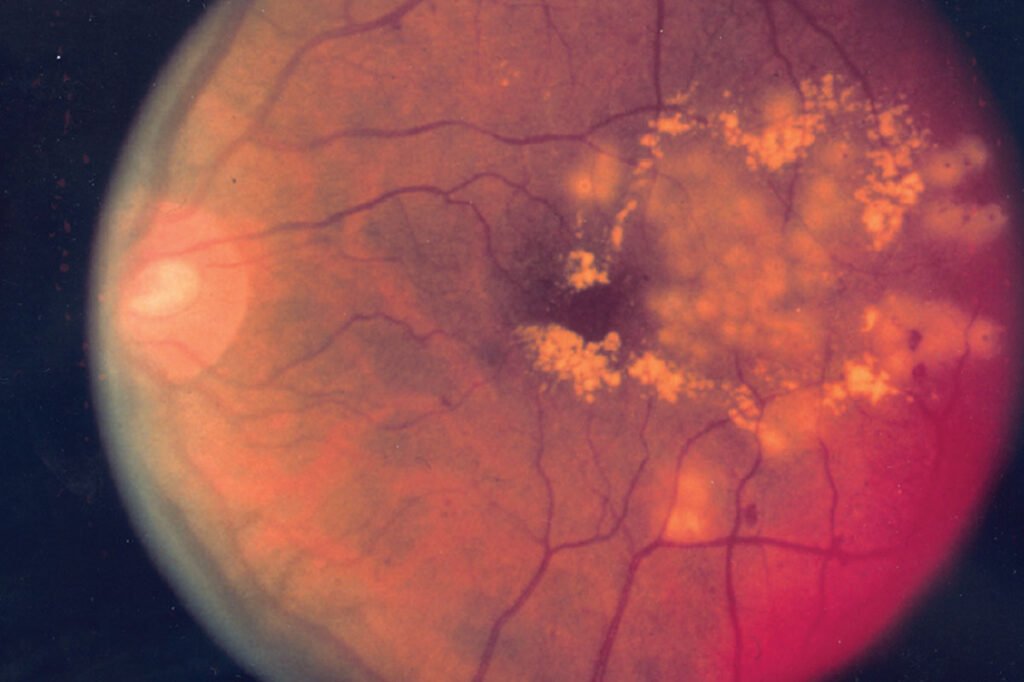
A 58-year-old man with center-involving diabetic macular edema has acuity of 20/80 and central thickness of 480 micrometers. His clinician reviews the Protocol T results and chooses aflibercept as the first agent because of his worse baseline vision.
After six monthly injections, his acuity reaches 20/40, and the thickness falls to 310 micrometers, and he then continues on an extended schedule.
Questions Patients Ask
Patients ask which injection is best, and the answer depends on baseline vision, cost, and availability. They also ask whether the cheaper drug works as well, and for good baseline vision the results were similar. Because the decision involves cost, explain that bevacizumab is a reasonable first choice in many cases.
Pitfalls to Avoid
- Applying the results to eyes with very poor vision or ischemia without caution
- Ignoring the need to switch agents when the response is inadequate
- Forgetting laser or steroids in eyes that respond poorly
- Assuming that the same drug is best for every patient
Looking Ahead
Newer agents, such as faricimab and high-dose aflibercept, have since entered practice with long-interval regimens, and comparative trials of these agents against older drugs continue. Therefore, treat Protocol T as a starting point, not the final word.
Practical Points
Document baseline acuity, thickness, and prior treatment, then set a time to assess response, such as after three monthly injections, and also discuss insurance requirements for step therapy.
Safety Observations in DRCR Protocol T
The trial found similar rates of serious adverse events across groups, with a few differences in the second year. Because patients with diabetes have high cardiovascular risk, monitor blood pressure and lipids and also review systemic history before each treatment.
Cost and Access
Bevacizumab costs far less than aflibercept or ranibizumab, and in many health systems, payers require a trial of the cheaper drug first. Therefore, Protocol T gives clinical support to step therapy in eyes with good vision.
Reading the Subgroup Table
The authors prespecified subgroups by baseline acuity, so the results by subgroup are reliable. They also report the change in letters and the proportion that gained at least 15 letters, so review the table when you counsel patients about expectations.


Document what you see
Two smartphone imaging tools built for everyday clinic use — one for the slit lamp, one for the fundus.
From Choroida — the team behind this siteReferences
- Diabetic Retinopathy Clinical Research Network. Aflibercept, bevacizumab, or ranibizumab for diabetic macular edema. N Engl J Med. 2015;372:1193-1203.
- Diabetic Retinopathy Clinical Research Network. Aflibercept, bevacizumab, or ranibizumab for diabetic macular edema: two-year results from a comparative effectiveness randomized clinical trial. Ophthalmology. 2016;123:1351-1359.
- Flaxel CJ, Adelman RA, Bailey ST, et al. Diabetic retinopathy preferred practice pattern. Ophthalmology. 2020;127:P66-P145.
- American Academy of Ophthalmology. Basic and Clinical Science Course, Section 12: Retina and Vitreous. AAO; current edition.
Test yourself
A few questions straight from this article.
-
DRCR Protocol T compared aflibercept, bevacizumab and ranibizumab head to head in which condition?
Protocol T was a randomized trial of 660 eyes with vision loss from center-involving diabetic macular edema. It remains the main head-to-head comparison of these three drugs in this disease. -
Which ranibizumab dose was used in the DRCR Protocol T trial for diabetic macular edema?
Eyes received aflibercept 2.0 mg, bevacizumab 1.25 mg or ranibizumab 0.3 mg, with protocol-driven retreatment and laser rescue. -
What was the primary outcome of DRCR Protocol T?
The primary outcome was the mean change in visual acuity at one year, and follow-up continued to two years. -
In DRCR Protocol T, how did the three anti-VEGF drugs compare in eyes with baseline acuity of 20/40 or better?
With baseline acuity of 20/40 or better, the gains were similar. For that reason the least costly agent, often bevacizumab, is a reasonable first choice in eyes with good vision. -
In DRCR Protocol T, which drug gave the greatest one-year improvement in eyes with baseline acuity of 20/50 or worse?
With baseline acuity of 20/50 or worse, aflibercept improved vision more than bevacizumab and ranibizumab at one year. That is why aflibercept is considered first when baseline vision is worse. -
At two years in DRCR Protocol T, what happened to aflibercept's advantage in eyes with worse baseline acuity?
Aflibercept stayed superior to bevacizumab in eyes with worse baseline acuity. The gap with ranibizumab narrowed and was no longer significant at two years. -
What safety signal did DRCR Protocol T report in the second year, and how strong was the evidence?
A numerically higher rate of cardiovascular events was reported with ranibizumab in the second year, but the trial was not powered for safety. Serious adverse events were otherwise similar across groups. -
When applying DRCR Protocol T in diabetic macular edema, at what point is response suggested to be assessed before considering a switch?
Record baseline acuity, thickness and prior treatment, then set a time to assess response, such as after three monthly injections. Switch agents when the response is inadequate and document the reason. -
Which limitation of DRCR Protocol T argues for applying its results flexibly?
The trial tested older formulations and regimens and did not measure outcomes beyond two years. Real-world patients also have more comorbidity and irregular follow-up. -
Why are the baseline-acuity subgroup results of DRCR Protocol T regarded as reliable?
The authors prespecified the subgroups by baseline acuity, so the subgroup results are reliable. The table reports letter change and the proportion gaining at least 15 letters, which helps when counselling patients.

Writes and reviews the clinical articles on Educate. Every post is checked against peer-reviewed sources before it goes live.