Corneal transplant recovery depends mainly on which corneal layers the surgeon replaced.
After endothelial keratoplasty, useful vision often returns within weeks. After full-thickness or deep anterior lamellar grafts, however, vision improves over a year or longer, so patients need a timeline matched to their own procedure.
Why the Procedure Sets the Pace
Penetrating keratoplasty (PK) replaces all corneal layers and needs sutures, while deep anterior lamellar keratoplasty (DALK) replaces stroma and keeps the host endothelium. Descemet membrane endothelial keratoplasty (DMEK) replaces only Descemet membrane and endothelium, and as a result each technique has its own pace and rejection profile.
Corneal Transplant Recovery After PK
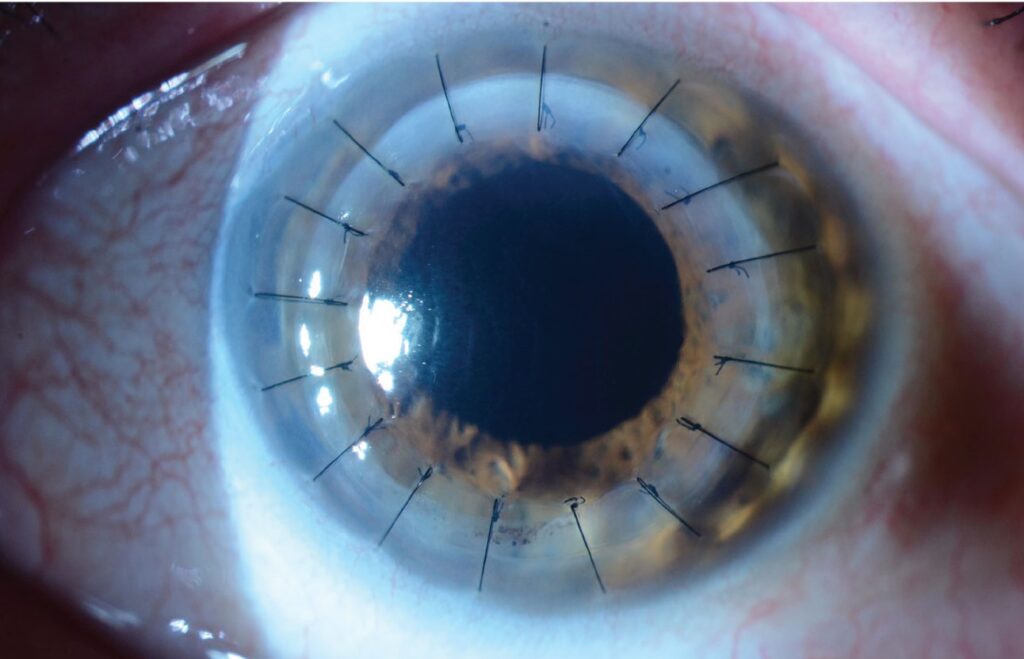
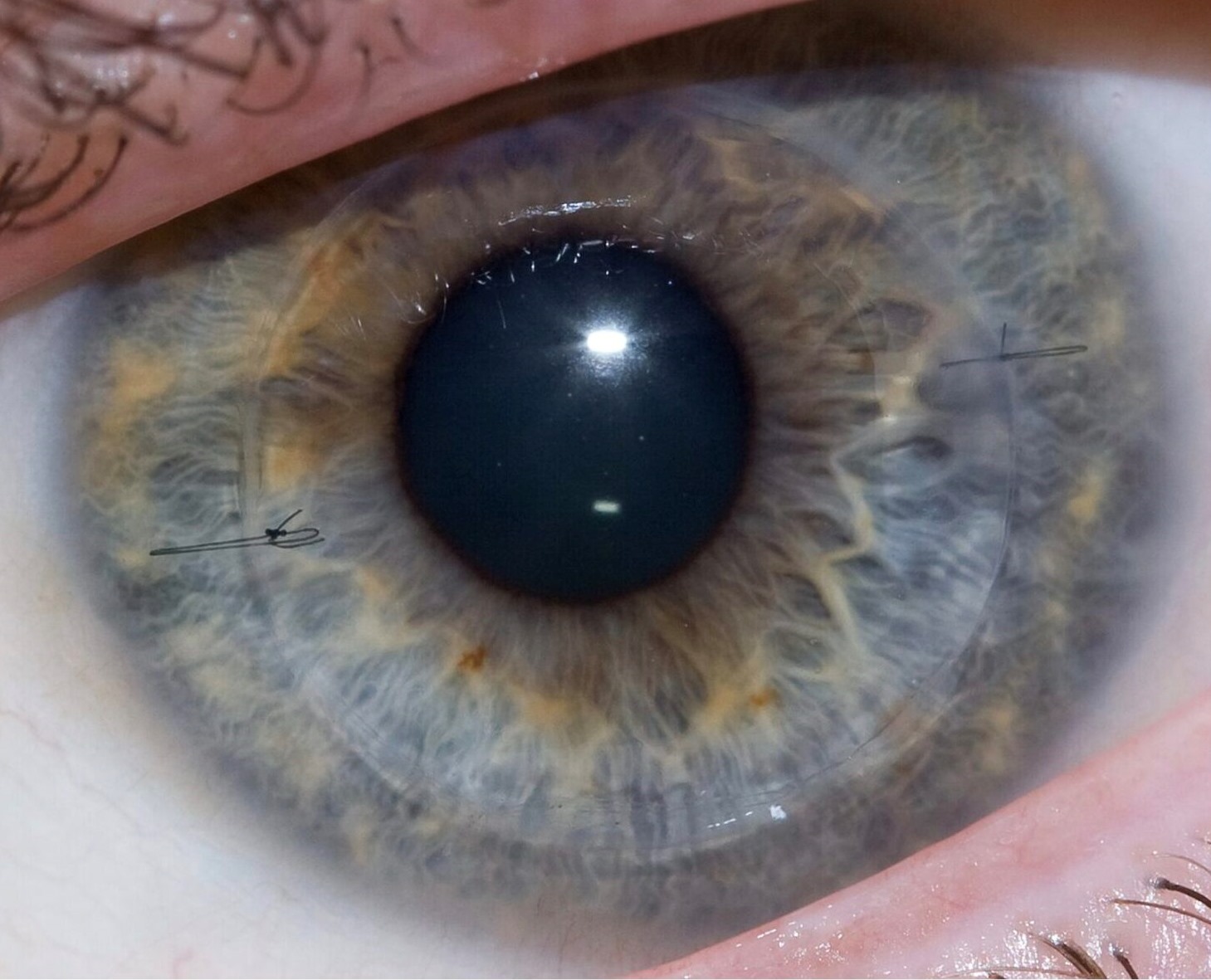
Vision after PK often stays blurred for several months because the graft-host junction heals slowly, since the cornea is avascular. In addition, suture tension creates astigmatism that glasses may not fully correct, and stable refraction often comes only after the first year (see penetrating keratoplasty). Some eyes still need a rigid gas permeable or scleral lens for irregular astigmatism.
All-fit Slit-Lamp Adapter
Record and share exactly what you see at the slit lamp. One adapter fits any slit lamp or surgical microscope — and any smartphone.
From Choroida — the team behind this siteThe First Week of Corneal Transplant Recovery
At day one, the examiner checks the epithelium, wound, chamber depth and pressure. A small epithelial defect is common and usually heals within days, although a persistent defect raises concern for infection or surface disease. Patients also wear a shield at night and avoid rubbing the eye.
Corneal Transplant Recovery After DALK
DALK follows a similar slow course because it also needs sutures, but the retained host endothelium removes the risk of endothelial rejection. Therefore, many surgeons taper steroids sooner than after PK, while interface haze or folds may still limit visual quality in some eyes.
Corneal Transplant Recovery After DMEK
DMEK uses no sutures and causes little refractive change, while an air or gas bubble presses the graft against the posterior stroma. Patients lie face up for a period the surgeon sets, usually the first days. Edema then clears over weeks, and many eyes see well within one to three months.
Graft Detachment and Rebubbling
Partial detachment is the most frequent early problem after DMEK, and at the slit lamp, localized stromal edema overlies the separated graft. Anterior segment OCT confirms the gap and its extent, and small detachments may reattach, while larger ones often need rebubbling (see DSEK vs DMEK).
Suture Management in Corneal Transplant Recovery
Sutures after PK and DALK close the wound and shape astigmatism, and surgeons usually guide selective removal with corneal topography. A loose or broken suture should come out promptly, because it invites vessels, infection and rejection, although removing sutures too early can open an immature wound.
Typical Drop Schedule
Topical corticosteroids form the base of post-graft care, and prednisolone acetate 1% often starts four times daily and then tapers over months. A topical antibiotic usually continues until the epithelium closes, and after PK, many surgeons keep a low-dose steroid long term, especially in high-risk eyes, although exact schedules vary between surgeons.
Steroid Choice After DMEK
The lower rejection risk after DMEK allows a gentler regimen in many eyes. For example, one randomized trial compared prednisolone acetate with fluorometholone after an initial prednisolone course. Fluorometholone caused fewer pressure rises, and rejection stayed low in both groups.
Side Effects of Long-Term Steroids
Steroid drops can raise intraocular pressure in susceptible patients, and high pressure threatens the optic nerve and the graft endothelium. In addition, long-term use promotes cataract and may allow herpetic recurrence, so pressure checks continue at every visit.
Rejection Warning Signs
Rejection can occur at any time, although it is most common in the early years. Teach patients the RSVP rule: redness, sensitivity to light, vision loss and pain. Endothelial rejection shows keratic precipitates, stromal edema and sometimes a Khodadoust line, and then prompt intensive steroids often reverse an early episode (see graft rejection warning signs).
Follow-Up Visits in Corneal Transplant Recovery
Visits are frequent in the first month, then spaced out. Each visit records acuity, pressure, graft clarity and suture status, and pachymetry and specular microscopy also track endothelial function over time.
Activity and Work in Corneal Transplant Recovery
Most patients return to desk work within a few weeks, but swimming and dusty work should wait until the surgeon approves. After PK, the wound stays weaker than normal cornea for life, and as a result, protective eyewear is a lifelong recommendation for contact sports.
Counseling Patients on Corneal Transplant Recovery
Set expectations at the preoperative visit by explaining that PK and DALK recovery takes months, while DMEK recovery takes weeks. Also stress that drops matter even when the eye feels well, and finally, give clear instructions on when to call urgently.
Pitfalls to Avoid
- Do not remove sutures early because the graft looks clear
- Never ignore a loose suture between scheduled visits
- Do not stop steroids abruptly after PK
- Avoid blaming new redness on dry eye before excluding rejection
- Check pressure regularly in steroid responders


Document what you see
Two smartphone imaging tools built for everyday clinic use — one for the slit lamp, one for the fundus.
From Choroida — the team behind this siteReferences
- Tan DT, Dart JK, Holland EJ, Kinoshita S. Corneal transplantation. Lancet. 2012;379:1749-1761.
- Melles GR, Ong TS, Ververs B, van der Wees J. Descemet membrane endothelial keratoplasty (DMEK). Cornea. 2006;25:987-990.
- Anshu A, Price MO, Price FW Jr. Risk of corneal transplant rejection significantly reduced with Descemet’s membrane endothelial keratoplasty. Ophthalmology. 2012;119:536-540.
- Price MO, Price FW Jr, Kruse FE, Bachmann BO, Tourtas T. Randomized comparison of topical prednisolone acetate 1% versus fluorometholone 0.1% in the first year after Descemet membrane endothelial keratoplasty. Cornea. 2014;33:880-886.
Test yourself
A few questions straight from this article.
-
Why does deep anterior lamellar keratoplasty (DALK) carry no risk of endothelial rejection?
DALK replaces the stroma but keeps the host endothelium, removing the risk of endothelial rejection, so many surgeons taper steroids sooner than after PK. -
Which corneal layers does Descemet membrane endothelial keratoplasty (DMEK) replace?
DMEK replaces only Descemet membrane and endothelium, whereas PK replaces all layers and DALK replaces stroma while keeping host endothelium. -
When does refraction usually stabilize after penetrating keratoplasty?
After PK the avascular graft-host junction heals slowly and suture tension creates astigmatism, so stable refraction often comes only after the first year. -
Within what time do many eyes see well after Descemet membrane endothelial keratoplasty (DMEK)?
DMEK uses no sutures and causes little refractive change; edema clears over weeks and many eyes see well within one to three months. -
What is the most frequent early problem after Descemet membrane endothelial keratoplasty (DMEK)?
Partial detachment is the most frequent early DMEK problem, seen as localized stromal edema; small ones may reattach, while larger ones often need rebubbling. -
How should a loose or broken suture after penetrating keratoplasty be managed?
A loose or broken suture should come out promptly because it invites vessels, infection and rejection, though removing sutures too early can open an immature wound. -
Which steroid regimen often starts after corneal transplantation?
Topical steroids are the base of post-graft care; prednisolone acetate 1% often starts four times daily and tapers over months, though schedules vary between surgeons. -
In a randomized trial after DMEK, what advantage did fluorometholone show over prednisolone acetate?
After an initial prednisolone course, fluorometholone caused fewer pressure rises, and rejection stayed low in both groups. -
What does the RSVP rule teach patients after corneal transplantation?
Patients learn RSVP, redness, sensitivity to light, vision loss and pain, as warning signs of graft rejection, which can occur at any time. -
Which slit-lamp sign may accompany endothelial graft rejection?
Endothelial rejection shows keratic precipitates, stromal edema and sometimes a Khodadoust line, and prompt intensive steroids often reverse an early episode.

Writes and reviews the clinical articles on Educate. Every post is checked against peer-reviewed sources before it goes live.