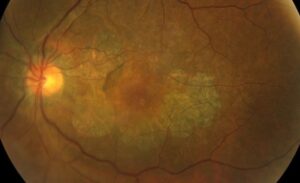
Diabetic retinopathy screening intervals vary by diabetes type, duration, retinopathy grade, and control.
Annual screening is the traditional standard, but evidence supports longer intervals for low-risk patients. Choosing the right interval balances safety, cost, and access.
Standard Recommendations for Diabetic Retinopathy Screening Intervals
The American Diabetes Association advises an eye examination within five years of diagnosis in type 1 diabetes, while in type 2 diabetes the first examination should occur at diagnosis. If there is no retinopathy and glycemia is well controlled, repeat every one to two years, as Solomon and colleagues summarized in the ADA position statement.
Pregnancy and Diabetic Retinopathy Screening Intervals
Pregnancy accelerates retinopathy, so examine women with diabetes before or early in pregnancy. Then repeat once per trimester and again within a year after delivery (see diabetic retinopathy in pregnancy).
Fundus Explorer Pro
Photograph the retinal findings described here with the phone already in your pocket — 22 D optics and built-in illumination in one handheld unit.
From Choroida — the team behind this siteLonger Diabetic Retinopathy Screening Intervals
Agardh and Tababat-Khani proposed three-year intervals for people with type 2 diabetes and no retinopathy, while the English national program moved toward two-year intervals for low-risk patients after modeling studies. Scanlon described these programs and the way risk categories drive the interval, and the risk of sight-threatening disease in the interval is low for people with no retinopathy and good control.
Shorter Diabetic Retinopathy Screening Intervals
- Moderate or worse nonproliferative retinopathy, at 3 to 6 months
- Proliferative disease or macular edema, with prompt treatment and close review
- Poor glycemic or blood pressure control
- Rapid improvement in glycemia, which may worsen retinopathy temporarily
Examine more often when risk factors cluster (see proliferative diabetic retinopathy).
Technology and Diabetic Retinopathy Screening Intervals
Telemedicine and artificial intelligence can extend screening to underserved areas, and wide-field imaging may find peripheral lesions that change the risk grade (see AI diabetic retinopathy screening). Programs need clear referral pathways, since screening alone does not save vision.
Practical Points on Diabetic Retinopathy Screening Intervals
Grade each examination and set the interval from the grade and risk profile, then document the date of the next review and send reminders. Keep adherence high, since missed appointments cause most late presentations.
An Example Case
A 52-year-old man with type 2 diabetes for eight years has no retinopathy on two consecutive annual exams, and his hemoglobin A1c is 6.8 percent while his blood pressure is controlled. His clinician moves him to a two-year interval based on the risk grade, and at the next exam he has no retinopathy and the schedule continues.
Questions Patients Ask
Patients ask why the interval is longer than last time, and the answer is that low-risk patients have a very small chance of problems in the first year. They also ask whether they should call if vision changes, and they should. Because patients may relax too much, stress that sudden changes need prompt review.
Pitfalls to Avoid
- Using a long interval without a validated grade
- Forgetting to examine after rapid improvement in glycemic control
- Delaying the first examination in type 2 diabetes
- Failing to track patients who miss appointments
Looking Ahead
Risk calculators that combine glycemia, blood pressure, duration, and prior grades may personalize intervals, and artificial intelligence may extend screening at low cost. Therefore, individualized schedules will likely replace fixed intervals.
Practical Points
Define the grade using a validated scheme at each visit and then set the next date. Document it in the record and also send reminders by message or phone.
Special Situations
Pregnancy, puberty, and cataract surgery may speed up retinopathy, and patients on rapidly lowering therapy may worsen temporarily. Therefore, shorten the interval in these situations.
Equity and Access
Many patients with diabetes never receive eye exams, while community programs, mobile cameras, and primary care imaging expand coverage. Because outcomes depend on follow-up, invest in recall systems.
Risk Calculators and Personalized Intervals
Some programs use algorithms that combine prior grades, glycemic control, and duration, which can place patients in low, medium, and high-risk groups. Because the interval then follows the individual risk, resources go where they are needed, but the tools need local validation before use.
Communicating the Plan to Patients
Explain why the interval is chosen and what symptoms need earlier review, then give written instructions and a reminder date. Also involve the primary care team, so that glycemic and blood pressure control stay in focus.
Summary
Choose the interval from the grade, the type of diabetes, and control, then document the next date and send reminders. Because missed visits cause most late presentations, track attendance.


Document what you see
Two smartphone imaging tools built for everyday clinic use — one for the slit lamp, one for the fundus.
From Choroida — the team behind this siteReferences
- Solomon SD, Chew E, Duh EJ, et al. Diabetic retinopathy: a position statement by the American Diabetes Association. Diabetes Care. 2017;40:412-418.
- Agardh E, Tababat-Khani P. Adopting 3-year screening intervals for sight-threatening retinal vascular lesions in type 2 diabetes subjects without retinopathy. Diabetes Care. 2011;34:1318-1319.
- Scanlon PH. The English National Screening Programme for diabetic retinopathy 2003-2016. Acta Diabetol. 2017;54:515-525.
- Flaxel CJ, Adelman RA, Bailey ST, et al. Diabetic retinopathy preferred practice pattern. Ophthalmology. 2020;127:P66-P145.
Test yourself
A few questions straight from this article.
-
When should the first eye examination occur in a patient with type 2 diabetes according to the ADA, regarding diabetic retinopathy screening?
The article states that in type 2 diabetes the first examination should occur at diagnosis, whereas in type 1 diabetes it is within five years of diagnosis. -
In type 1 diabetes, when does the ADA advise the first diabetic retinopathy eye examination?
The ADA advises an eye examination within five years of diagnosis in type 1 diabetes, unlike type 2 diabetes, where examination occurs at diagnosis. -
What repeat screening interval is advised for diabetic retinopathy when there is no retinopathy and glycemia is well controlled?
The article states that with no retinopathy and well-controlled glycemia, the exam is repeated every one to two years. -
How often should women with diabetic retinopathy risk be examined during pregnancy?
Pregnancy accelerates retinopathy, so women are examined before or early in pregnancy, once per trimester, and again within a year after delivery. -
What interval did Agardh and Tababat-Khani propose for type 2 diabetes with no diabetic retinopathy?
The article reports that they proposed three-year intervals for people with type 2 diabetes and no retinopathy. -
What interval is advised for moderate or worse nonproliferative diabetic retinopathy?
Moderate or worse nonproliferative retinopathy calls for a shorter screening interval of 3 to 6 months. -
Why should the clinician examine sooner after rapid improvement in glycemic control in a patient with diabetic retinopathy risk?
The article lists rapid improvement in glycemia as a reason for shorter intervals because it may worsen retinopathy temporarily. -
According to the article, what causes most late presentations of diabetic retinopathy?
The article says missed appointments cause most late presentations, so adherence should be kept high and attendance tracked. -
Which situations may speed up diabetic retinopathy and warrant a shorter screening interval?
The article states that pregnancy, puberty, and cataract surgery may speed up retinopathy, so the interval should be shortened. -
What is needed before programs use risk calculators to personalize diabetic retinopathy screening intervals?
The article notes that risk algorithms place patients in low, medium, or high-risk groups, but the tools need local validation before use.

Writes and reviews the clinical articles on Educate. Every post is checked against peer-reviewed sources before it goes live.