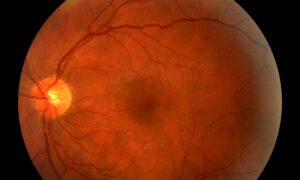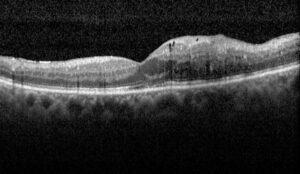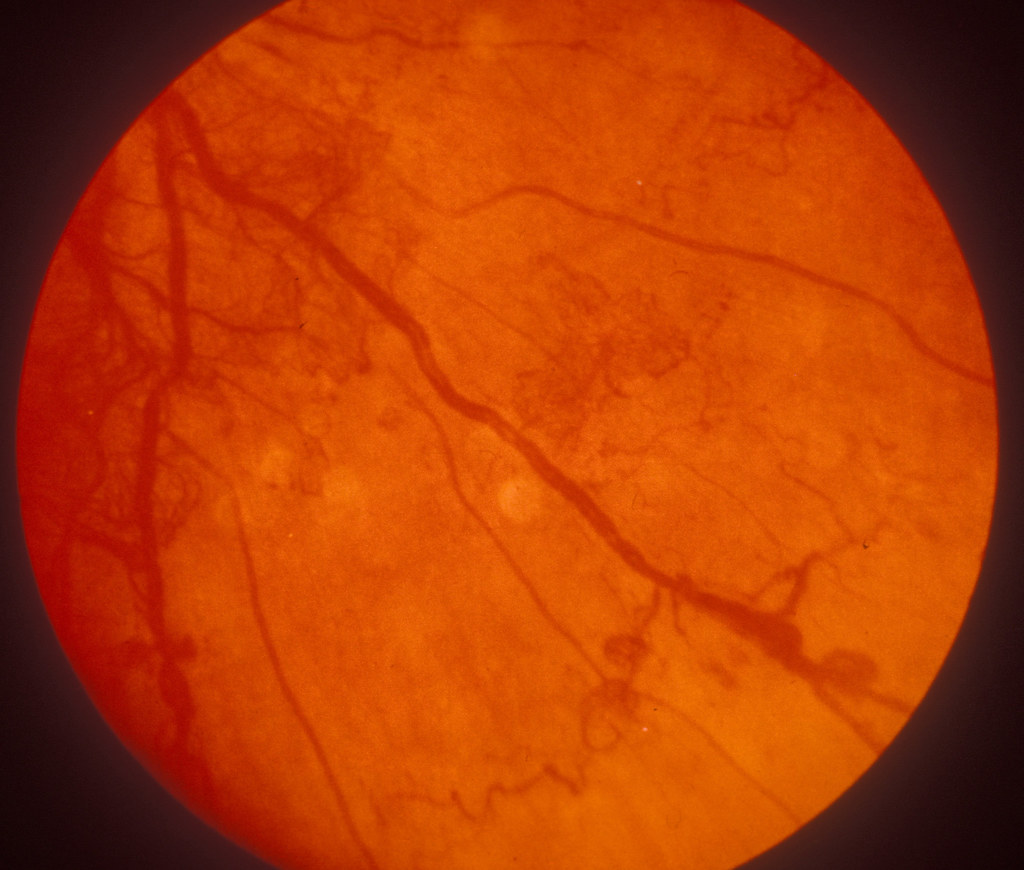
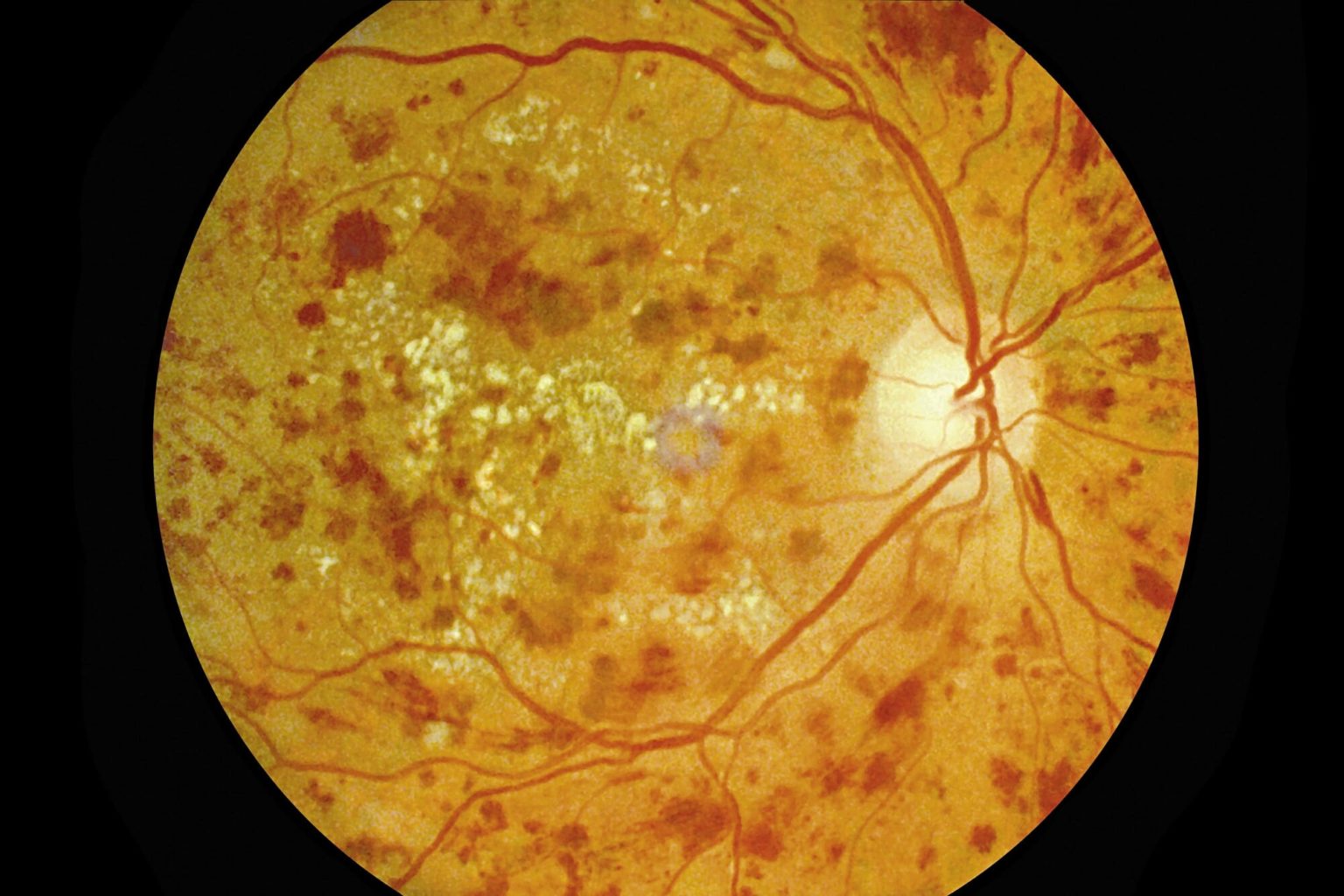
Emerging treatments for diabetic retinopathy try to change the course of the disease before patients lose vision.
For decades, treatment started late, with laser for proliferative disease or injections for edema (see diabetic retinopathy).
Also, the new strategies aim at earlier stages, with drugs that act on the systemic and vascular causes.
Why Emerging Treatments for Diabetic Retinopathy Target Earlier Stages
By the time edema or neovascularization causes symptoms, damage is already established.
Treatment of moderate to severe nonproliferative disease could also prevent progression to sight-threatening stages, which would reduce the burden of laser, injections, and surgery.
Emerging Treatments for Diabetic Retinopathy: Anti-VEGF for Nonproliferative Disease
The PANORAMA trial in severe nonproliferative retinopathy showed that aflibercept given at intervals of 8 to 16 weeks improved the severity score in most eyes and cut the rate of vision-threatening complications (see the references).
The benefit was clear, but patients needed many injections, and benefit faded when treatment stopped (see anti-VEGF for nonproliferative diabetic retinopathy).
Fundus Explorer Pro
Photograph the retinal findings described here with the phone already in your pocket — 22 D optics and built-in illumination in one handheld unit.
From Choroida — the team behind this siteFenofibrate
Also, the FIELD and ACCORD Eye studies showed that fenofibrate reduces the need for laser and slows retinopathy progression in type 2 diabetes (see the references).
It is inexpensive and oral, so it is an attractive option, and some countries have added it to guidance for patients with retinopathy.
Emerging Treatments for Diabetic Retinopathy: Systemic Agents Under Study
- Oral inhibitors of redox signaling, studied in early trials
- Plasma kallikrein inhibitors, which reduce vascular leakage
- Tyrosine kinase inhibitors with sustained release, tested as inserts
- Agents targeting inflammation, oxidative stress, and neurodegeneration
Results so far are mixed, and none has replaced established treatment.
GLP-1 Agonists and SGLT2 Inhibitors
These drugs lower blood sugar and weight, and large datasets look at their effect on the retina.
The signal is also complex, with possible early worsening in some patients and long-term benefit in others (see GLP-1 agonists and diabetic retinopathy).
Emerging Treatments for Diabetic Retinopathy: Screening and Telemedicine
Earlier treatment depends on earlier detection, and artificial intelligence screening of fundus photographs can find retinopathy in primary care (see AI for diabetic retinopathy screening).
Researchers are studying home-based and handheld cameras for remote areas.
Neuroprotection and Other Ideas
- Protecting retinal neurons, which are damaged before vessels
- Targeting the microvascular pericyte and endothelial pathways
- Cell and gene therapies to supply anti-VEGF proteins
These approaches remain in the laboratory or early trials.
Emerging Treatments for Diabetic Retinopathy: Where This Leaves Practice
- Strict control of glucose, blood pressure, and lipids remains the base of care
- Anti-VEGF drugs for severe NPDR are an option when follow-up is certain
- Discuss fenofibrate with the physician
- Regular screening is the most effective step
Counselling
Explain that new drugs are being tested, but that today’s most powerful treatment is control of the systemic disease and regular eye checks.
What Is Proven and What Is Not
- Proven: control of glucose, blood pressure, and lipids; laser for proliferative disease; anti-VEGF drugs for edema and proliferative disease
- Supported by trials: anti-VEGF for severe NPDR, and fenofibrate in type 2 diabetes
- Early or uncertain: oral inflammation and redox drugs, new delivery systems, and neuroprotection
This division helps clinicians to answer patient questions honestly.
An Example Plan
A 52-year-old woman with type 2 diabetes has moderate NPDR, normal vision, and HbA1c of 8.5 percent.
In addition, the plan is to optimize her diabetes care, check blood pressure and lipids, discuss fenofibrate with her physician, and review the retina every four months.
If she progresses to severe disease, the team will discuss anti-VEGF treatment or laser, depending on her ability to attend.
Making the Plan Work
Reminders, shared care records, and community screening help patients to reach the stage of treatment when it works best.
Key Messages for Colleagues
The most powerful treatments for retinopathy are still outside the eye clinic, in the control of blood sugar, blood pressure, and lipids, so communication with physicians matters.
Eye doctors can help by sharing findings quickly, because a new diagnosis of retinopathy often leads to better systemic care.
Pregnancy and Special Groups
Pregnancy can speed up retinopathy, so women with diabetes need an eye exam before pregnancy, in each trimester, and after delivery (see diabetic retinopathy in pregnancy).
Patients with kidney disease or high blood pressure also progress faster, so doctors advise closer review and tight control.
Clinicians use anti-VEGF drugs with care in pregnancy, and laser is often preferred in those cases.
For the latest studies, see the PubMed results for emerging treatments for diabetic retinopathy.


Document what you see
Two smartphone imaging tools built for everyday clinic use — one for the slit lamp, one for the fundus.
From Choroida — the team behind this siteReferences
- Brown DM, Wykoff CC, Boyer D, et al. Evaluation of intravitreal aflibercept for the treatment of severe nonproliferative diabetic retinopathy: results from the PANORAMA randomized clinical trial. JAMA Ophthalmol. 2021;139:946-955.
- Keech AC, Mitchell P, Summanen PA, et al. Effect of fenofibrate on the need for laser treatment for diabetic retinopathy (FIELD study): a randomised controlled trial. Lancet. 2007;370:1687-1697.
- ACCORD Study Group; ACCORD Eye Study Group. Effects of medical therapies on retinopathy progression in type 2 diabetes. N Engl J Med. 2010;363:233-244.
- American Academy of Ophthalmology. Basic and Clinical Science Course, Section 12: Retina and Vitreous. AAO; current edition.

Writes and reviews the clinical articles on Educate. Every post is checked against peer-reviewed sources before it goes live.