Leptospirosis uveitis is an intraocular inflammation caused by the immune response to Leptospira, a spirochete found in the urine of infected animals and in contaminated water.
It is a common cause of infectious uveitis in endemic regions, and it is easy to miss when the systemic illness was mild or forgotten.
The ocular phase usually starts weeks to months after the fever.
What Is Leptospirosis Uveitis?
Leptospira interrogans infects rats, cattle, dogs, and other animals, and humans are infected through skin or mucous membranes that contact contaminated water or soil.
Outbreaks follow flooding, and exposure occurs in farmers, sewer workers, and people who swim in fresh water.
Most infections are mild and flu-like, and a minority progress to Weil disease, with jaundice, renal failure, and hemorrhage.
Ocular Findings
The disease has two ocular stages.
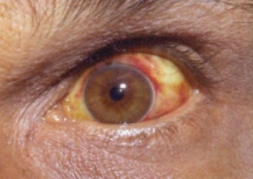
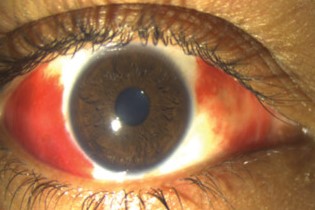
In the acute phase, conjunctival suffusion, a bilateral redness without discharge, is a characteristic sign.
In the later, immune phase, uveitis develops, often one to several weeks after the acute illness, and sometimes after a longer interval.
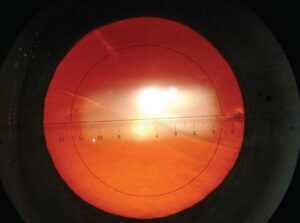
- Anterior uveitis: cells, flare, keratic precipitates, and sometimes hypopyon (see hypopyon)
- Intermediate uveitis and vitritis: with dense floaters and haze
- Panuveitis: with retinal vasculitis, choroiditis, and papillitis
- Optic disc swelling and cystoid macular edema in some patients
The inflammation may be severe, and it is often bilateral.
All-fit Slit-Lamp Adapter
Record and share exactly what you see at the slit lamp. One adapter fits any slit lamp or surgical microscope — and any smartphone.
From Choroida — the team behind this siteHistory
Ask about contact with floodwater, rodents, farm animals, and fresh-water swimming or work in wet fields.
Ask about a fever with severe muscle pain, jaundice, or kidney problems in the months before the eye symptoms.
Patients in endemic areas who present with uveitis and a history of a febrile illness should be tested.
Differential Diagnosis
- Tuberculosis, syphilis, and brucellosis: other infectious causes (see ocular brucellosis)
- Pars planitis and sarcoidosis: chronic intermediate or granulomatous disease (see pars planitis)
- Behçet disease and HLA-B27 uveitis: noninfectious causes
- Dengue, chikungunya, and other tropical infections
Diagnosis
Serology is the usual route, with the microscopic agglutination test as the reference and IgM ELISA as a useful screening test.
In the later immune phase, antibody titers may be low or negative, and a negative test does not exclude the diagnosis.
PCR on aqueous or vitreous samples may detect the organism in some cases, and it is useful in difficult presentations.
Treatment
Systemic antibiotics, such as doxycycline or penicillin, are used in the acute illness, and they may be given when uveitis is thought to be active.
Topical corticosteroids and cycloplegics treat anterior inflammation, and periocular or systemic steroids are added for severe posterior disease.
The visual prognosis is generally good with treatment, and most patients recover well, though complications such as cataract, glaucoma, and macular edema can occur.
Prevention depends on avoiding contact with contaminated water and on protective clothing in high-risk work.
Tell patients that the eye inflammation reflects an immune response, that it responds to treatment, and that follow-up is needed until the eye is quiet.
Epidemiology and Who Is at Risk
Leptospirosis is more frequent in tropical and subtropical regions, and the burden is greatest in rural and urban slum populations with poor sanitation.
Seasonal outbreaks follow the monsoon and flooding.
Occupational exposure affects rice and sugarcane farmers, miners, veterinarians, and abattoir workers, and recreational exposure follows swimming, kayaking, or adventure races in fresh water.
The disease is also seen in temperate countries in returning travelers.
The Retina and the Optic Nerve
Retinal vasculitis, with vascular sheathing and hemorrhages, can accompany the vitritis.
Optic disc swelling may be due to papillitis or to raised pressure from meningitis.
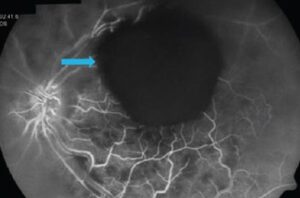
A fluorescein angiogram shows leakage from vessels and the disc, and OCT demonstrates macular edema, which may limit vision despite control of the inflammation.
Practical Treatment Notes
Start with topical steroids and a cycloplegic for anterior disease, and increase to periocular or systemic steroids when the posterior segment is involved.
The role of antibiotics in the late immune phase is less clear than in the acute disease, but many clinicians give a course to cover a possible active infection, particularly if PCR is positive.
Treat any rise in pressure, and prevent synechiae with mydriatics.
Prognosis and Prevention
Most patients regain good vision, and recurrences are uncommon but possible.
In endemic regions, public health measures, rodent control, and protective footwear reduce the infection.
Doxycycline prophylaxis has been used for short-term high-risk exposure in some settings.
The ophthalmologist can contribute by asking about exposure and by reporting cases to the public health service.
A short written summary of the infection and its eye complications is useful to give to the patient, because the history may be asked about in the future by other physicians.

Document what you see
Two smartphone imaging tools built for everyday clinic use — one for the slit lamp, one for the fundus.
From Choroida — the team behind this siteReferences
- Rathinam SR, Rathnam S, Selvaraj S, et al. Uveitis associated with an epidemic outbreak of leptospirosis. Am J Ophthalmol. 1997;124:71-79.
- Rathinam SR. Ocular manifestations of leptospirosis. J Postgrad Med. 2005;51:189-194.
- Salmon JF. Kanski’s Clinical Ophthalmology: A Systematic Approach. 9th ed. Elsevier; 2020.
- American Academy of Ophthalmology. Basic and Clinical Science Course, Section 9: Uveitis and Ocular Inflammation. AAO; current edition.

Writes and reviews the clinical articles on Educate. Every post is checked against peer-reviewed sources before it goes live.