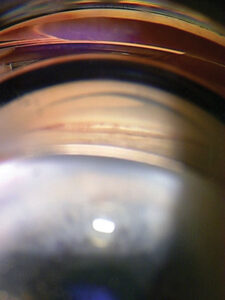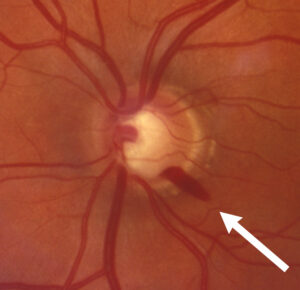
Selective laser trabeculoplasty, or SLT, is a laser procedure that lowers intraocular pressure by targeting pigmented cells in the trabecular meshwork, improving aqueous outflow without the thermal tissue damage caused by older laser trabeculoplasty techniques.
It has moved from being a second-line option, reserved for eyes not adequately controlled on medication, to being offered by many glaucoma specialists as a genuine first-line treatment alongside or instead of topical drops, reflecting a real shift in how early glaucoma is approached.
Understanding both why SLT works and why its effect is not permanent shapes how it should be discussed with patients and how it fits into a longer-term glaucoma treatment plan.
The name “selective” refers specifically to this targeted cellular absorption, and it is worth explaining to patients as the key reason the treatment is considered gentler and more repeatable than its older predecessor.
How It Differs From Argon Laser Trabeculoplasty
Older argon laser trabeculoplasty uses continuous thermal energy that coagulates trabecular meshwork tissue, causing a degree of structural scarring that limits how many times the treatment can be safely repeated in the same eye.
Selective laser trabeculoplasty instead uses very short laser pulses selectively absorbed by pigmented trabecular meshwork cells, sparing adjacent non-pigmented tissue and avoiding the coagulative thermal damage associated with the argon technique.
Because SLT causes less structural tissue damage, it can generally be repeated more readily than argon laser trabeculoplasty if its effect wanes over time, which is a meaningful practical advantage in a chronic disease managed over decades.
Most glaucoma centers today use SLT in preference to argon laser trabeculoplasty for this reason, and the older technique has become correspondingly less common in routine practice.
Mechanism
The laser selectively targets melanin-containing pigmented cells within the trabecular meshwork, triggering a biological response involving macrophage recruitment and cellular remodeling that improves the meshwork’s ability to drain aqueous humor.
This is a biological, cellular-level effect rather than a mechanical one, which is part of why SLT does not create a permanent structural opening the way some other glaucoma procedures do, and why its pressure-lowering effect gradually diminishes over years for many patients.
The exact degree and duration of pressure reduction vary between individuals, and while many patients achieve a meaningful, clinically useful reduction, others respond only modestly or not at all, and predicting an individual’s response in advance remains imperfect.
All-fit Slit-Lamp Adapter
Record and share exactly what you see at the slit lamp. One adapter fits any slit lamp or surgical microscope — and any smartphone.
From Choroida — the team behind this siteIndications
- Primary open-angle glaucoma or ocular hypertension, the most common indications, whether as an initial treatment or as an addition to existing medical therapy
- Pigmentary glaucoma, where the trabecular meshwork’s higher pigment content can make it a particularly favorable target for the laser
- Patients who struggle with medication adherence or tolerate topical drops poorly, where SLT offers pressure control without the daily burden or side effects of eye drops
- As a first-line option, based on clinical trial evidence supporting its use even before any medication has been trialed in appropriately selected patients
The LiGHT Trial and First-Line Use
The Laser in Glaucoma and Ocular Hypertension trial, a major randomized study comparing SLT to topical medication as initial treatment, found SLT achieved comparable or better long-term disease control with fewer patients needing incisional glaucoma surgery over the follow-up period.
This trial provided much of the evidence base behind the shift toward offering SLT earlier in the treatment pathway, including as an initial treatment rather than reserving it until medication alone has failed.
Patient preference still matters considerably in this decision, since some patients strongly prefer avoiding a procedure altogether in favor of drops, while others prefer avoiding the daily burden of medication in favor of a brief in-office laser treatment.
Procedure and Recovery
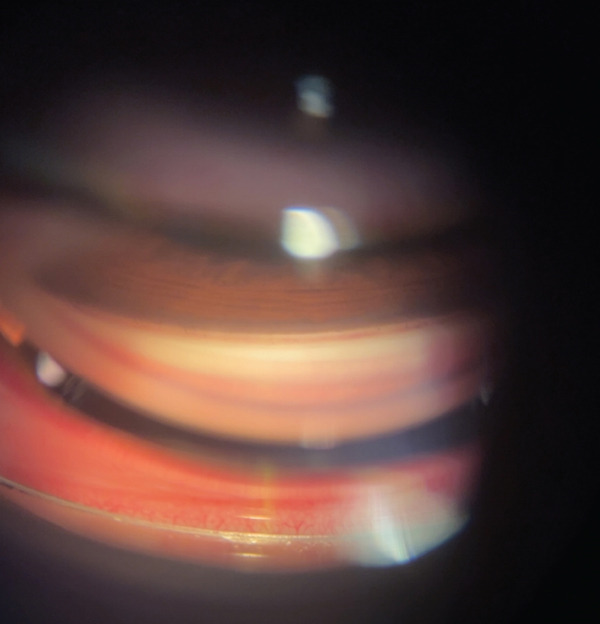
The procedure is performed at a slit lamp using a specialized gonioscopy lens to visualize and target the trabecular meshwork, typically taking only a few minutes with topical anesthesia alone.
A brief course of topical anti-inflammatory drops is commonly used afterward, and most patients resume normal activity the same day, with pressure typically checked at a follow-up visit within a few weeks to assess response.
Repeat treatment is a reasonable option when the effect of an initial SLT session wanes over subsequent years, reflecting the procedure’s generally favorable safety profile for repeated use compared to older thermal laser techniques.
A transient pressure spike in the hours after treatment is the most common early complication, which is why pressure is typically checked before the patient leaves the office on the day of the procedure.
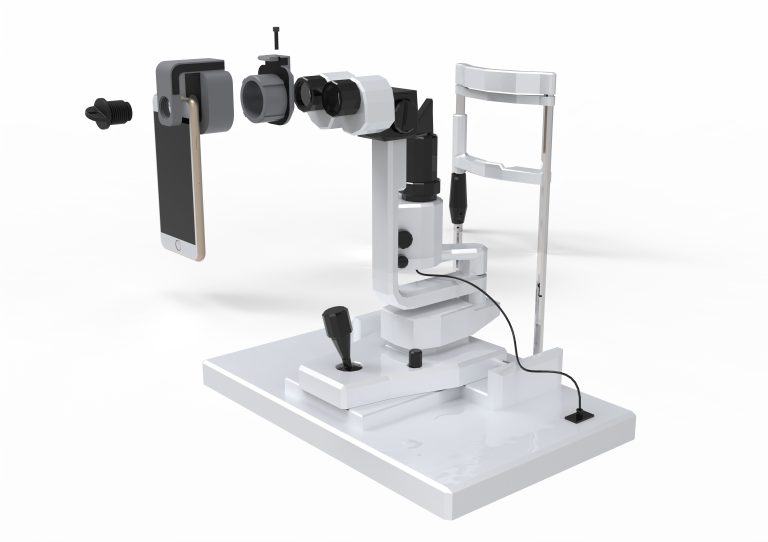
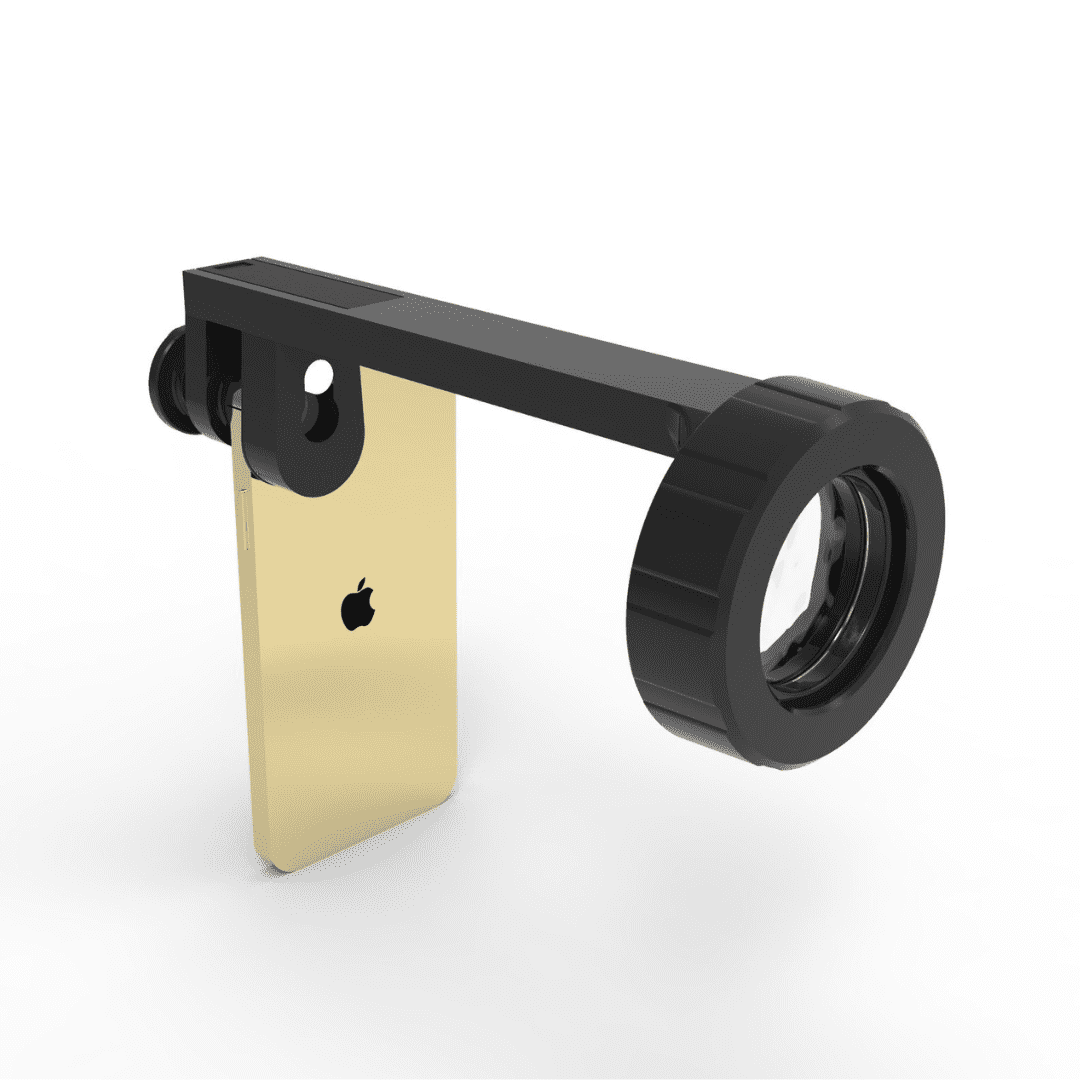
Document what you see
Two smartphone imaging tools built for everyday clinic use — one for the slit lamp, one for the fundus.
From Choroida — the team behind this siteReferences
- Gazzard G, Konstantakopoulou E, Garway-Heath D, et al. Selective laser trabeculoplasty versus eye drops for first-line treatment of ocular hypertension and glaucoma (LiGHT): a multicentre randomised controlled trial. The Lancet.
- American Academy of Ophthalmology. Basic and Clinical Science Course, Section 10: Glaucoma.
- Latina MA, Park C. Selective targeting of trabecular meshwork cells: in vitro studies of pulsed and CW laser interactions. Experimental Eye Research.
Test yourself
A few questions straight from this article.
-
Selective laser trabeculoplasty lowers intraocular pressure by targeting which cells?
Short laser pulses are absorbed by melanin-containing cells within the trabecular meshwork, improving aqueous outflow while adjacent non-pigmented tissue is spared. -
The pressure-lowering effect of SLT depends on which biological response?
Targeting the pigmented cells triggers macrophage recruitment and cellular remodelling that improves the meshwork's ability to drain aqueous humour. -
How does SLT differ fundamentally from argon laser trabeculoplasty?
Argon laser trabeculoplasty applies continuous thermal energy that coagulates meshwork tissue, whereas SLT uses very short, selectively absorbed pulses. -
Why can SLT be repeated more readily than argon laser trabeculoplasty?
Argon treatment leaves structural scarring that limits safe repetition; SLT spares that tissue, which matters in a disease managed over decades. -
Why does the pressure-lowering effect of SLT diminish over years in many patients?
The effect is biological and cellular rather than mechanical, so unlike some other glaucoma procedures it leaves no permanent structural opening and gradually wanes. -
Which glaucoma subtype is an especially favourable target for SLT?
The higher pigment content of the trabecular meshwork in pigmentary glaucoma gives the selectively absorbed laser more target to work on. -
What did the LiGHT trial show when SLT was compared with drops as initial treatment?
The Laser in Glaucoma and Ocular Hypertension trial found comparable or better long-term control with fewer patients needing incisional glaucoma surgery, underpinning first-line use. -
SLT is particularly useful for which group of glaucoma patients?
SLT offers pressure control without the daily burden or ocular surface side effects of topical medication, which suits patients who struggle with drops. -
How is selective laser trabeculoplasty performed?
The meshwork is visualised and treated at the slit lamp through a specialised gonioscopy lens, typically in a few minutes under topical anaesthesia alone. -
What is the most common early complication after selective laser trabeculoplasty?
A pressure spike in the hours after treatment is the commonest early problem, which is why pressure is checked before the patient leaves on the day of the procedure.

Writes and reviews the clinical articles on Educate. Every post is checked against peer-reviewed sources before it goes live.