
Combined cataract-glaucoma surgery addresses a visually significant cataract and coexisting glaucoma needing surgical intervention in a single operative session, rather than treating the two conditions sequentially in separate procedures.
The decision to combine, rather than stage, these two operations involves genuine trade-offs, and the calculus has shifted meaningfully in recent years with the rise of MIGS, discussed in its own dedicated article on this site, which has made combination surgery considerably more attractive and more commonly performed than it once was with trabeculectomy or tube shunt alone.
Understanding the trade-offs between combined and sequential surgery, and how they differ depending on which specific glaucoma procedure is being paired with cataract surgery, is central to counseling patients accurately about their options.
This is a genuinely common clinical scenario, since cataract and glaucoma both become more prevalent with age and frequently coexist in the same aging eye.
Why Combine the Two Procedures
Performing both procedures in a single operative session spares the patient a second separate surgery, anesthesia episode, and recovery period, a meaningful practical and logistical benefit, particularly for older patients or those for whom a second procedure carries additional risk or burden.
Cataract surgery alone modestly lowers intraocular pressure in many eyes, and combining it with a glaucoma procedure can produce an additive pressure-lowering effect beyond what either procedure would achieve independently.
For a patient who already needs cataract surgery and also has glaucoma requiring surgical rather than purely medical management, combining the two addresses both problems efficiently in one coordinated surgical plan rather than requiring the patient to undergo and recover from two entirely separate operations.
Cataract Surgery Combined With MIGS
The rise of MIGS procedures, many specifically designed to be performed through the same incision and same operative session as phacoemulsification, discussed in its own dedicated article on this site, has made combination surgery far more common and considerably less burdensome than it was in the trabeculectomy-only era.
Because most MIGS procedures add relatively little additional time, risk, or recovery burden to standard cataract surgery, combining the two has become a routine consideration for glaucoma patients undergoing cataract surgery who might benefit from some additional pressure-lowering effect.
This combination has become common enough that for many patients with mild to moderate glaucoma needing cataract surgery anyway, adding a MIGS procedure is now a fairly standard part of the surgical conversation rather than an unusual or exceptional choice.
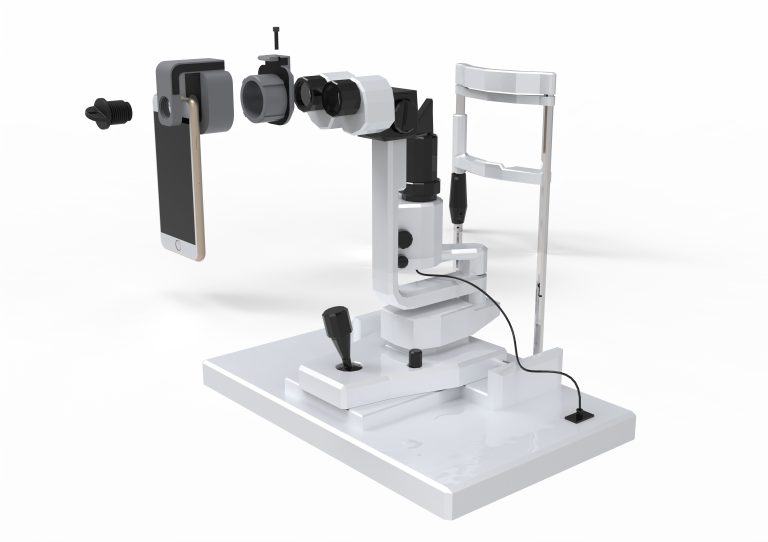
All-fit Slit-Lamp Adapter
Record and share exactly what you see at the slit lamp. One adapter fits any slit lamp or surgical microscope — and any smartphone.
From Choroida — the team behind this siteCataract Surgery Combined With Trabeculectomy or Tube Shunt
Combining cataract surgery with trabeculectomy or a tube shunt, both discussed in their own dedicated articles on this site, is technically more involved and carries a somewhat different risk profile than combining cataract surgery with MIGS.
Some studies suggest slightly lower pressure-lowering efficacy from combined trabeculectomy compared to trabeculectomy performed alone, possibly related to increased postoperative inflammation from the additional cataract surgery affecting bleb formation and function.
The decision to combine or stage these more involved glaucoma procedures with cataract surgery depends on the specific target pressure needed, the urgency of glaucoma control, and individual patient and surgeon factors, and is generally a more deliberated decision than the now fairly routine choice to add a MIGS procedure.
When Sequential Surgery Is Preferred
- When precise, maximally effective glaucoma control is the priority and any potential reduction in efficacy from combining with cataract surgery is judged an unacceptable trade-off
- When cataract surgery alone is expected to be more complex or higher risk, and adding a glaucoma procedure would meaningfully compound that risk in the same operative session
- When there is diagnostic uncertainty about how much of a patient’s visual symptoms are attributable to the cataract versus the glaucoma, and clarifying this before committing to a combined surgical plan is valuable
Patient Counseling
Patients benefit from understanding that combining surgeries trades some possible reduction in maximal glaucoma-specific efficacy, particularly with trabeculectomy or tube shunt, against the convenience and reduced overall burden of a single surgical episode.
For MIGS specifically, given the much smaller efficacy trade-off involved, the decision to combine is generally more straightforward and less controversial than for the more involved traditional glaucoma procedures.
Setting realistic expectations about medication use afterward also matters, since even a well-chosen combined MIGS procedure often reduces rather than fully eliminates the need for topical glaucoma medication going forward.
Document what you see
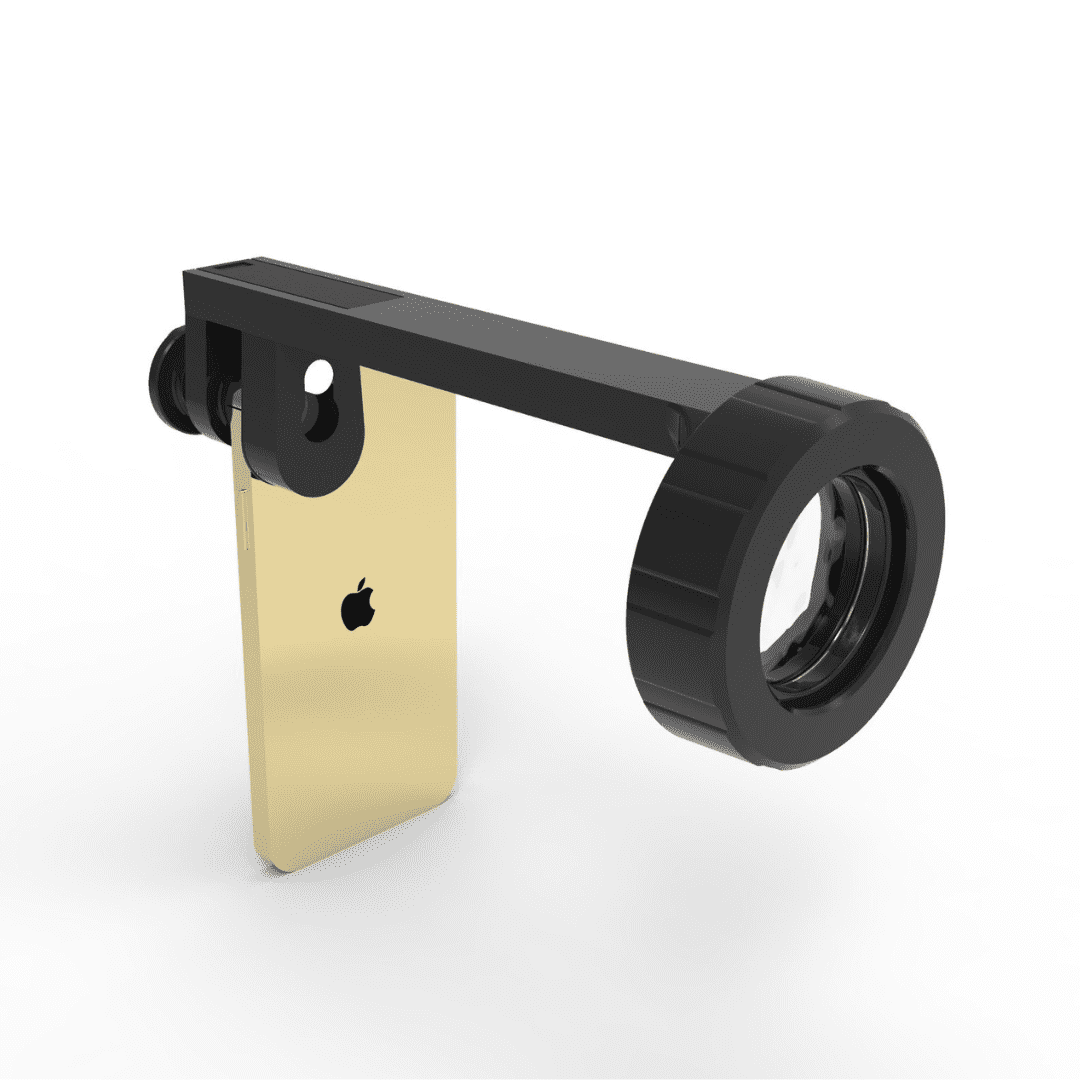
Two smartphone imaging tools built for everyday clinic use — one for the slit lamp, one for the fundus.
From Choroida — the team behind this siteReferences
- American Academy of Ophthalmology. Basic and Clinical Science Course, Section 10: Glaucoma.
- Friedman DS, Jampel HD, Lubomski LH, et al. Surgical strategies for coexisting glaucoma and cataract: an evidence-based update. Ophthalmology.
- Ahmed IIK, Fea A, Au L, et al. A prospective randomized trial comparing Hydrus and two trabecular micro-bypass stents. Ophthalmology.
Test yourself
A few questions straight from this article.
-
What does combined cataract-glaucoma surgery involve?
Combined surgery treats a visually significant cataract and coexisting glaucoma needing surgical intervention in one operative session rather than in two separate staged procedures. -
What effect does cataract surgery itself have on intraocular pressure in many eyes?
Cataract surgery alone modestly lowers intraocular pressure in many eyes, so pairing it with a glaucoma procedure can give an additive effect beyond either procedure alone. -
What design feature of many MIGS devices makes them suited to combination with cataract surgery?
Many minimally invasive glaucoma surgery procedures are specifically designed to be performed through the same incision and in the same session as phacoemulsification. -
Why has adding a MIGS procedure to cataract surgery become a routine consideration?
Because most of these procedures add relatively little time, risk or recovery burden to standard cataract surgery, combining them has become routine for patients who might benefit from extra pressure lowering. -
What do some studies suggest about trabeculectomy combined with cataract surgery?
Some studies suggest combined trabeculectomy gives slightly less pressure lowering than trabeculectomy performed alone, possibly because added postoperative inflammation affects bleb formation and function. -
In which situation is staging the two operations separately preferred?
If the cataract surgery itself is expected to be complex or higher risk, adding a glaucoma procedure in the same session would meaningfully compound that risk, favouring sequential surgery. -
Which priority argues for performing glaucoma surgery separately rather than combining it?
When maximally effective glaucoma control is the priority, any potential reduction in efficacy from combining with cataract surgery may be judged an unacceptable trade-off. -
Which diagnostic uncertainty favours doing cataract surgery first rather than combining?
When it is unclear how much of the visual symptoms are due to the cataract rather than the glaucoma, clarifying this before committing to a combined plan is valuable. -
What should patients expect about glaucoma medication after combined cataract and MIGS surgery?
Even a well-chosen combined procedure often reduces rather than fully eliminates the need for topical glaucoma medication, so expectations should be set realistically. -
Which practical benefit does a single combined operative session offer the patient?
Doing both procedures at once spares the patient a second surgery, anaesthetic episode and recovery, which matters particularly for older patients or where a second procedure adds risk or burden.
