CASE REPORT
A 40 years old Chinese man sought treatment for the progressive deterioration of vision in the right eye over about five months period. His sister also had congenital ocular abnormalities.
On examination,
the Snellen visual acuity of the right eye and left eye was 0.15 and 0.6, respectively. The intraocular pressure of the right eye and the left eye were 11.3 and 12.7 mmHg, respectively.
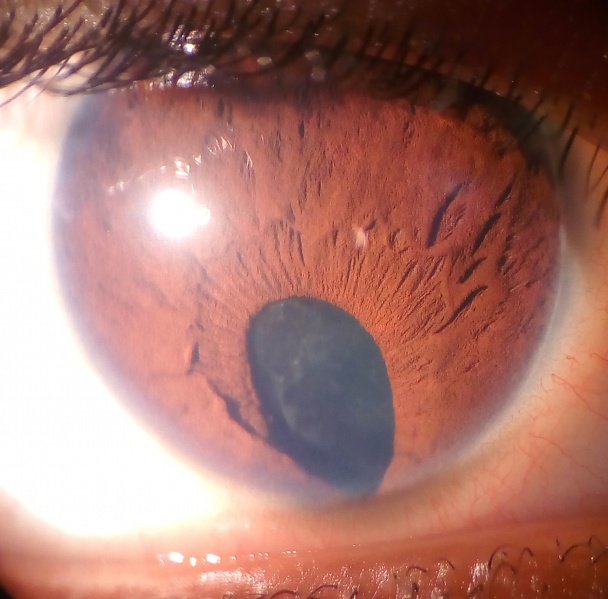
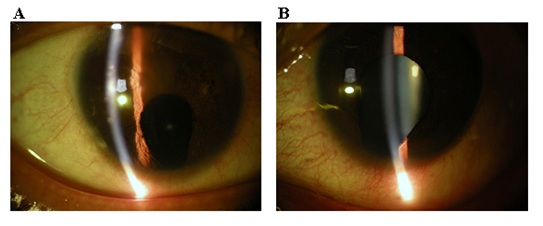
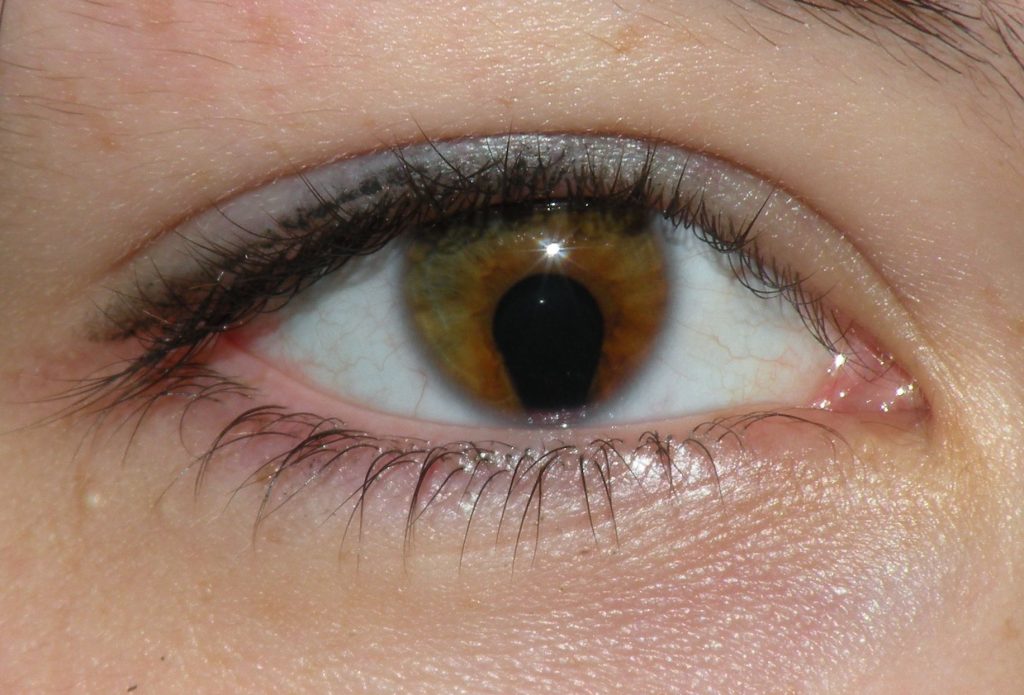
Slitlamp examination showed clear corneas in both eyes. Obviously, the patient had a bilateral inferonasal coloboma of the iris, which resulted in a pear-shaped pupil in both eyes.
DISEASE
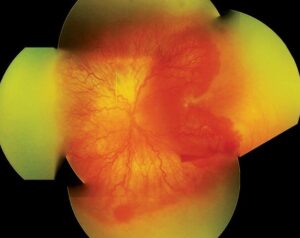
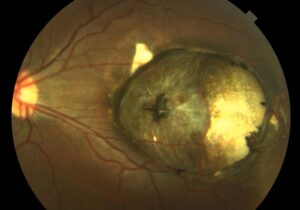
Coloboma is derived from the Greek koloboma, meaning mutilated, curtailed, or with a defect. The term is used to describe ocular defects of the eyelids, iris, lens, ciliary body, zonules, choroid, retina, or optic nerve.
It is typically located in the inferonasal quadrant of the involved structure and is often associated with microphthalmia. It can affect one eye (unilateral) or both eyes (bilateral).
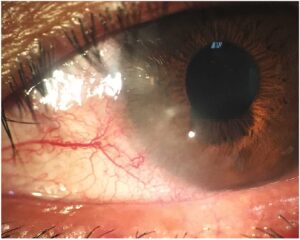
It is important to differentiate colobomas involving the globe from those of the eyelids. In either case, they can affect one eye (unilateral) or both eyes (bilateral).
Fundus Explorer Pro
Photograph the retinal findings described here with the phone already in your pocket — 22 D optics and built-in illumination in one handheld unit.
From Choroida — the team behind this siteMANAGEMENT
The most important predictor of visual outcome is the identification of normal foveal anatomy.
Patients with bilateral uveal coloboma or unilateral coloboma plus one other systemic abnormality should be referred to a genetics specialist to evaluate for systemic disorders.
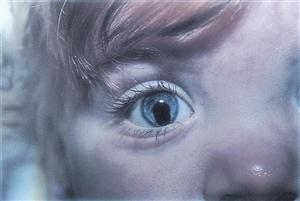
Monocular precautions should be strongly considered for any patient with unilateral coloboma in an ophthalmic exam and resulting in decreased visual acuity on the affected side.
Interval monitoring for retinal detachment should be done with a dilated fundus exam approximately every 6-12 months or sooner if indicated for patients with posterior coloboma.
The risk of retinal detachment is there which may be up to 40%. Prophylactic laser of such eyes may reduce the occurrence of retinal detachment, though a randomized trial for this is not yet available.
Measures such as patching should be taken to maximize the visual potential of the affected side as there is often a normal retina present and refractive error is often present putting patients at risk for amblyopia in the ophthalmic exam.
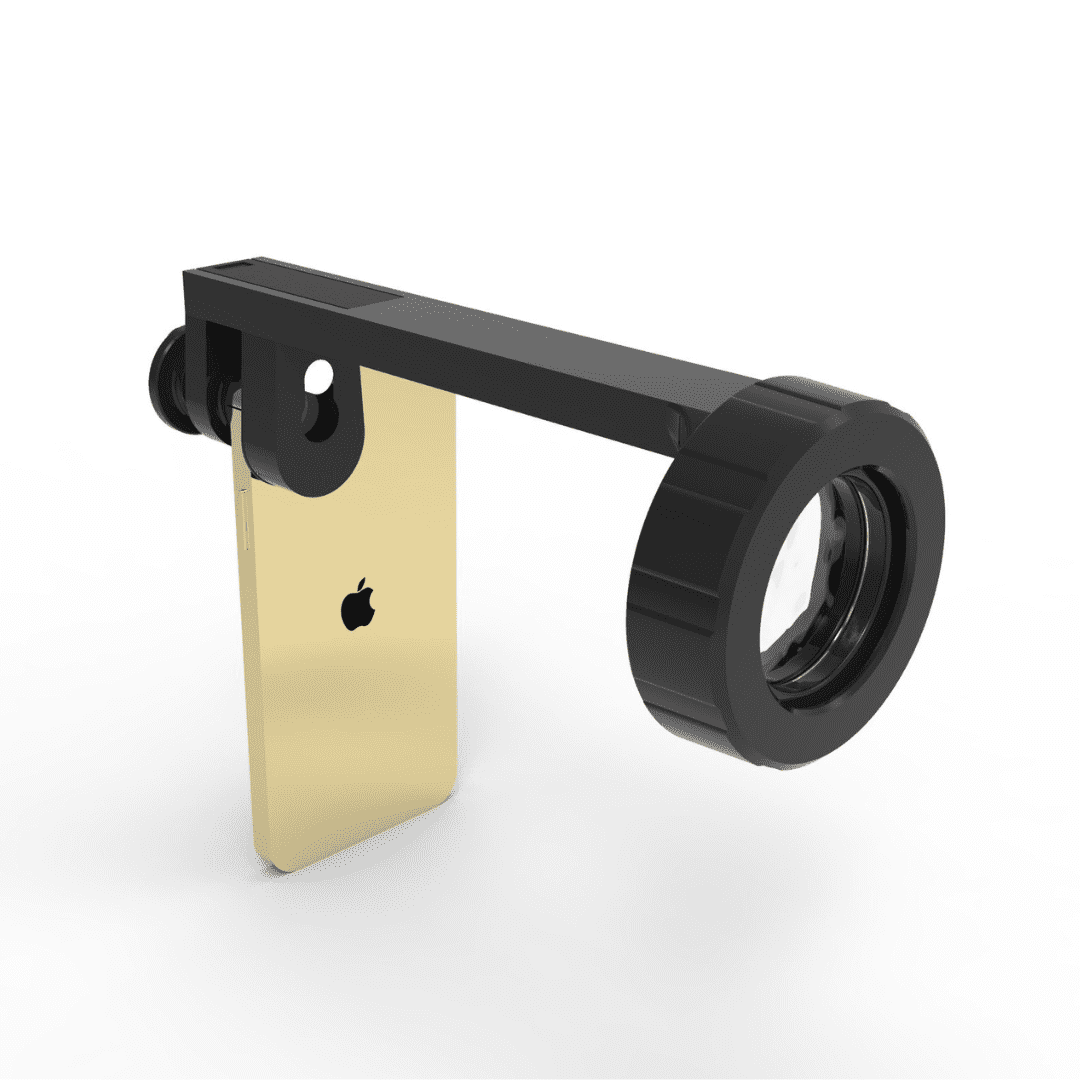
Document what you see
Two smartphone imaging tools built for everyday clinic use — one for the slit lamp, one for the fundus.
From Choroida — the team behind this siteREFERENCES
- Optic cup and stalk with open embryonic fissure below.
- Hyatt, G. A. & Dowling, J. E. Retinoic acid. A key molecule for eye and photoreceptor development. Invest. Ophthalmol. Vis. Sci. 38, 1471–1475 (1997).
- Nadauld, L. D. et al. Dual roles for adenomatous polyposis coli in regulating retinoic acid biosynthesis and Wnt during ocular development. Proc. Natl. Acad. Sci. U. S. A. 103, 13409–13414 (2006).
- Hornby, S. J., Ward, S. J. & Gilbert, C. E. Eye birth defects in humans may be caused by a recessively-inherited genetic predisposition to the effects of maternal vitamin A deficiency during pregnancy. Med. Sci. Monit. Int. Med.J. Exp. Clin. Res. 9, HY23–26 (2003).

Test yourself
A few questions straight from this article.
-
The word coloboma derives from Greek and carries which meaning?
Coloboma comes from the Greek koloboma, meaning mutilated, curtailed or with a defect, which is exactly what the ocular lesion represents. -
In which quadrant of the involved structure is a coloboma typically located?
Coloboma is typically inferonasal in the involved structure and is often accompanied by microphthalmia. -
Which structures may be affected by a coloboma?
The term covers defects of the eyelids, iris, lens, ciliary body, zonules, choroid, retina or optic nerve, and globe colobomas must be distinguished from eyelid ones. -
What pupil appearance results from an inferonasal iris coloboma?
In the reported case, bilateral inferonasal iris colobomas gave a pear-shaped pupil in each eye on slit lamp examination. -
What is the most important predictor of visual outcome in coloboma?
Visual prognosis hinges on whether the fovea is anatomically normal, rather than on the size or site of the visible defect. -
Which coloboma finding warrants referral to a genetics specialist?
Bilateral uveal coloboma, or unilateral coloboma with one other systemic abnormality, should prompt genetic evaluation for an underlying systemic disorder. -
How often should a patient with posterior coloboma have a dilated fundus examination?
Interval dilated examination every 6 to 12 months, or sooner if indicated, is advised in posterior coloboma to screen for retinal detachment. -
What is the quoted risk of retinal detachment in patients with coloboma?
Retinal detachment risk in coloboma may reach 40 percent, which is why interval dilated examination matters so much. -
What is the current status of prophylactic laser in eyes with coloboma?
Prophylactic laser of such eyes may lower the occurrence of retinal detachment, but no randomized trial supporting it is yet available. -
Why is patching considered in a child with unilateral coloboma?
A normal retina is often present but refractive error is common, so the eye is amblyopia-prone and patching helps maximise its visual potential.

Writes and reviews the clinical articles on Educate. Every post is checked against peer-reviewed sources before it goes live.