Medically reviewed by Dr. Sameh Nabil, DO, ophthalmologist · Last reviewed November 14, 2026
Bleach in eye exposure usually involves household sodium hypochlorite splashed during cleaning, and most of these injuries are mild and heal within days. However, bleach is alkaline, so every case starts as a chemical emergency, and the first minutes of irrigation shape the outcome more than anything done later.
What Household Bleach Contains
Domestic bleach is a dilute solution of sodium hypochlorite in water, and many products also contain sodium hydroxide, which raises the pH. Concentrated or industrial formulations carry a higher risk of deep injury, so ask for the product label or bottle when the patient arrives.
How Bleach in Eye Injures the Surface
Alkali saponifies cell membrane lipids and can penetrate deeper than acid, while hypochlorite also oxidizes proteins in the epithelium. In addition, household strength usually damages the epithelium without reaching the limbal stem cells, and as a result, most patients show punctate keratopathy or an epithelial defect.
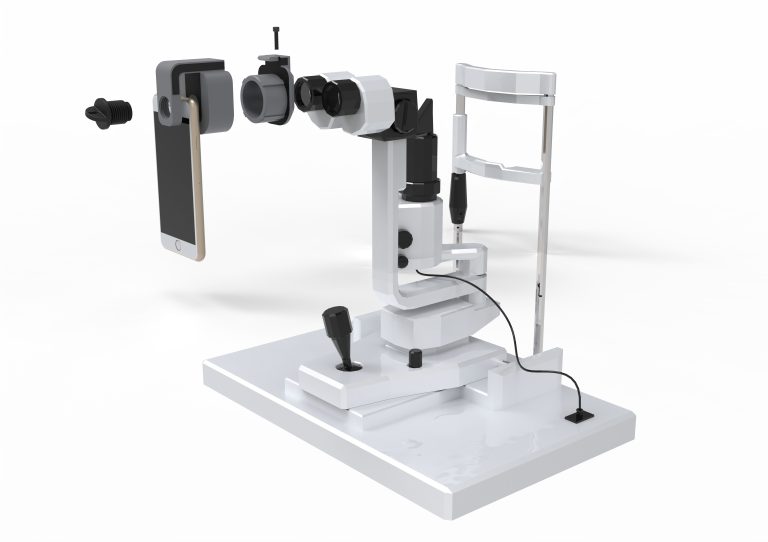
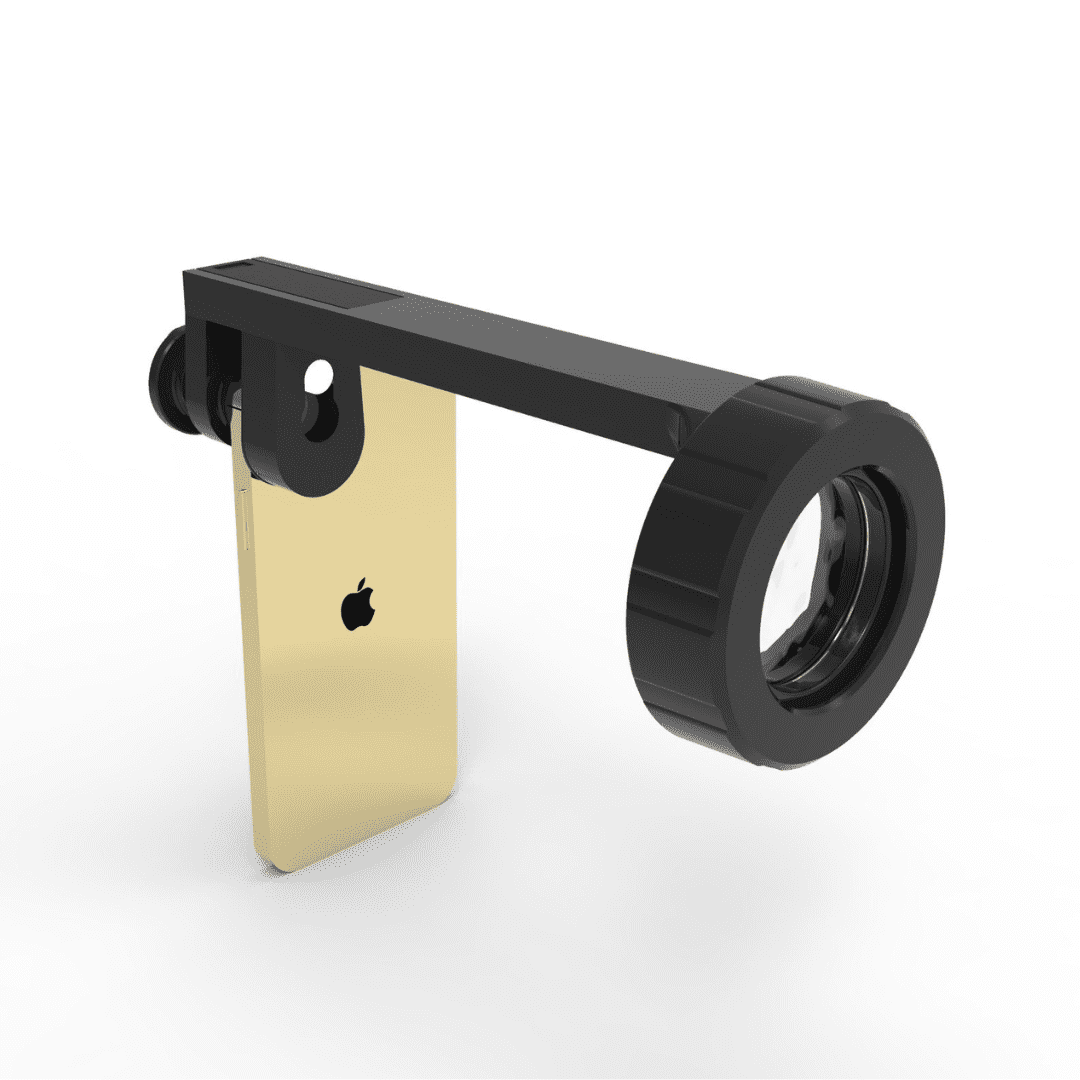
All-fit Slit-Lamp Adapter
Record and share exactly what you see at the slit lamp. One adapter fits any slit lamp or surgical microscope — and any smartphone.
From Choroida — the team behind this siteFirst Aid for Bleach in Eye at Home
Irrigation begins at the sink, before any phone call or journey, and the patient should hold the lids open and flush with running tap water. Then they should continue for at least 15 to 20 minutes and remove contact lenses, and advise against neutralizing with vinegar or milk (see ocular first aid).
Irrigation in the Clinic
On arrival, instill topical anesthetic so the patient can tolerate the flow. Next, irrigate with normal saline or lactated Ringer’s through a giving set, and evert the upper lid and sweep the fornices for retained material.
Checking pH After Bleach in Eye
First, touch litmus or universal indicator paper to the lower fornix, while normal tear pH sits close to 7. Wait about five minutes after stopping, because alkali can leach back from tissue, and if the reading rises again, resume irrigation and recheck.
Symptoms Patients Report
Burning and stinging start immediately, and patients also describe watering, blurred vision and photophobia. However, pain does not reliably predict depth, since deeper burns can damage corneal nerves, so examine every exposed eye with fluorescein.
Slit Lamp Findings
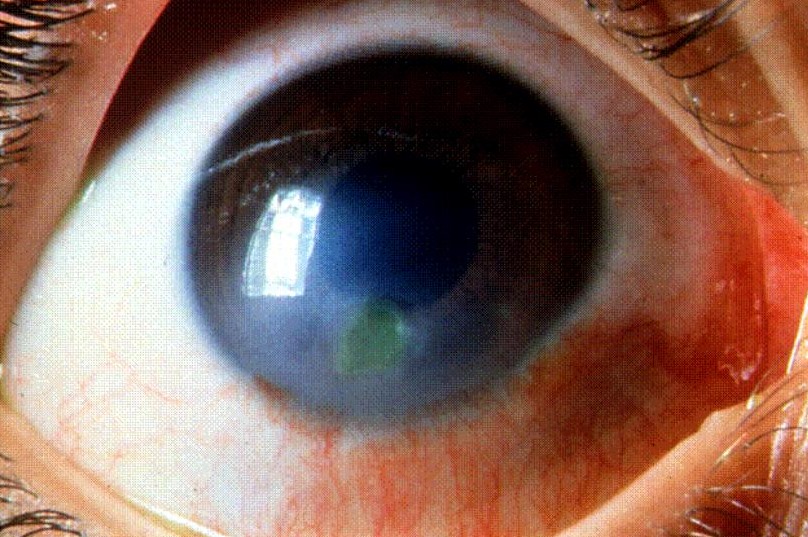
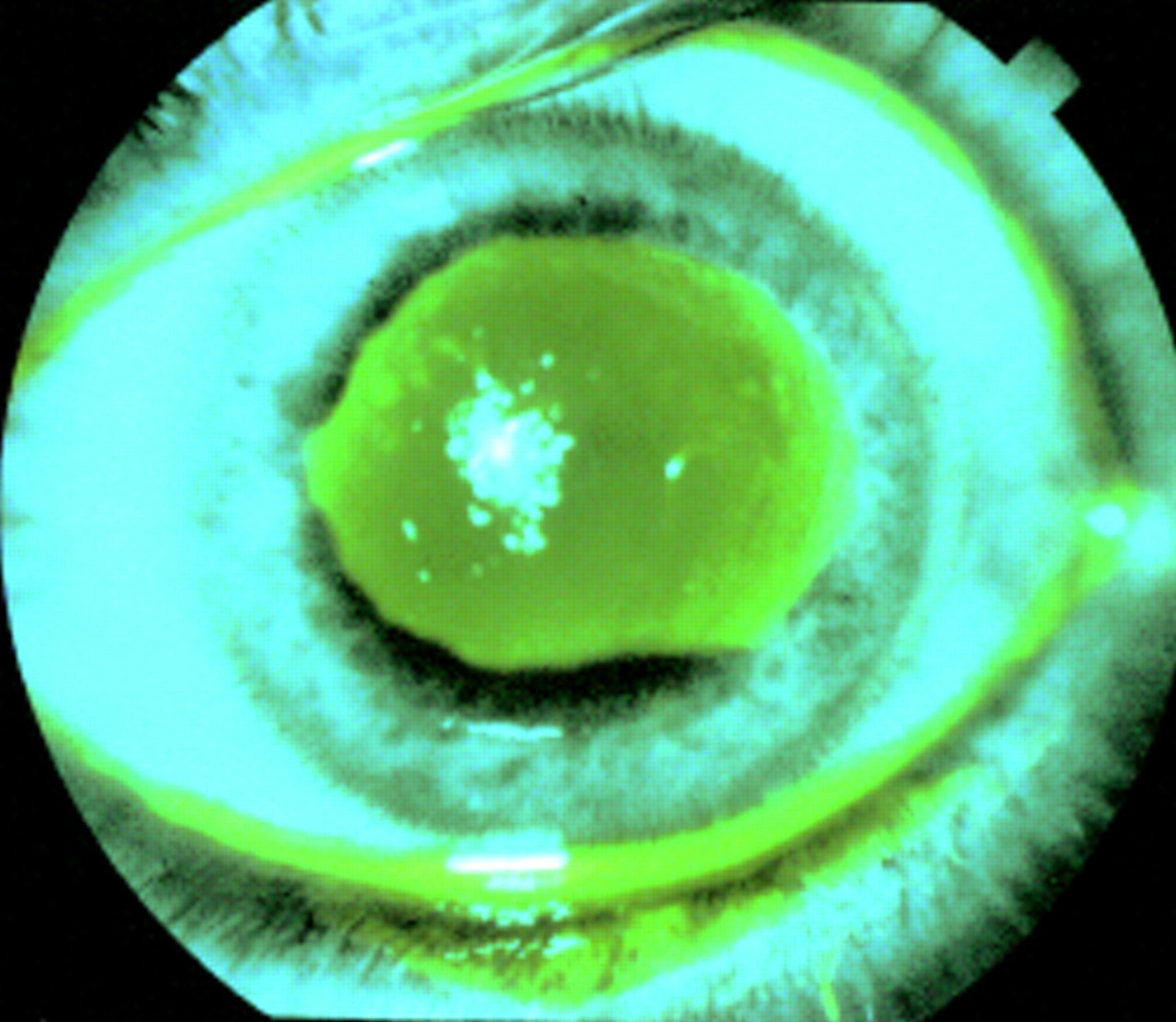
Start with visual acuity once irrigation is complete, then look for conjunctival injection, chemosis and fluorescein staining (see slit lamp exam). Measure any epithelial defect and note corneal haze, and finally, inspect the limbus for pallor, which signals ischemia.
Grading Bleach in Eye Burns
The Roper-Hall system grades corneal haze and the extent of limbal ischemia, while Dua’s classification scores limbal involvement in clock hours and the percentage of conjunctival involvement. For example, a clear cornea with no limbal ischemia falls into grade I under both, and household bleach injuries usually sit in this mild range.
Expected Course of Bleach in Eye
In most cases, small epithelial defects in grade I burns close within a few days, and vision also returns to baseline as the surface heals. However, a persistent defect beyond one week needs a fresh look, because delayed healing suggests a deeper burn, limbal damage or infection.
Initial Treatment
Topical antibiotic drops protect the open epithelium, and preservative-free lubricants then ease discomfort and support healing. A cycloplegic can relieve ciliary spasm when photophobia is marked, and in addition, oral analgesia helps for the first day or two.
Steroids and Bleach in Eye
Topical steroids reduce inflammation in moderate burns, but they can slow stromal repair if used beyond the early phase. Therefore, most clinicians keep them short and supervised, and mild household exposures often need no steroid at all.
Severe Alkali Patterns
Concentrated products can produce limbal blanching and corneal opacity, so these eyes may need adjuncts such as ascorbate, doxycycline or amniotic membrane, and because limbal stem cell failure may follow, specialist care is mandatory.
When to Refer Bleach in Eye
Refer the same day (see same-day eye emergencies) if any of these apply:
- Corneal haze or reduced vision after irrigation
- Any limbal pallor or ischemia
- An epithelial defect larger than a few millimeters
- pH that stays high after repeated irrigation
- A concentrated or industrial product
- Raised intraocular pressure
Follow-Up Visits
Review mild burns within one to two days, and recheck acuity, fluorescein staining and pressure at each visit. Then stop antibiotics once the epithelium has closed, while persisting dryness may need lubricants for several weeks.
Counseling the Patient
Explain that most household bleach injuries heal without lasting harm, and also teach immediate home irrigation for any future splash, and encourage eye protection when decanting or spraying cleaning products.
Pitfalls to Avoid
- Delaying irrigation because sterile saline is not at hand
- Skipping the pH check after flushing
- Missing retained material under the upper lid
- Assuming low pain means a mild burn
- Leaving steroid drops unsupervised
- Discharging without a follow-up appointment
Document what you see
Two smartphone imaging tools built for everyday clinic use — one for the slit lamp, one for the fundus.
From Choroida — the team behind this siteReferences
- Roper-Hall MJ. Thermal and chemical burns. Trans Ophthalmol Soc U K. 1965;85:631-653.
- Dua HS, King AJ, Joseph A. A new classification of ocular surface burns. Br J Ophthalmol. 2001;85:1379-1383.
- Wagoner MD. Chemical injuries of the eye: current concepts in pathophysiology and therapy. Surv Ophthalmol. 1997;41:275-313.
- Kuckelkorn R, Schrage N, Keller G, Redbrake C. Emergency treatment of chemical and thermal eye burns. Acta Ophthalmol Scand. 2002;80:4-10.
- Eslani M, Baradaran-Rafii A, Movahedan A, Djalilian AR. The ocular surface chemical burns. J Ophthalmol. 2014;2014:196827.
- Bowling B. Kanski’s Clinical Ophthalmology: A Systematic Approach. 8th ed. Elsevier; 2016.
Test yourself
A few questions straight from this article.
-
What is the first step in home first aid for bleach in the eye?
The article says irrigation begins at the sink, before any phone call or journey, using running tap water with the lids held open. -
How long should home irrigation continue after a bleach in eye exposure?
Patients should keep flushing with tap water for at least 15 to 20 minutes and remove contact lenses. -
Why is alkali such as bleach in the eye considered more hazardous than acid?
The article states alkali saponifies cell membrane lipids and can penetrate deeper than acid, while hypochlorite also oxidizes epithelial proteins. -
When should pH be rechecked after irrigating a bleach in eye injury?
Alkali can leach back from tissue, so wait about five minutes after stopping, and resume irrigation if the reading rises again. -
What normal tear pH is the target when checking a bleach-exposed eye with litmus paper?
The article notes normal tear pH sits close to 7, tested by touching indicator paper to the lower fornix. -
Why must every eye with a bleach splash be examined with fluorescein even if pain is mild?
Deeper burns can damage corneal nerves, so low pain does not mean a mild burn. -
Which slit lamp sign after a bleach in eye injury signals limbal ischemia?
The article says inspecting the limbus for pallor is important because pallor signals ischemia. -
What typical finding follows household bleach in eye injury, which usually damages epithelium without reaching limbal stem cells?
Household strength usually spares the limbal stem cells, so most patients show punctate keratopathy or an epithelial defect. -
What does an epithelial defect persisting beyond one week suggest after a bleach in eye injury?
Small grade I defects close within days, so a defect beyond one week suggests delayed healing from a deeper burn, limbal damage or infection. -
Why are topical steroids kept short and supervised after a bleach in eye injury?
Steroids reduce inflammation in moderate burns but can slow stromal repair beyond the early phase, and mild household exposures often need none.

Writes and reviews the clinical articles on Educate. Every post is checked against peer-reviewed sources before it goes live.