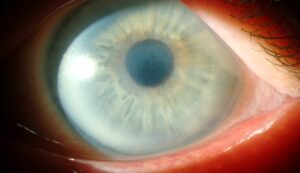
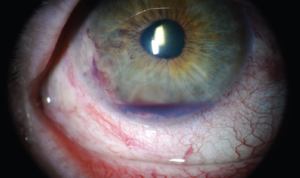
Ocular first aid is the care given in the first minutes after an eye injury, before a professional is reached.
What is done at that point can also limit damage, and a wrong move can cause more.
Clinicians can also use the same principles to advise patients by telephone and to teach families and teachers.
Ocular First Aid for a Chemical Splash
This is the situation in which minutes count.
- Irrigate immediately with clean water, saline, or any harmless liquid, for at least 15 to 30 minutes
- Hold the lids open, and then roll the eye to wash the fornices
- Remove contact lenses
- Continue irrigation during transport
- Do not try to neutralize the chemical
Alkali burns penetrate quickly and need the most urgent irrigation (see chemical eye injury).
Classification of burns by limbal ischemia guides the outlook (see the references).
Ocular First Aid: Foreign Body on the Surface
- Do not rub the eye
- Blink, and pull the upper lid over the lower lid to wash it with tears
- Rinse with clean water or saline
- If it does not wash out, cover the eye lightly and seek care, and do not use sharp tools
Examination at a clinic can find embedded particles and rust rings (see corneal foreign body).
Fundus Explorer Pro
Photograph the retinal findings described here with the phone already in your pocket — 22 D optics and built-in illumination in one handheld unit.
From Choroida — the team behind this siteBlunt Trauma
- Apply a cold compress gently, without pressure on the eye
- Sit upright, because this lowers the pressure and lets blood settle
- Seek urgent care if there is pain, blood in the eye, reduced vision, or double vision
Hyphema and orbital fractures may be present even when the eye looks mild (see hyphema).
Ocular First Aid: Penetrating or Suspected Open Globe
- Do not press on the eye, wash it, or remove an embedded object
- Place a rigid shield over the eye, such as a paper cup taped to the bone around the eye
- Do not use ointment
- Keep the patient calm, and fasting if surgery is needed
- Go to an emergency department with an eye service at once
Pressing on the globe may push out the contents (see ruptured globe).
Corneal Abrasion
- Rinse the eye, and avoid rubbing
- Do not patch tightly, and avoid steroid drops unless advised
- Seek review within a day, since the abrasion may be deeper or infected (see corneal abrasion)
Contact lens wearers should also stop wear and seek care promptly.
Ocular First Aid: Welding Flash and Ultraviolet Burns
Symptoms start hours after exposure, with severe pain and tearing.
Also, cold compresses and a cool, dark room help, and an eye examination should follow (see photokeratitis).
Burns of the Lid and Face
Cool the area with running water, avoid ointments, and then cover with a clean, non-stick dressing.
Do not open swollen lids forcefully.
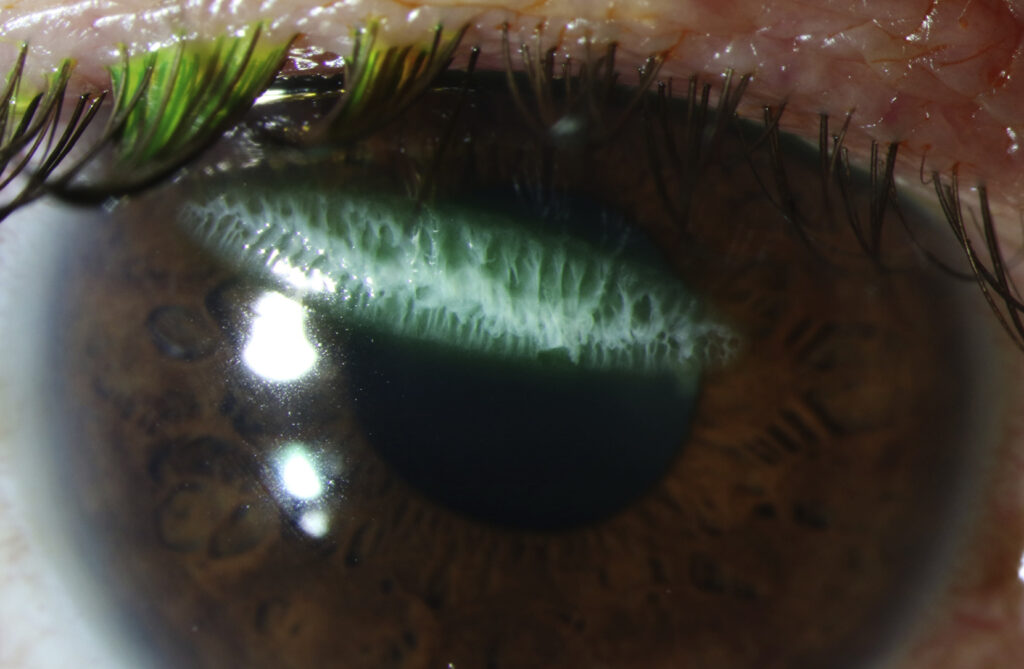
Ocular First Aid: What to Avoid
- Rubbing the eye
- Using tweezers, cotton buds, or needles
- Putting home remedies, such as milk or oil, in the eye
- Applying pressure on an injured eye
- Delaying treatment for a painful, red eye
Teaching Others
Schools, workplaces, and homes should have an eyewash station or a bottle of saline, and a list of emergency numbers.
In addition, teach protective eyewear in sports and manual work, and practice the steps.
Advising Patients by Telephone
- Ask what happened, what the injury was caused by, and when it occurred
- Ask about pain, vision, and the appearance of the eye
- Give clear first aid steps, and tell the patient where to go
- Stress that a chemical splash must be washed at once, and that care should not wait for transport
What a First Aid Kit for the Eye Should Contain
- A bottle of sterile saline or an eyewash station
- A rigid eye shield or a paper cup and tape
- Clean gauze and cold packs
- A card with emergency numbers and the closest eye service
Check the contents regularly, and replace items when they expire.
Special Considerations
- Children: need an adult to hold them gently during irrigation, and help to keep the lids open
- Contact lens wearers: remove the lenses before irrigation if possible, or irrigate and then remove
- Patients with one functioning eye: every injury is urgent
- Industrial settings: follow the safety data sheet of the chemical, and report the substance to the doctor
After First Aid
Transport the patient to a facility that can treat eye emergencies, and pass on a note of the substance, the time of injury, and the steps given.
Early review allows measurement of pH, examination for damage, and treatment, which can also limit the long-term outcome (see corneal abrasion).
For the latest studies, see the PubMed results for ocular first aid.


Document what you see
Two smartphone imaging tools built for everyday clinic use — one for the slit lamp, one for the fundus.
From Choroida — the team behind this siteReferences
- Dua HS, King AJ, Joseph A. A new classification of ocular surface burns. Br J Ophthalmol. 2001;85:1379-1383.
- Haring RS, Sheffield ID, Channa R, Canner JK, Schneider EB. Epidemiologic trends of chemical ocular burns in the United States. JAMA Ophthalmol. 2016;134:1119-1124.
- Singh P, Tyagi M, Kumar Y, Gupta KK, Sharma PD. Ocular chemical injuries and their management. Oman J Ophthalmol. 2013;6:83-86.
- American Academy of Ophthalmology. Basic and Clinical Science Course, Section 8: External Disease and Cornea. AAO; current edition.

Writes and reviews the clinical articles on Educate. Every post is checked against peer-reviewed sources before it goes live.