CNTGS, the Collaborative Normal-Tension Glaucoma Study, tested whether lowering intraocular pressure slows damage in normal-tension glaucoma.
Before it, many clinicians doubted that pressure mattered when readings were already normal. However, its randomized data still guide treatment decisions today.
Why CNTGS Was Needed
Normal-tension glaucoma shows glaucomatous cupping and field loss while pressure stays in the statistical normal range, so some authors viewed it as a vascular disease with little pressure component. However, no controlled data supported or rejected treatment (see normal-tension glaucoma).
CNTGS Design
The trial randomized one eye per patient to treatment or observation. Treated eyes needed a 30% pressure reduction from baseline, while control eyes stayed untreated and had regular visual fields and disc photographs. Then investigators compared progression rates between the groups.
All-fit Slit-Lamp Adapter
Record and share exactly what you see at the slit lamp. One adapter fits any slit lamp or surgical microscope — and any smartphone.
From Choroida — the team behind this siteWho Entered the Trial
Patients had glaucomatous discs, typical field defects and untreated pressures in the normal range. In addition, randomization required documented progression, a defect threatening fixation, or a new disc hemorrhage, so as a result the cohort was enriched for higher-risk eyes.
How Pressure Was Lowered in CNTGS
Investigators could use medications, laser trabeculoplasty or filtering surgery, but they excluded beta-blockers and adrenergic drugs because of concern about vascular effects. Because medicines alone often fell short of 30%, many treated eyes needed trabeculectomy.
Main Results of CNTGS
The endpoint was confirmed visual field progression or optic disc change, and after censoring for cataract, about 12% of treated eyes progressed, compared with 35% of controls. Therefore, a 30% reduction clearly slowed progression in this population.
The Cataract Problem in CNTGS
Filtering surgery accelerated cataract in treated eyes, and the cataract then depressed field sensitivity and mimicked glaucomatous progression. As a result, the intention-to-treat analysis did not show a significant benefit, so readers should remember that the headline result depends on this adjustment.
What Untreated Eyes Revealed
Control eyes gave valuable natural history data, and a substantial share of them did not progress during follow-up. However, others progressed quickly and rates varied widely between patients, so normal-tension glaucoma behaves as a heterogeneous disease.
Risk Factors for Progression in CNTGS
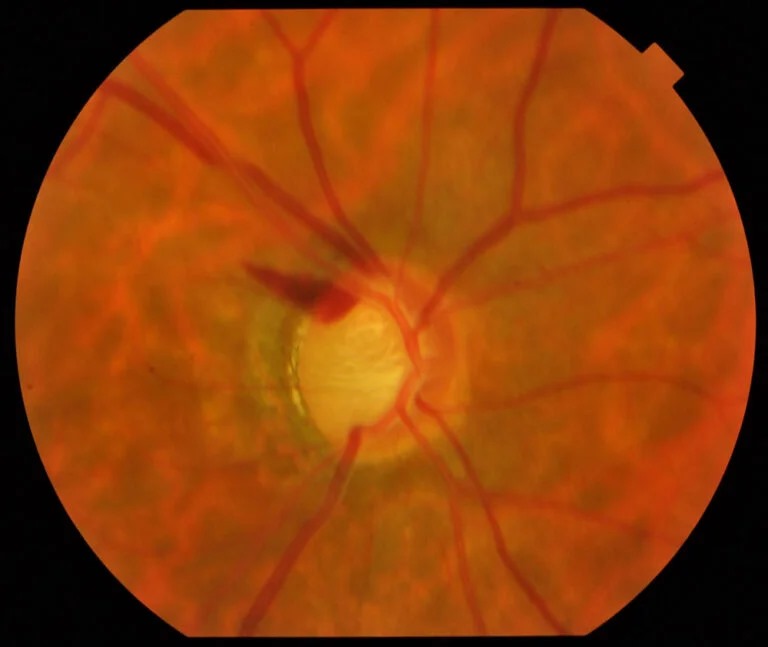
A later analysis linked female sex, migraine and disc hemorrhage with faster field loss. Disc hemorrhage deserves special attention, because it often precedes new field defects, so examine the disc rim carefully at every visit.
When to Start Treatment
CNTGS supports observation for some patients until progression is documented, so first build a baseline with several untreated pressures, visual fields, OCT and disc photographs. Then treat early when fixation is threatened, a disc hemorrhage appears or damage advances fast, and young patients with long life expectancy also justify a lower threshold.
Target Pressure After CNTGS
The trial target was a 30% reduction from the untreated baseline. Because single readings vary, average several measurements before calculating the target, and tighten the target if the eye progresses despite reaching it.
Choosing Therapy in Practice
Prostaglandin analogs now usually serve as first-line drops because they lower pressure effectively once daily. Selective laser trabeculoplasty offers another option for patients who prefer fewer drops, while filtering surgery should wait for clear progression because CNTGS showed its cataract cost.
CNTGS and Other Glaucoma Trials
The Early Manifest Glaucoma Trial included normal-tension eyes and also showed benefit from pressure reduction. Meanwhile, the Low-Pressure Glaucoma Treatment Study found fewer progressing eyes with brimonidine than with timolol. For a comparison of medicine and surgery in higher-pressure disease, see the Collaborative Initial Glaucoma Treatment Study.
Vascular Factors Beyond the Trial
CNTGS did not test blood pressure or blood flow interventions, but nocturnal hypotension and vasospasm may contribute in some patients. Therefore, ask about migraine, cold hands and overnight antihypertensive dosing, and coordinate with the physician before changing systemic medication.
Counseling Patients About CNTGS
Explain that normal pressure can still be too high for a vulnerable optic nerve, and tell patients that treatment slows damage but cannot restore lost field. Finally, share that watchful follow-up is a reasonable choice when progression is unproven.
Limits of CNTGS
The trial randomized only 140 eyes, so subgroup conclusions remain uncertain. In addition, it used older perimetry and predated modern OCT, and its selection criteria also limit generalization to newly diagnosed, stable patients.
Pitfalls to Avoid
- Do not treat every normal-tension patient aggressively at diagnosis
- Never judge progression from a single visual field
- Do not miss cataract as a cause of field decline
- Always look for disc hemorrhages at each visit
- Recheck pressures at different times of day before labeling glaucoma normal-tension


Document what you see
Two smartphone imaging tools built for everyday clinic use — one for the slit lamp, one for the fundus.
From Choroida — the team behind this siteReferences
- Collaborative Normal-Tension Glaucoma Study Group. Comparison of glaucomatous progression between untreated patients with normal-tension glaucoma and patients with therapeutically reduced intraocular pressures. Am J Ophthalmol. 1998;126:487-497.
- Collaborative Normal-Tension Glaucoma Study Group. The effectiveness of intraocular pressure reduction in the treatment of normal-tension glaucoma. Am J Ophthalmol. 1998;126:498-505.
- Anderson DR, Drance SM, Schulzer M. Natural history of normal-tension glaucoma. Ophthalmology. 2001;108:247-253.
- Drance S, Anderson DR, Schulzer M. Risk factors for progression of visual field abnormalities in normal-tension glaucoma. Am J Ophthalmol. 2001;131:699-708.
- Heijl A, Leske MC, Bengtsson B, et al. Reduction of intraocular pressure and glaucoma progression: results from the Early Manifest Glaucoma Trial. Arch Ophthalmol. 2002;120:1268-1279.
- Krupin T, Liebmann JM, Greenfield DS, et al. A randomized trial of brimonidine versus timolol in preserving visual function: results from the Low-Pressure Glaucoma Treatment Study. Am J Ophthalmol. 2011;151:671-681.
Test yourself
A few questions straight from this article.
-
What question did the Collaborative Normal-Tension Glaucoma Study (CNTGS) set out to answer?
Before CNTGS many clinicians viewed normal-tension glaucoma as largely vascular and doubted that pressure mattered when readings were already normal. -
What pressure reduction did treated eyes need to reach in the Collaborative Normal-Tension Glaucoma Study?
One eye per patient was randomized to a 30% pressure reduction from the untreated baseline or to observation with regular fields and disc photographs. -
Why was the Collaborative Normal-Tension Glaucoma Study cohort enriched for higher-risk eyes?
Patients needed documented progression, a defect threatening fixation or a new disc hemorrhage before randomization, which limits generalization to newly diagnosed stable patients. -
Which drug classes were excluded for lowering pressure in the Collaborative Normal-Tension Glaucoma Study?
These were excluded over concern about vascular effects, and because medicines alone often fell short of 30%, many treated eyes needed trabeculectomy. -
After censoring for cataract, how did progression rates compare in the Collaborative Normal-Tension Glaucoma Study?
With cataract censored, about 12% of treated eyes progressed versus 35% of controls, showing that a 30% reduction slowed progression in this population. -
Why did the intention-to-treat analysis of the Collaborative Normal-Tension Glaucoma Study show no significant benefit?
Filtering surgery accelerated cataract, which depressed field sensitivity and mimicked glaucomatous progression, so the headline benefit depends on censoring for cataract. -
What did untreated control eyes in the Collaborative Normal-Tension Glaucoma Study reveal about the disease?
A substantial share of control eyes did not progress while others progressed quickly, so normal-tension glaucoma behaves as a heterogeneous disease. -
Which patient factors were linked with faster field loss in normal-tension glaucoma in a later CNTGS analysis?
A later analysis linked female sex, migraine and disc hemorrhage with faster field loss; disc hemorrhage often precedes new field defects. -
For a newly found, apparently stable normal-tension glaucoma patient, what approach does CNTGS support?
CNTGS supports observation for some patients after building a baseline of untreated pressures, fields, OCT and disc photographs, treating early when fixation is threatened or damage advances fast. -
What did the Low-Pressure Glaucoma Treatment Study find in normal-tension glaucoma?
Alongside CNTGS, the Low-Pressure Glaucoma Treatment Study found fewer progressing eyes with brimonidine than with timolol.

Writes and reviews the clinical articles on Educate. Every post is checked against peer-reviewed sources before it goes live.