Medically reviewed by Dr. Sameh Nabil, DO, ophthalmologist · Last reviewed November 27, 2026
IIHTT (the Idiopathic Intracranial Hypertension Treatment Trial) tested whether acetazolamide adds benefit to diet in IIH with mild visual loss.
The NORDIC IIH Study Group published it in JAMA in 2014, and before it, clinicians prescribed acetazolamide widely, although no randomized evidence supported it.
Why the IIHTT Was Needed
IIH raises intracranial pressure without a mass lesion or venous obstruction, and papilledema is the main threat to vision because chronic swelling damages axons. Acetazolamide lowers cerebrospinal fluid production by inhibiting carbonic anhydrase. However, its benefit rested on case series and expert habit.
Who Entered the Trial
The IIHTT enrolled 165 adults, almost all women, with newly diagnosed IIH who met modified Dandy criteria and had raised opening pressure on lumbar puncture. Each had mild visual loss, defined as perimetric mean deviation between -2 and -7 dB. Because severe field loss was excluded, the results apply to milder disease.
Fundus Explorer Pro
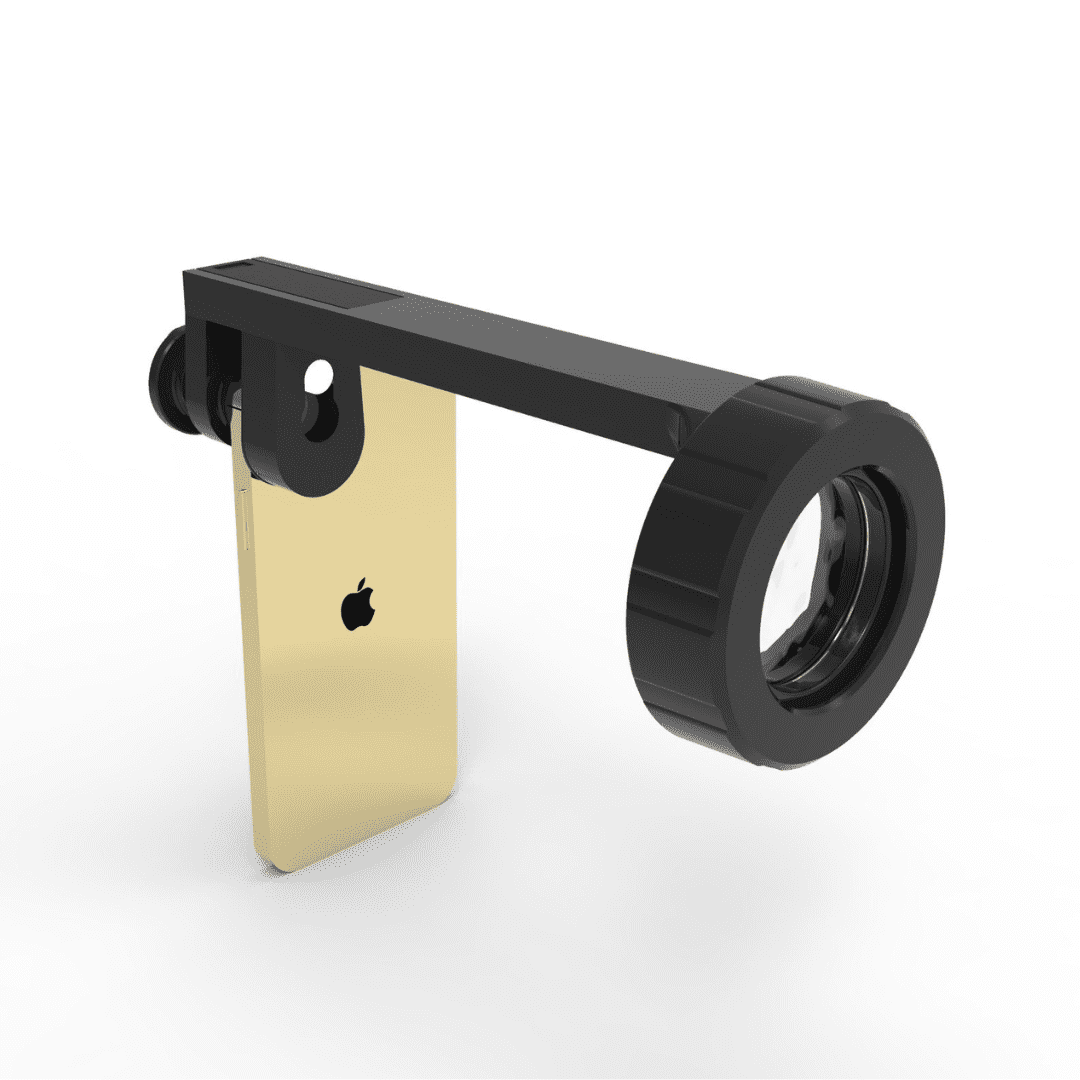
Photograph the retinal findings described here with the phone already in your pocket — 22 D optics and built-in illumination in one handheld unit.
From Choroida — the team behind this siteIIHTT Design and Randomization
The trial was double masked, randomized and placebo controlled, and all participants received a supervised low-sodium weight-reduction diet. Then they were randomized to acetazolamide or matching placebo, and the dose increased stepwise to a maximum of 4 g daily, as tolerated.
Primary Endpoint in the IIHTT
The primary outcome was change in perimetric mean deviation in the study eye at six months, which investigators measured with Humphrey 24-2 testing. Mean deviation captures diffuse sensitivity loss, which is common in papilledema. However, it reflects enlarged blind spots and nasal steps less well.
The Visual Field Result
Both groups improved, which shows the effect of diet and time, and the acetazolamide group improved by 1.43 dB while the placebo group improved by 0.71 dB. The difference was modest and reached statistical significance only at the margin. Therefore, the field benefit is real but small for an individual patient.
Frisen Grade as an IIHTT Endpoint
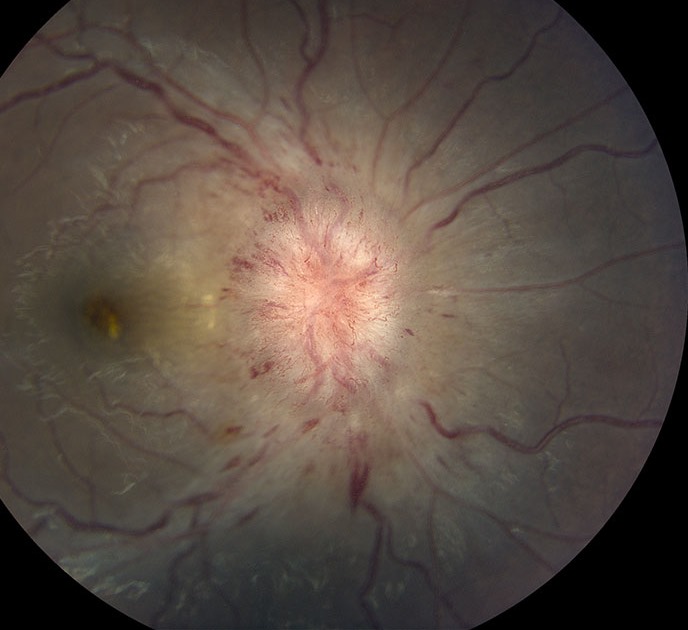
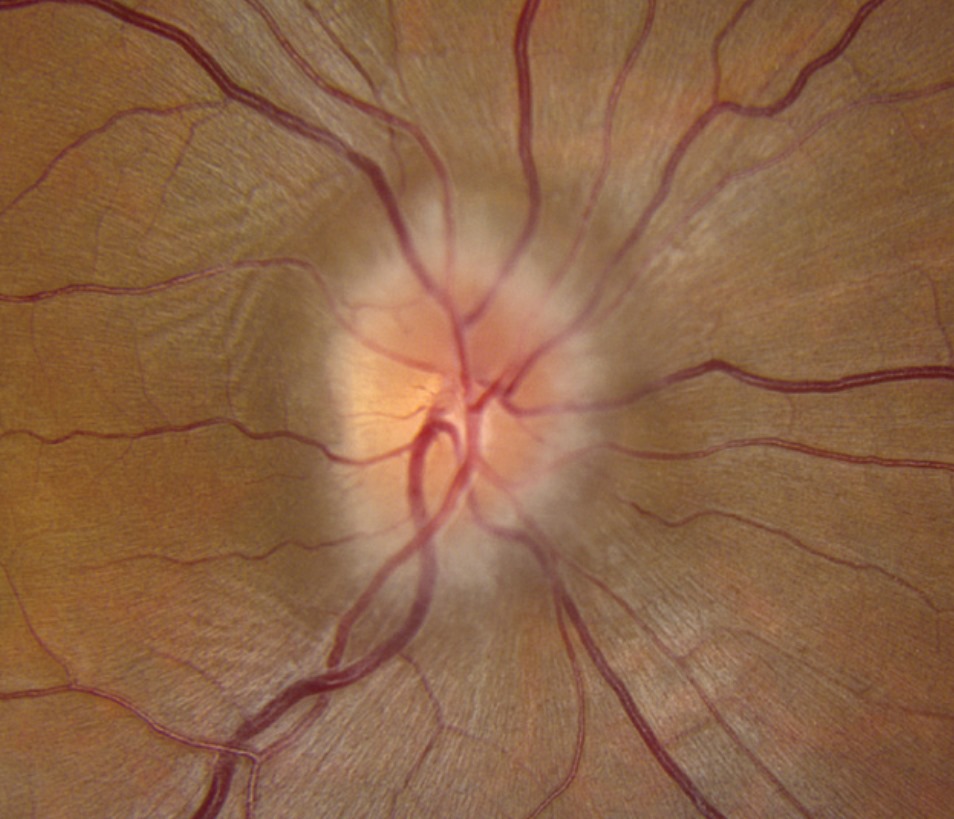
Papilledema grade was a key secondary outcome, and masked readers graded fundus photographs with the Frisen scale (see Frisen grading). Grade fell more in the acetazolamide group than in the placebo group. As a result, the fundus supported what the modest field change suggested.
What the Fundus Shows During Recovery
Resolving swelling follows a recognizable pattern: for example, the peripapillary halo narrows, and vessels obscured at the disc margin become visible again. Hemorrhages and cotton wool spots usually clear as pressure falls, and a disc that flattens while vision worsens may signal atrophy instead of recovery.
OCT Findings in the IIHTT
An OCT substudy measured peripapillary nerve fiber layer thickness and optic nerve head volume, and swelling measures decreased more with acetazolamide. However, thickness alone cannot separate falling edema from axonal loss, so pair OCT with visual fields and ganglion cell layer analysis.
Quality of Life and Headache
Vision-related quality of life improved more with acetazolamide on the NEI-VFQ-25. However, headache disability did not differ significantly between groups, so acetazolamide should not be presented as a headache treatment.
Treatment Failure and Safety
Protocol-defined treatment failure from visual worsening occurred more often in the placebo arm. Common side effects included paresthesia, dysgeusia, fatigue, nausea and diarrhea, and electrolyte disturbance and kidney stones also require attention. Many participants tolerated high doses, which supports titration before abandoning the drug.
Limits of the IIHTT
The trial covered only mild visual loss, so it does not guide fulminant IIH. Six months is short for a chronic disease that can relapse, and the trial did not test surgery, shunting or venous stenting.
How the IIHTT Changed Practice
Acetazolamide with weight loss became standard first-line therapy for mild IIH, and consensus guidelines now cite the IIHTT when they recommend it. Then, worsening fields or severe papilledema prompt referral for surgical options.
Counseling Patients After the IIHTT
Warn about tingling, altered taste of carbonated drinks and fatigue before starting, and next, explain why repeated fields and fundus photos matter. Finally, ask patients to report new blurring or transient visual obscurations promptly.
Comparing the IIHTT With Other Trials
Like the Optic Neuritis Treatment Trial, the IIHTT gave neuro-ophthalmology a randomized evidence base, and both trials used the visual field and the fundus as practical endpoints. However, the IIHTT measured a smaller effect over a shorter period.
Pitfalls to Avoid
- Severe or fulminant visual loss lies outside the IIHTT results
- Frisen grade alone cannot define recovery
- Titrate the acetazolamide dose before stopping it
- Check for new pallor as swelling resolves
Frequently Asked Questions
Does acetazolamide help the headaches of IIH?
Acetazolamide did not significantly change headache disability compared with placebo in the IIHTT. Vision-related quality of life improved more with the drug, but acetazolamide should not be presented as a headache treatment for patients with IIH.
What side effects should patients expect with acetazolamide for IIH?
Acetazolamide commonly causes paresthesia, altered taste, fatigue, nausea and diarrhea. Electrolyte disturbance and kidney stones also require attention. Many IIHTT participants tolerated high doses, which supports titrating the dose before abandoning the drug.
Does the IIHTT apply to patients with severe vision loss from IIH?
The IIHTT results apply only to mild visual loss, with perimetric mean deviation between -2 and -7 dB. Severe or fulminant IIH lies outside the trial, which also did not test surgery, shunting or venous stenting, and followed patients for only six months.
Document what you see
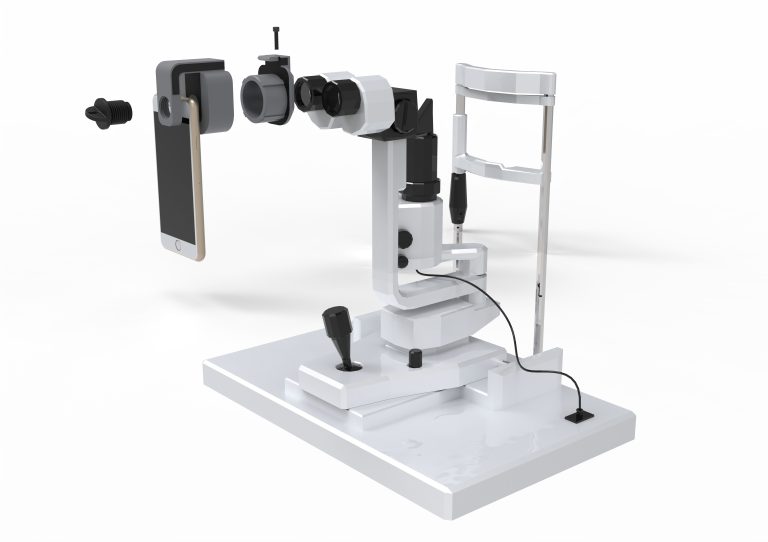
Two smartphone imaging tools built for everyday clinic use — one for the slit lamp, one for the fundus.
From Choroida — the team behind this siteReferences
- NORDIC Idiopathic Intracranial Hypertension Study Group Writing Committee; Wall M, McDermott MP, Kieburtz KD, et al. Effect of acetazolamide on visual function in patients with idiopathic intracranial hypertension and mild visual loss: the idiopathic intracranial hypertension treatment trial. JAMA. 2014;311:1641-1651.
- Wall M, Kupersmith MJ, Kieburtz KD, et al. The idiopathic intracranial hypertension treatment trial: clinical profile at baseline. JAMA Neurol. 2014;71:693-701.
- Frisén L. Swelling of the optic nerve head: a staging scheme. J Neurol Neurosurg Psychiatry. 1982;45:13-18.
- Friedman DI, Liu GT, Digre KB. Revised diagnostic criteria for the pseudotumor cerebri syndrome in adults and children. Neurology. 2013;81:1159-1165.
- Mollan SP, Davies B, Silver NC, et al. Idiopathic intracranial hypertension: consensus guidelines on management. J Neurol Neurosurg Psychiatry. 2018;89:1088-1100.
Test yourself
A few questions straight from this article.
-
What was the main question tested by the IIHTT in idiopathic intracranial hypertension?
The IIHTT tested whether acetazolamide adds benefit to diet in IIH with mild visual loss. Before it, acetazolamide was widely prescribed without randomized evidence. -
In IIH, what is the main threat to vision that the IIHTT aimed to reduce?
The article states papilledema is the main threat to vision in IIH because chronic swelling damages axons. -
What is the mechanism by which acetazolamide is used in idiopathic intracranial hypertension?
Acetazolamide lowers cerebrospinal fluid production by inhibiting carbonic anhydrase. Its use before the IIHTT rested on case series and expert habit. -
What range of perimetric mean deviation defined mild visual loss for entry into the IIHTT in IIH?
Participants had mild visual loss defined as perimetric mean deviation between -2 and -7 dB. Severe field loss was excluded, so results apply to milder disease. -
What was the primary outcome of the IIHTT in patients with IIH and mild visual loss?
The primary outcome was change in perimetric mean deviation in the study eye at six months, measured with Humphrey 24-2 testing. -
In the IIHTT for IIH, how much did mean deviation improve with acetazolamide versus placebo?
Both groups improved, but acetazolamide improved 1.43 dB versus 0.71 dB for placebo. The field benefit is real but small for an individual patient. -
Why is mean deviation an imperfect endpoint for papilledema in IIH trials such as the IIHTT?
Mean deviation captures diffuse sensitivity loss, common in papilledema, but reflects enlarged blind spots and nasal steps less well. -
In the IIHTT, how did headache disability compare between the acetazolamide and placebo groups in IIH?
Headache disability did not differ significantly between groups, so acetazolamide should not be presented as a headache treatment. -
What does the article advise when a patient with IIH struggles with acetazolamide side effects after the IIHTT?
Many IIHTT participants tolerated high doses, which supports titration before abandoning the drug. -
Why does the IIHTT not guide management of fulminant IIH?
The trial covered only mild visual loss, and it did not test surgery, shunting or venous stenting. Six months is also short for a relapsing disease.

Writes and reviews the clinical articles on Educate. Every post is checked against peer-reviewed sources before it goes live.