Chalazion healing usually takes several weeks, and many lesions settle without any procedure. The lump is a sterile lipogranuloma, so antibiotics rarely change its course. Therefore, management means timing intervention well and catching the rare malignant mimic.
What Chalazion Healing Involves
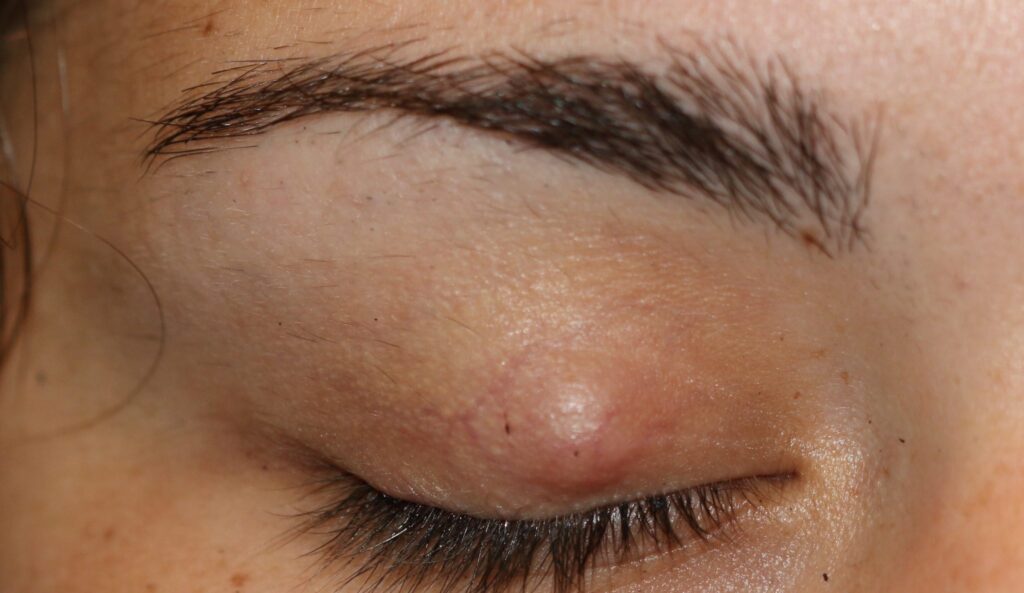
A chalazion forms when a blocked meibomian gland leaks lipid into the tarsus, and the surrounding tissue then mounts a chronic granulomatous reaction. Healing occurs as macrophages slowly clear this lipid and the granuloma shrinks, so resolution is gradual and often uneven.
What the Examiner Sees
Early lesions may look red and tender, similar to a stye, but later a firm, painless nodule sits within the tarsus, away from the lid margin. Everting the lid often shows a gray or yellow conjunctival patch, and you should also check for posterior blepharitis, thick meibum and rosacea, because these predict new lesions.
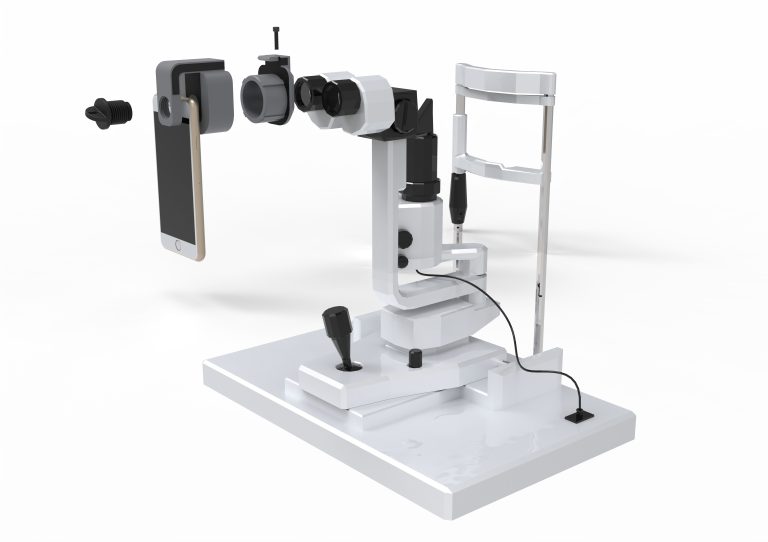
All-fit Slit-Lamp Adapter
Record and share exactly what you see at the slit lamp. One adapter fits any slit lamp or surgical microscope — and any smartphone.
From Choroida — the team behind this siteTypical Chalazion Healing Timeline
Many small chalazia regress within a few weeks of conservative care, but larger or older lesions may persist for several months. A firm, quiet nodule that has not changed for weeks rarely vanishes quickly. Therefore, frame expectations in weeks to months and set a clear review date.
Warm Compresses and Chalazion Healing
Heat softens thickened meibum and may help the gland drain, so the patient applies a warm compress for about ten minutes, several times a day. Gentle massage toward the lid margin can follow each session (see warm compress technique), and you should warn patients against water hot enough to burn thin lid skin.
Lid Hygiene Between Episodes
Daily lid cleaning reduces debris and bacterial load on the margin, and it also addresses the meibomian gland dysfunction behind most recurrences. For example, patients with ocular rosacea may benefit from oral doxycycline or azithromycin. However, these drugs target the gland environment and do little for an established nodule.
Topical Drops Have Limited Roles
Topical antibiotics do little for a sterile granuloma, so reserve them for a coexisting hordeolum or secondary preseptal cellulitis. Steroid drops may calm early inflammation, while they rarely shrink a chronic nodule, and you should also monitor intraocular pressure if steroid use continues for weeks.
When to Inject Steroid
Consider intralesional triamcinolone when a nodule persists after several weeks of compresses. It also suits lesions near the lacrimal punctum, where incision risks canalicular injury, and the clinician can inject through the skin or the conjunctiva.
Steroid Risks to Discuss
Injection can cause skin depigmentation and fat atrophy, especially in darker skin, and white steroid deposits may also remain visible at the site. Case reports also describe retinal or choroidal vascular occlusion after periocular triamcinolone, so many surgeons prefer the conjunctival route in pigmented patients.
Incision and Curettage in Chalazion Healing
Incision and curettage suits large, firm or long-standing lesions, and a chalazion clamp everts the lid while a vertical tarsal incision opens the lesion. The surgeon then curettes the contents and excises the capsule wall where possible. In a randomized study, injection and incision worked similarly, while compresses alone succeeded less often.
Children and Chalazion Healing
Children often develop multiple lesions linked to blepharitis, and most respond to compresses and lid hygiene, given enough time. However, large upper lid lesions can induce astigmatism during the amblyopia-sensitive years, and procedures usually need general anesthesia, so weigh the benefit carefully.
Recurrence After Chalazion Healing
New lesions at different sites usually reflect ongoing meibomian gland dysfunction, whereas recurrence at the same site deserves more suspicion. Incomplete curettage can explain it, although a hidden tumor can behave the same way, so treat same-site recurrence as an indication for biopsy.
Red Flags for Sebaceous Carcinoma
Sebaceous carcinoma classically masquerades as a recurrent chalazion in older adults (see sebaceous carcinoma), so suspect it when these features appear:
- Same-site recurrence after treatment
- Loss of lashes over the lesion
- Unilateral chronic blepharoconjunctivitis
- Yellow, firm or ulcerated tarsal mass
- A new lesion in an older patient
- Distorted lid margin anatomy
When to Send Tissue for Pathology
Send curetted material for histology whenever a red flag is present, and also submit tissue from atypical or unilateral recurrent lesions in older adults. Clinically diagnosed chalazia occasionally prove malignant on histology, so ask the pathologist to assess specifically for sebaceous carcinoma.
Counseling for Chalazion Healing
Tell patients the lump is sterile and not contagious, and explain that slow shrinkage over weeks is normal. Agree on a review point, for example four to six weeks, before discussing procedures, and finally ask them to return early for spreading redness, fever or vision change.
Pitfalls to Avoid
- Do not prescribe repeated antibiotic courses for a sterile nodule
- Never repeat curettage at one site without sending tissue
- Avoid transcutaneous steroid on pigmented skin when the conjunctival route works
- Do not miss preseptal cellulitis in a hot, diffusely swollen lid
- Treat the underlying gland dysfunction, because untreated glands form new lesions
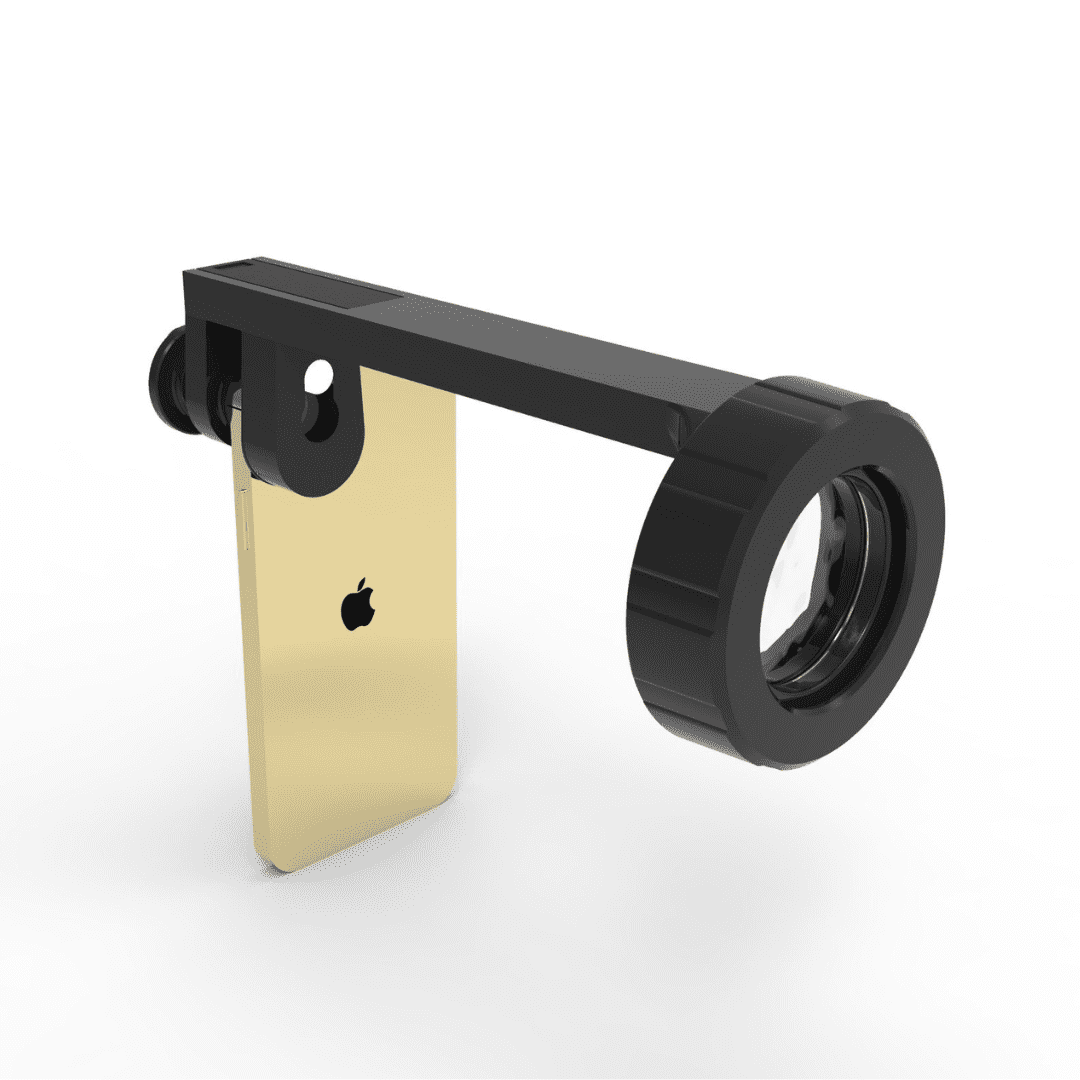
Document what you see
Two smartphone imaging tools built for everyday clinic use — one for the slit lamp, one for the fundus.
From Choroida — the team behind this siteReferences
- Goawalla A, Lee V. A prospective randomized treatment study comparing three treatment options for chalazia: triamcinolone acetonide injections, incision and curettage and treatment with hot compresses. Clin Exp Ophthalmol. 2007;35:706-712.
- Ben Simon GJ, Huang L, Nakra T, et al. Intralesional triamcinolone acetonide injection for primary and recurrent chalazia: is it really effective? Ophthalmology. 2005;112:913-917.
- Ozdal PC, Codère F, Callejo S, Caissie AL, Burnier MN. Accuracy of the clinical diagnosis of chalazion. Eye. 2004;18:135-138.
- Shields JA, Demirci H, Marr BP, Eagle RC Jr, Shields CL. Sebaceous carcinoma of the eyelids: personal experience with 60 cases. Ophthalmology. 2004;111:2151-2157.
- Arbabi EM, Kelly RJ, Carrim ZI. Chalazion. BMJ. 2010;341:c4044.
Test yourself
A few questions straight from this article.
-
What is the underlying nature of a chalazion, which explains why antibiotics rarely change its course?
The article describes a chalazion as a sterile lipogranuloma, so antibiotics rarely change its course. -
What is the mechanism by which a chalazion forms?
A blocked meibomian gland leaks lipid into the tarsus, and surrounding tissue mounts a chronic granulomatous reaction. -
How does a established chalazion typically appear on examination, compared with an early red, tender lesion?
Early lesions may look red and tender like a stye, but later a firm, painless nodule sits within the tarsus, away from the lid margin. -
What is the recommended warm compress regimen for chalazion healing?
Heat softens thickened meibum and may help drainage, so the patient applies a warm compress for about ten minutes, several times a day. -
When is intralesional triamcinolone considered for a chalazion?
The article advises considering intralesional triamcinolone when a nodule persists after several weeks of compresses. It also suits lesions near the punctum, where incision risks canalicular injury. -
Why is intralesional steroid injection preferred over incision for a chalazion near the lacrimal punctum?
Intralesional triamcinolone suits lesions near the lacrimal punctum, where incision risks canalicular injury. -
Which local complication of periocular triamcinolone injection for chalazion is more of a concern in darker skin?
Injection can cause skin depigmentation and fat atrophy, especially in darker skin, so many surgeons prefer the conjunctival route in pigmented patients. -
Why can a large upper lid chalazion in a young child be a concern beyond cosmesis?
Large upper lid lesions in children can induce astigmatism during the amblyopia-sensitive years, and procedures usually need general anesthesia. -
What does recurrence of a chalazion at the same site as before suggest, and what should be done?
New lesions at different sites usually reflect meibomian gland dysfunction, whereas same-site recurrence deserves more suspicion and should be an indication for biopsy. -
Which feature is listed as a red flag that a presumed chalazion may be sebaceous carcinoma?
Sebaceous carcinoma can masquerade as a recurrent chalazion in older adults; red flags include same-site recurrence, loss of lashes over the lesion, unilateral chronic blepharoconjunctivitis and a yellow, firm or ulcerated tarsal mass.

Writes and reviews the clinical articles on Educate. Every post is checked against peer-reviewed sources before it goes live.