Medically reviewed by Dr. Sameh Nabil, DO, ophthalmologist · Last reviewed November 14, 2026
Anti-VEGF tachyphylaxis describes a falling response to repeated injections of the same drug, with fluid returning at shorter intervals. Some eyes dry well in the first months and then need more frequent treatment or fail to dry at all, so before labeling a patient, rule out simpler causes that mimic tachyphylaxis.
What Anti-VEGF Tachyphylaxis Means
Tachyphylaxis refers to a quick loss of response after repeated dosing, while tolerance, by contrast, builds slowly over many injections. Nonresponse means that the eye never dries from the start, and studies use these terms loosely, while the evidence for true tachyphylaxis in the eye is limited (see anti-VEGF therapy).
Possible Causes of Anti-VEGF Tachyphylaxis
Several mechanisms have been proposed.
- Upregulation of other angiogenic factors besides VEGF-A
- Neutralizing antibodies against the drug
- Fibrosis and mature vessels that no longer depend on VEGF
- Changes in drug clearance from the vitreous
None of these has been proven in human eyes, so the cause often stays unclear.
Fundus Explorer Pro
Photograph the retinal findings described here with the phone already in your pocket — 22 D optics and built-in illumination in one handheld unit.
From Choroida — the team behind this siteRule Out Other Explanations First
Check adherence and the injection interval before changing therapy, and confirm the diagnosis with OCT angiography or indocyanine green angiography, since polypoidal disease responds differently (see macular neovascularization types).
Look for fibrosis, atrophy, or subretinal material that looks like fluid but does not respond to drugs, and also consider pachychoroid changes and central serous disease, which mimic neovascular AMD.
Evidence on Anti-VEGF Tachyphylaxis
Schaal and colleagues reported reduced response in some eyes and suggested tachyphylaxis during ranibizumab treatment. Gasperini and colleagues later described tachyphylaxis with bevacizumab and ranibizumab in a retrospective series. Other groups found no clear pattern once they adjusted for disease activity, and therefore many experts prefer the term persistent fluid until the cause is proven.
Management Options
- Shorten the interval for a trial period
- Switch to another anti-VEGF agent, including a bispecific one
- Add photodynamic therapy for polypoidal disease
- Consider a steroid implant in selected eyes with diabetic edema
Switching gives a modest benefit in some eyes, but the response varies. Reassess the target, because a small amount of stable fluid may not need chasing.
Switching Agents in Practice
When switching, give a short series of two or three monthly injections of the new drug before judging the response. Use OCT at four weeks after each injection to compare fluid, and record the response to each drug. Pharmacokinetic differences, such as faster clearance in vitrectomized eyes, may also change the effect.
Counselling
Tell patients that stable vision is a good outcome even when a little fluid persists, and reassure them that a changed interval is not a failure of care, because many eyes need adjustment over the years.
Explain that new agents may help, but none works in every eye, and document the response to each agent to guide later decisions.
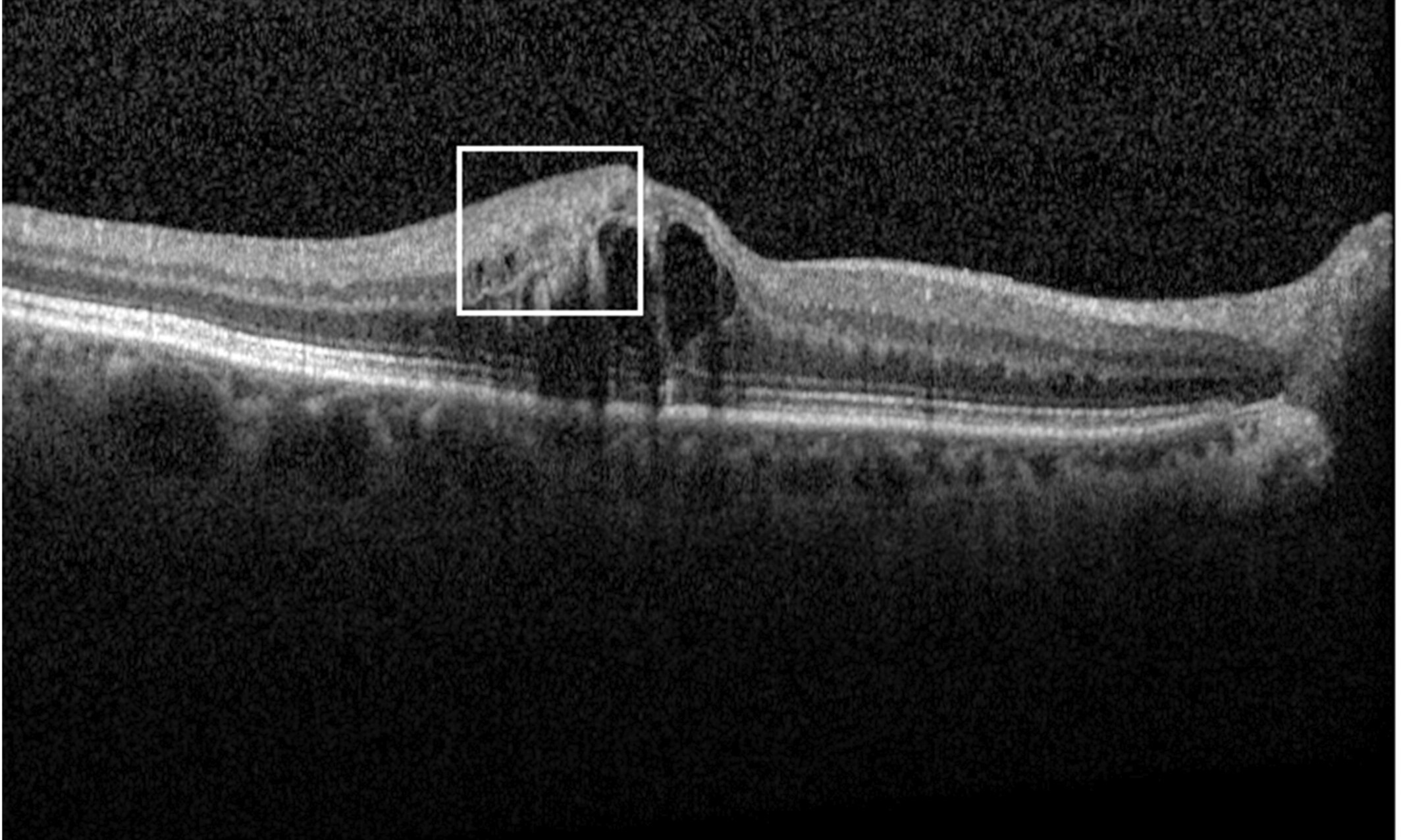
An Example Case
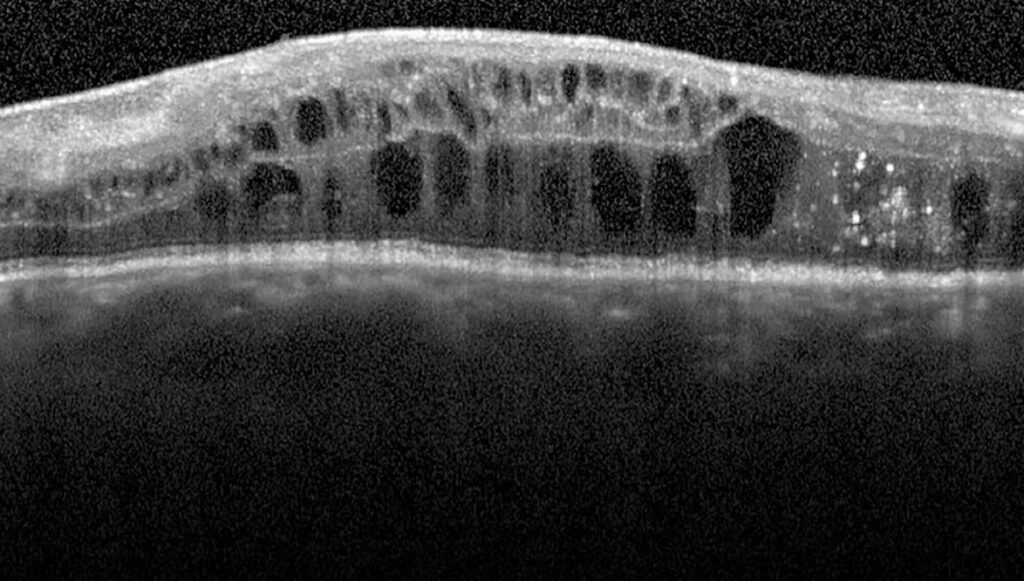
A 72-year-old woman with neovascular AMD dries well on bevacizumab for a year, then needs injections every 4 weeks to hold the macula dry. Her OCT shows a recurrent subretinal fluid pocket at week 8, and indocyanine green angiography shows polyps at the edge of the lesion.
After a switch to aflibercept and a course of photodynamic therapy, the fluid clears, and the interval extends to 10 weeks, which shows that a changing lesion often explains a falling response.
Anti-VEGF Tachyphylaxis Versus Disease Progression
The lesion itself may change over time, because a type 1 vessel may mature, and a type 2 vessel may form fibrosis. New polyps may appear in an eye that began as typical neovascular AMD, so repeat imaging before blaming the drug.
Pitfalls to Avoid
- Confirm regular attendance before switching agents
- Accept small amounts of stable fluid instead of shortening every interval
- Look for inflammation or infection in an eye with unexpected fluid
- Remember that some fluid sits within a scar that no drug will remove
Questions Patients Ask
Patients ask whether the drug has stopped working, and a fair answer is that the eye may need a different approach, and more testing may help. They also ask whether to stop treatment, and the answer is no unless a clear plan says otherwise.
Looking Ahead
Newer agents target several pathways at once, and researchers also study biomarkers that predict who will respond to which drug. Until then, careful imaging and stepwise changes remain the best approach.
Key Points
True tachyphylaxis is hard to prove, and many cases reflect other causes. Check adherence, imaging, and diagnosis before changing therapy, and shorten the interval, switch agents, or add photodynamic therapy when needed.


Document what you see
Two smartphone imaging tools built for everyday clinic use — one for the slit lamp, one for the fundus.
From Choroida — the team behind this siteReferences
- Schaal S, Kaplan HJ, Tezel TH. Is there tachyphylaxis to intravitreal anti-vascular endothelial growth factor pharmacotherapy in age-related macular degeneration? Ophthalmology. 2008;115:2199-2205.
- Gasperini JL, Fawzi AA, Khondkaryan A, et al. Bevacizumab and ranibizumab tachyphylaxis in the treatment of choroidal neovascularisation. Br J Ophthalmol. 2012;96:14-20.
- Flaxel CJ, Adelman RA, Bailey ST, et al. Age-related macular degeneration preferred practice pattern. Ophthalmology. 2020;127:P1-P65.
- American Academy of Ophthalmology. Basic and Clinical Science Course, Section 12: Retina and Vitreous. AAO; current edition.
Test yourself
A few questions straight from this article.
-
How is anti-VEGF tachyphylaxis defined in neovascular eyes receiving repeated injections?
The article defines anti-VEGF tachyphylaxis as a falling response to repeated injections of the same drug, with fluid returning at shorter intervals. -
In anti-VEGF therapy, how does nonresponse differ from tachyphylaxis?
The article states that nonresponse means the eye never dries from the start, while tachyphylaxis is a quick loss of response after repeated dosing and tolerance builds slowly. -
Which mechanism has been proposed to explain anti-VEGF tachyphylaxis in neovascular AMD?
Proposed mechanisms include upregulation of other angiogenic factors, neutralizing antibodies against the drug, fibrosis and mature vessels, and changed vitreous clearance. None is proven in human eyes. -
Before diagnosing anti-VEGF tachyphylaxis, which imaging helps confirm the diagnosis and detect polypoidal disease?
The article advises confirming the diagnosis with OCT angiography or indocyanine green angiography, since polypoidal disease responds differently. -
Which conditions can mimic neovascular AMD when fluid seems to persist despite anti-VEGF injections?
The article says to consider pachychoroid changes and central serous disease, which mimic neovascular AMD, along with fibrosis, atrophy, or subretinal material that does not respond to drugs. -
Why do many experts prefer the term persistent fluid over anti-VEGF tachyphylaxis?
Other groups found no clear pattern once they adjusted for disease activity, so many experts prefer persistent fluid until the cause is proven. -
How should a switch of anti-VEGF agent be judged when treating suspected tachyphylaxis?
The article advises a short series of two or three monthly injections of the new drug before judging the response, with OCT four weeks after each injection. -
In the example case of anti-VEGF tachyphylaxis, what treatment combination cleared the fluid and extended the interval?
After a switch to aflibercept and photodynamic therapy, the fluid cleared and the interval extended to 10 weeks, showing a changing lesion often explains a falling response. -
What is a recommended approach to a small amount of stable fluid in an eye with suspected anti-VEGF tachyphylaxis?
The article says to reassess the target because a small amount of stable fluid may not need chasing, and to accept stable fluid instead of shortening every interval. -
How can lesion change over time explain a falling anti-VEGF response in neovascular AMD?
The article notes that a type 1 vessel may mature and a type 2 vessel may form fibrosis, and new polyps may appear, so imaging should be repeated before blaming the drug.

Writes and reviews the clinical articles on Educate. Every post is checked against peer-reviewed sources before it goes live.