
Botulinum toxin injection for strabismus temporarily weakens a targeted extraocular muscle, offering a reversible, less invasive alternative or adjunct to strabismus surgery, discussed in its own dedicated article on this site, for selected patterns of eye misalignment.
Its temporary, reversible effect is both its greatest advantage and its central limitation: unlike surgery, an unsatisfactory result is not permanent, but the benefit also does not last indefinitely and can require repeat treatment or eventual surgery for a lasting correction.
Understanding which patterns of misalignment respond well to this chemical approach, and which are better served by surgery from the outset, is central to using the treatment appropriately rather than as a universal substitute for strabismus surgery.
The technique was originally developed and popularized specifically for strabismus before its now much broader cosmetic and other medical applications, an origin worth knowing given how strongly the toxin is now associated with unrelated cosmetic use in the public mind.
Mechanism
Botulinum toxin blocks acetylcholine release at the neuromuscular junction, producing temporary, dose-dependent paralysis of the injected muscle that typically lasts weeks to a few months before normal neuromuscular transmission gradually recovers.
When injected into an overacting muscle contributing to a strabismic deviation, this temporary weakening allows the opposing muscle relatively unopposed action, shifting eye position and, in some cases, allowing the ocular alignment system to partially reset or adapt even after the toxin’s direct effect has worn off.
This potential for lasting benefit beyond the toxin’s direct pharmacologic duration, sometimes attributed to adaptive changes in muscle length or altered neural innervation patterns during the period of weakness, is part of why the effect is not always purely temporary in every patient.
Technique
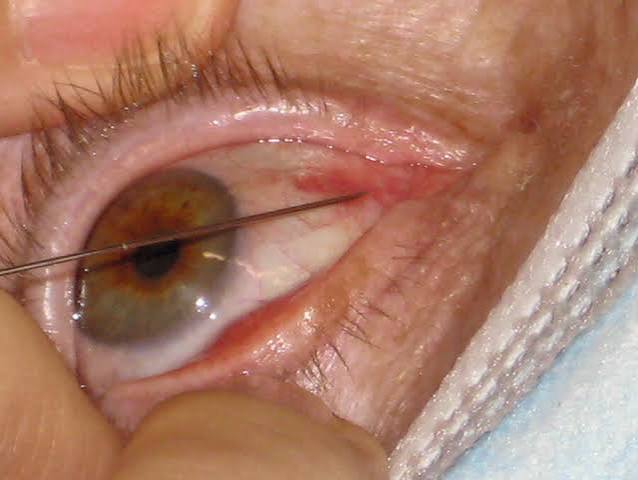
The toxin is injected directly into the target extraocular muscle, either under direct visualization during a brief procedure or, more commonly, using electromyographic guidance to confirm accurate needle placement within the muscle belly before injection.
The procedure can be performed under topical or local anesthesia in a cooperative adult, though general anesthesia is typically needed for a young child, similar to the anesthesia requirements for strabismus surgery itself.
Dosing is individualized based on the muscle being targeted, the degree of overaction, and the specific clinical goal, with the effect typically becoming apparent within days and reaching its maximum over one to two weeks.
Patients should be counseled in advance that some initial overcorrection is common and expected during the period of peak muscle weakness, gradually settling toward the intended final alignment as the effect stabilizes over the following weeks.
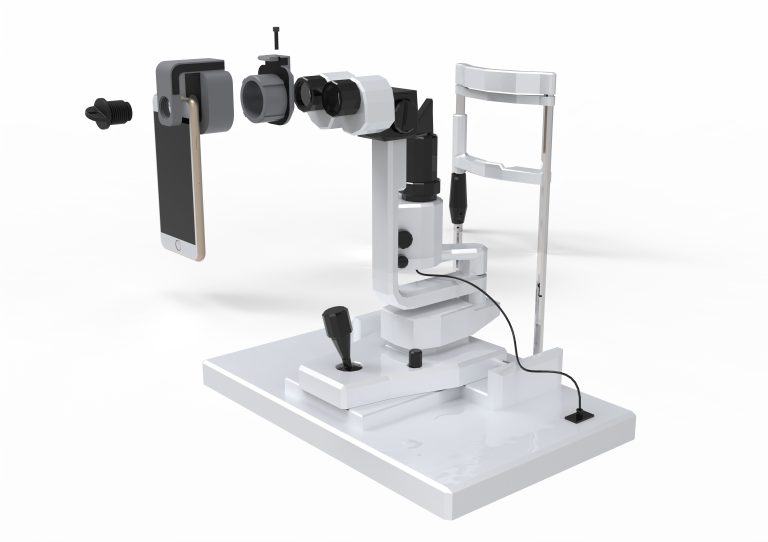
All-fit Slit-Lamp Adapter
Record and share exactly what you see at the slit lamp. One adapter fits any slit lamp or surgical microscope — and any smartphone.
From Choroida — the team behind this siteIndications
- Acute sixth nerve palsy, where temporary weakening of the antagonist medial rectus can prevent contracture while awaiting spontaneous recovery of the paralyzed lateral rectus
- Small to moderate angle strabismus, particularly esotropia, where the deviation may be effectively managed without the need for incisional surgery
- Adjustment or fine-tuning after strabismus surgery, when a residual deviation remains and a further surgical procedure is not yet warranted or desired
- Diagnostic use, temporarily simulating the effect of a planned surgical weakening to help predict surgical outcome or assess for the risk of postoperative diplopia before committing to a permanent procedure
Advantages and Limitations Compared to Surgery
The reversibility of botulinum toxin is its central advantage, allowing a trial of altered muscle balance without the permanence of a surgical procedure, which is particularly valuable when the risk of postoperative diplopia or overcorrection is uncertain.
The effect is less predictable and less precisely titratable than a well-planned surgical muscle recession or resection, and larger-angle or more complex strabismus patterns are generally better addressed surgically from the outset.
Repeat injections are often needed to maintain effect in a condition requiring ongoing management, which for some patients and clinical scenarios makes eventual surgery a more practical long-term solution than indefinitely repeated injections.
Complications
Ptosis from diffusion of the toxin to the levator muscle is a recognized, generally transient complication, resolving as the toxin’s effect wears off over the following weeks to months.
Vertical deviation or diplopia can occur if the toxin diffuses to or inadvertently affects an adjacent muscle beyond the intended target, another transient but sometimes bothersome side effect during the period of active drug effect.
Globe perforation is a rare but serious risk of the injection procedure itself, underscoring the importance of proper technique and, particularly in less cooperative or pediatric patients, appropriate guidance and anesthesia during the injection.
Most side effects, ptosis and diplopia included, resolve fully as the toxin’s effect wears off, and this self-limited nature is a key part of what patients find reassuring when weighing this option against a permanent surgical alternative.
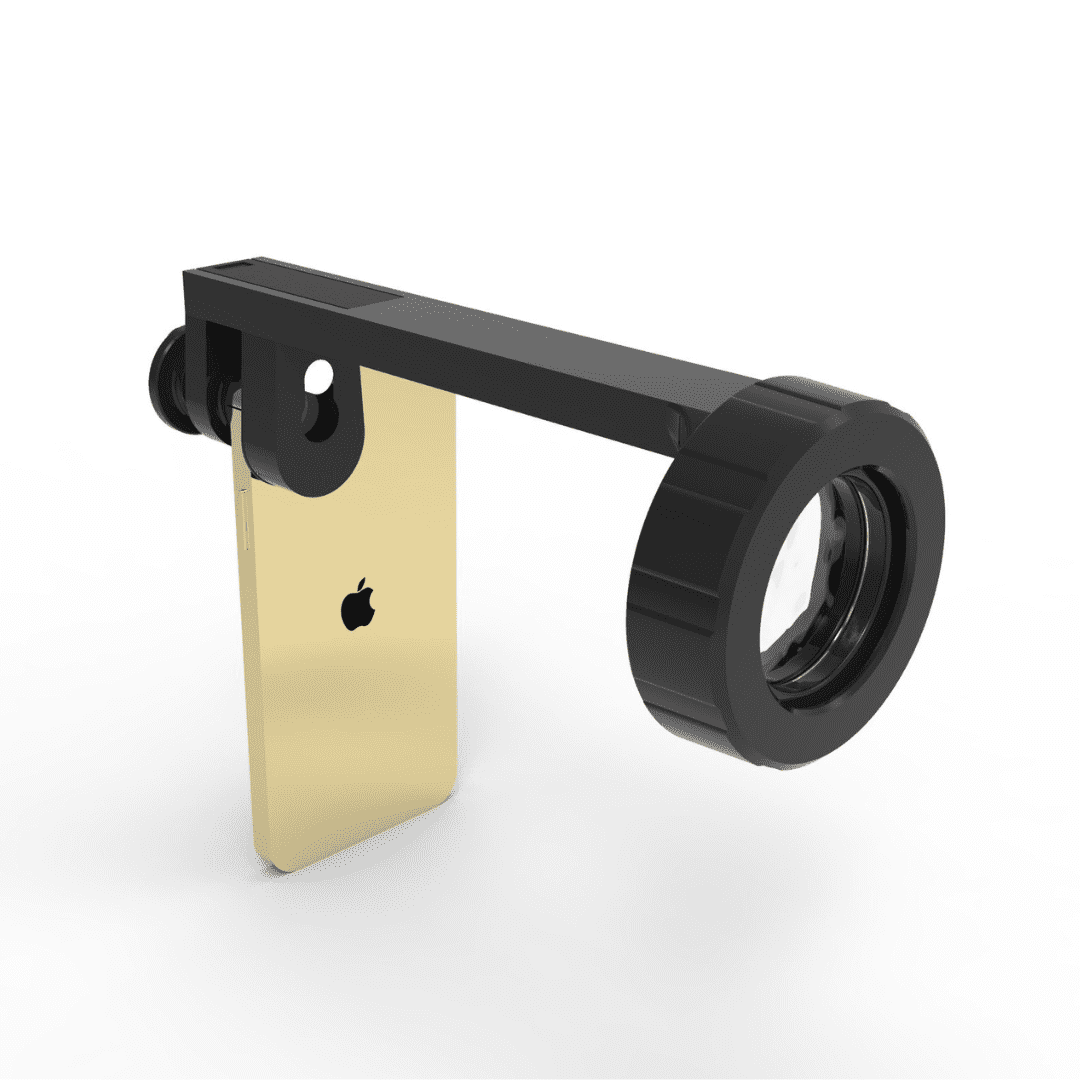
Document what you see
Two smartphone imaging tools built for everyday clinic use — one for the slit lamp, one for the fundus.
From Choroida — the team behind this siteReferences
- Scott AB. Botulinum toxin injection into extraocular muscles as an alternative to strabismus surgery. Ophthalmology.
- American Academy of Ophthalmology. Basic and Clinical Science Course, Section 6: Pediatric Ophthalmology and Strabismus.
- Rowe FJ, Noonan CP. Botulinum toxin for the treatment of strabismus. Cochrane Database of Systematic Reviews.
