Congenital rubella syndrome results from maternal rubella infection during pregnancy, and the classic triad, cataract, sensorineural hearing loss, and congenital heart disease, remains one of the clearest examples in medicine of a single, entirely preventable infection causing lifelong multisystem disability.
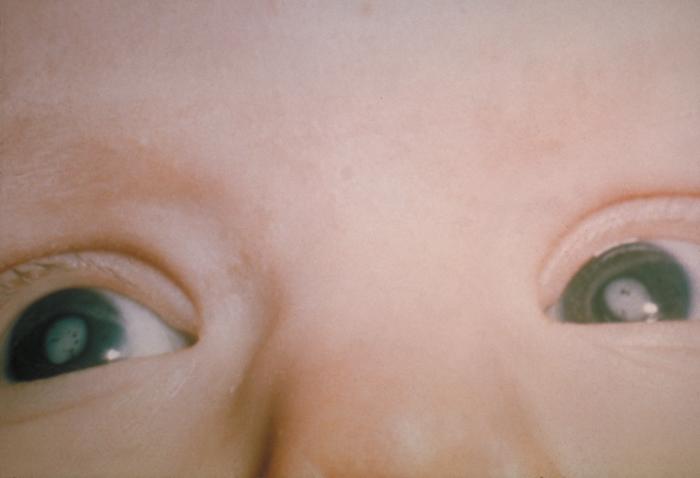
The ocular findings are often the most immediately visible sign, and a dense white cataract in a newborn should always raise the question of maternal rubella exposure, particularly in regions where vaccination coverage is incomplete.
Pathophysiology
Rubella virus crosses the placenta and directly infects the developing fetal tissues, and the severity and pattern of resulting malformation depend heavily on the gestational timing of maternal infection.
Infection during the first trimester, particularly the first eight to ten weeks, carries the highest risk of major malformation, since this is when the lens, heart, and inner ear are undergoing critical stages of organogenesis. Infection later in pregnancy carries a progressively lower risk of severe structural anomaly.
The virus directly damages the lens epithelium and can persist within the lens for a prolonged period after birth, a detail that has direct surgical relevance since retained live virus in an unoperated cataract can provoke intense inflammation if surgery is delayed into later infancy.
Ocular Manifestations
Cataract
Cataract is bilateral in the majority of affected infants, typically dense and involving the nucleus, and is frequently the presenting feature that leads to the diagnosis. Because it obscures a red reflex from birth, congenital rubella cataract carries the same amblyogenic urgency as any other visually significant congenital cataract.
Rubella Retinopathy
A distinctive salt-and-pepper pigmentary retinopathy is common, typically diffuse and involving the retinal pigment epithelium. Unlike the cataract, this retinopathy is usually visually insignificant on its own and is a useful diagnostic clue rather than a cause of vision loss.
Other Findings
Microphthalmia, glaucoma (which can be either congenital or develop later), and corneal clouding are also described, and any combination of these findings in an infant should prompt consideration of the diagnosis alongside the cataract.
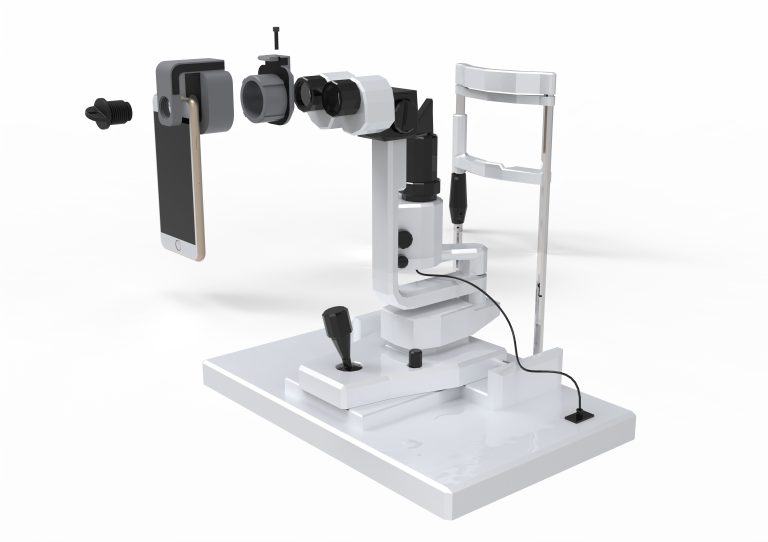
All-fit Slit-Lamp Adapter
Record and share exactly what you see at the slit lamp. One adapter fits any slit lamp or surgical microscope — and any smartphone.
From Choroida — the team behind this siteSystemic Manifestations
- Sensorineural hearing loss, the most common single manifestation of congenital rubella syndrome overall and often more functionally significant long-term than the ocular findings
- Congenital heart disease, classically patent ductus arteriosus and peripheral pulmonary artery stenosis
- Microcephaly and developmental delay
- Extramedullary haematopoiesis producing the classic “blueberry muffin” purpuric skin lesions in the newborn period
- Growth restriction and, in more severely affected infants, hepatosplenomegaly and thrombocytopenia at birth
Diagnostic Evaluation
Rubella-specific IgM in the infant supports recent congenital infection, while persistently elevated or rising rubella IgG titres over time, beyond what would be expected from simple transplacental antibody transfer, also support the diagnosis.
Viral culture or PCR from urine, nasopharyngeal secretions, or, when cataract surgery is performed, lens material itself can confirm ongoing viral shedding, which is directly relevant to infection control precautions around the infant and to surgical timing.
A comprehensive systemic evaluation, including formal audiology assessment and cardiac evaluation, should be arranged for any infant with confirmed or suspected congenital rubella syndrome, given how frequently the syndrome affects multiple organ systems together.
Differential Diagnosis
- Other congenital TORCH infections, including toxoplasmosis, cytomegalovirus, and herpes simplex, which can produce overlapping findings including cataract, retinopathy, and microcephaly, and require their own specific serological testing to distinguish
- Isolated hereditary congenital cataract without an infectious cause, distinguished by the absence of retinopathy, hearing loss, and cardiac findings
- Other causes of the salt-and-pepper retinopathy pattern, including some inherited retinal dystrophies, generally distinguished by the absence of the other systemic and ocular features of congenital rubella syndrome
Management
Cataract Surgery
Surgical timing requires a careful, individualised balance: early surgery treats the visually significant cataract before amblyogenic damage accumulates, but because live virus can persist in the lens and provoke severe postoperative inflammation, some surgeons deliberately delay intervention slightly or take particular precautions, and coordination with paediatric infectious disease input on infectivity status is genuinely useful in planning the operation.
Ongoing Monitoring
Glaucoma can develop at any point, including after successful cataract surgery, so intraocular pressure monitoring should continue long-term rather than being assumed complete once the cataract itself has been addressed.
Infection Control
Infants with congenital rubella syndrome may shed live virus for many months after birth, which has implications for isolation precautions, and this is coordinated with the paediatric and infection control teams managing the infant’s broader care, particularly around the time of any surgical procedure.
Multidisciplinary Care
Given the multisystem nature of the syndrome, coordinated care with audiology, cardiology, and developmental paediatrics is essential alongside ophthalmic management, since hearing loss and developmental support needs are often just as consequential to the child’s overall outcome as the ocular findings.
Prognosis
Visual outcome after cataract surgery is generally reasonable when surgery is performed promptly and amblyopia therapy is followed consistently afterward, though outcomes in congenital rubella cataract are historically somewhat less predictable than in isolated hereditary cataract, partly reflecting the additional surgical and inflammatory considerations involved.
Glaucoma remains a lifelong risk requiring ongoing surveillance even after apparently successful cataract management.
Overall prognosis for the child depends heavily on the severity of associated hearing loss, cardiac disease, and developmental impact, which is why ophthalmic management, while important, needs to be understood as one part of a broader, multidisciplinary care plan rather than the defining feature of this syndrome’s outcome.
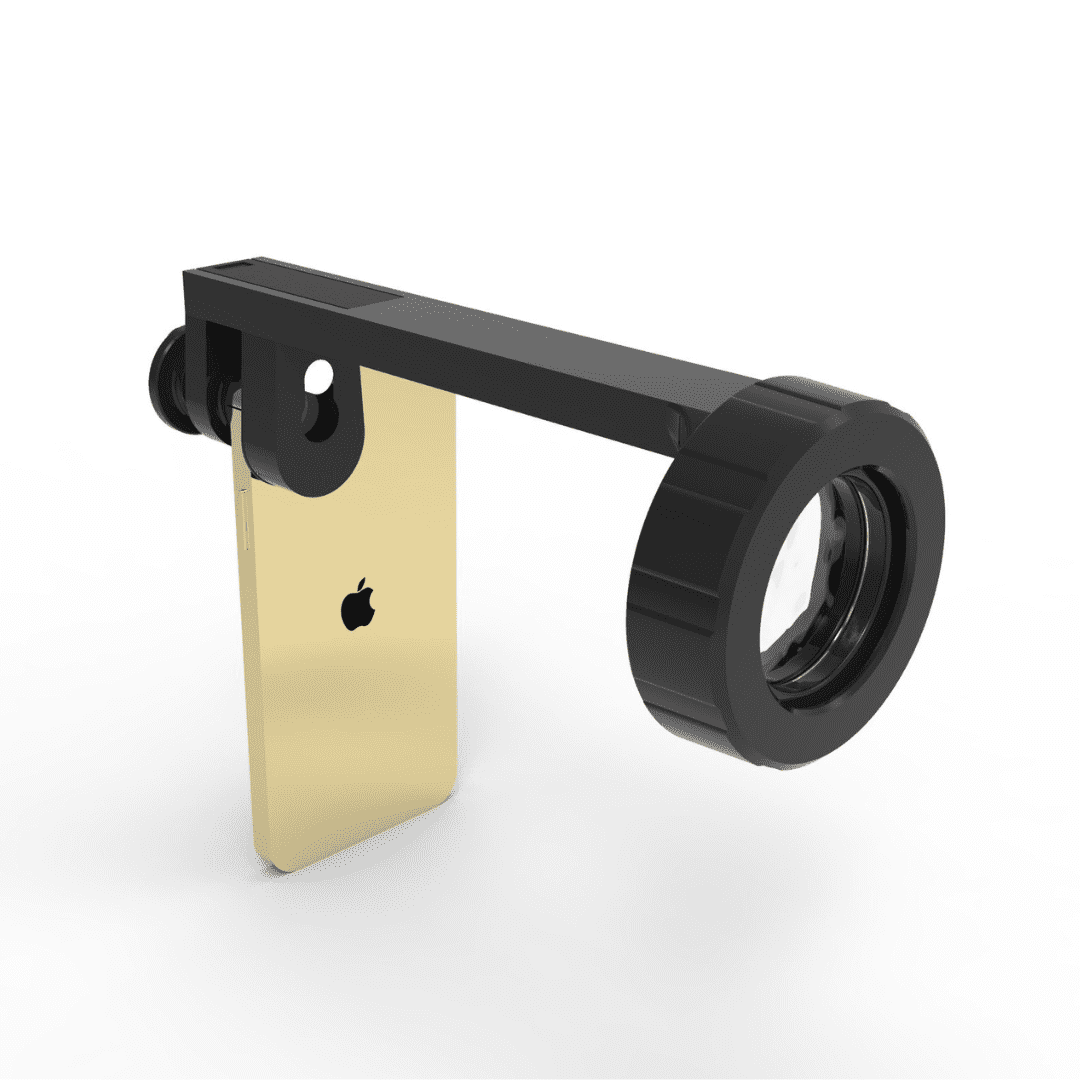
Document what you see
Two smartphone imaging tools built for everyday clinic use — one for the slit lamp, one for the fundus.
From Choroida — the team behind this siteReferences
- Vijayalakshmi P, Kakkar G, Samprathi A, Banushree R. Ocular manifestations of congenital rubella syndrome in a developing country. Indian Journal of Ophthalmology. 2002.
- Givens KT, Lee DA, Jones T, Ilstrup DM. Congenital rubella syndrome: ophthalmic manifestations and associated systemic disorders. British Journal of Ophthalmology. 1993.
- World Health Organization. Rubella vaccines: WHO position paper.
- Congenital Rubella Syndrome. EyeWiki, American Academy of Ophthalmology.
- Rubella. StatPearls, NCBI Bookshelf.
Test yourself
A few questions straight from this article.
-
Which triad is classic for congenital rubella syndrome?
The classic triad is cataract, sensorineural hearing loss and congenital heart disease, the hallmark of a single preventable infection causing lifelong multisystem disability. -
When in pregnancy does maternal rubella carry the highest risk of major malformation?
Infection in the first trimester, particularly the first eight to ten weeks, coincides with critical organogenesis of the lens, heart and inner ear; later infection carries progressively lower risk. -
Why does rubella cataract complicate the timing of cataract surgery?
Rubella virus damages the lens epithelium and can persist in the lens after birth, so surgery has to balance amblyogenic urgency against the risk of intense postoperative inflammation. -
How does the cataract of congenital rubella syndrome typically appear?
The cataract is bilateral in most affected infants, dense and nuclear, and obscures the red reflex from birth, giving it full amblyogenic urgency. -
Which statement describes the retinopathy of congenital rubella syndrome?
The diffuse salt-and-pepper pigmentary retinopathy involves the retinal pigment epithelium and serves as a diagnostic clue rather than a cause of vision loss. -
What is the most common single manifestation of congenital rubella syndrome overall?
Sensorineural hearing loss is the commonest single manifestation and is often more functionally significant in the long term than the ocular findings. -
Which cardiac lesion is classically associated with congenital rubella syndrome?
Patent ductus arteriosus and peripheral pulmonary artery stenosis are the classic cardiac lesions of congenital rubella syndrome. -
Which serological result supports a diagnosis of congenital rubella syndrome?
Rubella-specific IgM in the infant supports recent congenital infection, as do rubella IgG titres that persist or rise beyond what transplacental transfer would explain. -
Which finding points to isolated hereditary congenital cataract rather than congenital rubella syndrome?
Hereditary congenital cataract occurs without the pigmentary retinopathy, hearing loss and cardiac findings that accompany rubella cataract. -
Which long-term ocular surveillance is needed after cataract surgery in congenital rubella syndrome?
Glaucoma can develop at any point, including after successful cataract surgery, so intraocular pressure monitoring must continue long-term.

Writes and reviews the clinical articles on Educate. Every post is checked against peer-reviewed sources before it goes live.