Patching therapy treats amblyopia by occluding the stronger eye, forcing the visual system to rely on and strengthen the weaker one during the window of childhood when the visual cortex remains capable of change.
It is one of the oldest treatments in ophthalmology and remains, despite decades of alternatives being proposed, the best-evidenced option available. Its real-world success depends less on the prescription written than on how consistently a family actually carries it out at home.
Why Patching Works
Amblyopia develops when the developing visual cortex receives a persistently degraded or unequal image from one eye, whether from uncorrected refractive error, strabismus, or visual deprivation, and the brain progressively favours input from the stronger eye.
Occluding the stronger eye removes the competing input, forcing cortical visual pathways serving the amblyopic eye to be used and, through neural plasticity, to strengthen.
This plasticity is greatest in early childhood and declines with age, which is why treatment started earlier generally achieves a better result than treatment started later, though meaningful improvement is still possible well beyond the traditionally cited early cutoffs.
Indications
- Amblyopia confirmed on examination, with interocular visual acuity difference after full refractive correction, most commonly from strabismus, anisometropia, or a combination of both
- Deprivation amblyopia following treatment of a visually significant congenital cataract or other cause of early visual obstruction, where patching supplements optical correction after the underlying obstruction is removed
- Persistent amblyopia despite adequate refractive correction alone, once glasses have been worn consistently for a period sufficient to assess how much improvement spectacles achieve on their own
Refractive correction is typically given first and its effect assessed before patching is added, since a meaningful proportion of amblyopia, particularly anisometropic amblyopia, improves substantially with glasses alone before any occlusion is needed.
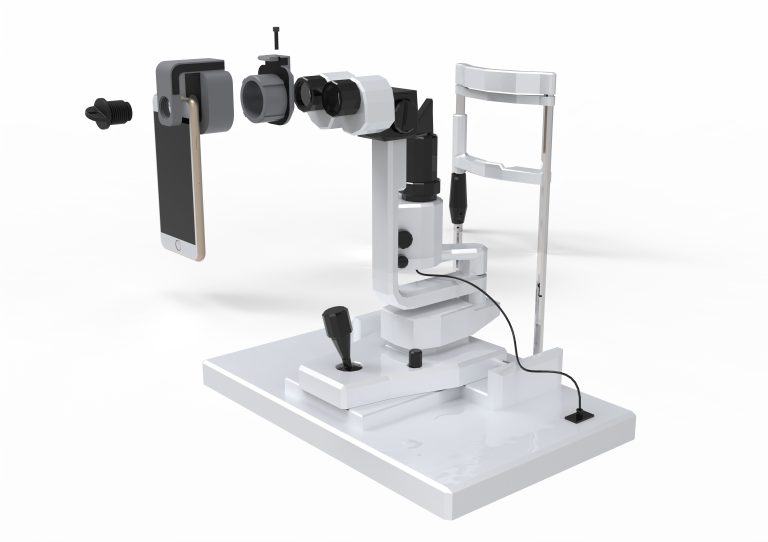
All-fit Slit-Lamp Adapter
Record and share exactly what you see at the slit lamp. One adapter fits any slit lamp or surgical microscope — and any smartphone.
From Choroida — the team behind this sitePrescribing Patching
Patching regimens vary from a couple of hours a day to most of the child’s waking hours, depending on the severity of amblyopia and the age of the child. Landmark trials from the Pediatric Eye Disease Investigator Group established that moderate amblyopia responds about as well to part-time patching as to more intensive full-time regimens, which has meaningfully reduced the burden placed on families for many patients.
Severe amblyopia generally still warrants a more intensive prescription, though even here the evidence supports substantial daily patching rather than around-the-clock occlusion in most cases.
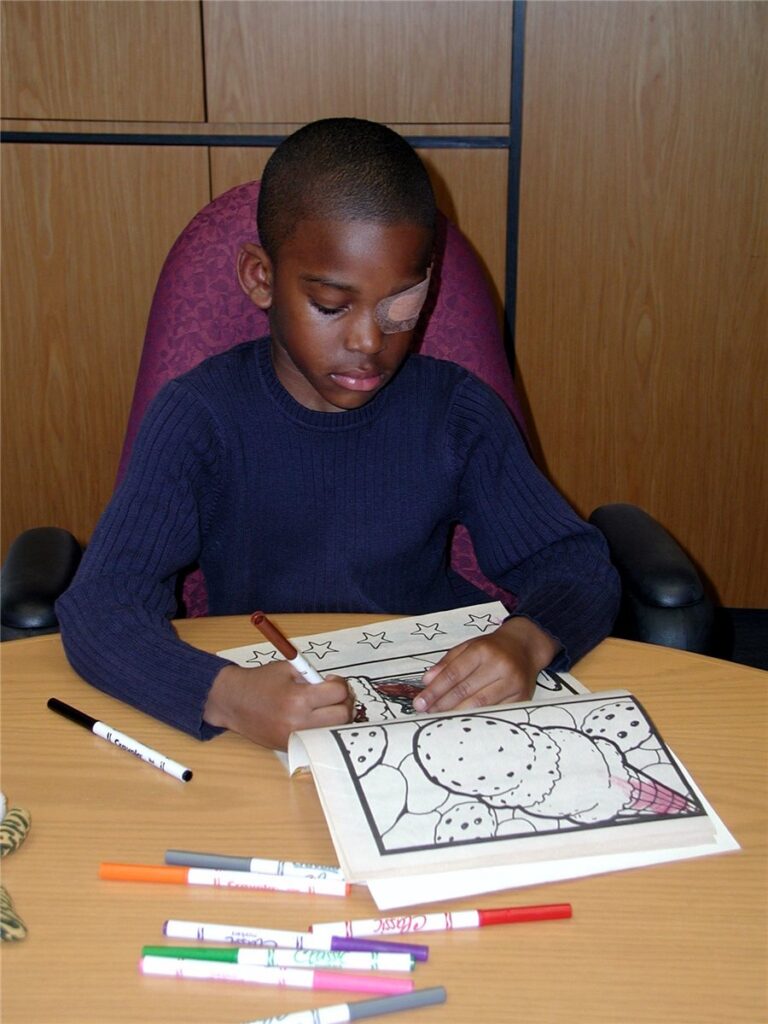
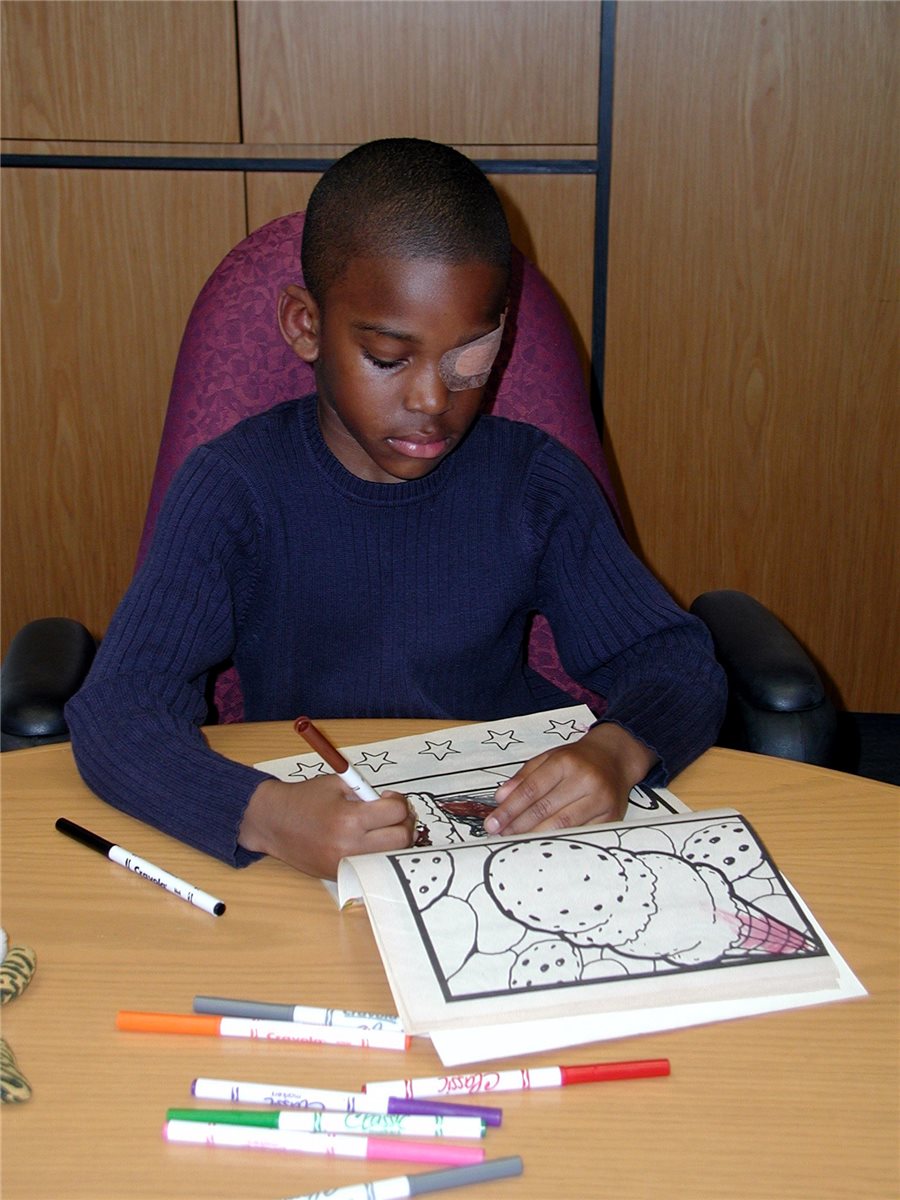
An adhesive patch applied directly to the skin around the eye is preferred over a patch fitted to spectacles, since children can often peek around or over a spectacle-mounted patch, undermining the treatment without anyone realising.
Adherence
Adherence is the single largest determinant of treatment success, and it is also the hardest thing to measure accurately from a clinic visit alone, since families’ reported patching hours are notoriously optimistic compared with objective monitoring data from occlusion dose monitors used in research settings.
Practical strategies that improve real-world adherence include tying patching time to an enjoyable, near-vision-demanding activity such as drawing or reading, using reward systems for younger children, and being explicit with families that the treatment is genuinely time-limited rather than an open-ended daily burden.
Skin irritation from adhesive patches is common and can itself undermine adherence if not addressed. Rotating patch brands, using a barrier cream, or switching to atropine penalisation are reasonable options when skin tolerance becomes a limiting factor.
Alternatives to Patching
Atropine penalisation, using atropine drops in the stronger eye to blur near vision and encourage use of the amblyopic eye, is a well-evidenced alternative that avoids the skin irritation and social visibility issues of a patch, though it can cause light sensitivity from pupil dilation.
Bangerter filters, translucent films applied to a spectacle lens to degrade vision in the stronger eye without full occlusion, are another option, generally considered somewhat less effective than patching or atropine for moderate to severe amblyopia but useful in specific situations.
Monitoring
Visual acuity should be reassessed at regular intervals during treatment, typically every few weeks to months depending on age and severity, both to track improvement and to watch for the specific risk of occlusion amblyopia, where the previously stronger eye is weakened by excessive patching.
Treatment is generally continued until visual acuity stabilises or equalises between the two eyes, at which point patching is gradually reduced rather than stopped abruptly, to consolidate the gain and reduce the chance of regression.
Prognosis
Most children with amblyopia achieve significant improvement in visual acuity with appropriately prescribed and consistently followed patching, particularly when treatment starts before the age of seven.
Recurrence after apparently successful treatment is common enough that follow-up continues after formal treatment ends, with a plan to resume patching if acuity regresses.
Older children and even some adolescents can still show meaningful improvement with treatment, challenging the older assumption that amblyopia becomes untreatable beyond a fixed early cutoff, though the response is generally slower and less complete than with earlier treatment.
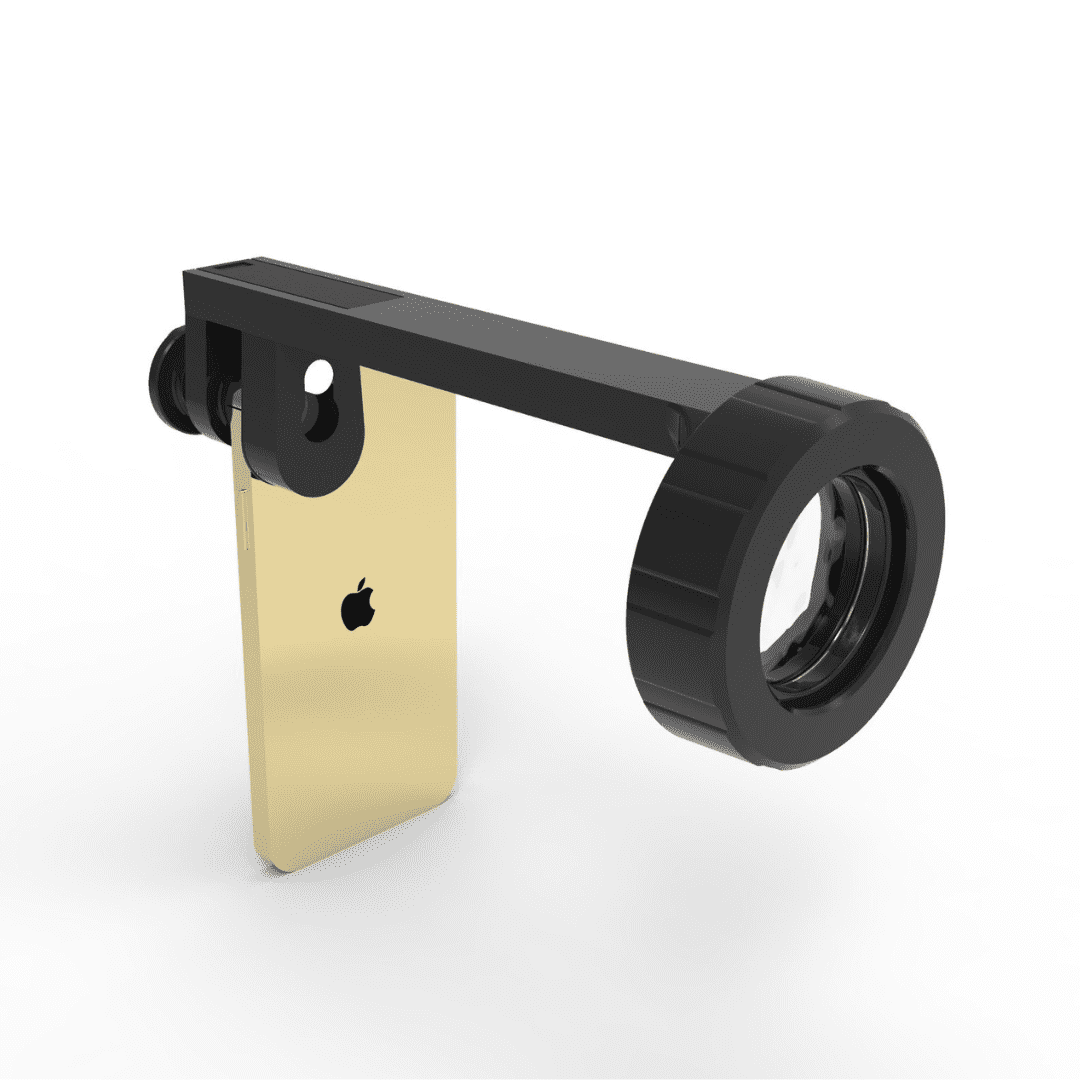
Document what you see
Two smartphone imaging tools built for everyday clinic use — one for the slit lamp, one for the fundus.
From Choroida — the team behind this siteReferences
- Pediatric Eye Disease Investigator Group. A randomized trial of patching regimens for treatment of moderate amblyopia in children. Archives of Ophthalmology. 2003.
- Holmes JM, Kraker RT, Beck RW, et al. A randomized trial of prescribed patching regimens for treatment of severe amblyopia in children. Ophthalmology. 2003.
- Repka MX, Kraker RT, Beck RW, et al. A randomized trial of atropine vs patching for treatment of moderate amblyopia. Archives of Ophthalmology. 2002.
- Amblyopia. EyeWiki, American Academy of Ophthalmology.
- Amblyopia. StatPearls, NCBI Bookshelf.
Test yourself
A few questions straight from this article.
-
How does amblyopia develop in a child?
Uncorrected refractive error, strabismus or visual deprivation degrades input from one eye, and the brain progressively favours the stronger eye. -
How does occluding the stronger eye treat amblyopia?
Removing the competing input makes the visual system use the amblyopic eye, and neural plasticity does the rest. That plasticity is greatest in early childhood. -
What is normally done before patching is started for amblyopia?
A meaningful proportion of amblyopia, anisometropic amblyopia especially, improves substantially with glasses alone before any occlusion is needed. -
What did the Pediatric Eye Disease Investigator Group trials establish for moderate amblyopia?
This finding meaningfully reduced the burden placed on families. Severe amblyopia still warrants a more intensive prescription, though not round-the-clock occlusion. -
Why is an adhesive patch preferred over a spectacle-mounted one?
Peeking undermines the treatment without anyone realising, so an adhesive patch applied to the skin around the eye is the standard choice. -
What is the single largest determinant of success in patching therapy?
It is also the hardest thing to judge in clinic, since families' reported patching hours run notably optimistic against objective monitoring data. -
How does atropine penalisation treat amblyopia?
This encourages use of the amblyopic eye without a patch, avoiding skin irritation and social visibility. Pupil dilation can cause light sensitivity. -
Which specific risk is watched for during patching therapy?
Excessive patching can weaken the previously stronger eye, which is why acuity is reassessed every few weeks to months depending on age and severity. -
How should patching be stopped once visual acuity has equalised?
Tapering reduces the chance of regression. Recurrence is common enough that follow-up continues after formal treatment ends, with a plan to resume if acuity slips. -
Before which age does patching therapy generally achieve the best results?
Older children and some adolescents can still improve meaningfully, challenging the old idea of a fixed cutoff, though the response is slower and less complete.

Writes and reviews the clinical articles on Educate. Every post is checked against peer-reviewed sources before it goes live.